Soft caramel apple cookies bake up with golden edges, tender centers, and little pockets of melted caramel in every bite. The apple stays sweet and bright instead of turning mushy, and the finishing drizzle of caramel with a pinch of flaky salt gives each cookie that bakery-style contrast that keeps people reaching for another one.
What makes these work is simple but important: the apple gets diced very small and patted dry before it ever hits the dough, so the cookies stay thick instead of spreading into cakey puddles. Brown sugar adds chew and a deeper caramel note, while the cinnamon, nutmeg, and allspice give the dough just enough warmth without burying the apple. Chopped caramel bits melt into soft pockets as the cookies bake, which is a lot easier than trying to tuck whole caramels into the dough and hoping for the best.
Below, I’ve included the one prep step that keeps the texture right, plus a few useful swaps if you want to make these a little more your own.
The diced apple stayed tender without making the dough wet, and the caramel bits turned into little pockets instead of disappearing. I baked mine at 11 minutes and they came out soft in the middle with perfectly crisp edges.
Save these caramel apple cookies for when you want soft centers, caramel pockets, and a little salted drizzle on top.
The Apple Needs to Be Dry, Not Just Chopped Small
The biggest reason apple cookies turn soft and heavy is extra moisture. Even a finely diced apple can leak enough juice to throw off the dough, which is why the apple gets blotted dry before it goes in. You want little apple pieces that soften in the oven, not wet bits that steam the cookie from the inside.
That small dice matters for texture too. Big chunks create pockets that bake unevenly and can leave you with raw seams around the fruit, while tiny pieces distribute cleanly through the dough and let the cookie hold together. If your apple looks shiny after cutting, keep blotting until the paper towel comes away mostly clean.
What Each Ingredient Is Actually Doing in These Cookies
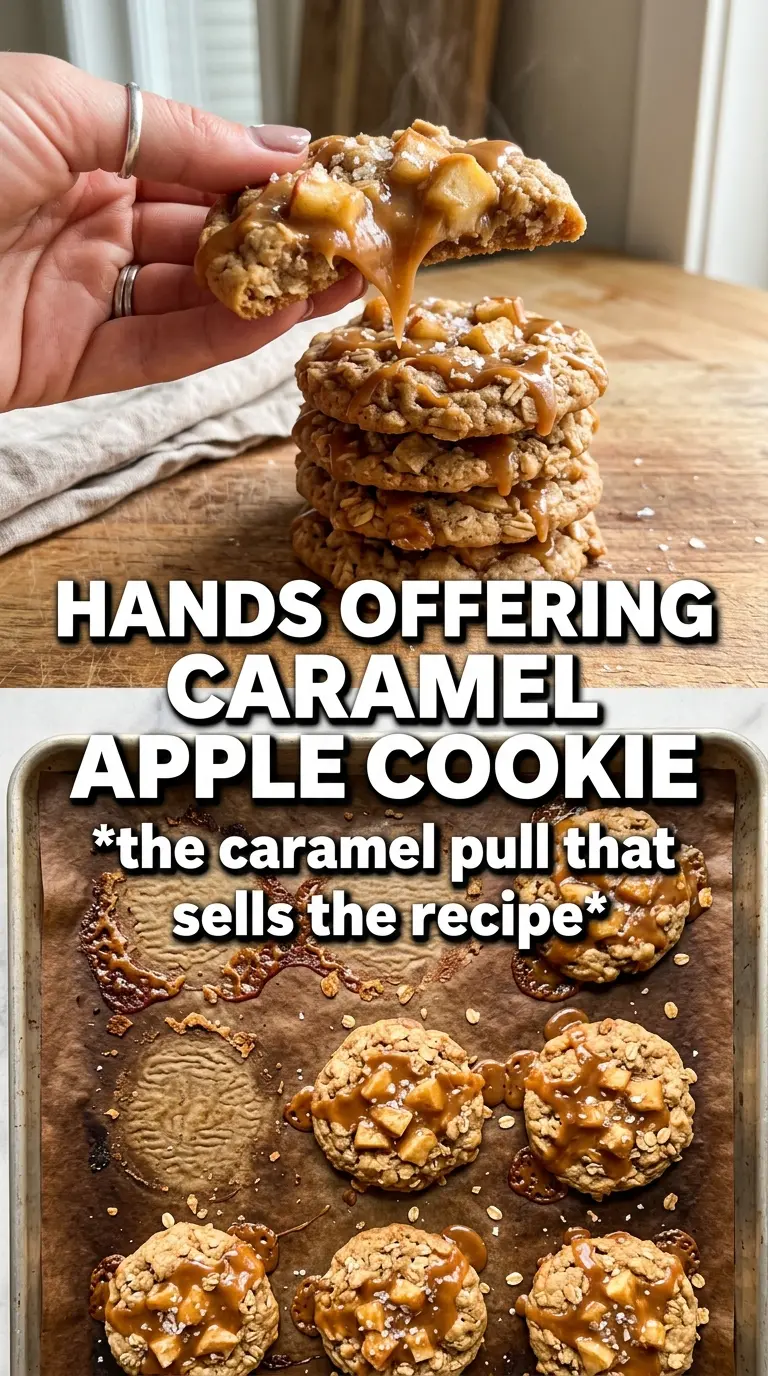
- Apples — Use a crisp apple that holds shape, not a mealy one. Granny Smith brings a sharper bite, while Honeycrisp or Pink Lady gives a sweeter result. The key is the tiny dice and the dry paper-towel treatment; that part matters more than the variety.
- Caramel bits or chopped soft caramels — These melt into the dough and give you those chewy pockets that make the cookies feel special. Caramel bits are easier because they keep their shape just enough to avoid turning the dough greasy, but chopped soft caramels work fine if that’s what you have.
- Brown sugar — This is what keeps the centers tender and adds a deeper caramel note that white sugar can’t give you on its own. The granulated sugar helps the edges set a little more firmly, so you get the right contrast.
- Spices — Cinnamon is the lead note, but nutmeg and allspice are what make these taste like apple dessert instead of plain sugar cookies with fruit mixed in. Don’t skip them unless you want a flatter, less interesting cookie.
- Butter — Softened butter creams with the sugars and gives the cookies their structure and spread. If the butter is melted, the dough will loosen too much and the cookies will bake flatter.
Building the Dough So the Cookies Stay Thick and Tender
Whisk the Dry Ingredients First
Mix the flour, baking soda, salt, and spices before they meet the butter. That gives you even spice distribution and prevents one bite from tasting more cinnamony than the next. If you skip this and dump everything in together, the baking soda can streak through the dough and leave uneven rise.
Cream Until Light, Not Oily
Beat the butter with both sugars until the mixture looks fluffy and a little paler in color. That step traps air, which helps the cookies bake up with soft centers instead of dense little hockey pucks. If the mixture looks greasy instead of fluffy, the butter was too warm, and the cookies will spread more in the oven.
Fold in the Apple at the End
Once the flour is almost incorporated, add the dried apple and caramel bits and fold just until combined. Overmixing after the flour goes in toughens the cookies and can start breaking down the apple, which is the last thing you want. Scoop right away so the dough doesn’t sit and draw moisture from the fruit.
Bake Until the Edges Set
Pull the cookies when the edges are golden and the centers still look a little soft. They finish setting on the hot pan, and that extra minute in the oven is usually the difference between tender and dry. If you wait for the centers to look fully done in the oven, you’ll go past the sweet spot.
Make Them Sharper with Granny Smith Apples
Granny Smith gives the cookies a brighter apple bite and keeps the sweetness in check. It’s the best choice if you want the caramel to stand out without the cookie turning cloying.
Use Dried Apples for a Less Fragile Dough
If you want a cookie that’s easier to portion and stores a little better, swap the fresh apple for finely chopped dried apple. The flavor turns more concentrated and less juicy, and the texture stays a bit chewier.
Make Them Gluten-Free with a 1:1 Baking Blend
A good gluten-free 1:1 flour blend works here because the cookie depends more on butter, sugar, and moisture balance than on gluten structure. Chill the dough for 15 to 20 minutes if it feels soft, since gluten-free dough can spread faster.
Skip the Drizzle for a Less Sweet Cookie
The cookies are sweet enough without the extra caramel sauce if you want a more restrained finish. The flaky salt still works beautifully on its own and keeps the apple and spice flavors front and center.
Storage and Reheating
- Refrigerator: Store in an airtight container for 3 to 4 days. The apple softens a little more after the first day, but the cookies stay pleasantly tender.
- Freezer: These freeze well baked or as scooped dough balls. Freeze baked cookies in a single layer, then pack tightly; freeze dough balls on a tray and bake from frozen with 1 to 2 extra minutes.
- Reheating: Warm baked cookies in a 300F oven for about 3 to 5 minutes. The mistake is microwaving too long, which makes the caramel sticky and the cookies rubbery instead of soft.
Questions I Get Asked About This Recipe
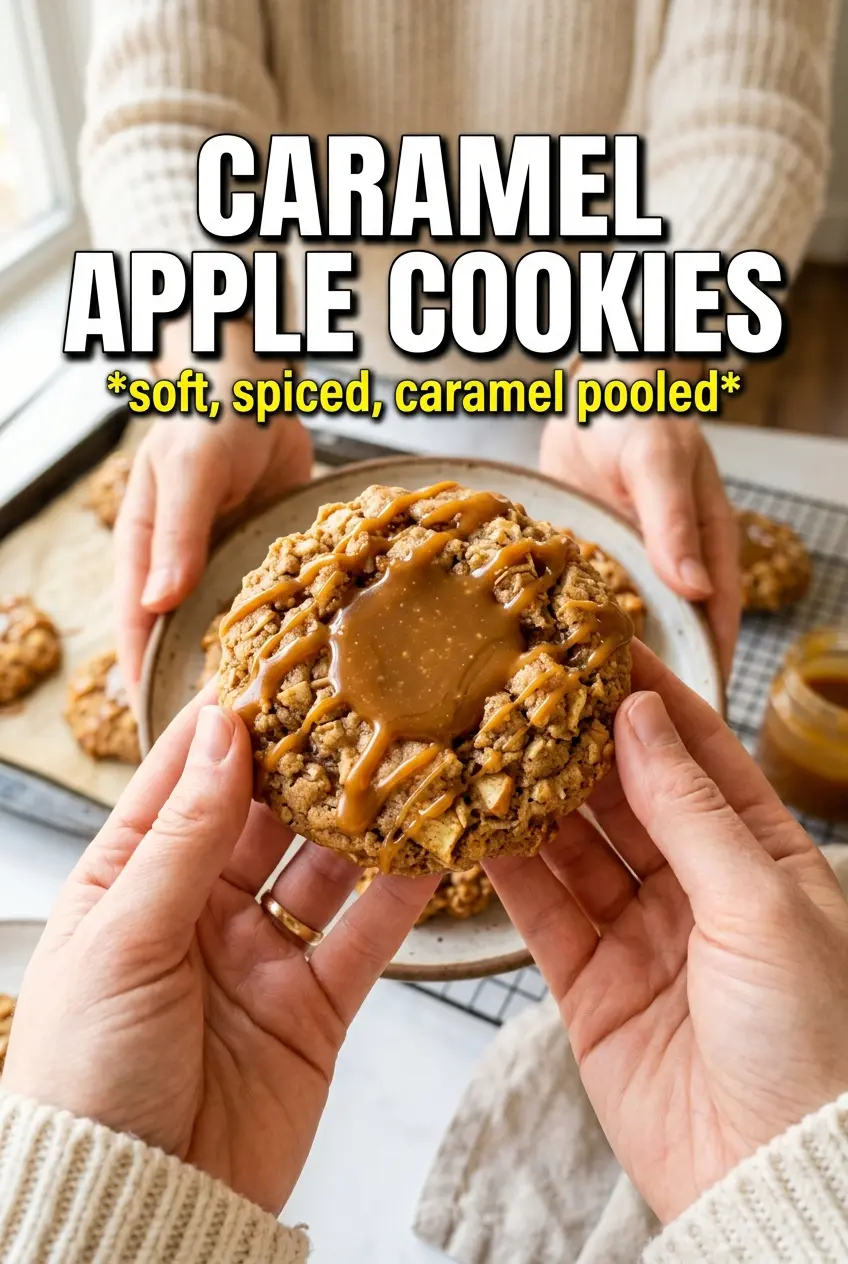
Caramel Apple Cookies
Ingredients
Equipment
Method
- Preheat oven to 375F and line baking sheets with parchment.
- Dice the apple very finely and blot completely dry with paper towels to prevent soggy cookies.
- Whisk the flour, baking soda, cinnamon, nutmeg, allspice, and salt together until evenly combined.
- Beat the butter and both sugars until fluffy, then beat in the eggs and vanilla extract until smooth.
- Fold in the flour mixture until no dry streaks remain.
- Fold in the dried apple and caramel bits until the dough is evenly speckled.
- Scoop the dough into 2-tablespoon rounds, spacing them on the lined baking sheets.
- Bake for 10-12 minutes at 375F, until edges are golden and centers look slightly set.
- Drizzle with caramel sauce and sprinkle flaky sea salt while the cookies are warm so the topping clings.