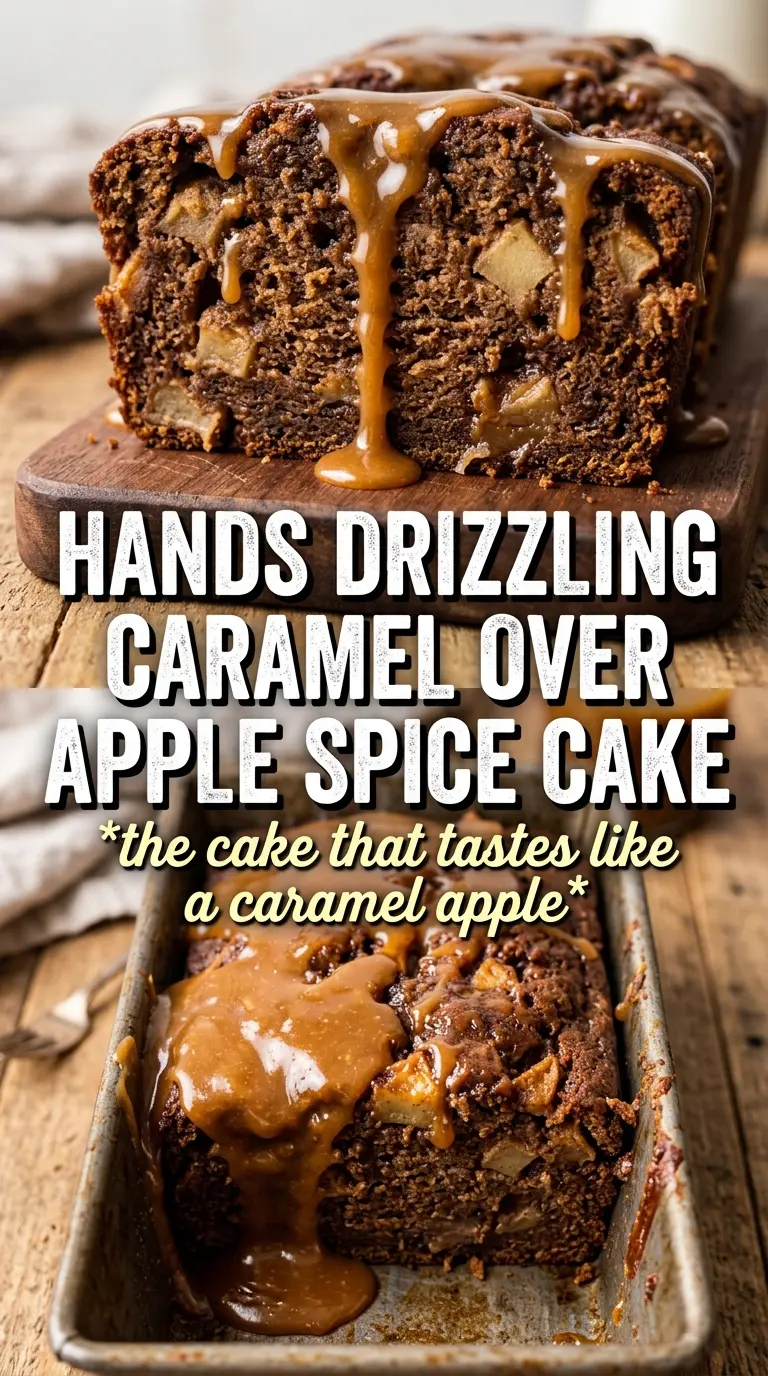
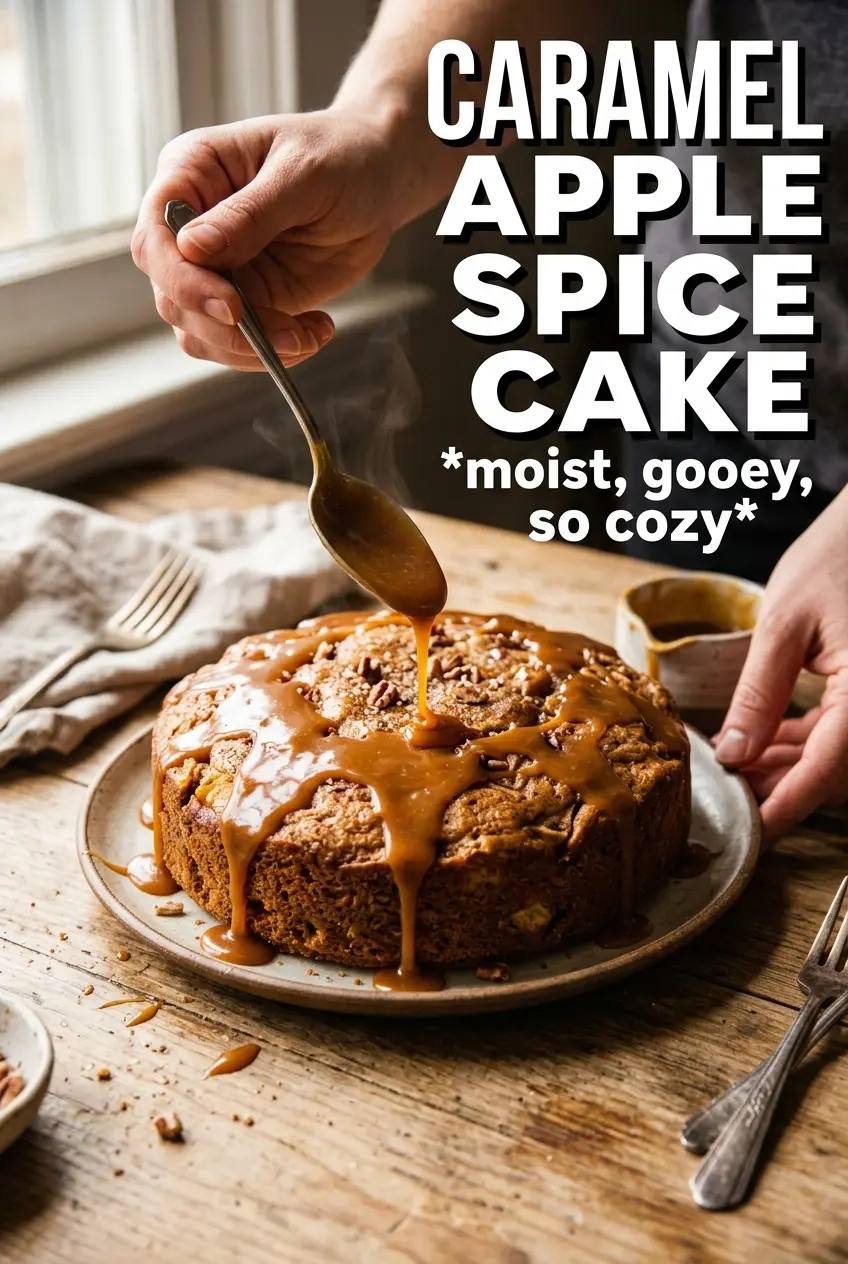
Caramel apple spice cake lands with the kind of weight that makes people slow down at the table. The crumb stays tender and moist from the sour cream and apples, while the cinnamon, allspice, cloves, and nutmeg give every bite a warm, bakery-style depth. Then the caramel cream cheese frosting comes in rich and tangy, turning a simple layer cake into something that feels worth the extra bowl and the extra minute to chill before slicing.
What makes this version work is balance. The apples are diced finely enough to melt into the cake instead of breaking the layers apart, and the sour cream keeps the crumb soft without making it heavy. The frosting also matters here: cream cheese gives the caramel a little bite, so the sweetness stays in check. If you’ve ever had an apple cake that tasted flat or a frosting that slid right off the sides, this one fixes both problems.
Below, I’ve included the timing that keeps the layers even, the mixing order that prevents a dense cake, and a few smart swaps if you need to adapt it without losing the character of the dessert.
The layers baked up evenly and the apples stayed tender without making the cake soggy. That caramel cream cheese frosting tasted like a bakery cake, and the drizzle held its shape instead of running off the sides.
Love the look of this caramel apple spice cake? Save it to Pinterest for the layered dessert with tangy frosting, warm spice, and that caramel-toffee finish.
The Reason This Cake Stays Moist Without Turning Heavy
Apple cakes can go wrong in one of two directions: too dry from overbaking, or too dense from overmixing and too much fruit. This cake avoids both by using sour cream for moisture and a careful hand with the apples. The sour cream gives the crumb a soft, rich texture that holds up under frosting, and the apples are folded in at the end so they stay evenly distributed instead of sinking to the bottom.
The spice blend matters more than it looks on paper. Cinnamon does the familiar work, but the allspice, cloves, and nutmeg are what make the cake taste layered instead of one-note. If the batter looks thick after the dry ingredients go in, that’s normal. It should be spoonable, not pourable. Thin batter here usually means too much liquid, which can turn the layers gummy in the center before the edges are set.
- Finely diced apples — Smaller pieces soften into the cake as it bakes, which gives you pockets of apple in every slice without tearing the layers apart. Cut them small and even so the cake slices cleanly.
- Sour cream — This adds fat and acidity, which keeps the crumb tender. Plain Greek yogurt works in a pinch, but it brings a slightly sharper tang and a little less richness.
- Brown sugar — It deepens the caramel note in the cake and helps keep the crumb moist. Light or dark brown sugar both work; dark brown sugar gives a darker, more molasses-heavy flavor.
- Caramel sauce — Use a thicker caramel for the frosting so it doesn’t loosen the cream cheese mixture. If yours is thin, chill it first or the frosting can slide.
What Each Ingredient Is Actually Doing in This Recipe
- Primary ingredient (the star) — Quality matters most. Choose the best you can find.
- Cooking medium (oil, butter, or broth) — This carries flavors and prevents dryness.
- Seasonings (salt, pepper, spices, herbs) — Layer flavors so nothing overpowers. Build depth gradually.
- Aromatics (garlic, onion, herbs) — Cook with fat to bloom flavors. Become the foundation.
- Supporting ingredients — Complement the main ingredient without overpowering it.
- Sauce or liquid (if applicable) — Brings flavors together. Balance richness with acid.
- Acid (lemon, vinegar, wine, or other) — Brightens and prevents flat-tasting results.
- Final finish (garnish, glaze, or sauce) — Prevents one-dimensional taste and adds visual appeal.
Building the Layers So the Frosting Stays Put
Mixing the Batter Without Toughening It
Beat the butter and brown sugar until the mixture looks pale and fluffy, then add the eggs one at a time so the batter emulsifies instead of curdling. Once the dry ingredients and sour cream start going in, switch to a gentler hand. Overmixing at this point is the fastest way to end up with a tight, chewy cake. Stop as soon as the flour disappears, then fold in the apples by hand so they stay intact.
Reading the Bake Instead of Guessing
Divide the batter evenly between the pans so the layers bake at the same pace. At 50 minutes, check for a cake that springs back lightly in the center and pulls just slightly from the edges; a toothpick should come out with a few moist crumbs, not wet batter. If the tops darken before the centers finish, the oven is running hot, so tent them loosely with foil for the last stretch. Let the layers cool completely before frosting or the caramel filling will melt into the sides.
Whipping the Frosting to a Spreadable Finish
Beat the cream cheese and butter first until smooth, then add the caramel, vanilla, and powdered sugar gradually. If you dump everything in at once, the frosting can turn lumpy and too soft to hold the layers. The finished frosting should be fluffy but thick enough to mound on a spoon. If it feels loose, chill it for 15 to 20 minutes before assembly; that short rest makes a big difference when you start smoothing the sides.
How to Adapt This Cake for the Pantry You Have
Dairy-Free Version
Use plant-based butter, dairy-free cream cheese, and a thick dairy-free caramel sauce. The cake itself adapts well, but the frosting will be a little softer and less tangy, so chill it before assembling and again before slicing. The flavor still lands in the same warm, spiced lane.
Gluten-Free Swap
A 1:1 gluten-free flour blend works best here. The crumb will be a touch more delicate, so let the layers cool fully before moving them. If your blend doesn’t include xanthan gum, add it if the package suggests it, since that helps the cake hold together under the weight of the frosting.
Make It a Bit Less Sweet
Reduce the caramel in the frosting slightly and use a thinner drizzle on top instead of a heavy pour. The cream cheese already brings balance, so you don’t need to drown the cake in extra caramel to get the right effect. A lighter finish also makes the apple spice flavor come through more clearly.
Storage and Reheating
- Refrigerator: Store covered for up to 5 days. The frosting firms up in the fridge, but the cake stays moist.
- Freezer: Freeze unfrosted layers wrapped tightly for up to 2 months, or freeze slices well wrapped. Frosting can be frozen separately, but the texture is best when made fresh.
- Reheating: Bring slices to room temperature before serving. If you want a softer crumb, warm individual slices for 10 to 15 seconds in the microwave, but don’t heat long enough to melt the frosting.
Answers to the Questions Worth Asking
Caramel Apple Spice Cake
Ingredients
Equipment
Method
- Preheat oven to 350F. Grease two 9-inch pans and set aside.
- Add butter and brown sugar to a mixing bowl and beat until smooth and lighter in color.
- Beat in the eggs one at a time, then mix in the vanilla.
- In another bowl, combine flour, baking powder, baking soda, cinnamon, allspice, cloves, nutmeg, and salt.
- Alternate adding the dry mixture and sour cream to the batter, mixing just until incorporated.
- Fold in the finely diced apples so they’re evenly distributed throughout the batter.
- Divide batter evenly between the two prepared pans.
- Bake for 50-55 minutes at 350F, until a toothpick in the center comes out clean.
- Cool cakes completely in their pans before frosting.
- Beat cream cheese and butter together until smooth.
- Beat in caramel sauce and vanilla until combined.
- Gradually add powdered sugar and beat until fluffy and thick enough to spread.
- Remove cakes from pans and frost the layers and the outside of the cake.
- Drizzle extra caramel sauce over the top. Scatter toffee bits over the caramel before serving.