Golden sourdough, sharp cheddar, crispy bacon, and sliced turkey make this melt worth putting on repeat. The bread turns deeply toasted and buttery in the skillet while the cheese goes soft enough to hold everything together without drowning the sandwich. What you get is a hot, crunchy exterior with a salty, savory center that eats like diner lunch done right at home.
The trick here is balance. Dijon on one side gives the turkey enough bite to keep the sandwich from tasting flat, while mayonnaise on the other side adds a little richness and helps the bread brown evenly. Cooking it over medium heat matters too. Too hot and the bread darkens before the cheddar has time to melt; too low and the sandwich dries out before the crust develops.
Below, I’ve included the one assembly order that keeps the bread crisp, plus a few swaps that still keep the sandwich sturdy enough to flip without losing all the good stuff.
The bread got perfectly crisp and the cheddar melted all the way through without the sandwich falling apart. The Dijon and mayo combo made it taste like something from a good deli, and the bacon stayed crunchy even after the second side cooked.
Save this cheddar and bacon turkey melt for the kind of lunch that needs extra crunch, melty cheese, and a strong Dijon bite.
The Trick to Keeping a Turkey Melt Crisp, Not Soggy
This sandwich can go soft fast if the fillings are stacked carelessly. The biggest mistake is loading wet ingredients against the bread and then trying to save it with more heat. Tomato and greens belong at the end, after the cheese has melted and the sandwich is off the skillet. That keeps the bread from steaming itself into submission.
The other thing that matters is the fat on the outside. Butter gives you flavor and browning, but it needs help staying even across the bread. A thin, full coat all the way to the edges keeps the crust from drying out before the center warms through. If one side is browning too fast, lower the heat and give the cheese another minute to catch up.
What Each Ingredient Is Actually Doing in This Sandwich
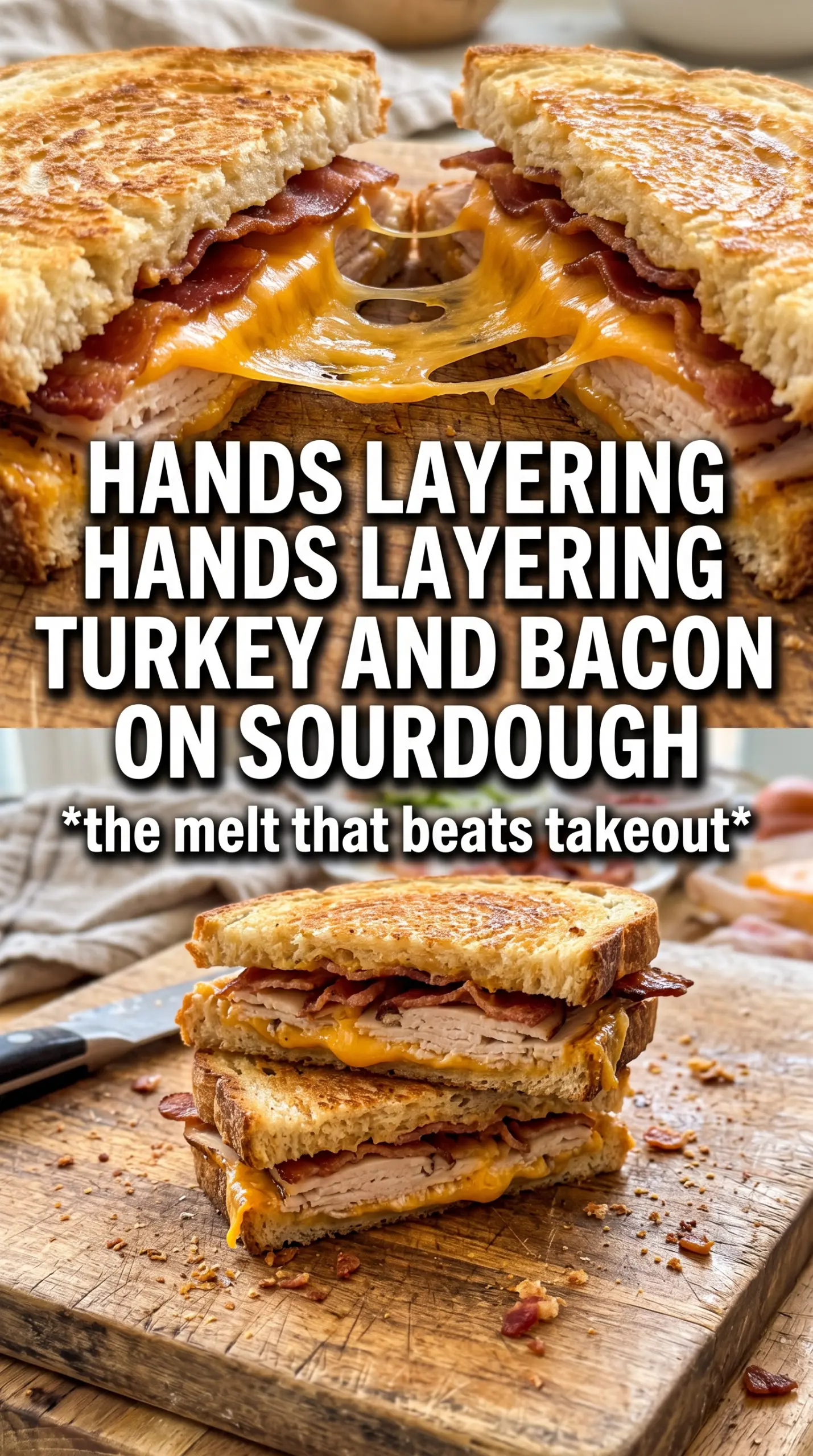
- Sourdough — Its sturdier crumb holds up to the fillings and gives you that tangy bite you want against the cheese and bacon. Use a bakery-style loaf if you can; thinner sandwich bread tends to compress and go limp.
- Sharp cheddar — Sharp cheddar brings the flavor that makes this more than just a turkey sandwich. Pre-sliced is fine here, but cut slices that aren’t paper-thin so they melt into a proper layer instead of disappearing.
- Turkey breast — Deli turkey keeps the sandwich fast, but thicker slices give you a better texture and less chance of the filling drying out. Leftover roasted turkey works too, as long as it’s sliced thin enough to warm through before the bread burns.
- Bacon — Crispy bacon adds the crunch that keeps every bite from feeling soft and one-note. Thick-cut bacon holds up best, and it’s worth draining it well so extra grease doesn’t seep into the bread.
- Dijon mustard and mayonnaise — This split spread is the reason the sandwich tastes layered instead of heavy. Dijon cuts through the richness, while mayo helps the outside brown evenly; mixing them together works, but keeping them separate gives you a little more control.
- Arugula or tomato — Both add freshness, but they should go in after cooking so they stay bright. If your tomatoes are especially juicy, pat them dry first or they’ll undo all the crispness you just built.
Building the Melt So the Cheese Catches Up With the Bread
Setting Up the Bread
Butter one side of each slice all the way to the edges, then flip and spread Dijon on half the slices and mayonnaise on the other half. The bread should look evenly coated, not patched on, because dry corners are where the first scorched spots show up. If the butter is too hard, it tears the bread; if it’s too soft, it slides around, so aim for spreadable, not greasy.
Layering the Filling
Build the sandwich on the Dijon side with turkey, bacon, and cheddar. Keep the cheese closest to the bread so it starts melting as soon as the sandwich hits the pan, which helps glue everything together. Don’t pile the fillings too high or the sandwich will tip when you flip it and squeeze the filling out the sides.
Cooking Over Medium Heat
Place the sandwiches butter-side down on a skillet or griddle set over medium heat, then top with the remaining slices, butter-side up. You want a steady sizzle, not a hard crackle. If the bread browns in under two minutes, the heat is too high and the cheese won’t fully melt before the crust is done.
Finishing With the Fresh Layer
Once both sides are golden and the cheddar is melted, open the sandwich and add the arugula and tomato. This keeps the greens crisp and the tomato fresh instead of wilted and watery. Press it back together gently and slice on the bias so the layers hold, especially if the cheese is still soft.
Three Ways to Make This Melt Fit What’s in Your Kitchen
Gluten-Free Version
Use a sturdy gluten-free sandwich bread that can handle a flip without cracking. Toasting it a touch longer helps compensate for the softer crumb, but the filling order stays the same. Skip ultra-thin slices here; they tend to fall apart before the cheddar melts.
Dairy-Free Swap
Use your favorite dairy-free butter and a good melting plant-based cheddar. The texture will be a little softer and less stretchy, but the sandwich still browns well if the pan stays at medium heat. Check the labels on the bread and mayo if you’re avoiding dairy strictly.
Turn It Into a Hot Open-Faced Melt
If you want less bread and more topping, leave the top slice off and broil the assembled sandwich until the cheddar bubbles. You lose the full handheld crunch, but you gain faster melting and a more dramatic cheese pull. Watch it closely because sourdough can go from toasted to burnt fast under the broiler.
Use Leftover Turkey
Leftover roasted turkey makes this even better, especially if it’s sliced thin and warmed in the sandwich instead of cooked separately. Since the turkey is already cooked, the real job is heating it through without drying it out, which is why the cheese and moderate pan heat matter. A splash of pan steam from the lid can help if the slices are thick.
Storage and Reheating
- Refrigerator: Wrap leftovers tightly and refrigerate for up to 2 days. The bread softens a bit, especially once the tomatoes and greens are added.
- Freezer: I don’t recommend freezing the finished sandwich. The lettuce, tomato, and mayo don’t thaw well, and the bread loses its crisp texture.
- Reheating: Reheat in a skillet over low to medium-low heat, covered for the first minute so the cheese loosens, then uncovered to re-crisp the bread. The common mistake is blasting it in the microwave, which turns the sourdough rubbery and the bacon limp.
Answers to the Questions Worth Asking
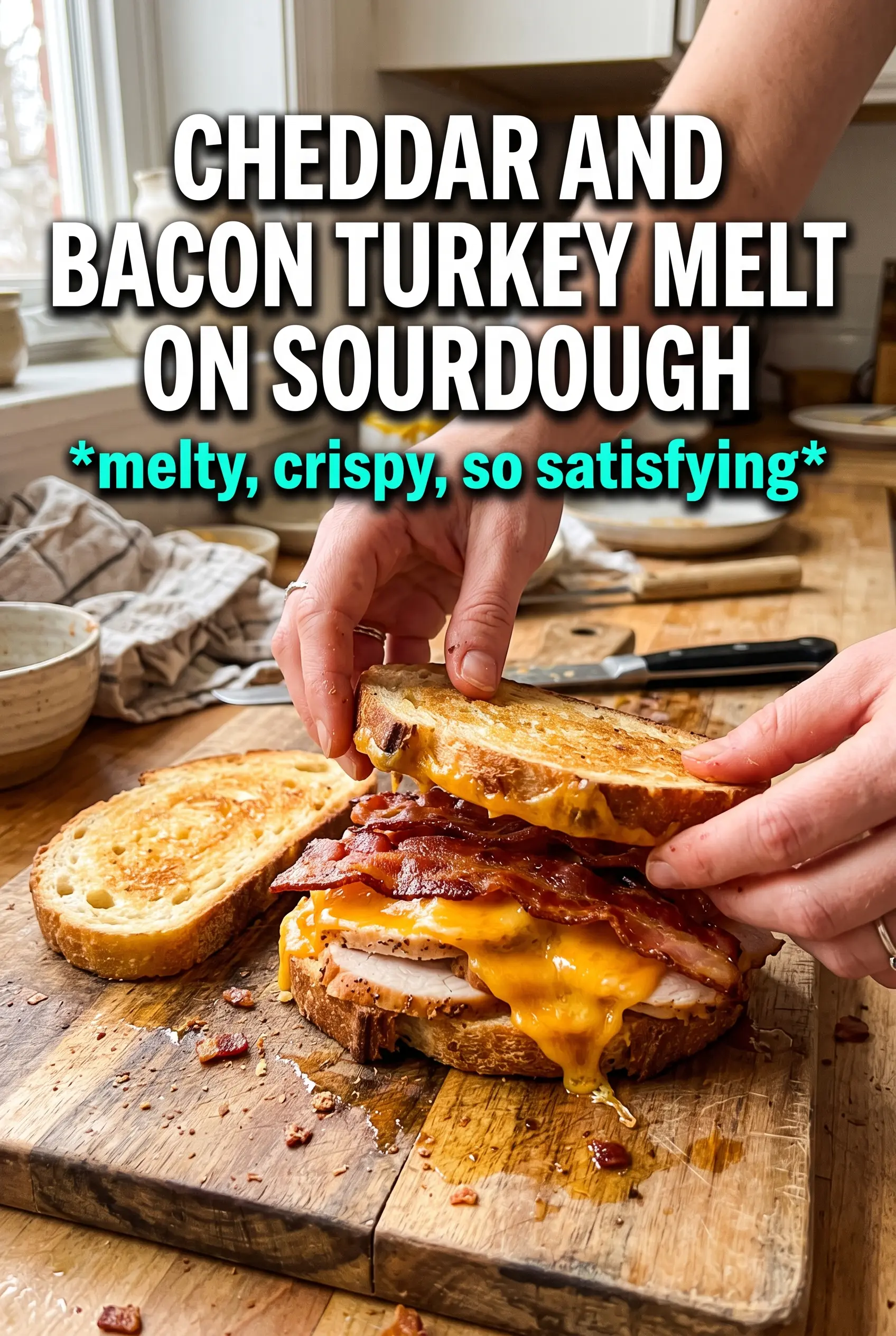
Cheddar and Bacon Turkey Melt on Sourdough
Ingredients
Equipment
Method
- Cook the thick-cut bacon until crispy, then drain and set aside for layering.
- Spread softened unsalted butter on one side of each sourdough bread slice.
- Flip the bread over and spread Dijon mustard on half the slices and mayonnaise on the other half.
- Layer sliced deli turkey breast, crispy bacon, and sharp cheddar cheese on the Dijon mustard side of the sandwiches.
- Heat a skillet or griddle over medium heat, then place sandwiches butter-side down.
- Top with the mayonnaise-spread slices butter-side up.
- Cook for 3-4 minutes per side until golden and cheddar is fully melted, then season with salt and pepper to taste if needed.
- Open each sandwich and add arugula or mixed greens and ripe tomato slices.
- Press the sandwiches closed and serve immediately.