Golden, bubbling root vegetable gratin is the kind of side dish that quietly steals the table. The top turns crisp and deeply browned while the vegetables underneath soften into tender layers that still hold their shape, and the mix of creamy potato, sweet carrot, earthy parsnip, and mild turnip gives every bite a little something different. It feels rich and comforting without turning heavy or one-note.
The trick is in the slicing and the layering. When the vegetables are cut evenly and tucked into the dish in overlapping rows, they cook at the same pace and the cream has a chance to slip between the layers instead of pooling at the bottom. Gruyère brings that nutty melt you want, while parmesan sharpens the finish and helps build the crust on top. Fresh thyme and a little nutmeg keep the gratin from tasting flat or overly milky.
Below you’ll find the cue I use to know when the vegetables are tender enough and the top is ready, plus a few smart swaps if you need to work with what’s in the pantry.
The layers softened beautifully and the cream thickened just enough while baking. The Gruyère on top browned into the best crust, and the turnip added a nice little bite that kept it from tasting too rich.
Save this cheesy root vegetable gratin for the nights when you want a crisp, golden crust and tender layers underneath.
The Reason This Gratin Stays Creamy Instead of Turning Watery
Root vegetables hold a lot of moisture, and that moisture can either turn the gratin silky or leave it thin and soupy at the bottom of the dish. The difference comes down to two things: cutting the vegetables evenly and baking them covered long enough for the cream to start thickening before the cheese goes on. If the slices are uneven, the thin pieces collapse while the thick ones stay firm. If you uncover too early, the top browns before the center is tender.
The foil-covered bake does the quiet work here. It traps steam, which helps the potatoes and denser roots soften all the way through, and it gives the cream time to reduce just enough without breaking. Once the vegetables are nearly tender, the cheese goes on for the final stretch so it melts into a crust instead of sinking into the sauce.
- Even slicing matters more than anything else in this dish. A mandoline makes the job faster, but a sharp knife works fine if you keep the slices thin and consistent.
- Foil on tightly is what keeps the early bake from drying out the top before the center is ready.
- Resting after baking lets the cream settle and thicken, which is why the gratin slices more cleanly after ten minutes on the counter.
What Each Ingredient Is Actually Doing in This Dish
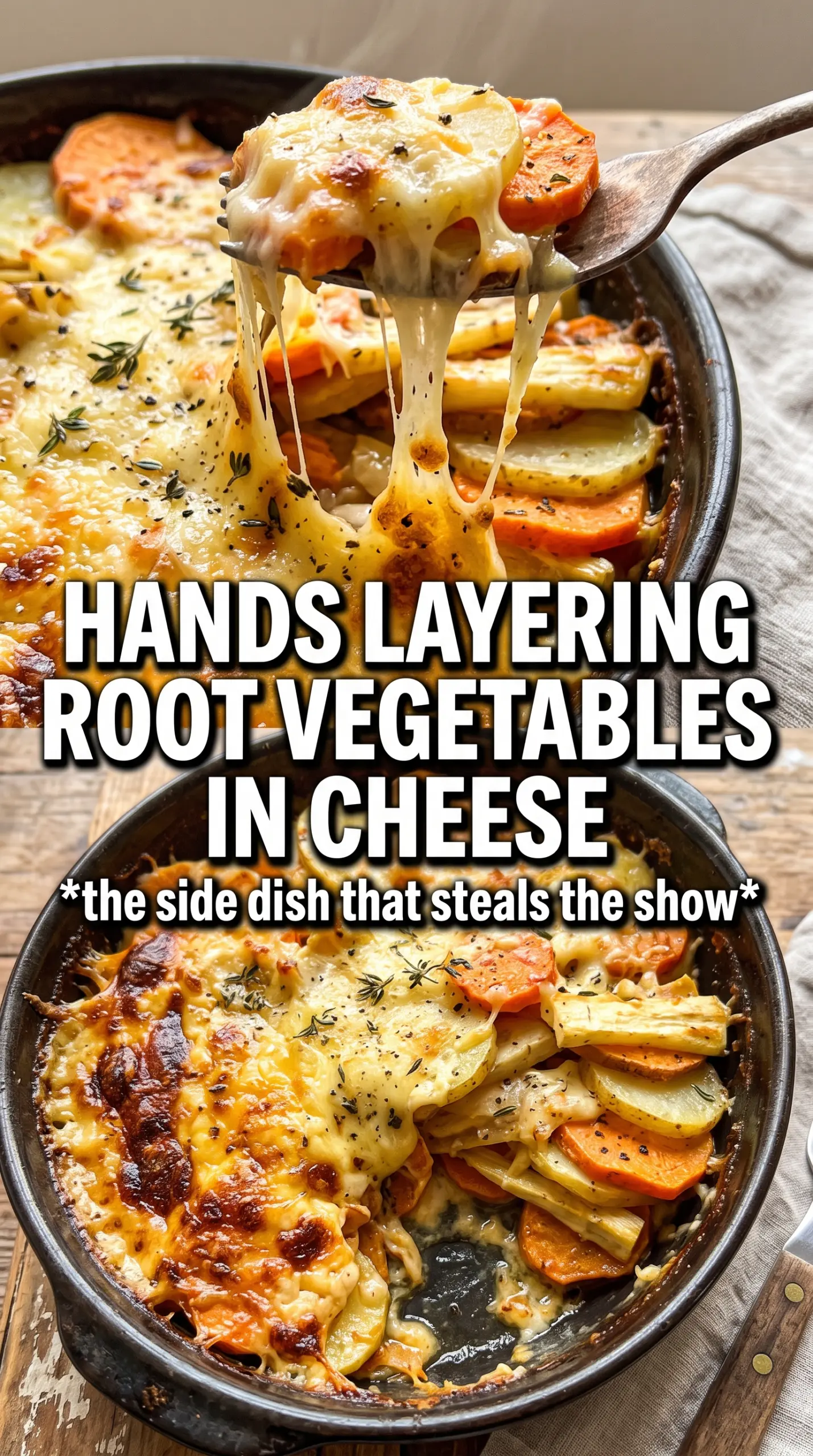
- Yukon gold potatoes give the gratin its creamy backbone. They hold their shape better than russets and turn silky instead of mealy.
- Parsnips, carrots, and turnip or celery root bring sweetness, earthiness, and a little bite. You need that mix or the dish can taste flat and one-dimensional.
- Heavy cream plus whole milk create a sauce that bakes into the vegetables instead of turning gluey. All cream works if you want it richer, but the milk keeps the texture from feeling heavy.
- Gruyère melts into a smooth, nutty layer that clings to the vegetables. If you swap it, choose another good melting cheese with some character, not a bland pre-shredded blend.
- Parmesan sharpens the top and helps it brown. Grate it fresh if you can; the fine stuff from a can won’t melt or brown the same way.
- Thyme and nutmeg keep the cream from tasting one-note. Nutmeg is easy to overdo, so a light hand is enough.
Building the Layers So the Center Cooks Through
Getting the Vegetables Ready
Peel and slice everything before you start layering. The slices should be thin enough to bend slightly but not so thin that they fall apart, and they need to be close to the same thickness or the gratin will bake unevenly. If you rush this part, the top burns while the middle stays stiff, which is the most common failure in a dish like this.
Whisking the Cream Base
Mix the cream, milk, garlic, thyme, nutmeg, salt, and pepper until the garlic is evenly distributed. The seasoning has to go into the liquid now so it can seep into every layer instead of sitting on top. Fresh garlic works best here because it mellows in the oven; powdered garlic can taste blunt and a little dusty in a cream sauce.
Stacking and Pressing
Layer the vegetables in slightly overlapping rows and press them down gently once the cream goes in. You want the liquid to move between the slices, not sit above them. If the vegetables float too much, the top dries out before the bottom has a chance to cook, so use the back of a spoon or your hand to settle them into the dish.
The Covered Bake and Final Browning
Bake covered until the vegetables are nearly tender, then uncover, add the cheeses, and finish until the top is deeply golden and bubbling at the edges. The cheese should melt into the cream rather than sit in a dry blanket, so don’t add it too early. If the top browns too fast, tent it loosely with foil for the last few minutes and let the heat finish the center.
Three Ways to Make This Gratin Work for Different Tables
Dairy-Free Version with a Silky Finish
Use full-fat unsweetened oat milk or cashew cream in place of the dairy, and swap in a good melting vegan cheese if you want a browned top. The gratin won’t have the same richness as the original, but the vegetables will still turn tender and layered instead of dry. Keep the seasoning bold, because plant-based creams need more help standing up to the starch.
Gluten-Free as Written
This gratin is naturally gluten-free as long as your cheese and seasonings are certified gluten-free. The texture comes from the potatoes and the reduced cream, not from any flour-based thickener, so nothing needs to be changed. That also means the result stays clean and creamy instead of pasty.
Make It a Little Lighter
Replace part of the heavy cream with more whole milk for a less rich sauce. The gratin will still bake up nicely, but the sauce will be a little looser and the top won’t taste quite as luxurious. This is the swap to use when the dish is part of a heavier meal and you want the vegetables to stay center stage.
Storage and Reheating
- Refrigerator: Store covered for up to 4 days. The cream will thicken and the vegetables will soften a bit more after chilling.
- Freezer: It freezes, but the texture gets softer after thawing. Freeze in portions, wrapped well, if you don’t mind a more rustic result.
- Reheating: Reheat covered at 325°F until hot in the center, then uncover for a few minutes to re-crisp the top. Microwave reheating works in a pinch, but it softens the cheese crust fast.
Answers to the Questions Worth Asking

Cheesy Root Vegetable Gratin
Ingredients
Equipment
Method
- Preheat the oven to 375F and butter a 9x13 baking dish generously.
- Whisk heavy cream, whole milk, garlic, fresh thyme, nutmeg, salt, and pepper until fully combined.
- Layer Yukon gold potatoes, parsnips, carrots, and turnip or celery root in the dish, alternating types in slightly overlapping rows.
- Pour the cream mixture over the vegetables and press down gently so the liquid settles between layers.
- Cover tightly with foil and bake 40 minutes at 375F.
- Uncover and scatter Gruyere cheese and parmesan over the top.
- Bake 20-25 more minutes at 375F until the vegetables are completely tender and the top is golden and bubbly.
- Rest the gratin 10 minutes before serving.