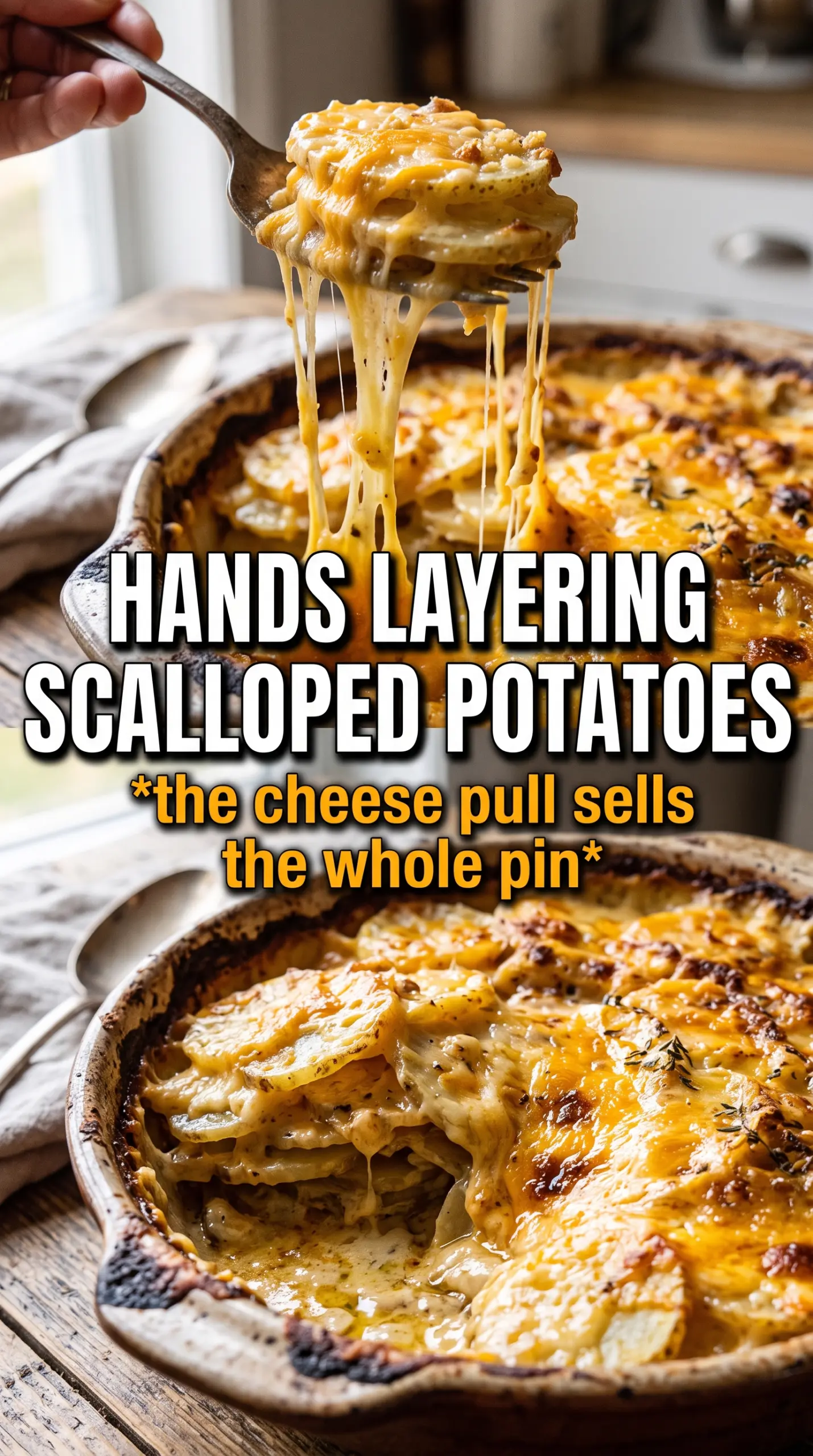
Cheesy scalloped potatoes bake into soft, layered slices wrapped in a rich cream sauce and finished with a bubbling, golden top that cracks just enough under the spoon. The best versions don’t turn watery or greasy; they come out velvety, cohesive, and deeply savory, with each potato layer tender but still distinct.
Yukon Gold potatoes are the right choice here because they hold their shape while soaking up the cream without turning mealy. Thin slicing matters more than almost anything else. If the slices are uneven, the thin ones collapse before the thicker ones are done. The Dijon and nutmeg don’t announce themselves, but they keep the sauce from tasting flat and give the cheese a little more depth.
Below, I’ve included the small details that keep the sauce smooth, the top browned instead of dry, and the layers tender all the way through. If you’ve ever pulled scalloped potatoes from the oven and found a loose sauce at the bottom, the timing notes here will help.
The sauce stayed creamy all the way through, and the potatoes were tender without falling apart. I used the full rest time, and the layers sliced cleanly instead of running everywhere.
Save these cheesy scalloped potatoes for the night you want a bubbling Gruyere-and-cheddar crust over tender cream-soaked layers.
The Difference Between Tender Layers and a Watery Dish
The biggest mistake with scalloped potatoes is rushing the bake and assuming the oven will solve everything. It won’t. Thin potato slices need enough time under foil to steam and soften before the cheese goes on, or you end up with browned edges and a firm center. The second mistake is using too much heat too early after the cheese is added. That’s how the dairy separates and the sauce turns loose instead of silky.
The foil phase matters because it traps moisture and lets the potatoes finish cooking in the cream. Once they’re nearly tender, the cheese can brown on top without overcooking the layers underneath. That’s the window where this dish turns from good to memorable.
- Uniform slicing is the difference between even cooking and patchy texture. A mandoline helps, but a sharp knife and steady hand work if the slices stay very thin.
- Pressing the potatoes down after adding the cream helps submerge the top layer so it softens instead of drying out.
- Resting after baking lets the sauce settle back into the layers. Cut too soon and it looks loose, even if it’s cooked perfectly.
What Each Ingredient Is Actually Doing in This Dish
- Yukon Gold potatoes hold their shape and give you a creamy bite without turning chalky. Russets work in a pinch, but they break down more and make the sauce feel starchier.
- Heavy cream and whole milk make the sauce rich without becoming gluey. All cream tastes heavier; all milk can feel thin. This mix lands in the middle.
- Gruyere gives nuttiness and a smooth melt. If you swap it, use another good melting cheese with some character, not pre-shredded blends that stay stubborn and dry.
- Sharp cheddar brings the stronger cheese note and helps the top brown. Mild cheddar disappears under the cream.
- Dijon, thyme, and nutmeg keep the dish from tasting one-note. They don’t overpower the potatoes; they sharpen the edges of the cream and cheese.
- Butter is there for the dish itself and for the top of the pan if you want a little extra richness where the potatoes meet the edges.
Building the Layers So the Center Cooks Before the Top Browns
Whisk the sauce first
Combine the cream, milk, garlic, Dijon, thyme, nutmeg, salt, and pepper before you start layering. That keeps the seasoning even from the bottom of the dish to the top. If you add the liquid piecemeal, the first layers taste bland and the last ones taste over-seasoned. The garlic should be minced fine enough that it softens in the oven instead of staying sharp.
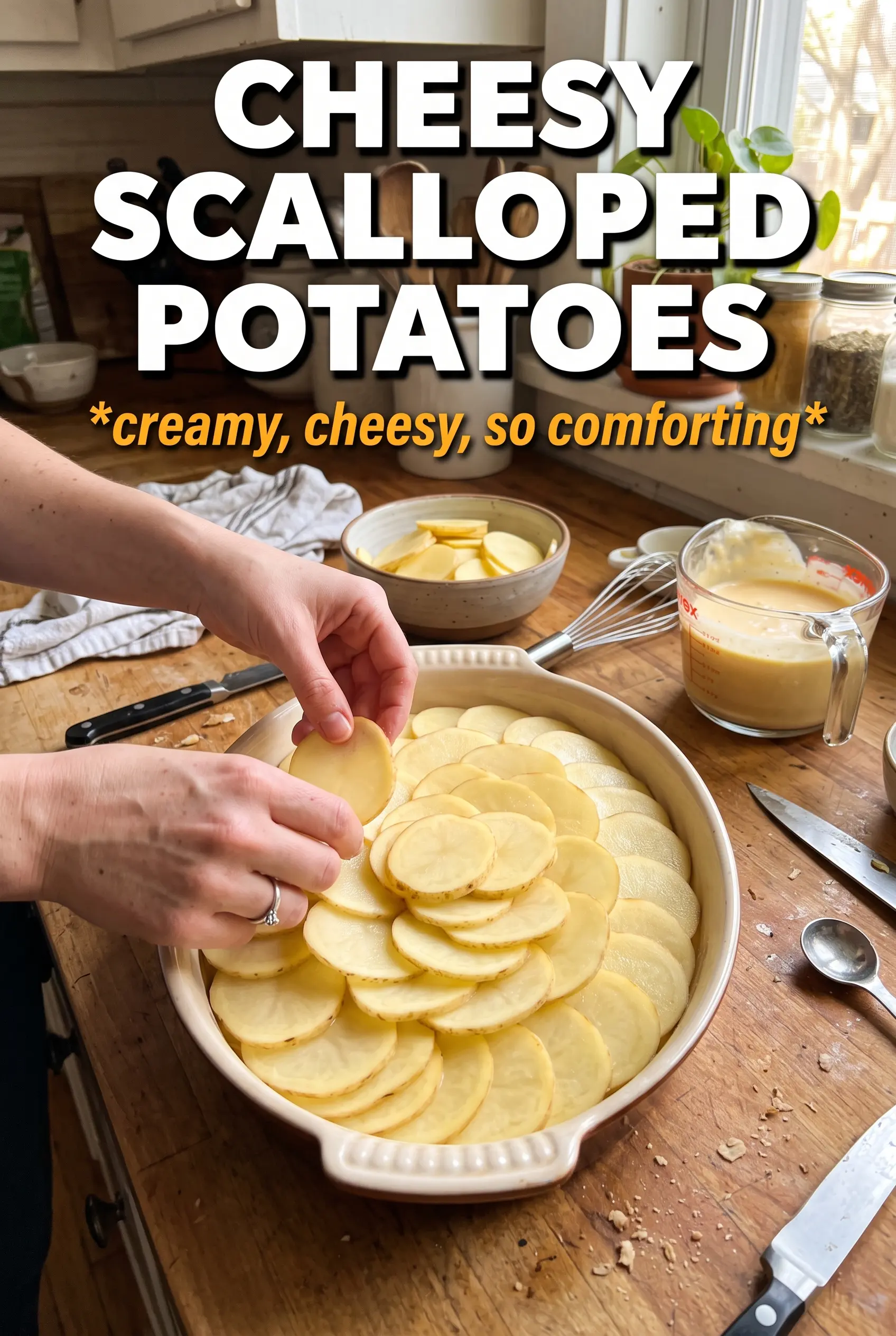
Overlap the potatoes like shingles
Set the slices in overlapping rows so the sauce can move around them and coat every layer. Don’t dump them in randomly. Tight, even layering helps the potatoes cook at the same rate and gives you clean slices later. Pour the cream mixture slowly so it works into the spaces instead of sitting only on top.
Cover tightly for the first bake
Foil traps steam and carries the potatoes through that first long stretch of cooking. If the foil is loose, the top dries before the center softens. After about 50 minutes, a knife should meet some resistance but not crunch. That’s your cue to uncover and add the cheese.
Finish with cheese and heat until bubbling
Scatter the Gruyere and cheddar evenly over the surface, then return the dish to the oven until the top is deeply golden and the sauce bubbles at the edges. If the cheese browns before the potatoes are tender, the oven is running hot; lower the rack a notch and keep going. The best finish is glossy and bubbling, not dry and crusty.
Make it lighter with half-and-half
You can swap the heavy cream and milk for half-and-half if you want a slightly lighter bake. The sauce won’t be quite as rich, and it may set a little looser, but it still works if you keep the baking dish tightly covered for the first stage.
Gluten-free by default
This recipe is naturally gluten-free as written, as long as your Dijon and cheeses are labeled safely if you’re cooking for someone sensitive. The texture doesn’t need flour to thicken because the potatoes release enough starch into the cream as they bake.
Swap in white cheddar or Fontina
If Gruyere is hard to find, white cheddar or Fontina are the closest practical swaps. White cheddar gives a sharper edge, while Fontina melts a little softer and silkier. Either one changes the personality of the dish, but neither breaks the method.
How to make it ahead
You can assemble the dish a few hours ahead and keep it covered in the fridge before baking. Let it sit at room temperature while the oven preheats so the center doesn’t start from stone cold. If it goes into the oven straight from the fridge, the middle takes longer and the top can overbrown before the potatoes finish.
Storage and Reheating
- Refrigerator: Store leftovers covered for up to 4 days. The sauce will thicken as it chills, which is normal.
- Freezer: It freezes, but the texture softens after thawing. Freeze in portions wrapped tightly, then thaw overnight in the refrigerator before reheating.
- Reheating: Reheat covered at 325F until hot in the center, then uncover for the last few minutes so the top comes back to life. The common mistake is blasting it in the microwave, which turns the potatoes rubbery and makes the sauce separate.
Answers to the Questions Worth Asking
Cheesy Scalloped Potatoes
Ingredients
Equipment
Method
- Preheat oven to 375°F and butter a 9x13 baking dish.
- Whisk heavy cream, whole milk, garlic, Dijon mustard, fresh thyme, nutmeg, salt, and pepper until smooth and combined.
- Layer Yukon gold potatoes in overlapping rows in the baking dish and pour the cream mixture over the top.
- Press the potatoes down to submerge them in the liquid, then cover tightly with foil.
- Bake for 50 minutes covered, until the potatoes have started to soften.
- Uncover and scatter Gruyere and sharp cheddar over the top for an even cheesy layer.
- Bake 18 to 22 more minutes, until the top is golden, bubbling, and the potatoes are completely tender.
- Rest the casserole for 10 minutes before serving to let the sauce thicken and the layers set.