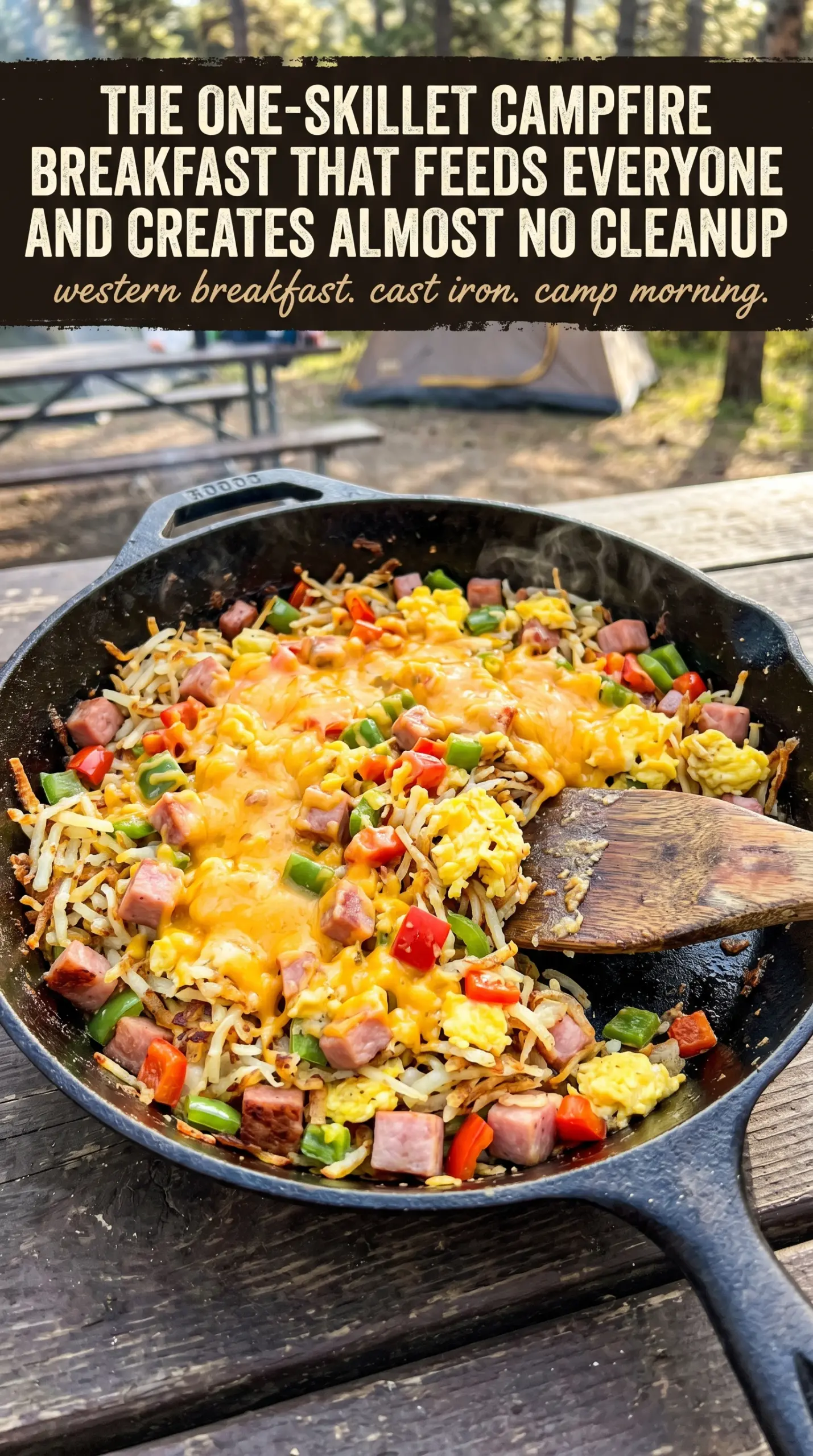
Golden hash browns, smoky ham, sweet peppers, and onions all tucked under melted cheddar and set with eggs make this the kind of skillet breakfast that disappears fast. The edges turn crisp, the middle stays tender, and every scoop gets a little bit of everything. It’s hearty enough for a campsite morning, but it works just as well on the stove when you want one pan to do all the work.
The key is giving the hash browns enough time to brown before anything else crowds the pan. If you rush that part, they steam and turn soft instead of building the crisp base that holds the whole skillet together. Adding the eggs at the end keeps the yolks where you want them, and covering the pan traps just enough heat to melt the cheese without drying out the ham.
Below, I’ve included the timing that matters most, a few smart swaps, and the one reheating trick that keeps the potatoes from turning gummy. If you’ve ever had a skillet breakfast go soggy on you, this version fixes that.
The hash browns got crisp underneath instead of mushy, and the eggs set up perfectly under the foil. We ate straight from the skillet and there wasn’t a bite left.
Save this cheesy western skillet with hash browns and ham for a one-pan breakfast that cooks up crisp, cheesy, and campfire-ready.
The Crisp Hash Brown Base Is Doing the Real Work
The biggest mistake with a skillet breakfast like this is moving too fast before the potatoes have a chance to brown. Frozen hash browns hold a lot of moisture, and if the pan is overcrowded or the heat is too low, they soften into a steamy layer instead of forming the crisp foundation this dish needs. Give them space, stir only occasionally, and let the edges sit long enough to pick up real color.
- Frozen hash browns — Thawed potatoes pick up color faster, but straight-from-frozen works if you give them enough time in the hot fat. Don’t add extra liquid; that only slows browning.
- Ham — Diced ham brings salt and smoke and doesn’t need much cooking. A leftover ham steak or holiday ham works well here, but skip a very wet deli-style ham because it softens the potatoes.
- Bell pepper and onion — These add sweetness and balance the cheese. Dice them small so they soften in the short cook time; big chunks stay too firm by the time the eggs are done.
- Cheddar cheese — Sharp cheddar gives the most punch. Pre-shredded is fine, but freshly shredded melts a little smoother if you have the time.
- Eggs — The wells keep the eggs from running all over the skillet. If you like firmer whites, cover the pan a minute or two longer; if you want softer yolks, pull it as soon as the whites turn opaque.
What Each Ingredient Is Actually Doing in Hash Brown Base
- Shredded potatoes (pressed very dry) — The drier the potatoes, the crispier the base. Squeeze them hard in a clean towel to remove every drop of liquid.
- Oil (generous amount to create crust) — The crust is created by oil hitting hot pan. Don’t skimp on oil or the base won’t crisps.
- Heat (medium-high, sustained) — The bottom needs to brown without burning. Keep the heat steady and don’t lower it partway through.
- Salt (helps draw remaining moisture and season) — Salt draws out any last liquid and seasons the crust. Apply early while cooking.
- Pressing and compacting (create a tight disk) — The shredded potatoes must be pressed together into one cohesive layer. Loose potatoes fry instead of forming a crust.
- Patience (let it cook until truly crispy) — Don’t flip too early. Wait until the bottom is deeply golden and sounds crispy when you tap it.
- The flip (done carefully, in one motion) — Slide the whole crispy disk onto a plate, then back into the pan for the other side. This keeps the crust intact.
- Second side (crisps faster than the first) — The second side cooks faster because the potatoes are already partially tender. Watch so it doesn’t burn.
Building the Skillet Without Steaming the Potatoes
Starting the Hash Browns
Heat the butter or oil in a large cast iron skillet until it shimmers, then add the hash browns in an even layer. The goal is steady sizzling, not aggressive frying, so adjust the heat if the bottom starts to scorch before the potatoes turn golden. Stir occasionally, but leave them alone long enough for contact with the pan to do the work. If they look pale and wet after several minutes, the pan is too crowded or not hot enough.
Cooking the Ham and Vegetables
Once the potatoes are lightly crisp and golden, add the ham, pepper, and onion. The vegetables should soften and lose their raw edge without going limp. If the onion is still crunchy when the eggs go in, dice it finer next time or give this stage an extra minute; the skillet finishes quickly, and this is your chance to build the flavor underneath everything else.
Setting the Eggs Under the Cheese
Make six wells with the back of a spoon and crack an egg into each one. Sprinkle the cheese over the top, then cover the skillet with a lid or tight foil. The cover traps heat so the whites set from the top while the bottom stays anchored in the potato mixture. If the eggs are setting too slowly, the heat is too low; if the cheese starts to brown before the whites are opaque, move the skillet farther from the fire or lower the burner.
Finishing and Serving Hot
Cook until the eggs are set where you like them, then season with salt and pepper right at the end. Ham and cheese already bring salt, so taste first if you can. Serve it straight from the skillet while the potatoes are still crisp around the edges. Once it sits too long, the steam softens the bottom, and that’s the one thing this dish can’t hide.
Three Smart Ways to Adapt This Campfire Breakfast
Make It Vegetarian
Skip the ham and add extra peppers, onions, or sautéed mushrooms. You’ll lose the smoky, salty bite from the ham, so add a little more seasoning and let the cheese carry more of the savory flavor.
Go Dairy-Free
Use oil instead of butter and leave off the cheese or use a dairy-free shred that melts well. The skillet still works, but the top won’t have the same creamy finish, so let the hash browns go a little deeper golden for more richness.
Turn It Into a Lighter Breakfast
Use six egg whites or a mix of whole eggs and whites, then cut the cheese back to 1 cup. You’ll still get the same skillet structure, but the top will be less rich and the eggs will set a little faster.
Storage and Reheating
- Refrigerator: Store leftovers in an airtight container for up to 3 days. The potatoes soften a bit, but the flavor holds up well.
- Freezer: This dish freezes, but the eggs and potatoes lose some texture. If you do freeze it, cool it completely first and wrap portions tightly before freezing for up to 1 month.
- Reheating: Reheat in a skillet over low to medium-low heat with a lid on top, or warm in the oven at 325°F until heated through. The common mistake is blasting it in the microwave, which makes the potatoes rubbery and the eggs tough.
Questions I Get Asked About This Recipe

Cheesy Western Skillet with Hash Browns and Ham
Ingredients
Equipment
Method
- Heat the butter in a large cast iron skillet over campfire. Cook until melted and shimmering, creating a hot surface for the hash browns.
- Add the hash browns and cook for 10 minutes, stirring occasionally, until golden. Keep the mixture spread in an even layer so the edges turn crisp.
- Add the diced ham, bell pepper, and onion, then cook for 5 minutes more. Stir occasionally until the vegetables soften and the ham warms through.
- Create 6 wells in the hash brown mixture and crack an egg into each well. Press lightly so the eggs sit in the hash browns instead of running out.
- Sprinkle the shredded cheddar cheese over everything and cover with a lid or foil. Cook for 8-10 minutes until the eggs are set to your desired doneness.
- Season with salt and pepper to taste. Serve directly from the skillet while the cheese is melted and the eggs are hot.