Golden chicken breasts tucked into a silky spinach cream sauce have a way of disappearing fast, and this Chicken Florentine earns that reaction every time. The chicken sears first, so you get a deep savory crust before it ever meets the sauce, and the finish stays light enough to spoon over pasta, rice, or a hunk of crusty bread without feeling heavy.
The part that makes this version work is the balance in the pan. White wine loosens the browned bits, cream and broth build the base without turning gluey, and Parmesan thickens the sauce just enough once the heat comes down. Lemon juice and zest cut through the richness, so the spinach tastes fresh instead of buried under cream.
Below, I’m walking through the part that matters most: how to keep the sauce smooth, how long to let it simmer, and what to do if your chicken breasts are thick on one end and thin on the other. Those small details are what make this feel like a restaurant-style dinner instead of a rushed skillet meal.
The sauce thickened up beautifully and stayed silky all the way through dinner. I served it over linguine and my husband said it tasted like something he’d order out.
Save this Chicken Florentine for the nights when you want a creamy skillet dinner with seared chicken, spinach, and lemon in one pan.
The Reason the Sauce Stays Silky Instead of Turning Grainy
The fastest way to ruin a cream sauce is to rush the dairy over heat that’s too high. Parmesan can clump, the cream can separate, and the whole pan starts looking broken instead of glossy. In this recipe, the garlic gets just enough time to bloom, the wine reduces before the cream goes in, and the heat stays at a simmer once the dairy is added.
That order matters. The wine lifts the browned bits from the pan and adds brightness, then the cream and broth reduce together until they coat a spoon. If the sauce looks thin at first, keep it moving and give it a couple more minutes before you judge it; it thickens as it cools slightly and the cheese melts in.
What Each Ingredient Is Doing in the Pan
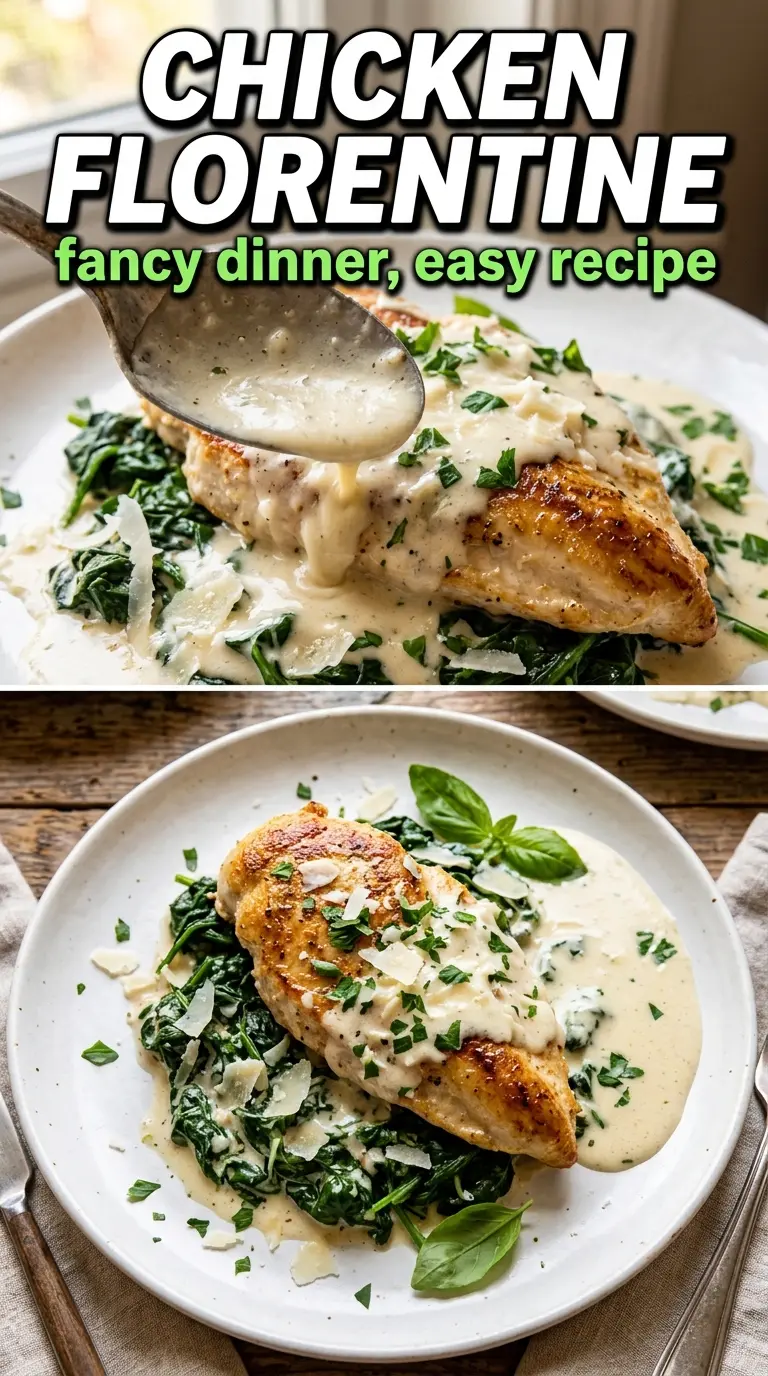
- Chicken breasts — Boneless, skinless breasts give you that classic restaurant-style presentation, but they need even thickness to cook cleanly. If one side is much thicker, pound it gently so the whole piece finishes at the same time and stays juicy.
- Dry white wine — This adds acidity and depth that broth alone can’t match. Use a wine you’d drink, not cooking wine, because the flavor concentrates as it simmers.
- Heavy cream — This is what gives the sauce its body and that pale, velvety finish. Half-and-half can work in a pinch, but it won’t reduce as richly and it’s more likely to break if you boil it.
- Parmesan — Freshly grated Parmesan melts smoothly and helps thicken the sauce. Pre-grated cheese often has anti-caking agents that make the sauce a little sandy.
- Baby spinach — Baby spinach wilts fast and disappears into the sauce without turning stringy. If you use mature spinach, remove the tough stems and expect a slightly more noticeable bite.
- Lemon juice and zest — These keep the sauce from tasting flat. The zest carries the bright aroma, while the juice sharpens the richness at the end.
How to Sear the Chicken Before the Sauce Ever Starts
Seasoning for a real crust
Pat the chicken dry before seasoning it. Moisture on the surface delays browning, and browning is what gives this dish its savory backbone. Season generously with salt, pepper, garlic powder, and Italian seasoning, then let the chicken sit for a minute or two so the spices cling instead of falling off in the pan.
Getting the first side deeply golden
Heat the olive oil until it shimmers, then lay the chicken in the skillet without crowding it. If the pan is packed, the chicken steams and you lose that golden crust. Leave it alone for the first few minutes; if it sticks, it’s not ready to turn yet, and forcing it early tears the surface.
Finishing without drying it out
Cook the chicken until the center reaches 165°F, then pull it out before you start the sauce. It will rest while the pan builds flavor, and that pause keeps it tender. If your breasts are thick, lower the heat a touch after the sear so the outside doesn’t overcook before the middle is done.
Building the sauce in the same pan
Use the same skillet and keep every browned bit in there. Garlic only needs about 30 seconds; once it smells fragrant, add the wine and scrape the bottom of the pan. Let it reduce before the cream goes in, because the concentrated wine flavor is what keeps the sauce from tasting one-note.
Finishing with spinach, cheese, and lemon
Once the cream and broth have thickened slightly, stir in the Parmesan off the hottest part of the burner if the pan is boiling hard. Then add the spinach and stir just until wilted. Finish with lemon juice and zest at the end so the sauce stays bright and the cheese doesn’t turn grainy from acid added too early.
Three Ways to Adjust This Without Losing the Dish
Make it dairy-free with coconut cream
Use full-fat coconut cream instead of heavy cream and skip the Parmesan, then add a little extra salt and a touch more lemon at the end. The sauce will still be rich, but it will taste less traditionally Italian and carry a subtle coconut note.
Turn it into a gluten-free dinner
The skillet itself is naturally gluten-free as written, so the main thing is what you serve underneath. Pair it with rice, mashed potatoes, or gluten-free pasta, and check that your broth is certified gluten-free if you’re cooking for someone with a sensitivity.
Use chicken thighs for a richer result
Boneless thighs bring more fat and stay juicy even if you cook them a minute longer than you meant to. They won’t have the same neat, lean look as breasts, but the sauce will taste deeper and the finished dish feels a little more forgiving.
Add mushrooms without watering down the sauce
Sauté sliced mushrooms after the chicken comes out and before the garlic goes in, and let them release their moisture fully. If you add them too late, they dump water into the cream sauce and keep it from thickening properly.
Storage and Reheating
- Refrigerator: Store leftovers in an airtight container for up to 3 days. The sauce will thicken in the fridge, and the spinach will soften a bit more.
- Freezer: Freezing isn’t ideal because cream sauces can separate after thawing. If you must freeze it, cool it completely first and thaw slowly in the refrigerator.
- Reheating: Warm it gently on the stove over low heat with a splash of broth or cream to loosen the sauce. High heat can make the dairy split and turn the chicken tough.
Questions I Get Asked About This Recipe
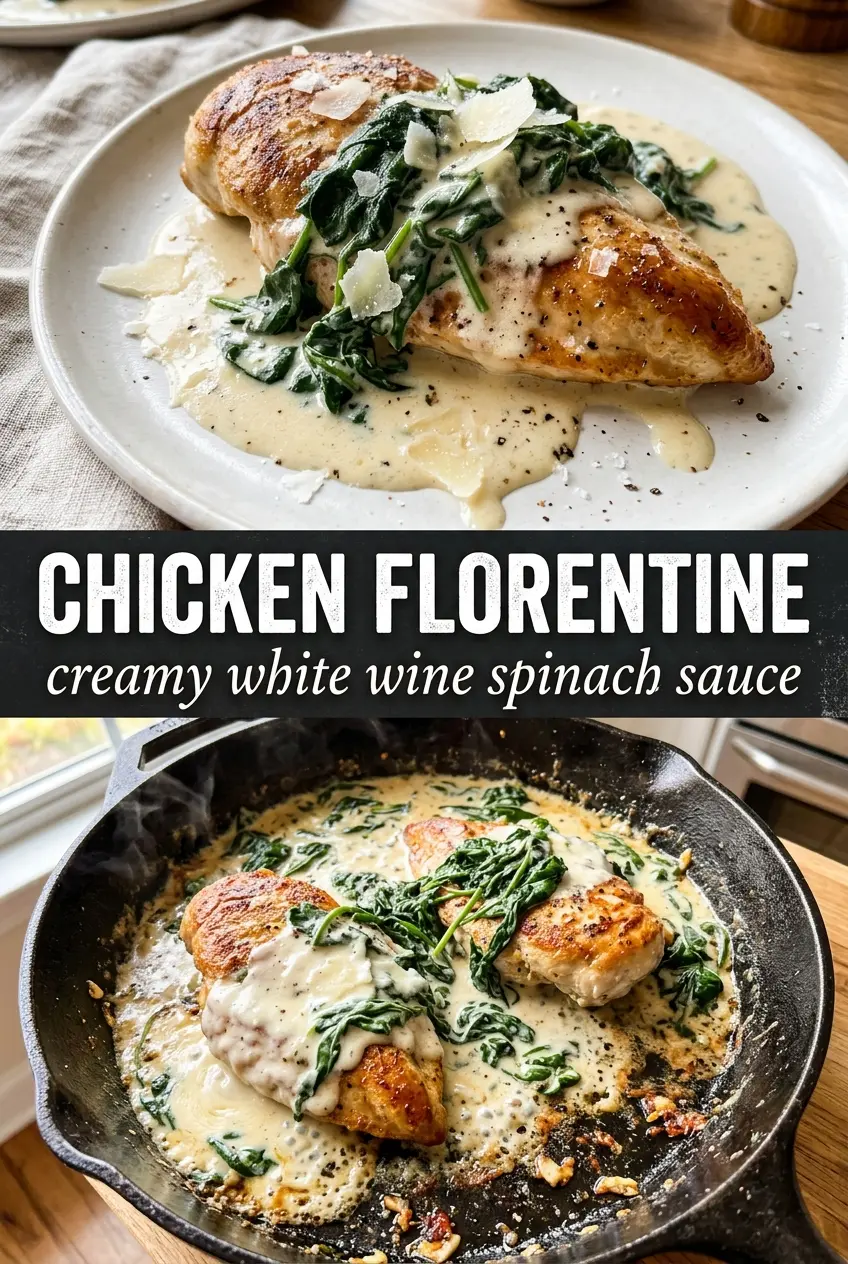
Chicken Florentine
Ingredients
Equipment
Method
- Season the chicken breasts generously on both sides with salt, pepper, garlic powder, and Italian seasoning. Rub in evenly so the flavor stays on the surface.
- Heat the olive oil in a large skillet over medium-high heat and sear the chicken until golden, 5-6 minutes per side. Cook to 165°F, then remove and set aside.
- Cook the garlic in the same pan for 30 seconds, stirring until fragrant. Prevent browning so it stays mellow.
- Add the dry white wine to deglaze the pan and simmer for 2 minutes. Scrape up any browned bits.
- Pour in the heavy cream and chicken broth, then simmer for 4-5 minutes until slightly thickened. Stir occasionally to keep the sauce smooth.
- Stir in the Parmesan, fresh lemon juice, and lemon zest until the sauce turns silky and cohesive. Let it warm through for 30-60 seconds while stirring.
- Add the baby spinach and stir until wilted, 1-2 minutes. Keep tossing until no bright green leaves remain.
- Return the chicken to the pan and spoon the sauce over each breast. Simmer gently just until reheated, about 1-2 minutes.
- Garnish with fresh parsley and lemon, then serve immediately over pasta or rice. Add the lemon last so it stays bright.