Golden, crisp-edged chicken cutlets with a bright lemon-butter-caper sauce have a way of disappearing fast, and this version earns that reaction every time. The chicken stays thin and tender, the pan sauce turns silky instead of thin and sharp, and the whole dish lands on the plate with just enough richness to keep the lemon from tasting one-note.
The trick is in the order. The chicken gets a light flour coating for color and a little body in the skillet, then the wine and broth pick up all those browned bits before the lemon and capers go in. That gives you a sauce with depth, not just acidity. The last swirl of cold butter off the heat is what makes the sauce glossy and spoonable instead of greasy or broken.
Below, I’ve broken down the part that matters most: how to keep the chicken crisp long enough to finish in the sauce, which ingredients can be swapped without losing the point of the dish, and what to do if you want to serve it with pasta or make it ahead.
The chicken stayed crisp under the sauce, and the lemon-caper pan sauce thickened up just enough to coat the cutlets without turning watery. I followed the timing exactly and it tasted like a restaurant dinner.
Like this chicken piccata? Save it for the nights when you want crisp cutlets and a bright lemon-caper pan sauce without a long ingredient list.
The Part That Keeps the Sauce Silky Instead of Flat
Chicken piccata looks simple, but it can go wrong in one very common way: the sauce turns thin and sharp while the chicken gets soggy. The fix is to build flavor in stages and keep the heat honest. First, you want good browning on the cutlets. Then you use the wine to lift the browned bits off the pan before adding the broth and lemon. That sequence gives the sauce body and depth before the acid shows up.
The other small thing that matters is the butter at the end. If you whisk it in over high heat, the sauce can separate or taste oily. Pull the skillet off the burner first, then swirl in the cold butter until the sauce goes glossy. That last step changes the texture from thin pan liquid to a proper sauce that clings to the chicken.
What Each Ingredient Is Actually Doing in This Dish
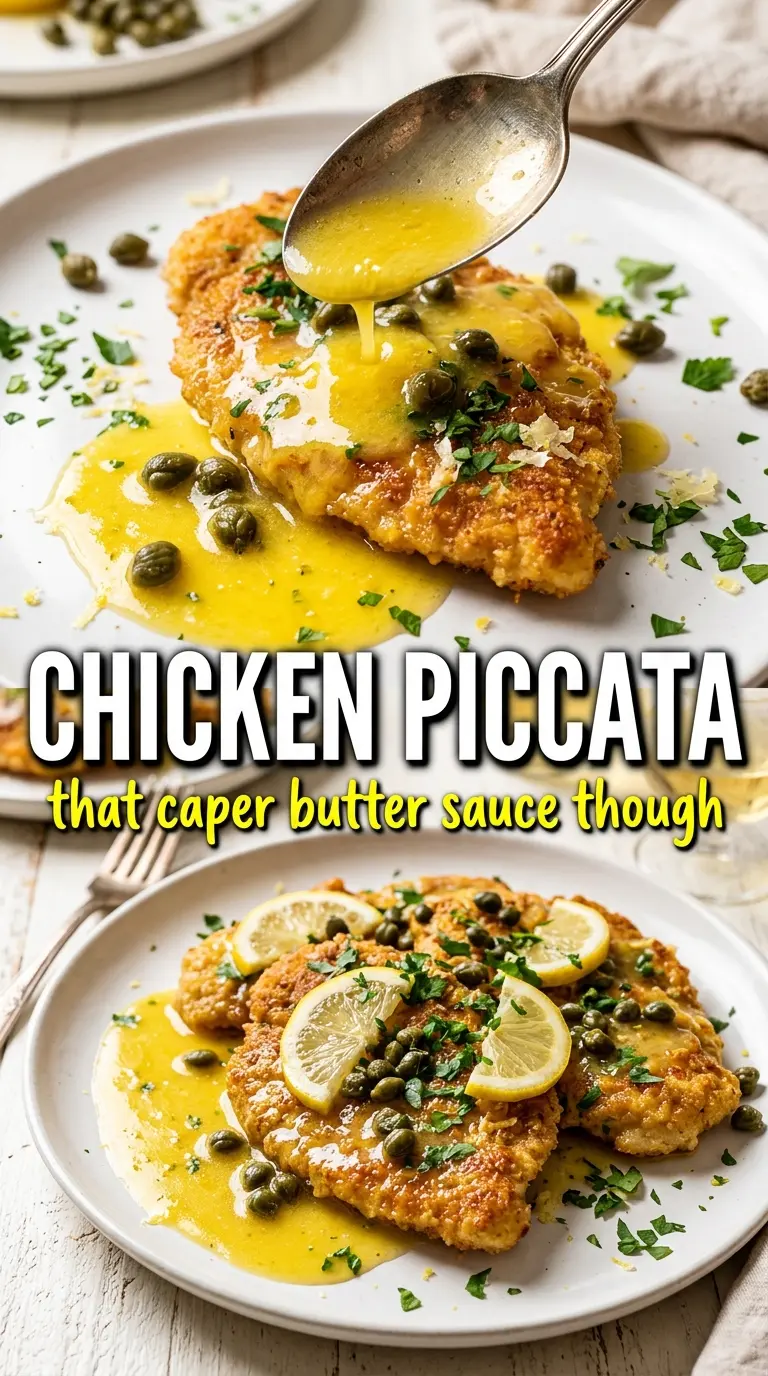
- Chicken breasts — Halving them into thin cutlets is what keeps the cooking fast and even. If the pieces are thick, the outside will overcook before the center is done.
- Flour — The light dredge does two jobs: it helps the chicken brown and it gives the sauce just enough starch to thicken slightly. Don’t skip shaking off the excess, or the pan will go past crisp and into gummy.
- Dry white wine — This adds depth and helps dissolve the browned bits stuck to the skillet. If you don’t cook off the wine for a couple of minutes, the sauce can taste harsh instead of bright.
- Lemon juice and capers — This is the signature of the dish. Fresh lemon gives the cleanest acidity, and capers bring that salty, briny punch that keeps the sauce from tasting one-dimensional.
- Cold butter — Use it at the end, off the heat. That’s what makes the sauce smooth and shiny instead of broken.
Getting the Cutlets Browned and the Sauce Finished in the Same Pan
Season and Dredge the Chicken
Season the cutlets with salt and pepper, then dredge them lightly in flour and tap off the extra. You want a thin dusting, not a heavy coating, because too much flour turns into a pasty crust in the skillet. If the chicken looks white and powdery, it’s too much. The surface should look just barely matte.
Brown the Chicken in Batches
Heat the olive oil and part of the butter until the fat shimmers, then lay the chicken in without crowding the pan. Crowding traps steam and kills the browning, which is the fastest way to lose the crisp edges piccata needs. Cook until the underside is a deep golden color and the cutlets release easily, then flip and finish the second side. If the chicken is sticking hard, it isn’t ready yet.
Build the Pan Sauce
Add the garlic for just about 30 seconds, long enough to smell it but not long enough for it to darken. Pour in the wine and scrape up every browned bit from the bottom of the skillet; that’s the base of the sauce. Let the wine bubble down so the raw alcohol smell fades, then add the broth, lemon juice, capers, and lemon slices. The sauce should reduce a little and look slightly more concentrated, not like a full skillet of thin liquid.
Finish With Butter and Return the Chicken
Take the skillet off the heat before you add the remaining butter. Swirl it until the sauce turns shiny and smooth, then return the chicken and spoon the sauce over the top. If the sauce seems too thin, let it sit for a minute or two with the chicken in the pan; the flour from the cutlets and the reduction will give it a little more body. Finish with parsley right before serving so the sauce still looks bright.
Three Ways to Put Your Own Spin on Chicken Piccata Without Losing the Point
Gluten-Free Piccata
Use a 1:1 gluten-free flour blend in place of the all-purpose flour. You’ll still get the light coating that helps the chicken brown and thickens the sauce a bit, but the crust may be a touch more delicate, so handle the cutlets gently when you flip them.
Dairy-Free Version
Swap the butter for a good olive oil or a plant-based butter that melts cleanly. You’ll lose a little of the sauce’s roundness, but the lemon and capers still carry the dish. Add the replacement fat off the heat at the end so the sauce stays smooth.
No-Wine Pan Sauce
If you don’t want to cook with wine, use an equal amount of chicken broth plus 1 teaspoon of extra lemon juice. The sauce will be a little less complex, but it still lifts the browned bits and gives you the bright, briny piccata character.
Make It with Veal or Thin Pork Cutlets
Piccata works beautifully with veal cutlets or very thin pork cutlets. Keep the same pan sauce, but watch the cook time closely since both proteins can dry out faster than chicken if the cutlets are too thick.
Storage and Reheating
- Refrigerator: Store leftovers in an airtight container for up to 3 days. The chicken will soften a bit in the sauce, but the flavor holds up well.
- Freezer: You can freeze it, but the sauce may separate slightly when thawed. For best texture, freeze the chicken and sauce together in a tightly sealed container for up to 2 months.
- Reheating: Warm gently in a skillet over low heat with a splash of broth or water. High heat will toughen the chicken and can break the sauce, so go slow and stop as soon as everything is heated through.
Answers to the Questions Worth Asking
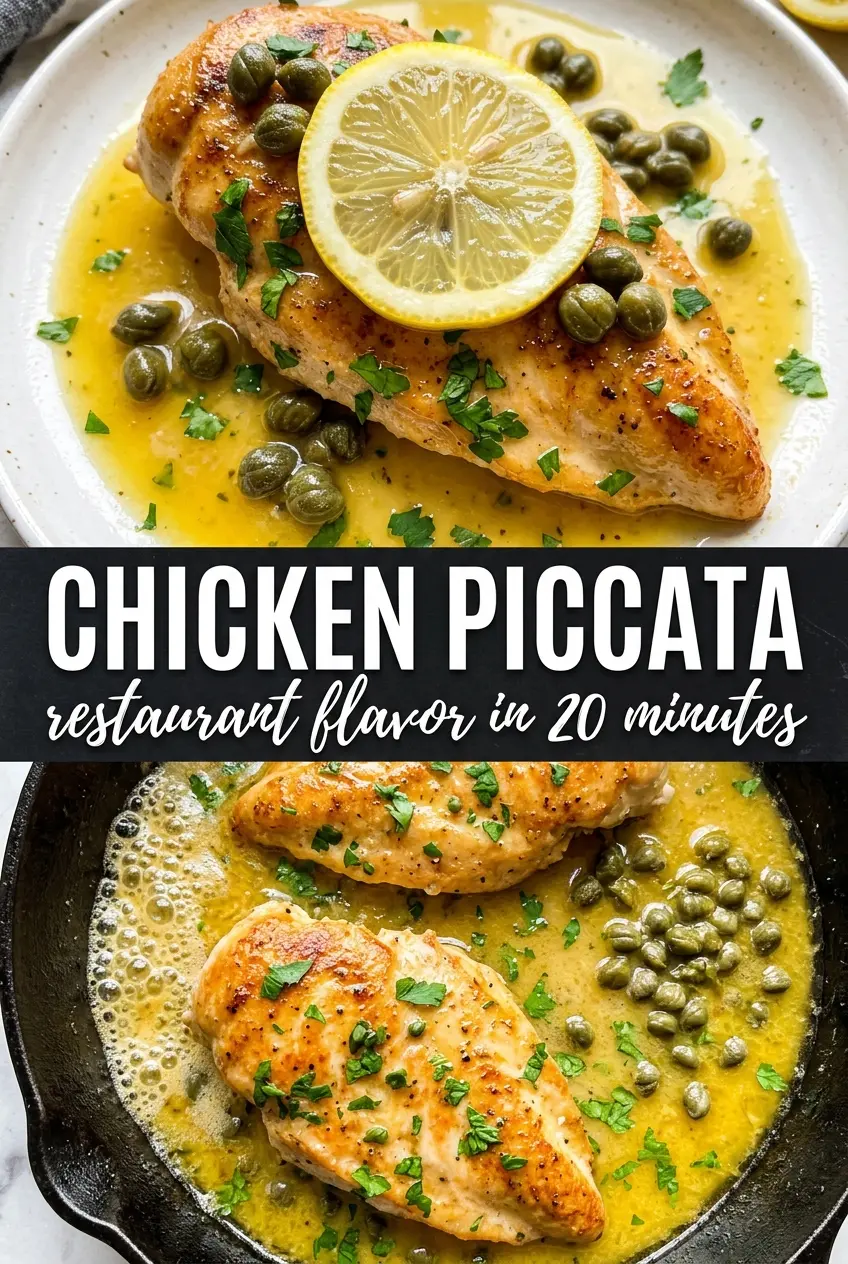
Chicken Piccata
Ingredients
Equipment
Method
- Season the thin chicken cutlets with salt and pepper and dredge lightly in all-purpose flour, shaking off excess.
- Set the chicken aside while you heat the skillet.
- Heat the olive oil and 2 tablespoons of butter in a large skillet over medium-high heat.
- Cook the chicken in batches for 3-4 minutes per side until golden and cooked through, then remove and set aside.
- Add the minced garlic and cook for 30 seconds.
- Pour in the dry white wine and scrape up the browned bits from the skillet.
- Simmer the wine for 2 minutes.
- Add the chicken broth, fresh lemon juice, capers, and lemon slices, then simmer for 4-5 minutes until the sauce reduces by about a third.
- Remove the skillet from the heat and swirl in the remaining 2 tablespoons of cold butter until the sauce looks glossy.
- Return the chicken to the skillet, spoon the lemon-caper sauce over the cutlets, and garnish with chopped fresh parsley.