Chicken pot pie orzo lands in that sweet spot between comforting and practical: creamy, savory, and full of the same cozy flavors you want from pot pie, but without rolling out a crust or waiting on a bake. The orzo cooks right in the sauce, so every spoonful comes out thickened and coated instead of watery or separate. It eats like a complete meal, with tender chicken, soft vegetables, and just enough herbiness to keep it tasting fresh.
What makes this version work is the order. The butter, flour, broth, and cream build a base that should look a little loose before the orzo goes in, because the pasta keeps absorbing liquid as it cooks. If you start too thick, the finished dish turns pasty instead of silky. I also like adding the chicken and peas at the end so the chicken stays juicy and the peas keep their color.
Below, I’ll walk through the part that matters most: getting the sauce to the right consistency before the orzo hits the pot. There’s also a simple storage note for making it ahead, because this is one of those dinners that reheats better when you treat it gently.
The sauce thickened beautifully and the orzo stayed creamy without turning mushy. I added leftover rotisserie chicken and my kids ate the peas without a complaint.
Love the creamy, pot-pie flavor in this chicken pot pie orzo? Save it to Pinterest for an easy one-pot dinner that feels like comfort food without the crust.
The Sauce Has to Look a Little Loose Before the Orzo Goes In
The biggest mistake with one-pot orzo is judging the sauce too early. Right after the broth and cream go in, it should look thinner than you expect, almost like it needs another ladle of liquid. That is exactly where it should be, because the orzo pulls in a lot of moisture as it cooks and the sauce tightens fast near the end.
If you wait until the pan already looks thick before adding the pasta, the finished dish turns stodgy instead of creamy. Keep the heat at a steady simmer, stir often enough to keep the orzo from catching on the bottom, and watch for the sauce to coat the spoon lightly while still moving in the pan. That’s the point where it tastes rich, not gluey.
- Butter — This gives you the base for the vegetables and carries the flour into a smooth roux. Olive oil works in a pinch, but it won’t give the same pot-pie flavor.
- Flour — This is what thickens the sauce enough to cling to the orzo. Cook it for a full minute so it loses the raw taste and blends cleanly with the liquid.
- Chicken broth — Use a broth you’d drink on its own if you can. A weak broth makes the whole dish taste flat, because this is the main savory backbone.
- Heavy cream — This adds body and gives the sauce that pot-pie richness. Half-and-half can work, but the sauce will be lighter and a little less plush.
- Shredded chicken — Rotisserie chicken is the easiest option and works well here because it’s already seasoned. Add it at the end so it stays tender instead of drying out in the simmer.
- Frozen peas — Don’t thaw them first. Toss them in straight from the freezer so they stay bright and don’t turn dull and soft.
What Each Ingredient Is Actually Doing in This Recipe

- Primary ingredient (the star) — Quality matters most. Choose the best you can find.
- Cooking medium (oil, butter, or broth) — This carries flavors and prevents dryness.
- Seasonings (salt, pepper, spices, herbs) — Layer flavors so nothing overpowers. Build depth gradually.
- Aromatics (garlic, onion, herbs) — Cook with fat to bloom flavors. Become the foundation.
- Supporting ingredients — Complement the main ingredient without overpowering it.
- Sauce or liquid (if applicable) — Brings flavors together. Balance richness with acid.
- Acid (lemon, vinegar, wine, or other) — Brightens and prevents flat-tasting results.
- Final finish (garnish, glaze, or sauce) — Prevents one-dimensional taste and adds visual appeal.
The 20 Minutes That Build the Whole Pot
Softening the Vegetables
Melt the butter in a large pot, then cook the onion, carrots, and celery until the onion turns translucent and the carrots just start to soften. You want the vegetables tender enough to eat through, not browned, because this dish is going for pot pie comfort rather than deep caramelization. If the pot starts to dry out, lower the heat instead of pushing the vegetables harder; burnt butter will show up in every bite.
Making the Roux and Base
Stir in the garlic, thyme, and garlic powder, then whisk in the flour and cook it for about a minute. The mixture should look pasty and smell a little nutty, not raw and dusty. Gradually add the broth and cream while whisking so the flour dissolves smoothly; dumping the liquid in all at once can leave you with little flour lumps that never fully disappear.
Cooking the Orzo in the Sauce
Add the uncooked orzo and keep the pot at a gentle simmer, stirring often so the pasta doesn’t stick to the bottom. The liquid will thicken as the orzo cooks, and the pot may look a little crowded before it loosens back into a creamy sauce. If the pan starts looking dry before the pasta is tender, add a splash of broth or water; don’t wait until it scorches.
Finishing Without Overcooking
Stir in the chicken and peas during the last few minutes, just long enough to warm the chicken through and cook the peas. The chicken should stay juicy, and the peas should look bright green against the creamy sauce. Taste at the end and season with salt and pepper after the sauce has finished reducing, because seasoning too early can make the final dish taste too salty once the liquid concentrates.
How to Adapt Chicken Pot Pie Orzo Without Losing the Comfort Factor
Dairy-Free Version
Use olive oil instead of butter and swap the cream for full-fat canned coconut milk or an unsweetened dairy-free creamer. Coconut milk adds richness, but it brings a faint flavor of its own, so keep the thyme and garlic balanced and taste at the end before serving.
Gluten-Free Swap
Use a gluten-free orzo-style pasta and replace the flour with a gluten-free all-purpose blend or a cornstarch slurry added at the end. The sauce won’t behave exactly the same as a classic roux, so keep the heat gentle and add the thickener gradually until the texture turns creamy, not gummy.
Using Leftover Turkey
Leftover turkey works the same way as chicken and is an easy post-holiday swap. Since turkey can taste a little leaner, an extra splash of cream or a small knob of butter at the end helps round out the sauce.
Adding More Vegetables
Mushrooms, corn, or diced potato all fit here, but they need different timing. Mushrooms should go in with the carrots and celery so they cook down; potatoes need to be cut very small and simmered longer, or they’ll stay firm when the orzo is done.
Storage and Reheating
- Refrigerator: Store for up to 4 days. The orzo will keep absorbing sauce, so expect it to thicken as it sits.
- Freezer: It freezes, but the texture softens after thawing. For the best result, freeze in portions and accept that the pasta won’t be quite as firm when reheated.
- Reheating: Warm it slowly on the stovetop or in the microwave with a splash of broth or cream. The common mistake is blasting it on high heat, which tightens the sauce and makes the chicken dry.
Answers to the Questions Worth Asking
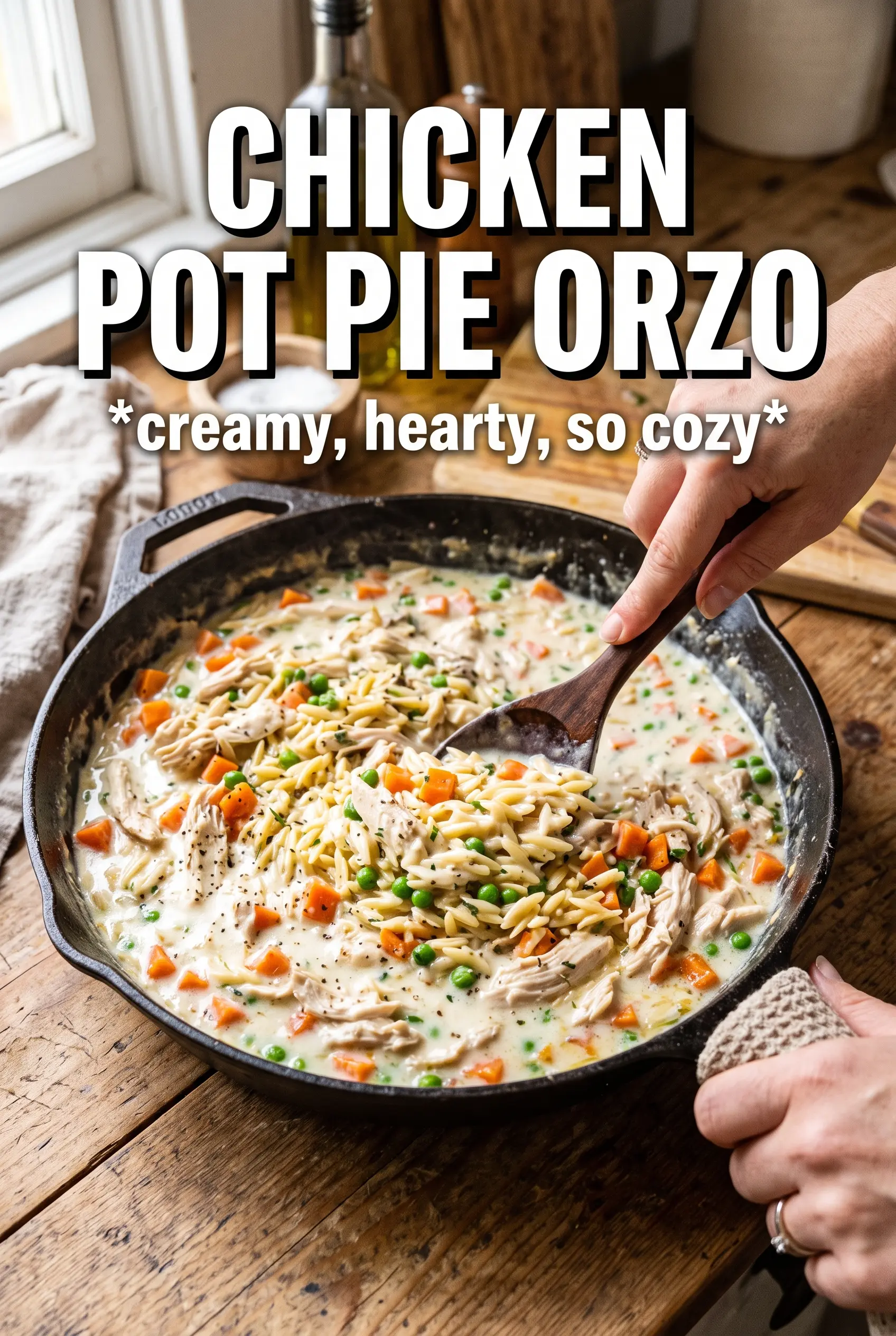
Chicken Pot Pie Orzo
Ingredients
Equipment
Method
- Melt the butter in a large pot over medium heat, then sauté the onion, carrots, and celery for 5 minutes until softened and glossy.
- Add the garlic, fresh thyme, and garlic powder, then whisk in the flour and cook for 1 minute until lightly toasted and fragrant.
- Gradually add the chicken broth and heavy cream, whisking as you pour, then bring the mixture to a simmer.
- Add the uncooked orzo and cook for 10-12 minutes, stirring frequently, until al dente.
- Stir in the shredded chicken and frozen peas, then cook for 3 minutes until hot throughout.
- Season with salt and pepper to taste, then top with fresh parsley as a finishing visual cue.