Golden chicken over silky buttered noodles hits the table with the kind of comfort that never lasts long. The noodles are glossy instead of greasy, the garlic stays mellow and fragrant, and the Parmesan melts into the butter just enough to coat every strand without turning the sauce heavy. It’s the sort of dinner that feels simple in the best way: a few smart steps, a hot skillet, and a bowl that’s gone before the pan cools down.
What makes this version work is the sequence. The chicken sears first, then the same skillet builds the noodle sauce, so the butter picks up all the good browned flavor left behind. A splash of pasta water helps the butter cling to the noodles instead of pooling at the bottom of the bowl, and the Parmesan goes in at the end so it softens into the sauce instead of clumping.
You’ll find the small details that keep this dish from tasting flat or split, plus a few swaps for when you want to turn it into a creamier pasta or stretch it to feed more people.
The chicken stayed juicy and the noodles soaked up the garlic butter without getting greasy. I added a little pasta water like you suggested and the sauce clung to everything perfectly.
Save these chicken with buttered noodles for the nights when you want glossy garlic butter noodles and tender chicken in one skillet.
The Mistake That Makes Buttered Noodles Taste Flat
Buttered noodles can go dull fast if the pasta gets drained too dry and then sits in plain butter with nothing to help it emulsify. The fix is the pasta water. That little bit of starch gives the butter something to grab onto, so the noodles turn glossy and coated instead of slick and separated.
The other place this recipe can stumble is the chicken. If the pan is crowded or the heat is too low, the meat steams instead of browning, and you lose the flavor that carries the whole dish. Give the chicken space, let it finish in a deep golden crust, and rest it before slicing so the juices stay in the meat instead of running onto the board.
What the Garlic, Butter, and Parmesan Each Do Here
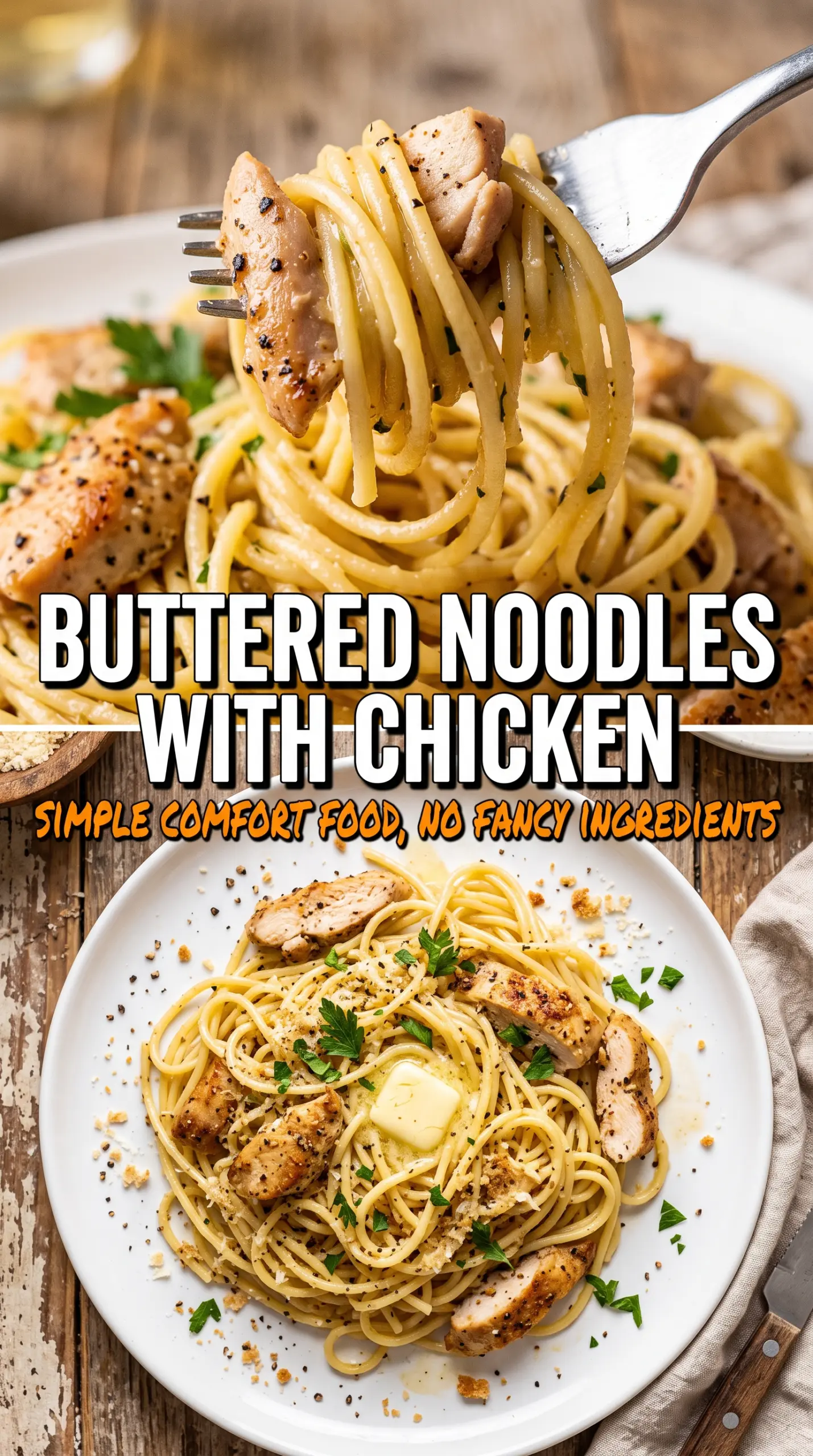
- Egg noodles — Their soft, springy texture is what makes this dish feel comforting. Regular pasta works in a pinch, but egg noodles hold onto butter and Parmesan a little better, which is why the sauce feels more connected.
- Butter — This is the base of the sauce, so use the good stuff if you can. Salted or unsalted both work; just adjust the final seasoning at the end so the dish doesn’t drift salty once the cheese goes in.
- Garlic — Fresh minced garlic matters here because it perfumes the butter fast and gives the noodles their main savory note. Jarred garlic can taste sharper and a little muted, so use it only if that’s what you have.
- Parmesan — Grated Parmesan melts into the butter and gives the sauce body. Pre-shredded cheese can be a little stubborn because of anti-caking agents, so grate it fresh if you want the smoothest finish.
- Pasta water — Don’t skip the reserved water. A few spoonfuls loosen the noodles just enough to help the butter and cheese cling instead of slipping off.
Building the Sauce in the Same Skillet
Getting the Chicken Golden First
Season the chicken well before it hits the pan. You want a hot, lightly shimmering layer of oil and enough space around each piece for the surface to brown instead of steam. After 5 to 6 minutes per side, the chicken should release easily and have a deep golden crust; if it sticks, it probably needs another minute. Rest it before slicing so the juices settle back into the meat.
Turning the Pan Drippings Into Garlic Butter
Once the chicken comes out, keep the skillet on the stove and lower the heat to medium. Melt the butter in the same pan, then add the garlic and red pepper flakes just until fragrant, not browned. If the garlic starts to toast hard, it turns bitter fast, and that’s the one thing that can throw off an otherwise simple dish.
Coating the Noodles So They Stay Glossy
Add the cooked egg noodles straight into the butter mixture and toss until every strand looks shiny. If the noodles seem dry or clump together, add pasta water a splash at a time and toss again. The sauce should look loose in the pan at first; it tightens as it coats the noodles, so don’t wait for it to seem thick before you stop adding water.
Finishing With Chicken and Parmesan
Season the noodles with salt and pepper, then fold in the parsley right at the end so it stays bright. Plate the noodles first, top with sliced chicken, and shower Parmesan over everything while the dish is still hot. That last hit of cheese softens into the butter and gives you the best texture on the plate.
How to Adapt This for Bigger Appetites, Different Diets, and Leftovers
Make It Dairy-Free
Swap the butter for a good dairy-free butter alternative and leave off the Parmesan, or use a dairy-free hard cheese if you like that savory finish. The sauce will be a little less rich and less creamy-looking, but the garlic and chicken still carry the dish well.
Use Chicken Thighs Instead
Boneless skinless thighs give you a juicier, slightly richer result and are more forgiving if you cook them a minute too long. They may need an extra minute or two in the pan, but the flavor works beautifully with the garlic butter.
Add Veggies Without Weighing It Down
Stir in thawed peas, sautéed mushrooms, or quick-cooked spinach after the garlic butter is made. Keep the add-ins modest so the noodles still stay coated in butter instead of turning into a crowded skillet.
Storage and Reheating
- Refrigerator: Store leftovers in an airtight container for up to 3 days. The noodles will soak up some of the butter as they sit.
- Freezer: You can freeze it, but the noodles soften a bit after thawing. Freeze in portions for up to 2 months if you don’t mind a softer texture.
- Reheating: Warm gently in a skillet over low heat with a splash of water or broth to loosen the sauce. The common mistake is blasting it on high heat, which dries out the chicken and makes the butter separate.
Answers to the Questions Worth Asking
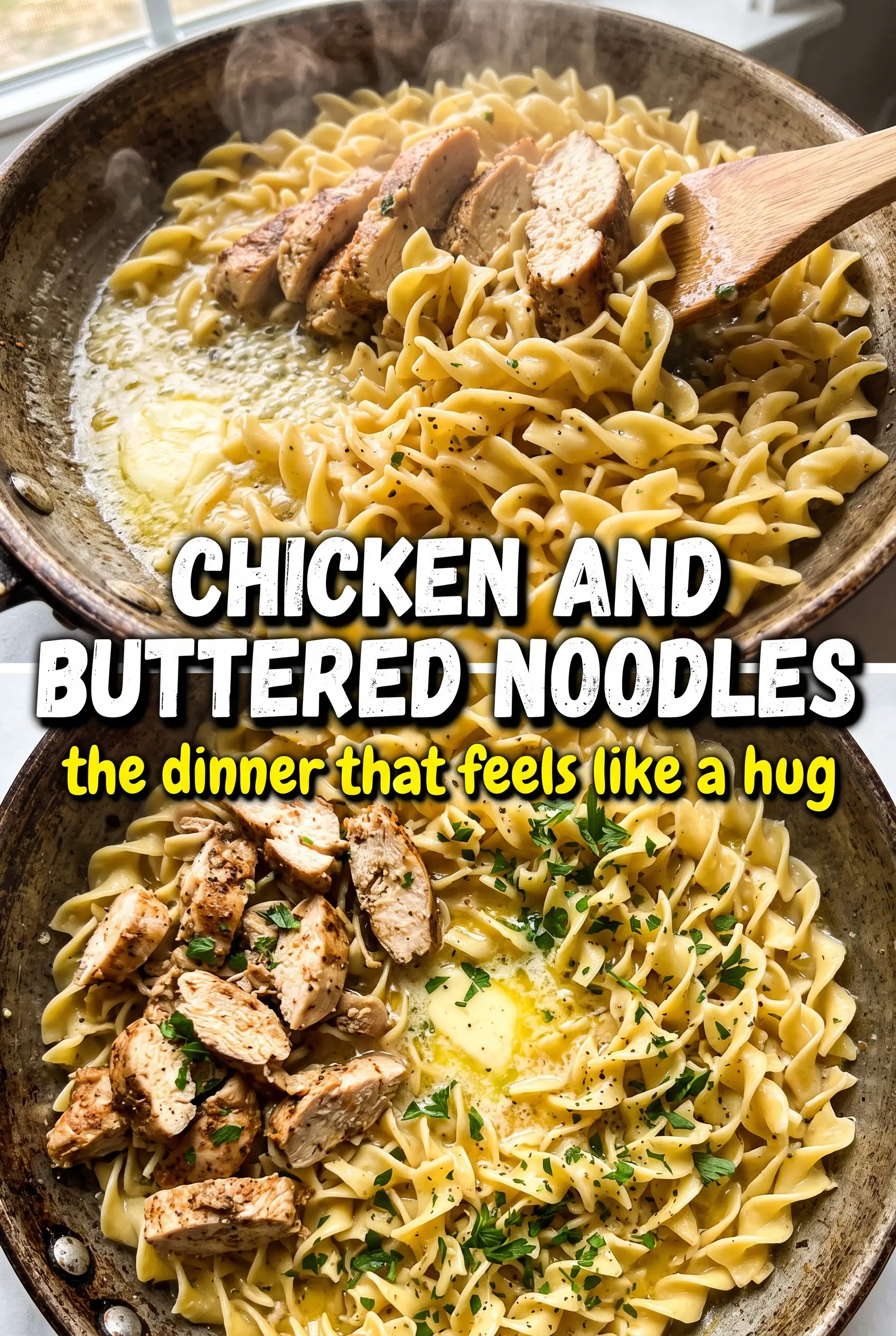
Chicken with Buttered Noodles
Ingredients
Equipment
Method
- Season the chicken breasts with salt, pepper, garlic powder, and Italian seasoning to taste, then sear in the olive oil over medium-high heat for 5-6 minutes per side until golden and the internal temperature reaches 165°F. Transfer to a plate, rest briefly, and slice for topping.
- Melt the butter in the same skillet over medium heat, then add the minced garlic and red pepper flakes and cook for 1-2 minutes until fragrant. Stir to prevent browning.
- Add the cooked egg noodles to the garlic butter and toss to coat, adding the reserved pasta water as needed for a glossy sauce. Keep tossing until the noodles look evenly slick.
- Season with salt and pepper to taste, then stir in the chopped fresh parsley. Toss just until the parsley turns bright green.
- Divide the noodles among plates and top with the sliced chicken. Scatter the Parmesan generously over the top and serve immediately.