Moist, warmly spiced, and topped with a crackly cinnamon sugar crust, cinnamon applesauce bread is the kind of loaf that disappears slice by slice before it ever makes it to the end of the week. The applesauce keeps the crumb tender without making it heavy, and the top bakes up golden with just enough crunch to contrast the soft center. It tastes like something that belongs next to a hot mug of coffee, but it’s simple enough to pull together on an ordinary morning.
The trick is balancing that extra moisture from the applesauce with enough structure from the flour and eggs. Sour cream or Greek yogurt adds richness and helps the loaf stay plush instead of gummy, while the baking soda gives it the lift it needs. I also like the cinnamon sugar topping because it bakes into a thin, crisp layer that gives each slice a little texture right away.
Below, I’ve included the small details that matter most: how to keep the loaf from sinking in the center, what the batter should look like before it goes into the pan, and a few easy swaps if you want to adjust the spice or dairy.
The loaf came out incredibly moist and the cinnamon sugar top had just enough crunch. I baked it for the full 60 minutes and the center was set perfectly with no gummy streaks.
Save this cinnamon applesauce bread for the mornings when you want a moist loaf with a crackly cinnamon sugar top and no fussy steps.
The Part That Keeps Applesauce Bread from Turning Heavy
Applesauce bread can go wrong when the batter turns too wet and the structure never catches up in the oven. The fix is in the balance: enough flour to support the loaf, enough fat to keep it tender, and enough acidity and lift to help it rise instead of puddling in the center. When the batter is mixed correctly, it should look thick and spoonable, not pourable like cake batter.
The other place people lose the texture is overmixing after the flour goes in. Once the dry ingredients are added, stir just until the streaks disappear. If you beat it smooth at that point, the gluten tightens up and the bread bakes up tougher than it should. A few small lumps are fine. They usually disappear in the oven.
What Each Ingredient Is Actually Doing in This Loaf
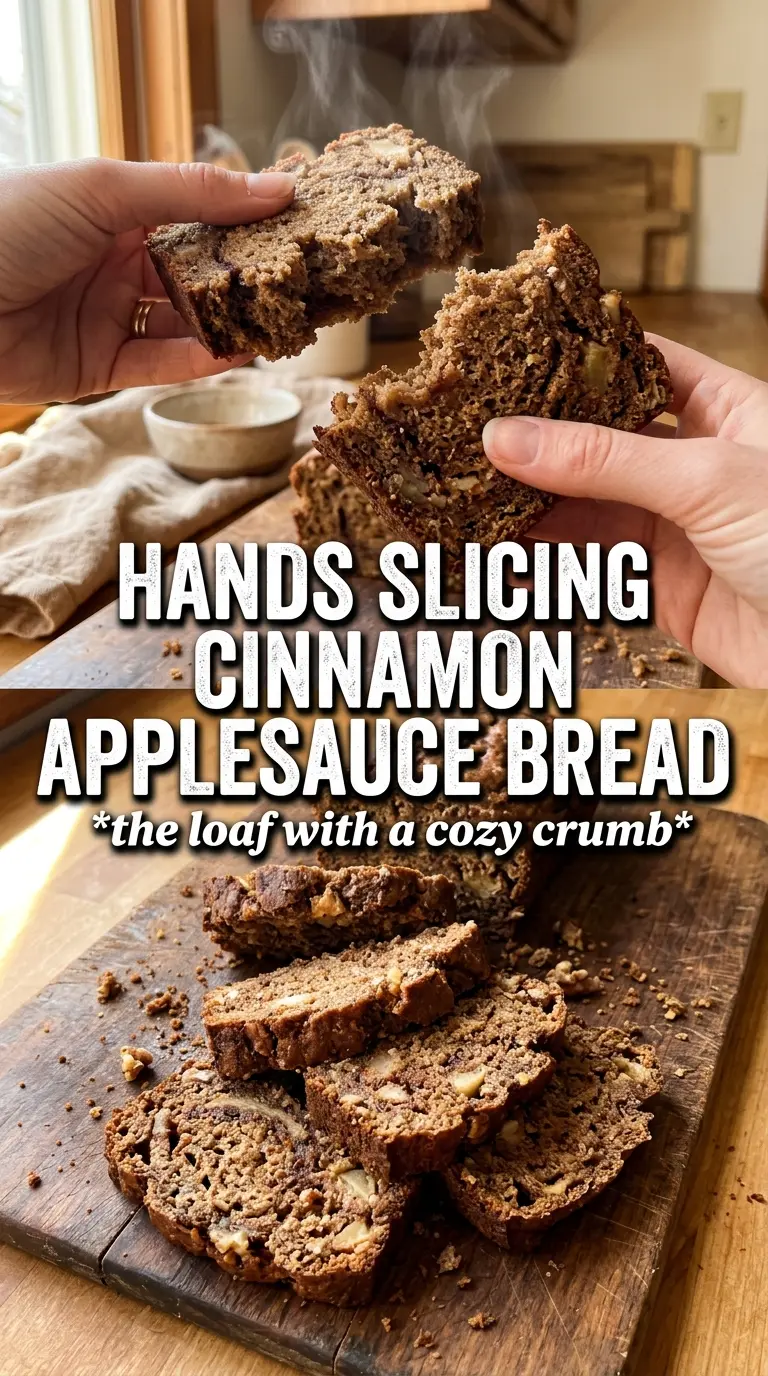
- Unsweetened applesauce — This is the moisture source and the flavor backbone. Unsweetened applesauce keeps the loaf from becoming cloying, and it lets the cinnamon and brown sugar shine. Sweetened applesauce works in a pinch, but the bread will taste softer and sweeter, so reduce the brown sugar a bit if you use it.
- Brown sugar — Brown sugar gives the loaf that deep, warm sweetness and helps it stay moist for days. Packed light brown sugar is fine here; dark brown sugar will push the flavor a little richer and more molasses-like.
- Sour cream or Greek yogurt — Either one adds richness and protects the crumb from drying out. Full-fat versions give the best texture, but plain Greek yogurt works cleanly if that’s what you have. Thin, watery yogurt is the one swap that can throw off the batter.
- Cinnamon, nutmeg, and allspice — Cinnamon leads, but the smaller spices matter because they round out the loaf instead of making it taste flat. Fresh spices make a noticeable difference here, especially if your nutmeg has been sitting in the cabinet for years.
- Butter — Butter gives the bread a softer, more rounded flavor than oil alone. It needs to be softened, not melted, so it can cream with the sugar and trap air for lift.
How to Mix the Batter So the Center Bakes Through
Creaming the Butter and Sugar
Beat the softened butter and brown sugar until the mixture looks pale and fluffy, not dense and gritty. That step matters because it adds air that helps the loaf rise. If the butter is too cold, the mixture stays clumpy and the bread bakes up tight. If the butter is melted, you lose that structure before the loaf even hits the oven.
Bringing in the Wet Ingredients
Add the eggs one at a time, then stir in the vanilla, applesauce, and sour cream or yogurt. The batter may look a little loose or slightly curdled at this stage, and that’s fine. The key is to get everything evenly combined before the flour goes in. If you dump in the applesauce too quickly, it can break the butter mixture and leave streaks that don’t bake out cleanly.
Finishing Without Overmixing
Fold in the dry ingredients just until you stop seeing flour. The batter should be thick and glossy, with a few small lumps still visible. Scrape the bowl well so there aren’t pockets of dry flour hiding at the bottom, but don’t keep stirring once everything is incorporated. Overmixed batter is the fastest way to get a tough loaf.
Baking Until the Crumb Sets
Pour the batter into the prepared pan and scatter the cinnamon sugar over the top before baking. The loaf is done when the top is deeply golden, the center springs back lightly, and a toothpick comes out clean or with just a few moist crumbs. If the top is browning too fast before the middle sets, tent it loosely with foil for the last 10 to 15 minutes. Let it cool in the pan for 15 minutes so it firms up enough to release without tearing.
Ways to Adjust It Without Losing the Good Texture
Dairy-Free Version
Use dairy-free butter and swap the sour cream for an unsweetened dairy-free yogurt with some body. The loaf will still bake up moist, but the flavor will be a little less rich than the original. Choose a yogurt that isn’t runny, or the batter can thin out too much.
Gluten-Free Adjustment
A cup-for-cup gluten-free flour blend can work here, but use one that includes xanthan gum. The loaf may bake a little more delicately, so let it cool completely before slicing or it can crumble. The flavor stays the same, but the crumb is usually a touch more tender.
Extra Cinnamon Swirl Finish
For a stronger cinnamon hit, swirl a spoonful of the cinnamon sugar mixture through the top third of the batter before baking. Don’t overdo it, or the loaf can separate as it rises. A light swirl gives you ribbons of spice without weighing down the crumb.
Storage and Reheating
- Refrigerator: Store tightly wrapped for up to 5 days. The loaf stays moist, but the cinnamon sugar top softens a bit after the first day.
- Freezer: This bread freezes well. Wrap the cooled loaf or individual slices tightly, then freeze for up to 3 months. Thaw at room temperature while still wrapped so condensation doesn’t make the crust soggy.
- Reheating: Warm slices in a toaster oven or microwave for a few seconds just until the crumb loosens. Too much heat dries out the edges fast, especially with a loaf this tender.
Questions I Get Asked About This Recipe
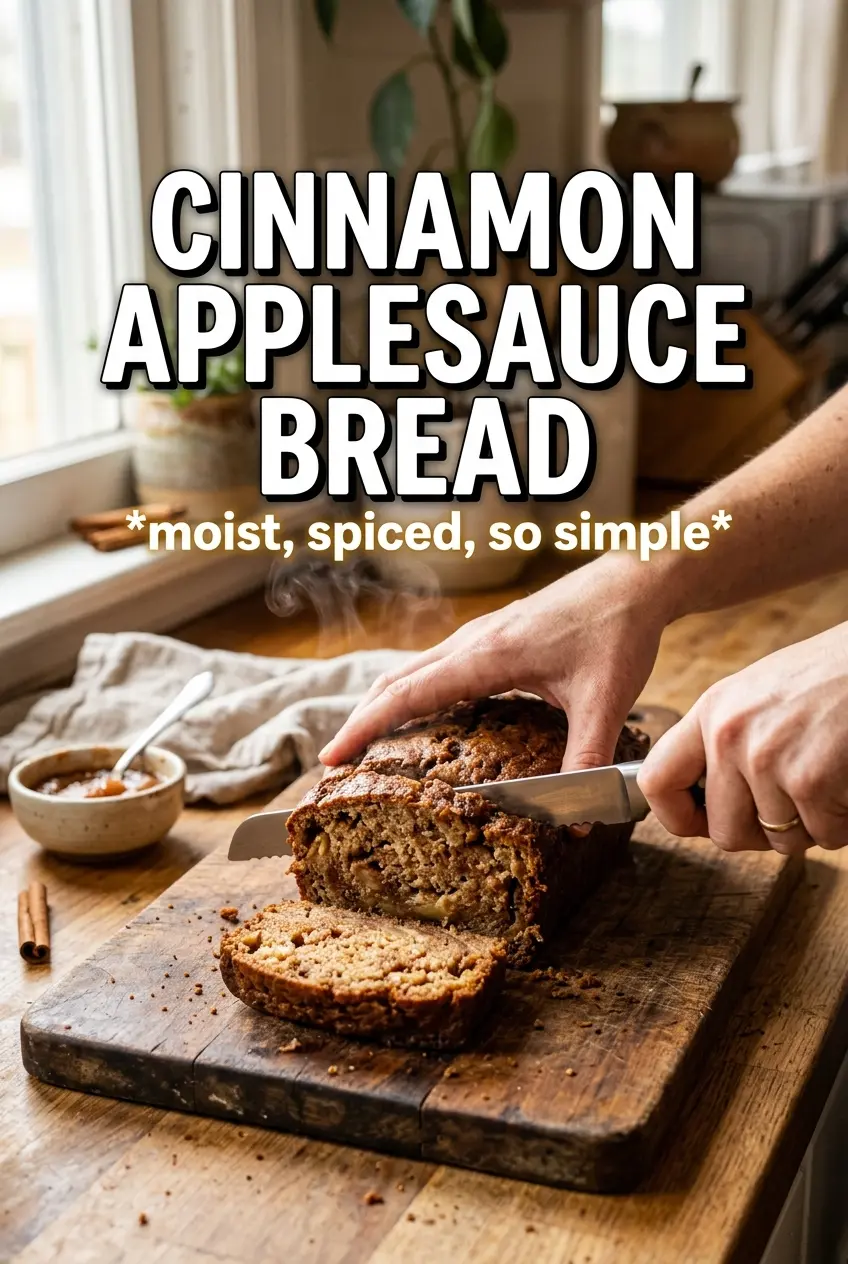
Cinnamon Applesauce Bread
Ingredients
Equipment
Method
- Preheat the oven to 350F and grease a 9x5 loaf pan so the loaf releases cleanly.
- Whisk all-purpose flour, baking soda, cinnamon, nutmeg, allspice, and salt in a bowl until the spices are evenly distributed.
- Beat the softened unsalted butter and packed brown sugar until fluffy, then add the eggs and vanilla extract and beat again until smooth.
- Stir in the unsweetened applesauce and sour cream or Greek yogurt, then fold in the flour mixture just until no dry streaks remain.
- Pour the batter into the prepared pan and sprinkle the sugar and cinnamon topping over the top.
- Bake for 55-65 minutes, until a toothpick comes out clean and the top is deeply golden with a domed surface.
- Cool in the pan for 15 minutes before turning out so the loaf sets.
- Cool completely before slicing to keep the crumb moist and prevent crumbling.