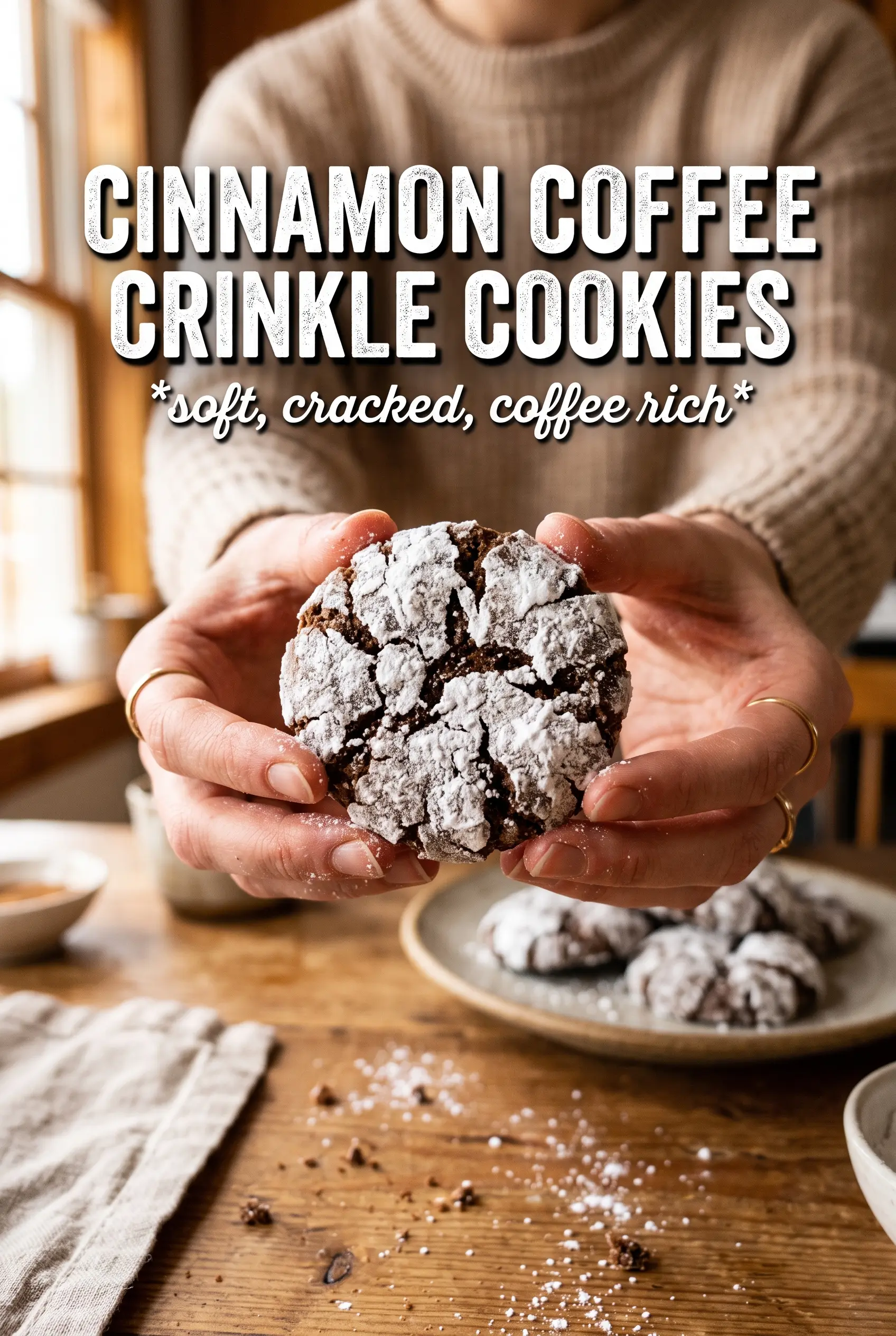
Cinnamon coffee crinkle cookies bake up with a soft, brownie-like center, a crackled powdered sugar shell, and a warm coffee note that keeps the sweetness from going flat. The cinnamon shows up in the background at first, then lingers after each bite, which is exactly why these disappear fast from the cooling rack.
The melted butter gives the dough a dense, fudgy texture instead of a light cakey one, and the espresso powder does more than add coffee flavor — it deepens the chocolate-like richness you get from brown sugar and cinnamon together. Chilling the dough matters here. Without that hour in the fridge, the cookies spread too quickly and the crinkles stay shallow instead of splitting into those dramatic cracks.
Below you’ll find the small details that make these cookies work: how to keep the coating thick and snowy, why the espresso should be cooled, and what to do if your dough feels too sticky to roll cleanly.
The cookies cracked beautifully in the oven, and the powdered sugar stayed thick instead of melting into the tops. That espresso-cinnamon combination tastes like a bakery cookie, not just a spice cookie.
Love these cinnamon coffee crinkle cookies? Save them to Pinterest for the days you want a crackly, espresso-kissed cookie with bakery-style looks.
The Chill Time That Makes the Crinkles Pop
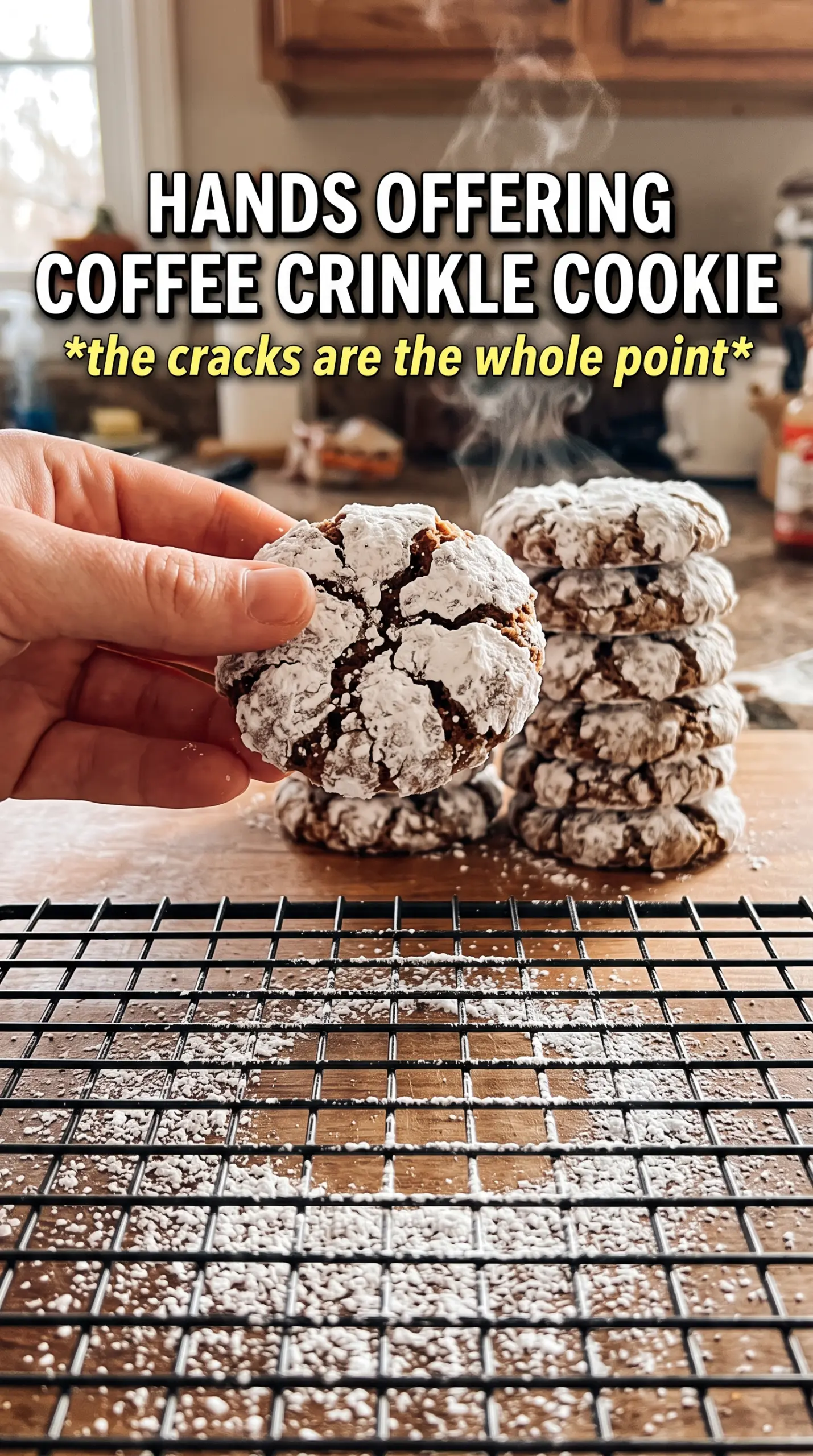
These cookies look dramatic because the dough is sticky, rich, and chilled before baking. That combination is doing the heavy lifting. The cold dough holds its shape long enough for the outside to set before the center is fully done, which is what creates those deep splits under the powdered sugar instead of a smooth, flat top.
If you skip the chill, the butter softens too fast in the oven and the cookies spread before the surface can crack. The result is thinner cookies with a dusty coating instead of thick, craggy crinkles. This is one of those recipes where the rest period is not optional.
- Espresso powder — This gives the cookies their coffee edge without adding extra liquid. Instant espresso powder works best because it dissolves cleanly and tastes deeper than brewed coffee alone.
- Melted butter — Melted butter makes the dough denser and chewier. Softened butter would whip in too much air and give you a lighter cookie with less of that fudgy center.
- Brown sugar — This brings moisture and a little chew. If you use all granulated sugar, the cookies lose that soft middle and taste flatter.
- Cinnamon in the coating — A little cinnamon mixed into the powdered sugar keeps the outside from tasting one-note. It also makes the cracks look more interesting when the darker dough peeks through.
What Each Ingredient Is Actually Doing in the Dough
- All-purpose flour — The amount here is tuned for a dough that can be scooped after chilling but still bakes up tender. Too much flour makes the cookies dry and dull; too little leaves them too loose to crinkle well.
- Freshly brewed espresso or strong coffee — Use it cooled so it doesn’t melt the butter or scramble the eggs. Brewed coffee softens the coffee flavor a touch, while espresso gives a sharper finish.
- Granulated sugar + powdered sugar coating — Rolling in granulated sugar first helps the powdered sugar cling in a thick layer instead of dissolving into the dough. That two-step coating is the reason the cookies stay snowy after baking.
- Eggs — They bind the dough and help it set in the oven. Room-temperature eggs mix in more smoothly, but if yours are cold, just whisk them well into the sugar mixture so the batter doesn’t look broken.
From Sticky Dough to Crinkled Tops
Mix the Dry Ingredients First
Whisk the flour, espresso powder, cinnamon, baking powder, and salt together until the color looks even. This keeps the espresso and cinnamon from clumping in one bite and gives the baking powder a fair shot at distributing through the dough. If you rush this part, the cookies can bake with uneven spice streaks.
Build the Thick, Sticky Dough
Whisk the melted butter with both sugars until the mixture looks glossy and evenly combined, then add the eggs, cooled espresso, and vanilla. Fold in the dry ingredients just until no flour patches remain. The dough will be sticky and soft, and that’s correct; if it feels pourable, the butter was too warm or the flour was undermeasured.
Chill Before You Scoop
Cover the bowl and refrigerate the dough for a full hour. Chilling firms the fat so the cookies don’t spread before the tops set, and it also makes the dough manageable enough to roll. If the dough still feels too soft after chilling, give it 15 more minutes instead of adding extra flour, which can make the cookies heavy.
Coat for the Crinkle
Preheat the oven to 350°F and line the pans with parchment. Mix the cinnamon into the powdered sugar coating, then scoop the dough into 1 1/2-tablespoon balls and roll each one first in granulated sugar, then generously in the powdered sugar mixture. Don’t be shy with the coating; a thin dusting melts into the surface and won’t give you the same dramatic contrast.
Bake Until the Edges Set
Bake for 10 to 12 minutes, just until the edges are set and the centers still look slightly soft and puffed. The cookies finish setting as they cool on the pan, and that carryover heat is what keeps them tender. If you wait until they look fully done in the oven, they’ll come out dry instead of chewy.
How to Adapt These Cookies for Different Kitchens
Dairy-Free Version
Use a plant-based butter stick that’s meant for baking, not a tub spread. The texture stays close, but the cookies may spread a touch more, so keep the dough well chilled and watch the first tray closely.
Decaf Coffee Flavor
If you want the coffee note without the caffeine, use decaf espresso powder and decaf brewed coffee. The flavor stays full and warm, which matters here because the coffee is there to deepen the cinnamon rather than shout over it.
Gluten-Free Swap
A 1:1 gluten-free baking flour can work here, but choose one that includes xanthan gum. The cookies may bake a little more delicately, so let them cool on the sheet for several minutes before moving them.
Storage and Reheating
- Refrigerator: Store in an airtight container for up to 5 days. The powdered sugar coating softens a bit, but the cookies stay chewy.
- Freezer: Freeze baked cookies for up to 2 months, or freeze the rolled dough balls before baking. If freezing dough, coat them in the sugars first, then bake straight from frozen with 1 to 2 extra minutes.
- Reheating: Warm baked cookies for 8 to 10 seconds in the microwave just until the center loosens. Heat longer and the powdered sugar coating will melt into the surface.
Questions I Get Asked About This Recipe
Cinnamon Coffee Crinkle Cookies
Ingredients
Equipment
Method
- Whisk all-purpose flour, espresso powder, cinnamon, baking powder, and salt until evenly combined.
- Whisk melted unsalted butter and both sugars together, then whisk in eggs, espresso, and vanilla extract until smooth.
- Fold the flour mixture into the wet ingredients until a sticky dough forms.
- Refrigerate the dough for 1 hour to firm it for easier rolling and better crinkle.
- Preheat the oven to 350F and line sheet pan(s) with parchment paper.
- Mix cinnamon into the powdered sugar coating.
- Scoop dough into 1-1/2 tablespoon balls, then roll each ball first in granulated sugar and generously in the powdered sugar-cinnamon mixture.
- Bake for 10-12 minutes at 350F until the cookies look crinkled and the edges are set; do not overbake.