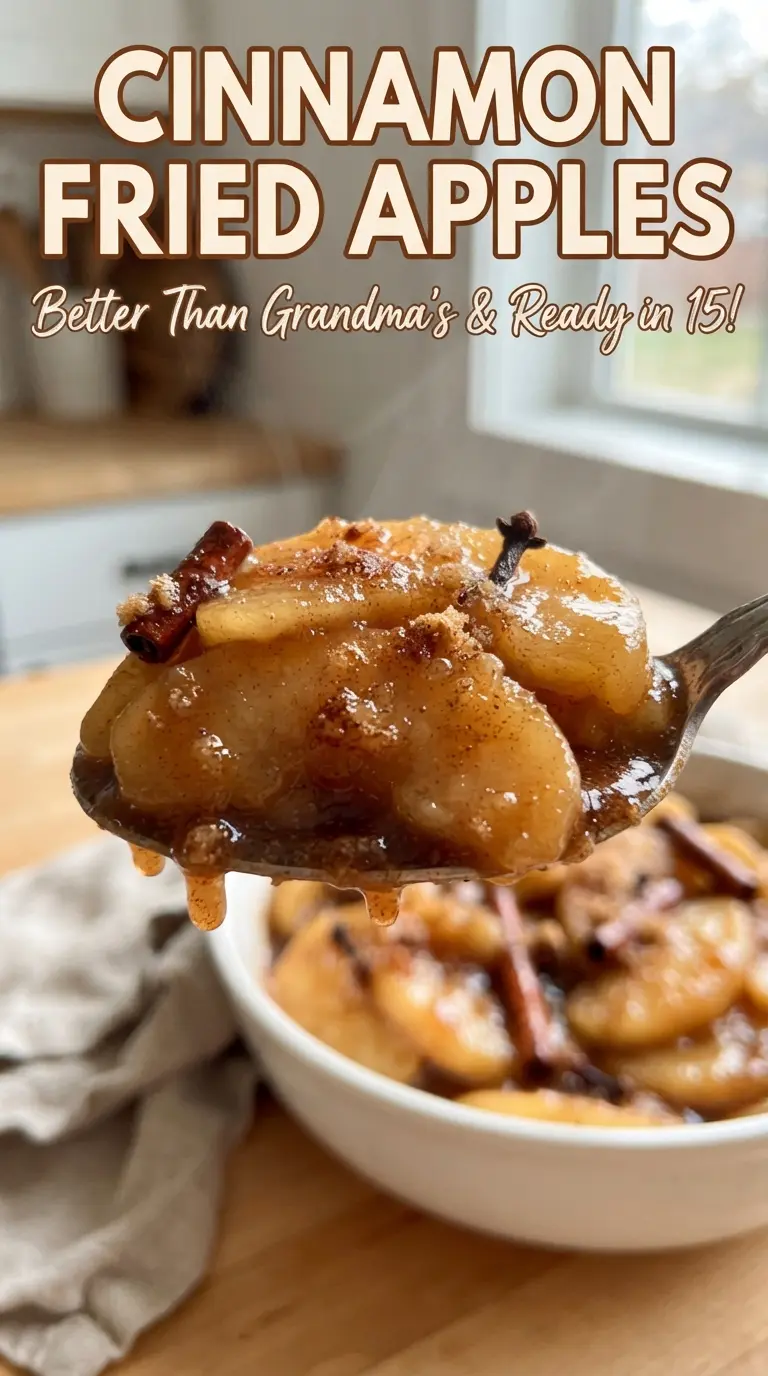
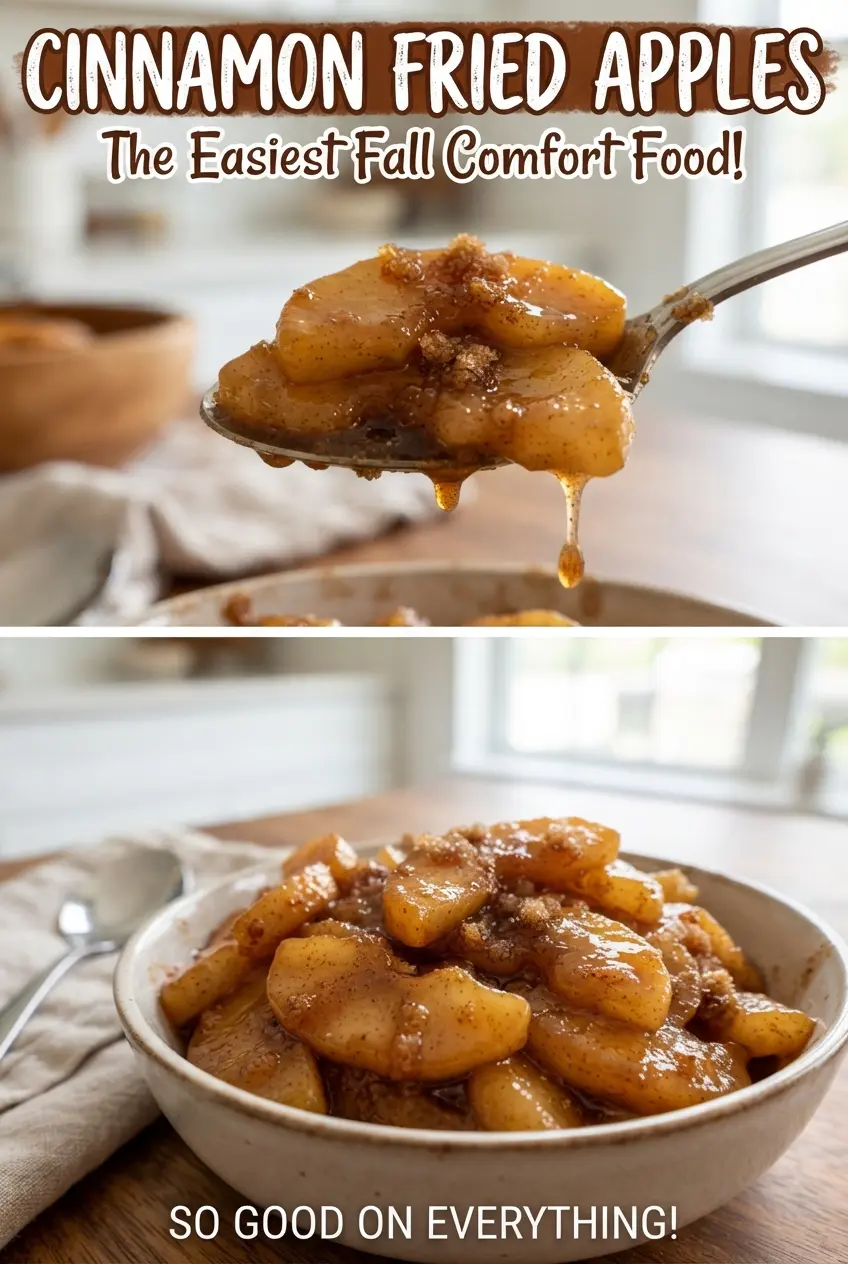
Cinnamon fried apples land on the table soft at the edges, tender through the center, and coated in a glossy sauce that clings to every slice. The apples keep enough structure to still feel like apples, not applesauce, which is what makes this side dish worth repeating. It works next to pork, spooned over pancakes, or eaten warm straight from the skillet with a spoon.
The trick is starting with firm apples and covering the pan long enough for them to steam just until tender. After that, the cornstarch slurry finishes the job by tightening the juices into a shiny syrup instead of leaving you with a thin, watery pan sauce. Brown sugar, cinnamon, nutmeg, and butter do the heavy lifting, but the order matters if you want that deep, glossy finish.
Below, I’ve included the one texture cue that keeps the apples from going mushy, plus a few swaps that still give you that old-fashioned fried apple flavor without losing the sauce.
The apples stayed in nice slices instead of turning to mush, and the sauce thickened up into this glossy cinnamon syrup that was perfect over pork chops.
Cinnamon fried apples with glossy brown sugar sauce are perfect for spooning over breakfast, pork, or ice cream.
The Part Where Apple Slices Go from Firm to Mushy
The biggest mistake with fried apples is letting them cook uncovered the whole time. That drives off moisture too fast before the centers soften, which leaves you with apples that are either still raw in the middle or broken down around the edges. Covering the skillet traps just enough steam to cook the slices through while the butter, sugar, and spices form the base of the sauce.
Firm apples matter here. Honeycrisp gives you sweetness and a little snap, while Granny Smith brings more tartness and stays upright even after a longer simmer. If your apples are very soft to begin with, they’ll collapse before the sauce ever gets a chance to thicken.
- Honeycrisp — Sweet, crisp, and a little juicy. Use these when you want a softer sweetness in the finished dish.
- Granny Smith — Tart and sturdy. These hold their shape the best and keep the dish from tasting too sweet.
- Butter — It coats the apples and carries the cinnamon evenly. A plant-based butter works in a pinch, but the flavor is flatter.
- Cornstarch — This is what turns the pan juices into a glossy syrup. Flour won’t give the same clear finish and can make the sauce cloudy.
What Each Ingredient Is Actually Doing in the Skillet
- Apples — Choose firm fruit with a clean bite. They need enough structure to survive the covered cook and still hold some shape after the sauce thickens.
- Brown sugar — This melts into the butter and gives the sauce its caramel note. Light or dark brown sugar both work; dark brown sugar makes the syrup deeper and a little richer.
- Cinnamon and nutmeg — Cinnamon leads, and nutmeg quietly rounds it out. Freshly opened cinnamon makes a noticeable difference here because the spice is front and center.
- Cornstarch slurry — Mixing it with cold water before it hits the pan keeps it from clumping. If you dump cornstarch straight into hot liquid, you’ll get little pastey bits instead of a smooth glaze.
- Vanilla — Stir it in at the end so the aroma stays bright. Adding it too early cooks off the best part of it.
Cooking the Apples Until They’re Tender, Not Broken
Melting the Butter and Coating the Fruit
Start with a large skillet over medium heat and let the butter melt completely before the apples go in. Once the slices are in the pan, add the brown sugar, cinnamon, nutmeg, and salt and stir until everything looks evenly coated. The apples should look shiny and stained with spice right away. If the heat is too high here, the sugar can catch on the bottom before the apples have a chance to soften.
Steaming Under the Lid
Cover the skillet and cook the apples for 8 to 10 minutes, stirring once or twice so the bottom layers don’t overcook. You’re looking for slices that bend slightly when lifted with a spoon but still keep their shape. If the apples are cut too thin, they’ll collapse early; if they’re too thick, the centers stay firm while the outside goes soft.
Thickening the Syrup
Whisk the cornstarch with water until completely smooth, then pour it into the skillet and stir well. Let the mixture simmer for 2 to 3 minutes until the sauce turns glossy and lightly coats the apples instead of pooling at the bottom. If it stays cloudy or thin, it hasn’t cooked long enough for the starch to activate.
Finishing with Vanilla
Take the pan off the heat and stir in the vanilla at the end. The smell should shift from brown sugar and spice to something warmer and rounder in just a few seconds. Serve the apples warm while the syrup is still loose enough to spoon.
How to Adjust These Apples Without Losing the Sauce
Make Them Dairy-Free
Use a good dairy-free butter substitute in place of the butter. The sauce will still thicken and coat the apples, but you’ll lose a little of the rich, rounded flavor that real butter brings. Pick a substitute that melts cleanly so the sauce stays smooth.
Use Them as a Pie Filling Base
Cook the apples just until barely tender, then stop a minute earlier than you would for serving as a side dish. That gives you slices that hold up better after baking and keeps the filling from turning soft and jammy in the oven.
Cut the Sugar a Bit
Reduce the brown sugar slightly if you’re serving these with sweet breakfast dishes or ice cream. The sauce will still thicken, but it will taste more like spiced apples and less like dessert syrup.
Gluten-Free as Written
This recipe is naturally gluten-free as long as your cornstarch is certified gluten-free. That makes it an easy side dish for holiday tables and weeknight dinners without any extra changes.
Storage and Reheating
- Refrigerator: Store in an airtight container for up to 4 days. The sauce thickens more as it chills.
- Freezer: Freezing is not ideal. The apples soften too much after thawing and the sauce can turn watery.
- Reheating: Warm gently in a skillet over low heat with a splash of water if needed. High heat breaks the sauce and makes the apples collapse faster.
Questions I Get Asked About This Recipe
Cinnamon Fried Apples
Ingredients
Equipment
Method
- Melt the butter in a large cast iron skillet over medium heat. Let it turn glossy and lightly foamy, then add the apples.
- Add the apples, brown sugar, ground cinnamon, nutmeg, and salt, then stir to coat. Make sure the apple slices are evenly covered with the seasoning.
- Cover the skillet and cook for 8-10 minutes, stirring occasionally, until the apples are just tender. Watch for steam building under the lid and apples turning slightly translucent.
- Whisk the cornstarch with the water, then pour the slurry into the skillet. The liquid should immediately loosen the syrup as it hits the hot apples.
- Simmer for 2-3 minutes, stirring, until the sauce thickens and turns glossy. You should see a smooth, spoon-coating consistency.
- Stir in the vanilla extract and cook for about 30 seconds to warm through, then serve warm. Keep it glossy and saucy as you portion it.