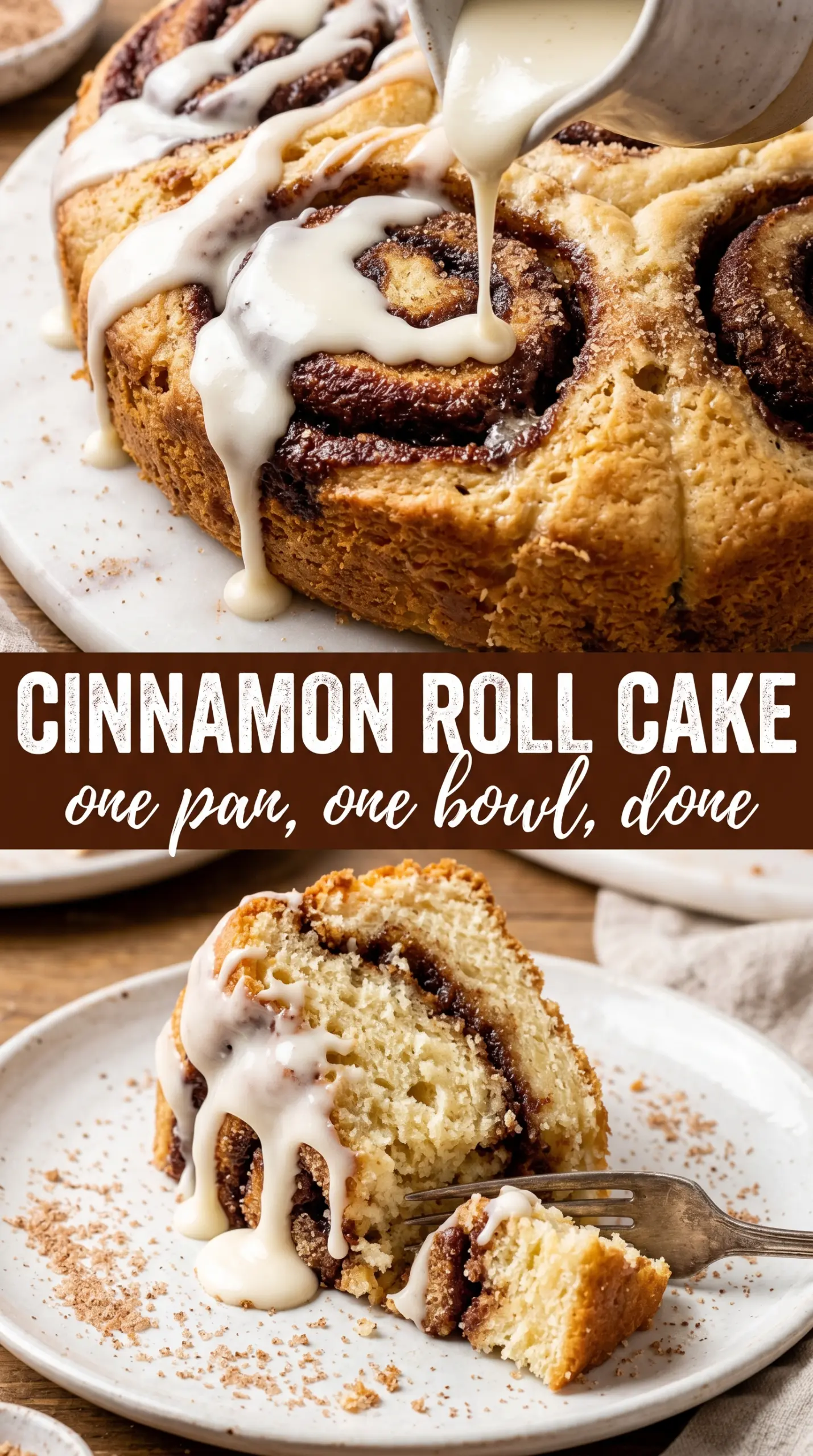
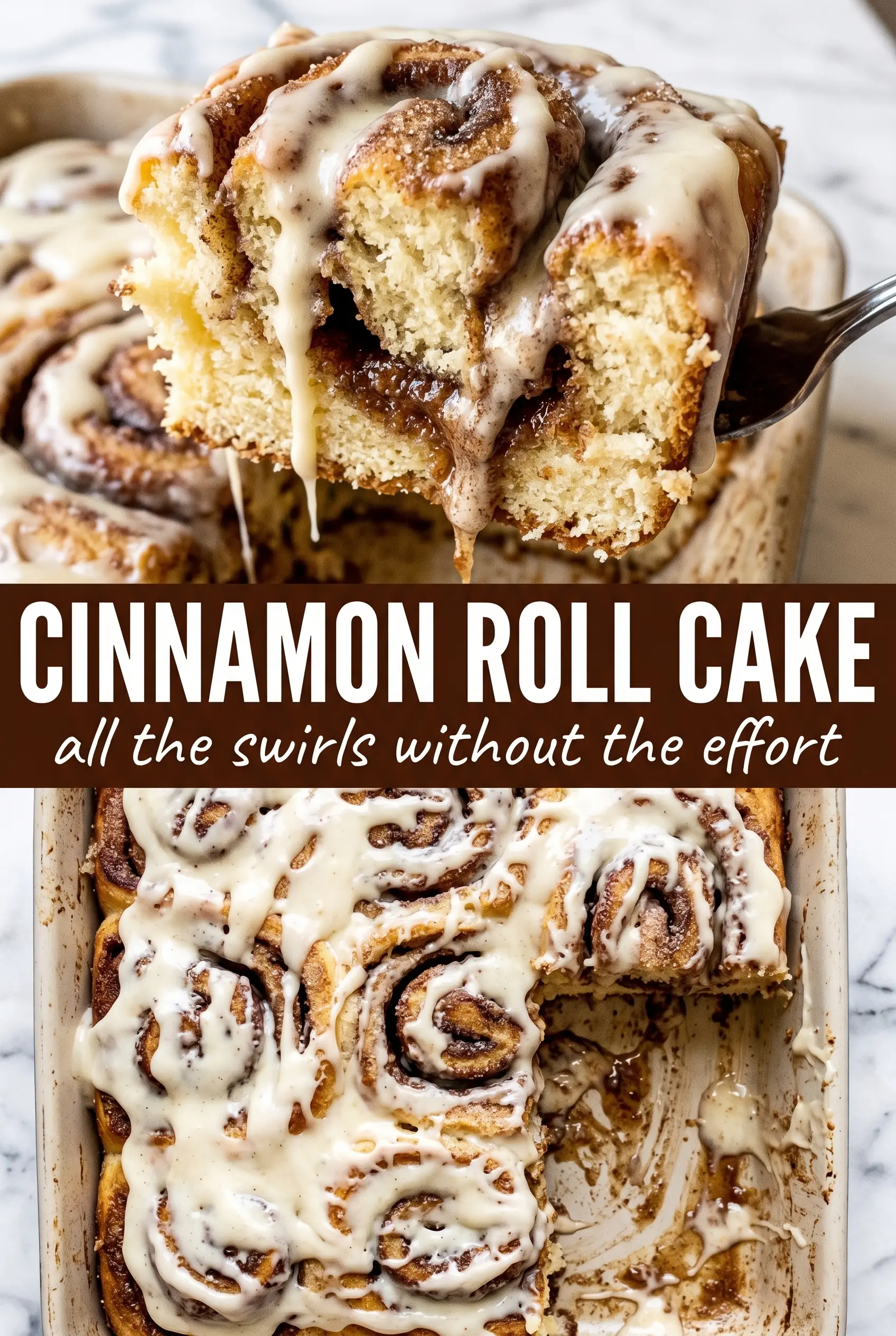
Warm cinnamon roll cake bakes up with the best parts of a pan of cinnamon rolls and none of the kneading, rising, or rolling. The cake stays tender and light, the cinnamon-brown sugar swirls melt into pockets of sticky richness, and the cream cheese glaze sinks into the warm surface so every bite tastes like the center of the roll.
What makes this version work is the way the batter stays simple and the swirl stays thick. A loose swirl mixture disappears into cake batter; a fluffy butter, brown sugar, and cinnamon paste holds its shape long enough to leave those dramatic ribbons behind. Pouring the glaze on while the cake is still warm matters too, because it softens the top just enough to let the glaze seep into the cracks instead of sitting on top in a sugary layer.
Below, I’ve included the timing cues that keep the cake from baking up dry, plus the small swirl technique that gives you those bakery-style ribbons without overmixing the batter.
The swirl stayed in beautiful ribbons instead of sinking, and the glaze soaked into the warm cake just enough to make the edges taste like a cinnamon roll center. My kids were cutting second pieces before it even cooled.
Save this cinnamon roll cake for mornings when you want cinnamon-swirl layers and cream cheese glaze without making yeast dough.
The Swirl That Stays Put Instead of Sinking
The most common problem with cake-style cinnamon roll recipes is a swirl that melts straight into the batter. You still get cinnamon flavor, but you lose those bold ribbons that make the cake look and taste special. The fix is a thick filling made with softened butter, brown sugar, and cinnamon that can be dropped by spoonfuls and swirled lightly, not stirred through.
Use a knife or skewer and stop as soon as you see marbling. If you keep going, the layers blend into a muddy cinnamon cake and the top can bake unevenly. This batter is thick enough to hold the swirl in place, so a few confident turns give you the best result.
What Each Ingredient Is Doing in the Cake
- All-purpose flour — This gives the cake its structure without making it tough. Cake flour would make the crumb a little softer, but all-purpose holds up better under the heavy swirl and glaze.
- Whole milk — The extra fat keeps the crumb tender and helps the batter bake up rich instead of dry. Lower-fat milk works, but the cake won’t taste as plush.
- Melted butter in the batter — This brings flavor and a soft, even crumb. Don’t swap it for oil unless you have to; oil will keep the cake moist, but you’ll lose that butter taste that belongs in a cinnamon roll-style cake.
- Softened butter in the swirl — This is what keeps the cinnamon filling thick enough to marble instead of disappearing. It needs to be soft, not melted, or the swirl runs into the cake before baking.
- Cream cheese — The glaze needs it for that tangy, bakery-style finish. If you skip it, the topping becomes plain icing and loses the balance that keeps the cake from tasting one-note sweet.
Building the Batter, Swirl, and Glaze in the Right Order
Mixing the Cake Without Toughening It
Whisk the dry ingredients first so the baking powder is evenly distributed, then stir in the milk, eggs, vanilla, and melted butter just until the flour disappears. A few small streaks are better than overmixing, because a stirred-too-long batter bakes up dense and chewy instead of tender. Spread it into the pan in an even layer so the swirl sits on top instead of sinking into one corner.
Dropping and Swirling the Cinnamon Filling
Beat the softened butter, brown sugar, and cinnamon until it looks fluffy and thick enough to scoop. Drop it over the batter in spoonfuls, spacing the dollops across the whole pan, then drag a knife through in broad figure-eight motions. The goal is visible ribbons, not a fully mixed batter; if the whole top turns tan, you’ve gone too far.
Baking Until the Center Sets
Bake at 350°F until the top is golden and a toothpick from the center comes out clean or with a few moist crumbs. The center should feel set when you lightly press it, but the cake shouldn’t look dry at the edges. If the swirl looks dark before the middle is done, tent loosely with foil for the last few minutes instead of turning up the heat.
Glazing While the Cake Is Still Warm
Beat the cream cheese, powdered sugar, milk, and vanilla until smooth, then pour it over the cake while it’s still warm from the oven. The heat softens the glaze so it slips into the surface and settles into the swirls. If the glaze looks too thick to pour, add milk a teaspoon at a time; if it’s too thin, it will run off the cake instead of clinging to it.
Three Ways to Adjust the Cake Without Losing the Cinnamon Roll Feel
Dairy-Free Version
Use a plant-based butter and an unsweetened dairy-free milk in the batter, then swap the cream cheese glaze for a simple vanilla icing made with powdered sugar, dairy-free milk, and vanilla. You’ll lose the tang of cream cheese, but the cake still bakes up soft and keeps the cinnamon swirl front and center.
Extra Cinnamon Swirl
If you want a stronger cinnamon bite, add another tablespoon of cinnamon to the swirl mixture. Don’t add more sugar unless you also want a sweeter, softer filling, because extra sugar makes the swirl melt faster and can blur the ribbons.
Make-Ahead Breakfast Cake
Bake the cake a day ahead and hold the glaze separately. Warm the cake slightly before glazing so the topping melts into the surface again instead of sitting in a cold, thick layer. That keeps the texture close to fresh-baked.
Storage and Reheating
- Refrigerator: Store covered for 4 days. The glaze firms up a bit, but the cake stays moist.
- Freezer: Freeze unfrosted slices tightly wrapped for up to 2 months. Glaze after thawing for the best texture, since cream cheese glaze can turn grainy after freezing.
- Reheating: Warm individual slices in the microwave for 15 to 20 seconds. Heat just until the glaze softens; too much heat makes the cake rubbery and pushes the glaze into an oily puddle.
Questions I Get Asked About This Recipe
Cinnamon Roll Cake
Ingredients
Equipment
Method
- Preheat the oven to 350°F and grease a 9x13 baking dish so the batter releases cleanly.
- Whisk together all-purpose flour, granulated sugar, baking powder, and salt, then stir in whole milk, large eggs, vanilla extract, and melted butter until just combined.
- Spread the batter into the prepared dish in an even layer, leaving no large ridges.
- Beat softened butter, brown sugar, and cinnamon until fluffy and lighter in color.
- Drop spoonfuls of the cinnamon mixture over the batter and use a knife to swirl into the batter for ribboned streaks.
- Bake for 30-35 minutes at 350°F until a toothpick comes out clean and the top is golden.
- While the cake is still warm, beat cream cheese, powdered sugar, milk, and vanilla extract until smooth.
- Pour the glossy cream cheese glaze over the warm cake so it pools into the swirls.
- Let the glaze soak in for 5 minutes before serving warm.