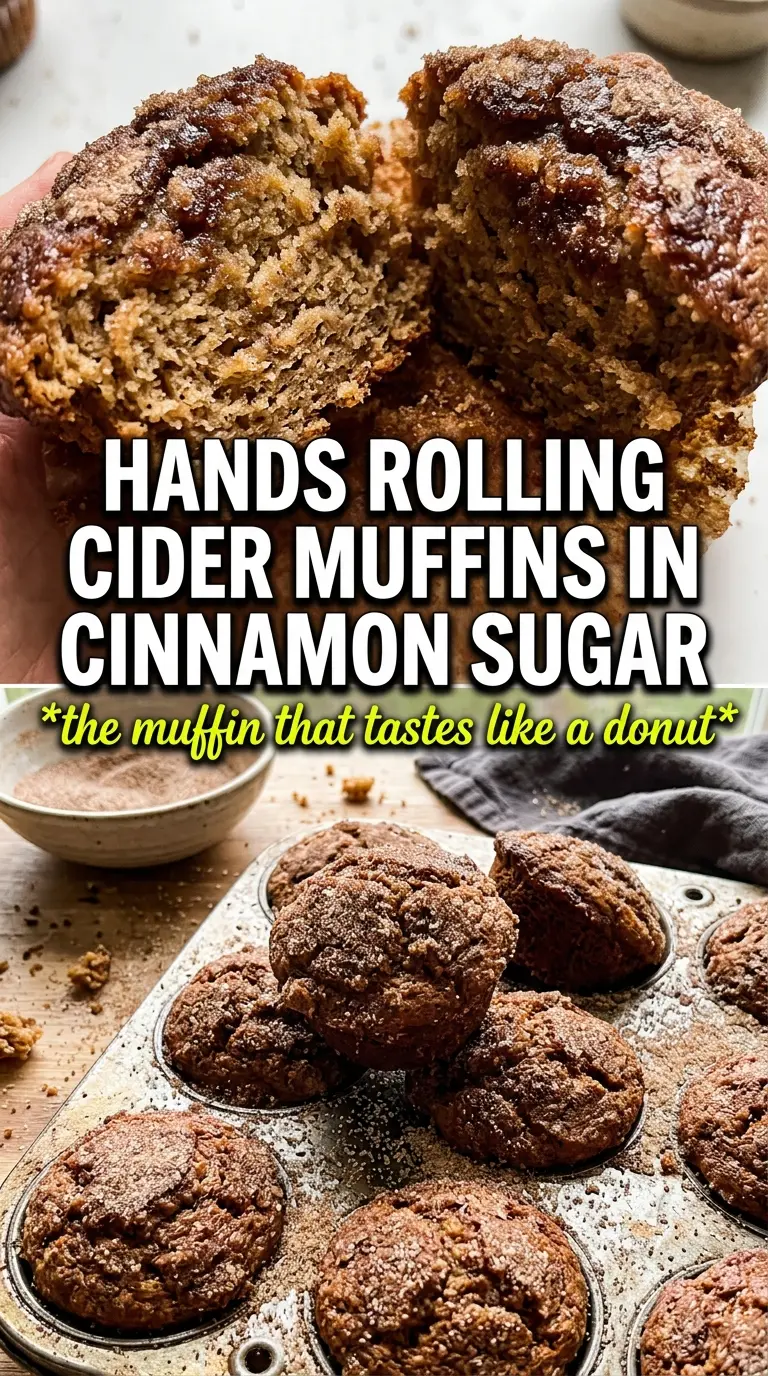
These cinnamon sugar apple cider donut muffins bake up with tender centers, domed tops, and that crackly sugar coating that clings to every edge. They taste like the best part of a cider mill donut, but you don’t need a fryer, special pan, or a trip anywhere to get there. The crumb stays soft and moist, and the cinnamon sugar shell gives each bite a little crunch before it melts into the warm spice underneath.
The trick is reducing the apple cider first. That step concentrates the flavor so the muffins actually taste like apples, not just cinnamon spice cake with a splash of juice. Sour cream keeps the texture plush without making the batter heavy, and brushing the muffins with butter while they’re still warm is what helps the coating stick instead of sliding off in a sandy pile.
Below you’ll find the timing that matters most, the one step that keeps the coating from turning patchy, and a few swaps that still keep these muffins in that donut shop lane.
The cider reduction made these taste like actual apple cider donuts, and the cinnamon sugar coating stuck perfectly because I brushed them while they were still warm. My kids grabbed two before they even cooled.
Like these apple cider donut muffins? Save them to Pinterest for a bakery-style breakfast with that crunchy cinnamon sugar finish.
The Step That Makes These Taste Like Donuts, Not Just Spiced Muffins
The line between a muffin that tastes nice and one that tastes like a true apple cider donut is the cider reduction. Raw cider brings moisture, but it doesn’t bring enough depth. Reducing it down concentrates the apple flavor and gives the batter a stronger backbone, so the spices don’t take over.
The other detail that matters is the coating timing. If you wait until the muffins are fully cool, the butter won’t soak into the surface enough for the sugar to grab. If you coat them when they’re still hot enough to steam hard, the sugar can clump and melt. Warm is the sweet spot. The coating goes on evenly, then sets into that familiar sparkly crust as the muffins cool.
- Reduced apple cider — This is the flavor anchor. Don’t skip the reduction or swap in plain apple juice unless you want a softer, less distinctive muffin.
- Sour cream — It keeps the crumb tender and adds a little tang that plays well with the cider and spice. Plain Greek yogurt works in a pinch, but the texture is a touch firmer and the flavor a little sharper.
- Brown sugar — It brings moisture and a deeper molasses note that fits the cider better than white sugar alone. Light or dark brown sugar both work; dark brown gives a slightly richer result.
- Butter for the coating — This is what turns the outside into an actual donut-style shell. Melted butter is better than oil here because it carries the cinnamon sugar and gives that bakery finish.
What Each Ingredient Is Actually Doing in This Recipe
- Primary ingredient (the star) — Quality matters most. Choose the best you can find.
- Cooking medium (oil, butter, or broth) — This carries flavors and prevents dryness.
- Seasonings (salt, pepper, spices, herbs) — Layer flavors so nothing overpowers. Build depth gradually.
- Aromatics (garlic, onion, herbs) — Cook with fat to bloom flavors. Become the foundation.
- Supporting ingredients — Complement the main ingredient without overpowering it.
- Sauce or liquid (if applicable) — Brings flavors together. Balance richness with acid.
- Acid (lemon, vinegar, wine, or other) — Brightens and prevents flat-tasting results.
- Final finish (garnish, glaze, or sauce) — Prevents one-dimensional taste and adds visual appeal.
Keeping the Batter Light and the Coating Crunchy
Reducing the Cider
Pour the cider into a small saucepan and simmer it until you have 1/3 cup left. Watch the measuring mark, not the clock, because evaporation speed changes with pan size. Let it cool completely before it goes into the batter or it can start warming the melted butter and make the mixture look greasy. If you rush this step, the flavor is still there, but the texture suffers.
Mixing the Batter Without Toughening It
Whisk the dry ingredients together first so the baking powder, baking soda, and spices are evenly distributed. In the wet mixture, whisk until the eggs are fully blended and the brown sugar breaks down, but don’t beat in extra air as if you were making cake. Once the dry ingredients go in, fold just until no flour streaks remain. A few small lumps are better than an overmixed batter that bakes up dense.
Baking to the Right Finish
Fill the muffin cups evenly and bake until the tops spring back lightly and a toothpick comes out clean or with a few moist crumbs. Pull them before the tops get dark and dry. These muffins should be soft in the middle, not crumbly at the edges. If the centers sink, they were underbaked; if they’re dry, the oven ran hot or they stayed in too long.
Coating While They’re Still Warm
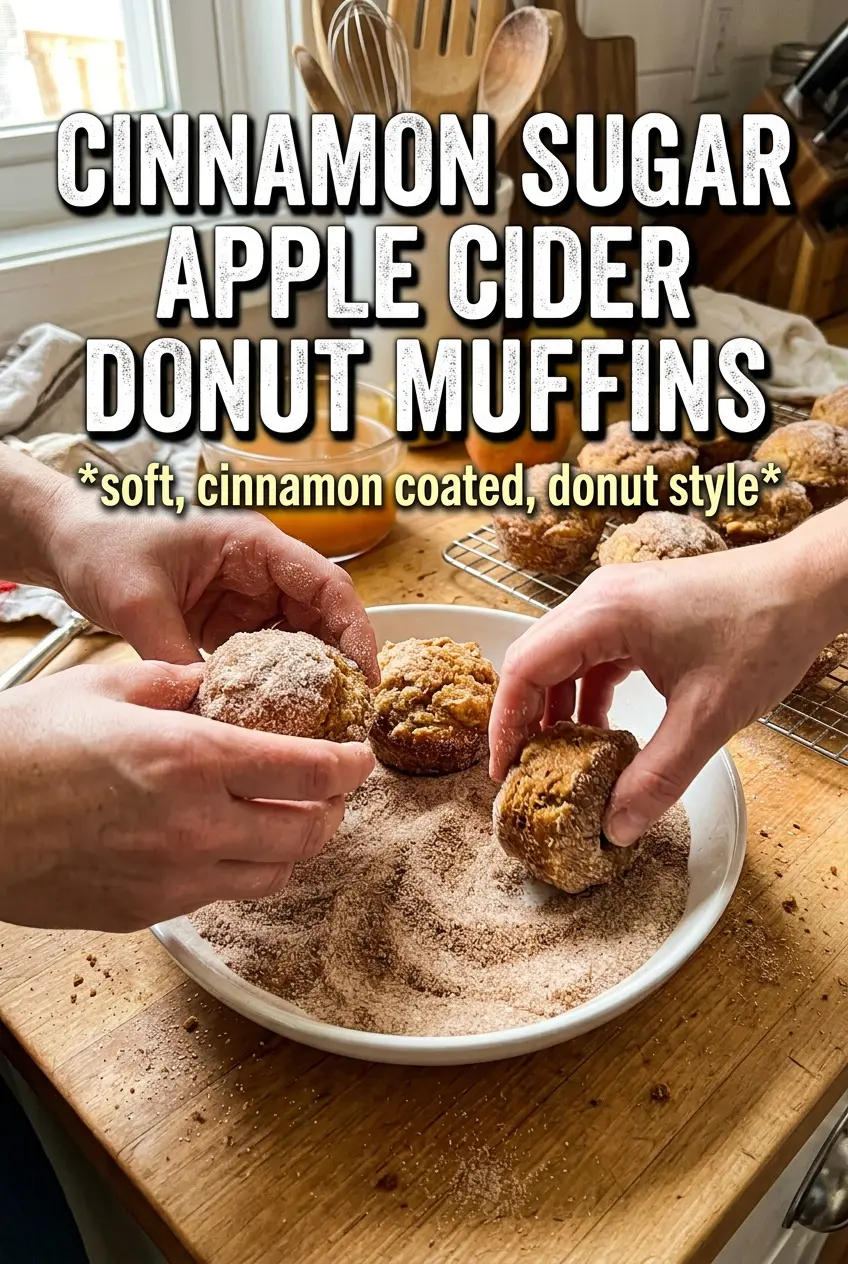
Brush each muffin all over with melted butter, then roll it generously in the cinnamon sugar. Turn them as you coat so the sides get covered, not just the tops. If the sugar won’t stick, the muffins cooled too much; warm them briefly in a low oven for a minute or two, then coat again. That gives you the full donut effect instead of a patchy topping.
How to Adapt These Muffins Without Losing the Donut Feel
Dairy-Free Version
Use a dairy-free butter for both the batter and coating, and swap the sour cream for an equal amount of unsweetened dairy-free yogurt. The texture stays tender, though the crumb will be a little less rich. The coating still works well as long as the butter substitute melts smoothly.
Gluten-Free Swap
A good 1:1 gluten-free baking flour can work here, but don’t use a single-ingredient flour like almond flour. You need the structure from a blend that includes starches and binders, or the muffins will crumble when you brush on the butter. Expect a slightly softer top and a more delicate crumb.
Extra-Spiced Bakery Style
If you want a stronger cider-donut vibe, add an extra 1/4 teaspoon cinnamon and a pinch more nutmeg to the batter. That gives you a warmer, more aromatic muffin without turning it into pumpkin spice territory. Keep the coating the same so the outside still tastes like the classic donut finish.
Storage and Reheating
- Refrigerator: Store in an airtight container for 3 days. The sugar coating softens a little, but the flavor stays good.
- Freezer: Freeze the uncoated muffins for up to 2 months. Thaw at room temperature, then brush with butter and coat fresh so the outside stays crisp.
- Reheating: Warm in a 300°F oven for 5 to 7 minutes. The mistake is microwaving them too long, which melts the coating and makes the crumb rubbery.
Answers to the Questions Worth Asking
Cinnamon Sugar Apple Cider Donut Muffins
Ingredients
Equipment
Method
- Reduce apple cider until you have 1/3 cup, then cool completely.
- Preheat oven to 375F and grease a 12-cup muffin tin.
- Whisk flour, baking powder, baking soda, cinnamon, nutmeg, allspice, and salt together until evenly combined.
- Whisk melted butter, brown sugar, eggs, vanilla, reduced cider, and sour cream until smooth.
- Fold dry ingredients into wet just until combined, then divide the batter among muffin cups.
- Bake 15-18 minutes at 375F until a toothpick comes out clean, then let muffins warm.
- Brush each warm muffin all over with melted butter, then roll generously in cinnamon sugar to coat completely for a crunchy all-around finish.