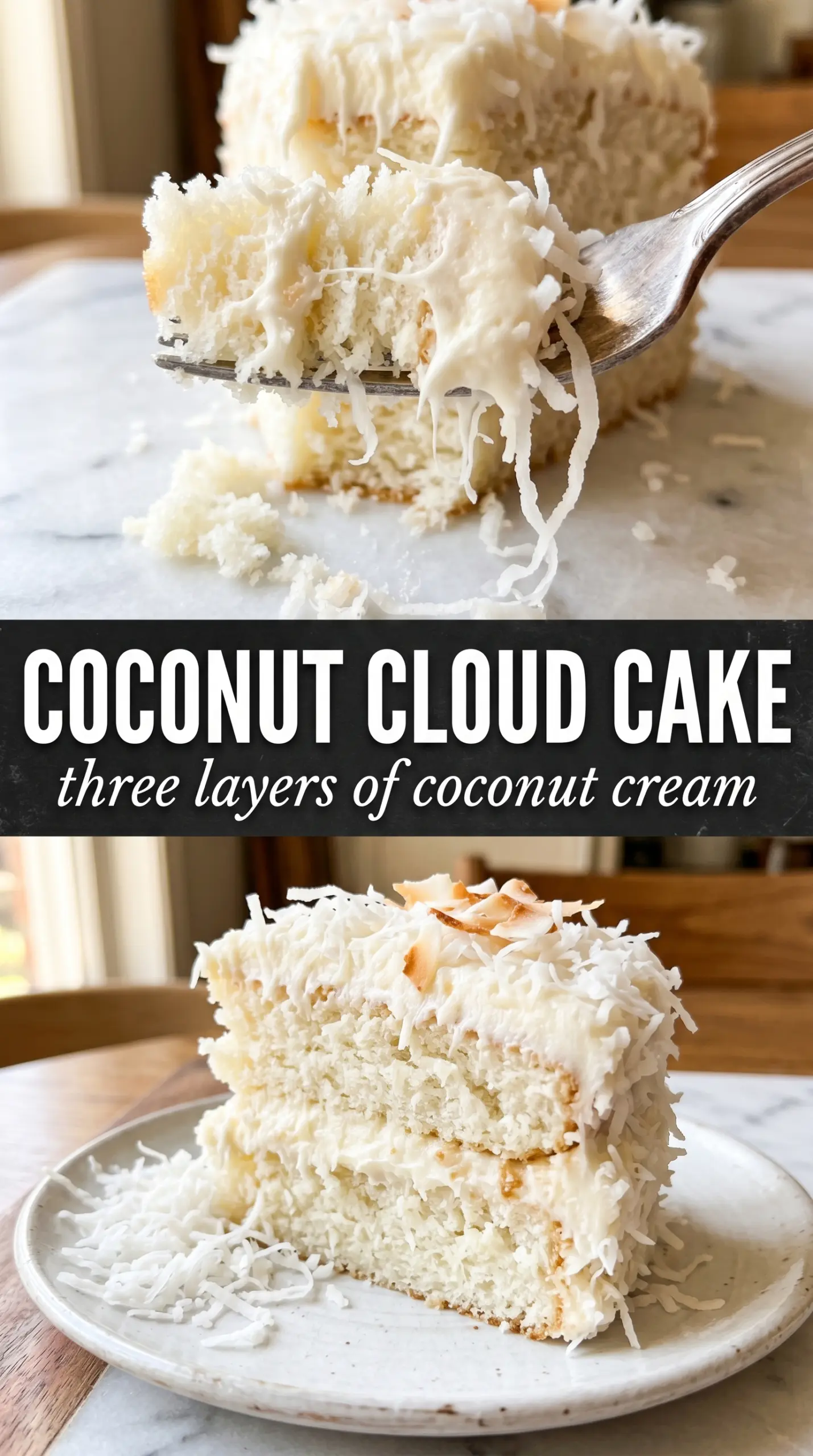
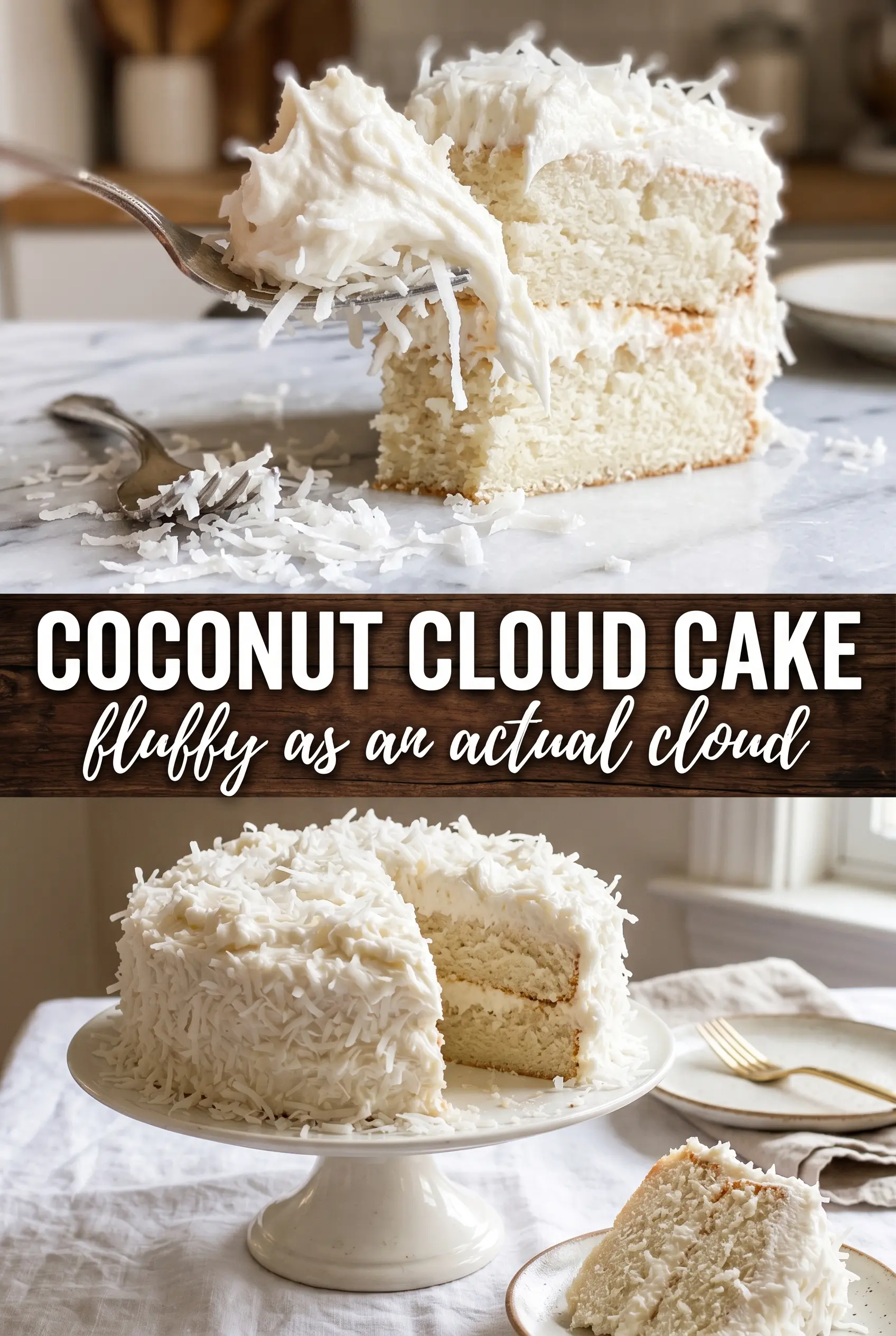
Coconut Cloud Cake earns its name the first time you slice into it: a soft, tender crumb stacked high with billowy cream cheese frosting and a full coat of toasted coconut that adds crunch instead of just sweetness. The outside looks dramatic, but the real payoff is inside, where the cake stays plush and moist without turning heavy or dense.
The texture comes from a few smart choices. Butter and sugar get beaten until pale and fluffy, which gives the cake lift before any flour goes in. Coconut milk keeps the batter rich without making it greasy, and the shredded coconut is folded in at the end so you get little pockets of coconut flavor without weighing down the layers. The frosting leans tangy and sweet in the right balance, which keeps the whole cake from tasting flat.
Below, I’ll walk through the one step that keeps the cake from turning dry, the ingredient swaps that actually work, and the small timing trick that helps the coconut coating stick cleanly to the frosting.
The cake layers stayed incredibly soft and the coconut milk made the crumb taste rich without being heavy. I also loved that the toasted coconut stuck to the frosting instead of sliding off after I pressed it on while the frosting was still soft.
Save this Coconut Cloud Cake for the days when you want a tall coconut layer cake with fluffy frosting and a golden toasted coconut finish.
The Mistake That Makes Coconut Layer Cakes Heavy
The fastest way to lose the light texture in a coconut layer cake is to rush the mixing once the flour goes in. After the dry ingredients are added, the batter only needs enough mixing to look smooth and combined. If you beat it hard at that point, the cake can turn tight instead of airy.
The other trap is baking too long because the top still looks pale. Coconut cakes often stay light in color even when they’re done, so trust the toothpick and the springy center. If the layers sit in the oven until the tops look deeply browned, the crumb dries out before the cake ever cools.
- Room-temperature butter and eggs — These help the batter emulsify cleanly and hold more air. Cold ingredients make the mixture curdle and bake up less evenly.
- Coconut milk — This gives the cake a richer coconut flavor than plain milk and keeps the crumb moist. Use canned coconut milk for the fullest taste; shake it well before measuring if it has separated.
- Sweetened shredded coconut — Fold it in at the end so the bits stay evenly suspended instead of sinking. Unsweetened coconut works in a pinch, but the cake loses some of its softness and sweetness.
- Cream cheese frosting — The tang cuts through the sweetness and gives the coconut coating something sturdy to cling to. Beat it until smooth, but stop once it’s fluffy; overbeaten cream cheese frosting can loosen and slide.
What Each Part Is Doing in the Bowl
- All-purpose flour — Gives the cake structure without making it bready. Cake flour will make it a touch more tender, but this recipe is built to work reliably with standard flour from the pantry.
- Baking powder — This is the lift behind those tall layers. It needs to be fresh; old baking powder can leave you with a flat cake that looks done but feels heavy.
- Coconut extract — A little goes a long way here. It boosts the coconut flavor without making the cake taste artificial, and the frosting especially benefits from that extra nudge.
- Toasted shredded coconut — This is the texture and the finish. Toast it until the edges are just turning golden and fragrant; if it goes too dark, the coating tastes bitter and the cake loses its clean white look.
Building the Layers and Getting the Coconut to Stick
Whipping the Butter and Sugar
Beat the butter and sugar until the mixture looks pale, thick, and almost fluffy enough to spread on its own. That step traps air, which helps the cake rise and keeps the crumb from turning compact. If the butter still looks greasy or yellow, keep mixing; if you move on too soon, the cake will bake up dense no matter how carefully you fold later.
Adding the Eggs and Coconut Milk
Add the eggs one at a time and let each one disappear before the next goes in. The batter should look smooth and satiny, not broken or curdled. Alternate the dry ingredients with the coconut milk so the batter stays balanced; dumping everything in at once can overwork the gluten and leave the cake tough.
Baking and Cooling Fully
Divide the batter evenly so the layers bake at the same rate, then pull them as soon as a toothpick comes out clean and the center springs back lightly. Let the cakes cool completely before frosting. If the layers are even a little warm, the frosting melts and the toasted coconut slides right off.
Frosting and Coating the Outside
Beat the cream cheese and butter until completely smooth before adding the powdered sugar. Once the cake is filled and frosted, press the toasted coconut on while the frosting is still soft enough to grab it. Work from the bottom up and gently pat it into the sides; if you try to sprinkle from far away, you’ll end up with bare spots and a messy counter.
How to Adapt This Coconut Cloud Cake Without Losing the Texture
Dairy-Free Coconut Cake
Swap the butter for a good plant-based baking stick and use a dairy-free cream cheese alternative in the frosting. The cake still bakes up soft, but the frosting may be a little looser, so chill it briefly before coating the cake with coconut. Keep the coconut milk, since that’s part of what makes the crumb taste rich.
Gluten-Free Version
Use a 1:1 gluten-free baking blend that includes xanthan gum. The cake will still be tender, though the crumb may be a touch more delicate when slicing, so let it cool completely before moving the layers. Don’t substitute coconut flour here; it drinks up too much liquid and will throw off the structure.
Less-Sweet Finish
Reduce the shredded coconut on the outside if you want a cleaner, less candy-like finish, but keep the frosting as written. The cream cheese needs the powdered sugar to hold its shape, and cutting it too far can make the cake sloppy once it’s stacked. A lighter coating still gives you the dramatic look without overwhelming the slice.
Storage and Reheating
- Refrigerator: Store covered for up to 4 days. The frosting firms up in the fridge, but the cake stays moist if you keep it sealed well.
- Freezer: Freeze unfrosted layers tightly wrapped for up to 2 months, or freeze frosted slices on a tray before wrapping. Toasted coconut softens a bit after thawing, so for the best texture, add the coconut coating after freezing if possible.
- Reheating: No reheating needed. For the best texture, let chilled cake sit at room temperature for 20 to 30 minutes before serving so the frosting softens and the coconut flavor comes through.
Questions I Get Asked About This Recipe
Coconut Cloud Cake
Ingredients
Equipment
Method
- Preheat the oven to 350°F and grease three 8-inch or two 9-inch round cake pans; line with parchment, then set aside.
- Beat the softened butter and granulated sugar until very fluffy, scraping the bowl as needed so the batter lightens visibly.
- Add the large eggs one at a time and mix until each egg disappears and the batter looks smooth and thick.
- Mix in the vanilla extract and coconut extract, then continue mixing just until evenly combined.
- Alternately add the flour mixture and the coconut milk, starting and ending with flour; mix only until the batter is uniform.
- Fold in the sweetened shredded coconut until evenly dispersed through the batter.
- Divide the batter between the pans and bake for 25-30 minutes, until a toothpick comes out clean.
- Cool the layers completely, resting them until fully cooled to prevent frosting from melting.
- Beat the softened cream cheese and butter until smooth, with no visible lumps.
- Add the powdered sugar and coconut extract, then beat until the frosting is fluffy and holds soft ridges.
- Fill and frost the cooled cake generously with the coconut cream cheese frosting, covering the sides and top thoroughly.
- Immediately press toasted sweetened shredded coconut firmly all over the outside and top of the cake until fully coated.