Golden butter sauce clinging to twirls of linguine is the whole reason this pasta gets made again and again. The chicken stays juicy and well-seasoned, the sauce hits with garlic, lemon, smoked paprika, and just enough heat, and the pasta gets glossy instead of greasy. It eats like something you’d order at a restaurant, but it comes together fast in one skillet and a pot of boiling water.
What makes this version work is the balance. The chicken is cooked hard enough to pick up some char, which gives the finished dish a deeper savory edge, and the cowboy butter starts in the same pan so all those browned bits get folded right back into the sauce. A splash of pasta water helps the butter emulsify and coat the linguine instead of sliding off it.
Below, you’ll find the timing that keeps the sauce silky, the ingredient swaps that still hold the dish together, and the small finishing moves that keep the lemon and herbs tasting fresh instead of flat.
The chicken got a great sear and the sauce actually clung to the linguine instead of pooling at the bottom. The lemon and chives made it taste bright, not heavy, and my husband asked if I could put this in the regular dinner rotation.
Save this cowboy butter chicken linguine for a bold pasta night with seared chicken, lemony butter sauce, and just enough heat.
The Seared Chicken Is What Keeps This Pasta from Tasting Flat
The biggest mistake with a butter-based pasta like this is treating the chicken like an afterthought. It needs a hard sear in a hot skillet so the outside picks up color before it cooks through, because that browned surface is what gives the sauce its backbone. If the pan is crowded, the chicken steams and you lose that deep savory flavor.
Let the chicken rest on a plate while you build the sauce in the same skillet. That keeps the fond in the pan, which is where the best flavor lives. The pasta water does important work here too: it loosens the butter just enough to turn the sauce silky and helps it coat the linguine instead of pooling underneath it.
- Crowding the pan — If the pieces are packed in tightly, they steam and stay pale. Work in batches if your skillet isn’t wide enough to give the strips room.
- Medium heat is too gentle for the chicken — You want a hot skillet so the outside browns before the inside dries out.
- Don’t rinse the pasta — The starch on the noodles helps the butter sauce grab on.
- Add pasta water a little at a time — Too much at once makes the sauce thin. Start with a splash and add only until the noodles look glossy and coated.
What Each Ingredient Is Doing in the Cowboy Butter Sauce
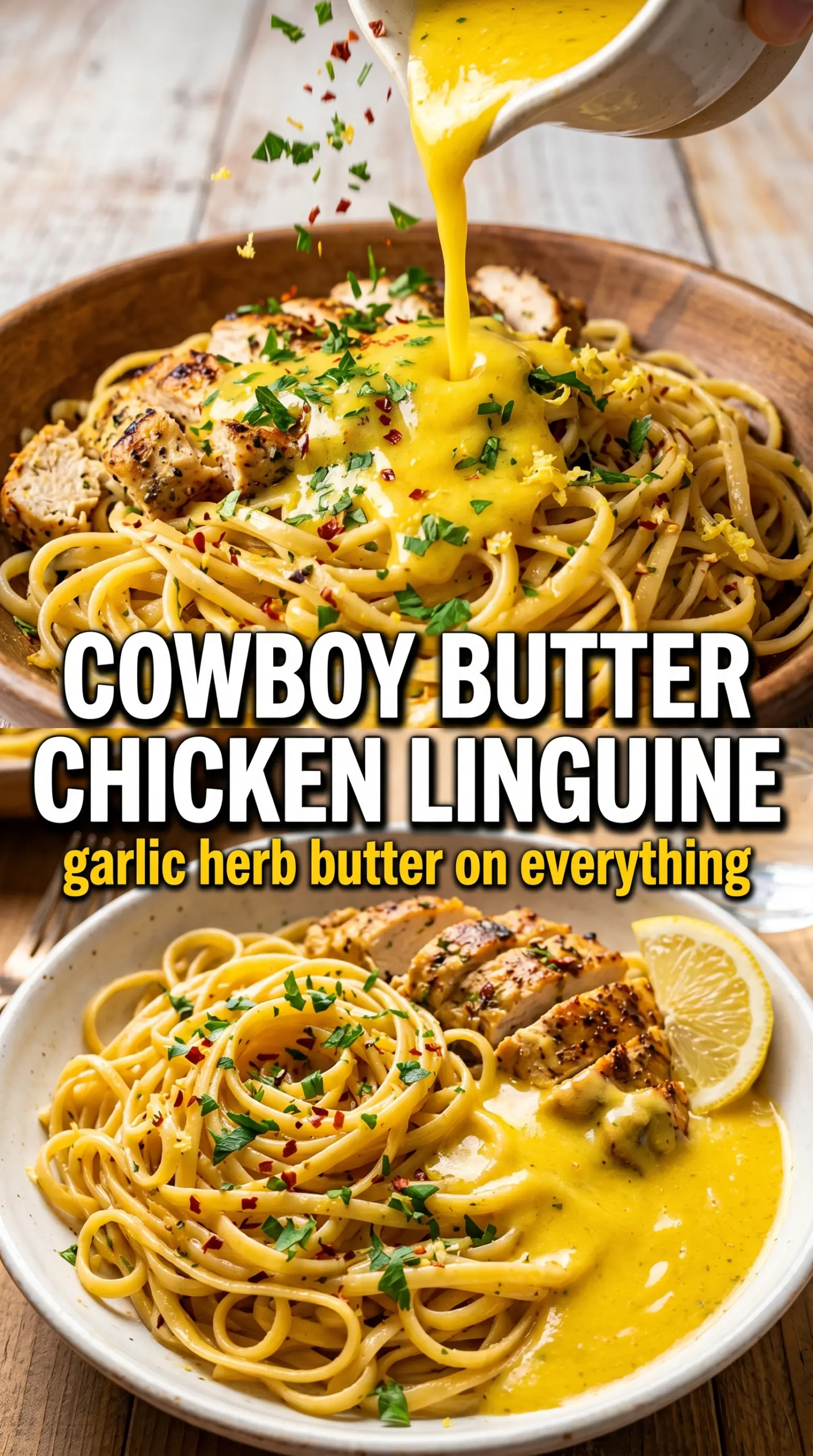
The butter is the base, but the garlic, Dijon, lemon, and spices are what keep it from tasting heavy. Dijon adds a little sharpness and helps the sauce emulsify, which is part of why it clings to the pasta instead of separating. Lemon juice wakes everything up at the end, so it needs to go in after the heat has come down a bit.
- Butter — Use real butter here. It carries the garlic and spices and gives the sauce its glossy finish.
- Dijon mustard — This doesn’t make the pasta taste mustardy. It adds depth and helps bind the sauce.
- Smoked paprika, red pepper flakes, and cayenne — This is the heat layer. If you want less kick, cut the cayenne first and keep the paprika.
- Fresh lemon juice — Bottled juice tastes flat here. Fresh lemon keeps the sauce bright and balances the butter.
- Parsley and chives — Add these at the end so they stay green and fresh. If they cook too long, the dish loses that clean herbal finish.
Building the Sauce Before the Pasta Cools Off
Season and Sear the Chicken
Toss the chicken strips with salt, pepper, and Cajun seasoning, then get them into a hot skillet with the olive oil. You want a real sear: the edges should darken and the strips should release cleanly before you flip them. Pull them off as soon as they’re cooked through so they stay juicy while you finish the sauce. If the chicken sits in the pan too long, it dries out and loses the contrast that makes the dish work.
Wake Up the Butter Base
Melt the butter in the same skillet, then add the garlic and stir just until fragrant. The garlic should smell warm and nutty, not brown; once it starts taking on color, the sauce can turn bitter. Stir in the Dijon, paprika, red pepper flakes, and cayenne and let them sizzle for about 30 seconds so the spices bloom in the fat. That short bloom gives the sauce a rounder, deeper taste than adding the spices later.
Finish the Sauce and Coat the Pasta
Take the pan off the heat for the lemon juice, parsley, and chives if the skillet is blazing hot. That keeps the herbs bright and keeps the lemon from tasting harsh. Add the cooked linguine and start tossing, then use reserved pasta water only as needed until every strand looks shiny and lightly sauced. If the pasta looks greasy instead of glossy, it needs a touch more pasta water and a little more tossing, not more butter.
Bring the Chicken Back at the End
Slide the chicken back on top after the pasta is coated. That keeps the seared strips from overcooking while you toss, and it leaves the browned chicken visible instead of buried. Serve right away while the sauce is still loose and silky. Butter sauces tighten up fast as they cool.
How to Adapt This for More Heat, Less Heat, or No Gluten
Milder Cowboy Butter Linguine
Cut the cayenne in half and use just a pinch of red pepper flakes. You’ll still get the smoky butter flavor and the lemony finish, but the heat stays in the background instead of taking over the plate.
Gluten-Free Pasta Version
Swap in a sturdy gluten-free linguine and cook it just shy of fully tender, since gluten-free pasta can go soft fast once it hits the sauce. Reserve extra pasta water because it often needs a little more help to loosen and cling properly.
Chicken Thigh Swap
Boneless skinless thighs work well if you want a richer, juicier bite. They take a minute or two longer to cook, but they hold up nicely to the bold sauce and stay tender even if the pasta sits for a few minutes before serving.
Dairy-Free Version
Use a good plant-based butter that melts cleanly and has a neutral flavor. The sauce will be a little less rich, but the garlic, lemon, and spices still carry the dish. Don’t use a spread that separates in the pan, or the sauce can turn oily.
Storage and Reheating
- Refrigerator: Store leftovers in an airtight container for up to 3 days. The sauce will thicken as it chills.
- Freezer: I don’t recommend freezing this one. Butter sauces and cooked pasta both lose their texture after thawing.
- Reheating: Warm it gently in a skillet over low heat with a splash of water or broth, tossing until the sauce loosens again. High heat can split the butter and dry out the chicken.
Questions I Get Asked About This Recipe
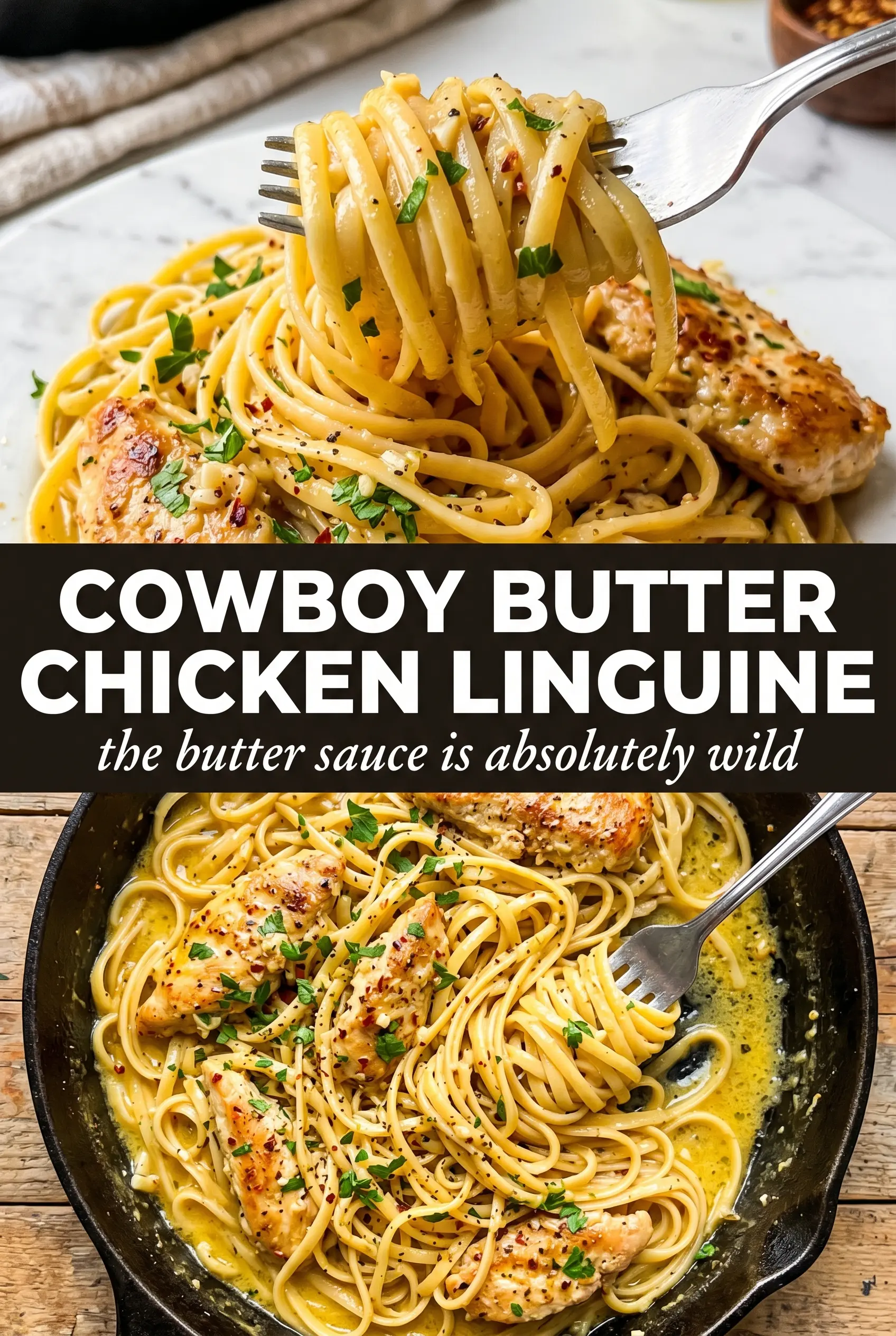
Cowboy Butter Chicken Linguine
Ingredients
Equipment
Method
- Season chicken strips with salt, pepper, and Cajun seasoning. Heat olive oil in a large skillet over high heat and cook until charred and cooked through, 4-5 minutes; remove to a plate.
- Melt butter in the same skillet over medium heat. Add minced garlic and cook until fragrant, about 1 minute, then keep the butter sizzling but not browning.
- Stir in Dijon mustard, smoked paprika, red pepper flakes, and cayenne. Cook for 30 seconds, stirring constantly, until the spices look slightly toasted.
- Add fresh lemon juice, parsley, and chives. Toss the cooked linguine in the sauce, adding reserved pasta water a splash at a time until glossy and evenly coated.
- Top the pasta with the seared chicken strips. Serve immediately while the sauce is hot and coats the noodles.