These cowboy butter steak bites hit the table with a hard sear, a glossy garlic-herb butter sauce, and just enough heat to keep every bite interesting. The steak stays juicy because it’s cooked fast in a screaming-hot skillet, then tossed back into the pan only long enough to coat it in the butter. You get crust on the outside, tenderness inside, and a sauce that clings instead of pooling at the bottom of the pan.
The trick is treating the steak and the butter as two separate jobs. First, you build color on the meat in batches so the skillet stays hot enough to brown instead of steam. Then you pull the heat down before the garlic goes in, because butter sauces break or burn when the pan is too aggressive. That little pause is what keeps the sauce fragrant, bright, and silky.
Below, I’ll walk through the sear that gives these bites their edge, the ingredient choices that matter most, and a few ways to adapt the dish if you need to change the cut or serve it a different way.
The steak got a real crust in the skillet, and the cowboy butter turned glossy without turning greasy. I used ribeye and the bites stayed tender even after the sauce went in.
Like these cowboy butter steak bites? Save them for the nights when you want a fast seared steak dinner with a buttery garlic finish.
The Sear Has to Happen Before the Butter Enters
Steak bites fail when people rush the pan and crowd in too much meat at once. The moment that happens, the steak starts releasing moisture faster than the skillet can evaporate it, and you get gray edges instead of a crust. High heat and breathing room matter more here than seasoning tricks or long marinades.
A cast iron skillet gives you the best shot at a deep brown sear because it holds heat well even after the cold steak goes in. Cut the beef into larger cubes, around 1.5 inches, so it stays juicy through the quick cook. If the pieces are much smaller, they cook too fast and lose the steakhouse texture that makes this dish worth making.
- Sirloin — leaner, more affordable, and still great when cut evenly. It benefits most from careful searing and immediate saucing.
- Ribeye — richer and more forgiving because of the marbling. This is the best choice if you want the most tender result.
- Butter — unsalted gives you control over the final seasoning. Salted butter can work, but it’s easier to overshoot once the Dijon and lemon go in.
- Dijon and lemon juice — these keep the cowboy butter from tasting flat. The mustard helps emulsify the sauce, and the lemon wakes up the richness without making it taste sharp.
What Each Ingredient Is Actually Doing in This Skillet
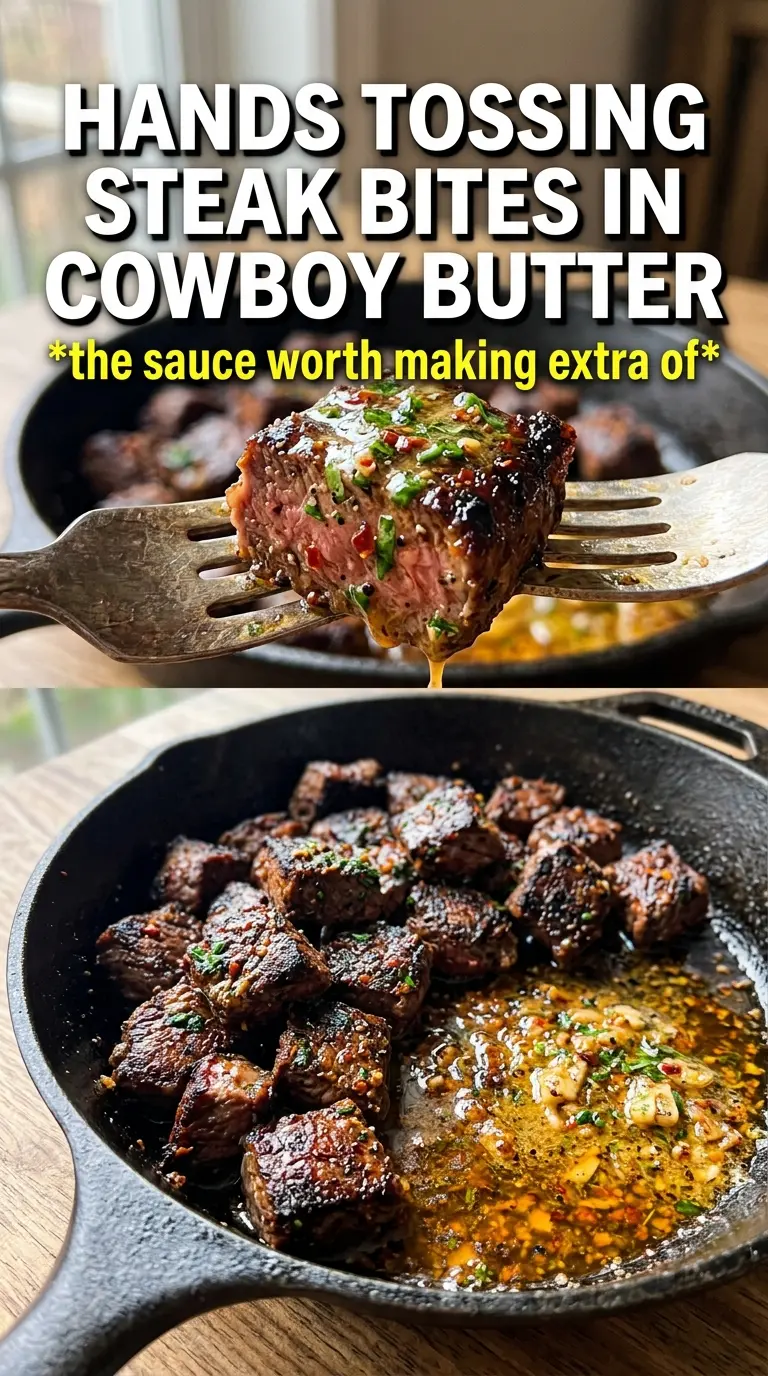
- Steak — choose a cut with enough marbling to stay tender through a fast, high-heat cook. Sirloin works well, but ribeye gives you more richness and a softer bite.
- Butter — this is the sauce base, so quality matters. Use real butter, and keep the heat moderate once it melts so it turns glossy instead of oily.
- Garlic and shallot — they build the savory backbone. Mince them fine so they soften quickly; big chunks can burn before the sauce comes together.
- Parsley and chives — these add freshness that cuts the richness. Dried herbs won’t give the same bright finish here.
- Red pepper flakes and smoked paprika — they give the cowboy butter its warm, smoky edge. The paprika should be smoked, not sweet, or the sauce loses that distinct savory depth.
- Dijon mustard and lemon juice — these keep the butter from tasting heavy. They also help the sauce cling to the steak instead of sliding off.
Build the Crust First, Then Finish in the Butter
Season and Dry the Surface
Pat the steak cubes dry before they hit the pan, then season them with salt and pepper right before cooking. Moisture on the surface is the enemy of browning, and if the meat sits around after salting too long, it starts to weep. You want a dry, seasoned exterior that can hit the skillet and immediately start forming a crust.
Sear in Batches Without Moving Them
Heat the cast iron until it’s smoking, then lay the steak in a single layer with space between the pieces. Let them sit for about 2 minutes per side without poking or flipping early. If they stick at first, they’re not ready; once they’ve developed a crust, they release on their own.
Make the Cowboy Butter Off the Heat of the Sear
After the steak comes out, lower the heat before the butter goes in. Add the garlic and shallot and stir just until fragrant, then pull in the parsley, chives, Dijon, lemon juice, red pepper flakes, and smoked paprika. If the pan is too hot, the garlic turns bitter and the butter starts to split instead of emulsifying.
Toss and Serve Immediately
Return the steak bites to the skillet and toss just until coated. You’re not cooking them a second time; you’re glazing them. Serve right away while the butter is still silky and the edges of the steak are still crisp.
Garlic Herb Steak Bites
Leave out the red pepper flakes and smoked paprika if you want a softer, more classic garlic-herb finish. You’ll lose the smoky heat, but the butter sauce still clings beautifully and tastes rich with the parsley, chives, and lemon.
Dairy-Free Version
Use a plant-based butter that melts cleanly and has a neutral flavor. The sauce won’t taste quite as round as it does with dairy butter, but the garlic, mustard, herbs, and lemon still give you a glossy coating with plenty of punch.
Ribeye Instead of Sirloin
Ribeye brings more marbling, which means a richer bite and a slightly more forgiving cook. It’s the version to use when you want the steak to taste almost steakhouse-level luxurious without adding any extra steps.
Storage and Reheating
- Refrigerator: Store leftovers for up to 3 days. The steak will lose some of its crust, and the butter sauce will thicken as it chills.
- Freezer: Freezing isn’t ideal because the butter sauce can separate and the steak texture softens after thawing. If you have to freeze it, cool it completely and freeze in an airtight container for up to 1 month.
- Reheating: Warm gently in a skillet over low heat with a small splash of water or broth. High heat will overcook the steak and break the sauce, which is the fastest way to ruin the texture.
Questions I Get Asked About This Recipe
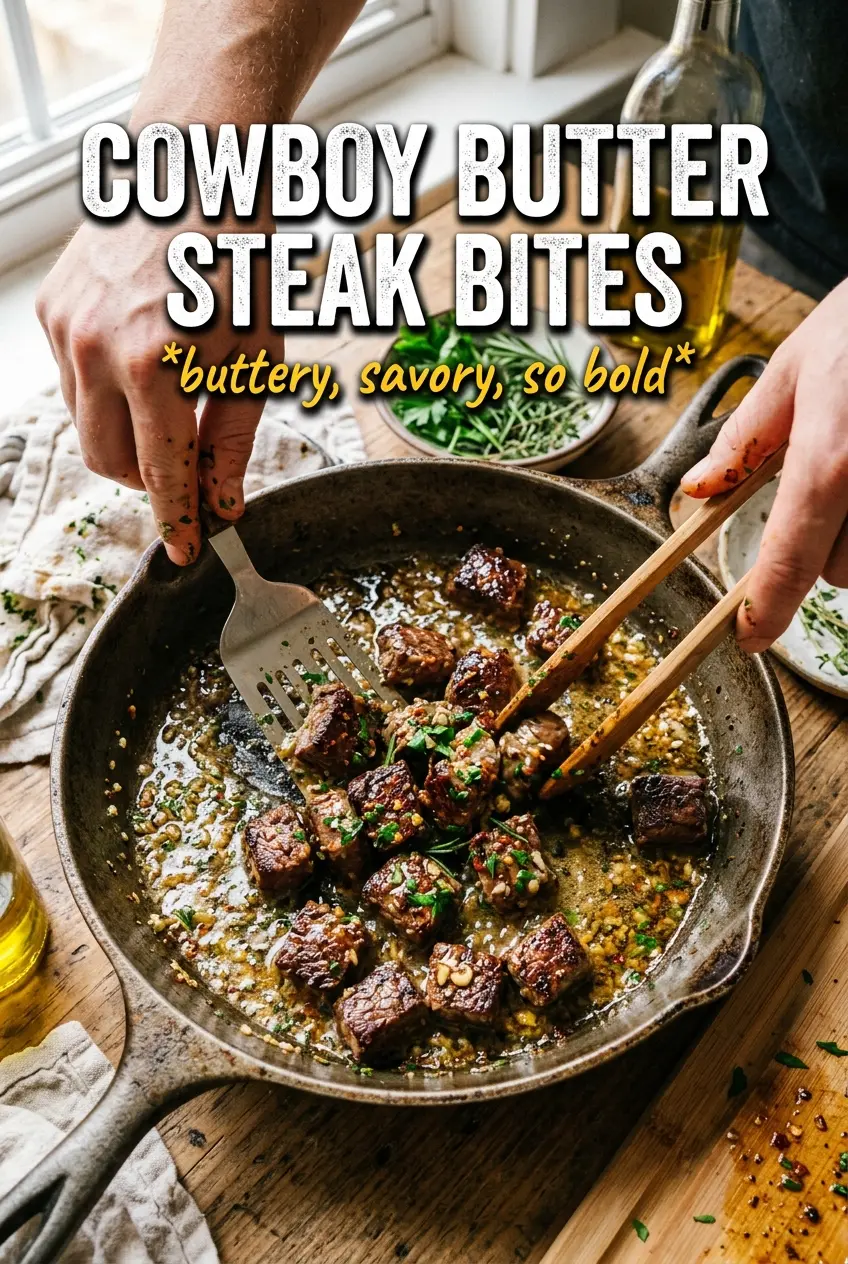
Cowboy Butter Steak Bites
Ingredients
Equipment
Method
- Season the steak cubes with salt and black pepper. Make sure all surfaces are coated.
- Heat a cast iron skillet over high heat until smoking. Sear the steak bites in a single layer without touching, for 2 minutes per side.
- Work in batches and set the seared steak aside. Keep it warm while you cook the rest.
- Reduce heat to medium and add the butter to the skillet. Let it melt and start to foam.
- Sauté the garlic and shallot for 1 minute, stirring as needed. Cook just until fragrant, not browned.
- Stir in the parsley, chives, Dijon mustard, lemon juice, red pepper flakes, and smoked paprika. Cook briefly until the sauce is bubbling.
- Return the steak bites to the skillet and toss them in the cowboy butter. Serve immediately.