Cranberry apple crisp lands in that sweet spot between tart, juicy filling and a buttery oat topping that turns deeply golden at the edges. The apples soften into the cranberries, the orange zest lifts everything, and the bubbling filling underneath keeps every spoonful from tasting flat or one-note. It’s the kind of dessert that disappears fast while still cooling on the counter.
What makes this version work is the balance: enough sugar to round out the cranberries, but not so much that the fruit turns syrupy-sweet. Cornstarch thickens the juices as the fruit bakes, and the cold butter in the topping gives you those chunky crumbles that stay crisp instead of melting into a sandy layer. The orange juice and zest don’t make it taste like citrus dessert; they sharpen the fruit and keep the filling bright.
Below, I’ve added the small details that keep the topping crisp and the filling thick instead of runny, plus a few variations for swapping the fruit or making it gluten-free without losing the texture that makes crisp worth baking in the first place.
The filling bubbled up thick and glossy, and the topping stayed crunchy even after sitting on the table for a bit. The orange zest with the cranberries was the part I didn’t expect to love as much as I did.
Save this cranberry apple crisp for the nights when you want a bubbling fruit dessert with a crisp oat topping and a bright orange lift.
The Secret to Keeping the Filling Thick, Not Soupy
The most common mistake with fruit crisp is underestimating how much liquid apples and cranberries give off as they bake. If you skip the cornstarch or rush the resting time, you end up with a loose, watery filling that slides apart on the plate. Here, the cornstarch gets tossed with the fruit before baking, so it starts working the second the juices hit heat.
Another detail that matters is the balance between fresh and frozen cranberries. Frozen cranberries work fine, but they release a little more moisture, which makes the rest time after baking even more important. Ten minutes off the heat gives the filling time to thicken and set up, so the spoonful holds together instead of flooding the dish.
- Apples — Use a firm baking apple so it keeps some shape. Softer apples turn mushy before the cranberries have finished breaking down.
- Cranberries — Fresh or frozen both work. If you use frozen, don’t thaw them first; they’ll bleed less and bake up more evenly in the dish.
- Cornstarch — This is what turns the fruit juices into a glossy sauce. Flour won’t thicken as cleanly here and can leave the filling cloudy.
- Orange zest and juice — The zest carries the bright aroma, while the juice loosens the mix just enough to help the sugar and spices coat the fruit. Lemon works in a pinch, but the orange makes this taste warmer and rounder.
What Each Ingredient Is Actually Doing in This Recipe
- Primary ingredient (the star) — Quality matters most. Choose the best you can find.
- Cooking medium (oil, butter, or broth) — This carries flavors and prevents dryness.
- Seasonings (salt, pepper, spices, herbs) — Layer flavors so nothing overpowers. Build depth gradually.
- Aromatics (garlic, onion, herbs) — Cook with fat to bloom flavors. Become the foundation.
- Supporting ingredients — Complement the main ingredient without overpowering it.
- Sauce or liquid (if applicable) — Brings flavors together. Balance richness with acid.
- Acid (lemon, vinegar, wine, or other) — Brightens and prevents flat-tasting results.
- Final finish (garnish, glaze, or sauce) — Prevents one-dimensional taste and adds visual appeal.
Building the Crumble So It Stays Crisp at the Edges
Cold butter is what gives the topping those chunky crags that bake into crisp little clusters instead of a fine sandy layer. If the butter softens too much before it goes into the oven, the topping spreads and bakes up dense. Cut it in until you still see uneven bits the size of peas and small walnuts; those pockets melt and help the topping brown.
The topping also needs enough flour to hold the oats together, but not so much that it turns cakey. You want a mix that squeezes in your hand and breaks apart in clumps. That texture gives you crisp edges on top of the fruit and a little chew in the center of the crumble.
Mixing the Fruit
Toss the apples and cranberries with the sugars, spices, zest, juice, and cornstarch until every piece looks lightly coated. Spread the mixture in an even layer so it bakes at the same pace across the dish. If the fruit piles too high in the center, the middle can stay undercooked while the edges overbake.
Cutting in the Butter
Work the cold butter into the oats, flour, sugar, cinnamon, and salt until the mixture forms uneven clumps. Stop before it turns pasty. If you overmix, the butter warms up and the topping loses that loose, craggy texture that crisps so well in the oven.
Baking Until the Filling Bubbles
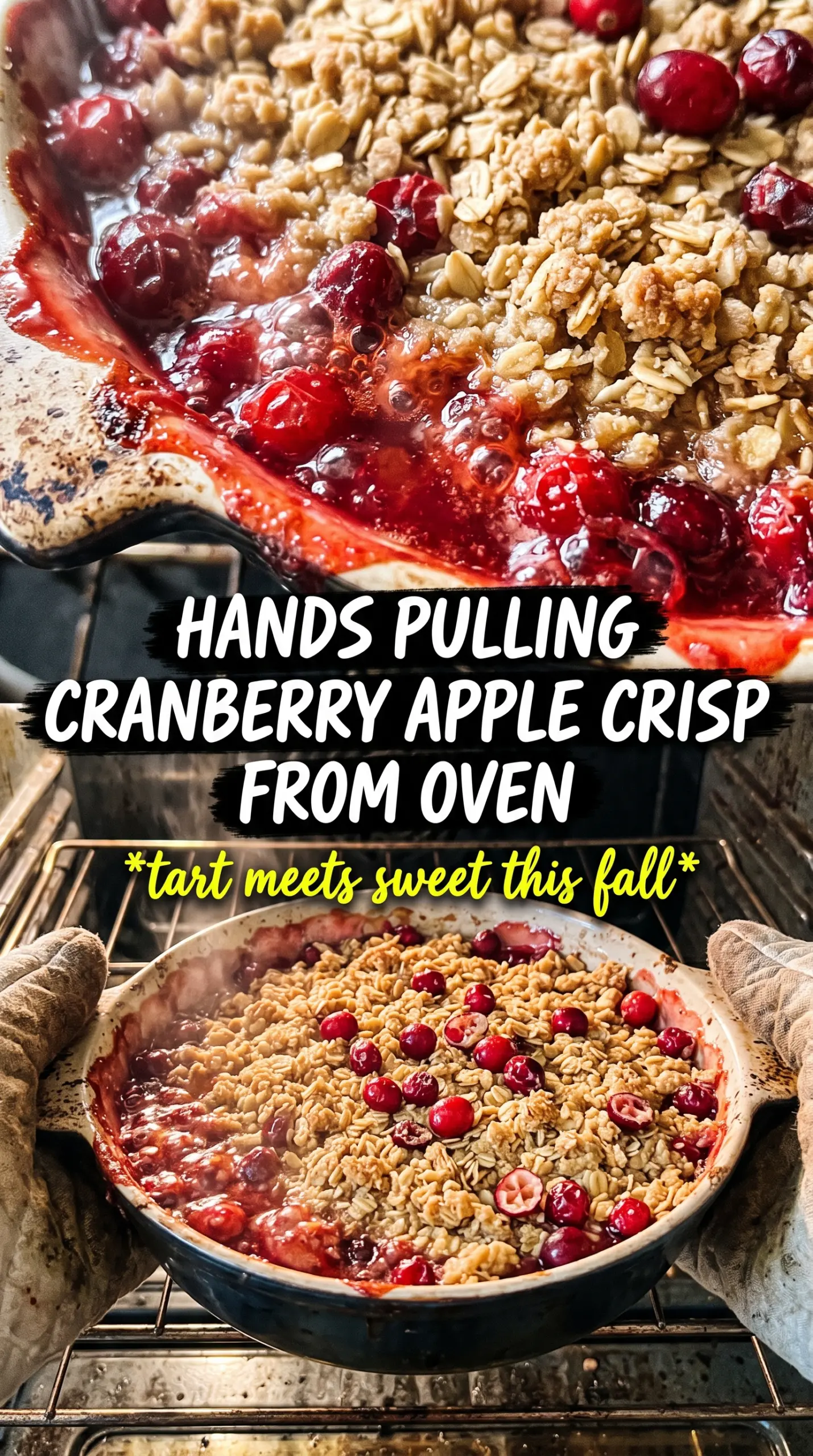
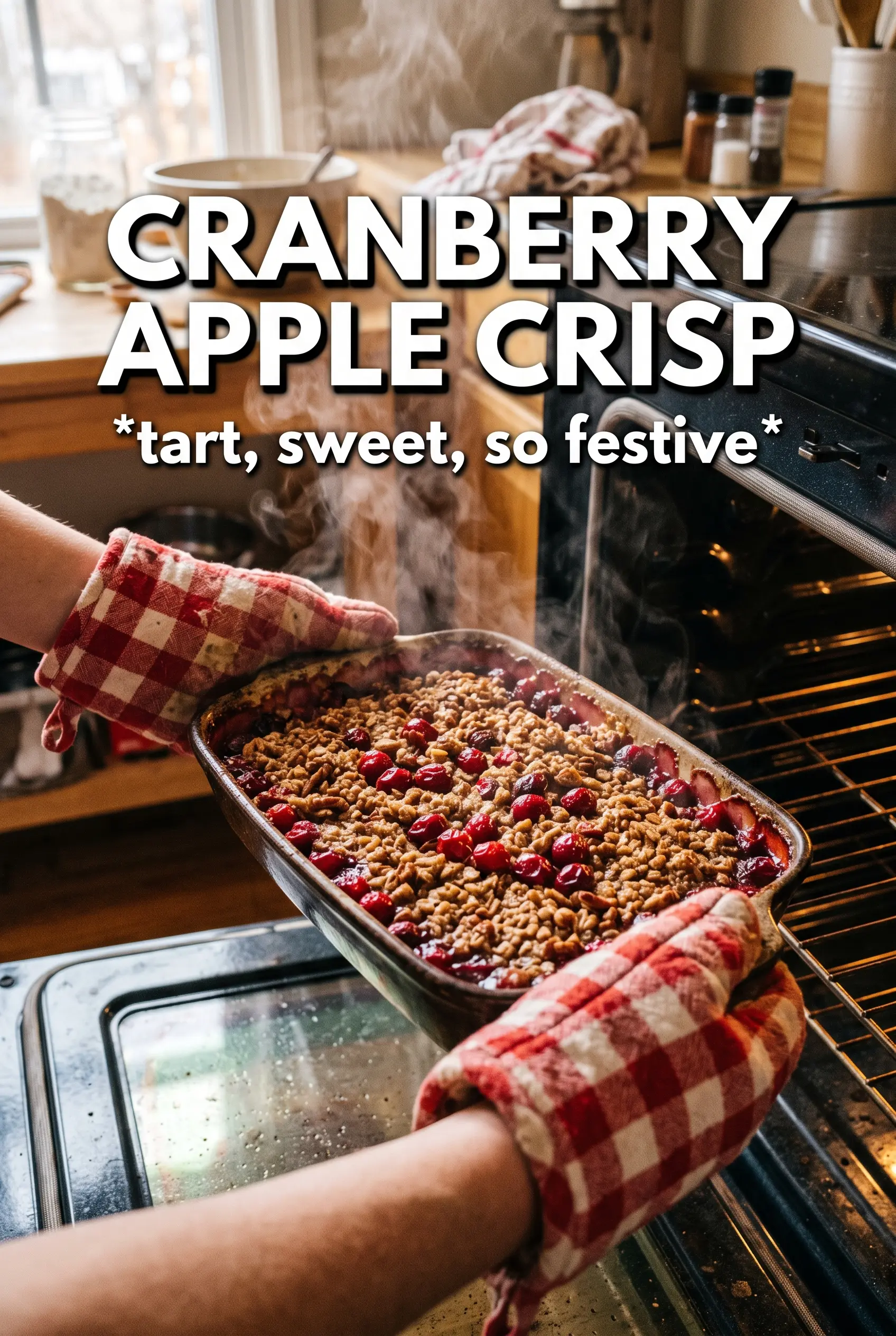
Scatter the crumble over the fruit without pressing it down, then bake until the top is deep golden and the filling bubbles in thick pockets around the edges. Those bubbles matter: they tell you the cornstarch has activated and the fruit juices have thickened. Pull it too early and the center will stay loose even after cooling.
Make It Gluten-Free Without Losing the Crunch
Swap the all-purpose flour in the topping for a 1:1 gluten-free baking blend. The crumble will still hold together, but it may brown a little faster, so start checking it near the 40-minute mark. The texture stays crisp as long as the butter stays cold.
Use Pears for a Softer, Milder Filling
Replace up to half the apples with firm pears if you want a gentler fruit flavor. Pears soften faster and taste less tart, so the cranberry flavor comes through more sharply. Keep the orange zest in place; it ties the pears and cranberries together.
Make It Less Sweet for Brighter Cranberry Flavor
Cut the granulated sugar by 1/4 cup if your apples are naturally sweet or you like a sharper cranberry note. The filling will taste more tart, but the orange juice keeps it from becoming aggressive. Don’t reduce the cornstarch, though, or the filling will thin out.
Storage and Reheating
- Refrigerator: Store covered for up to 4 days. The topping softens a bit in the fridge, but the flavor stays great.
- Freezer: Freeze baked crisp tightly wrapped for up to 2 months. Thaw in the refrigerator overnight before reheating.
- Reheating: Warm uncovered in a 350F oven until the topping crisps back up and the center is hot. The microwave will heat the filling, but it leaves the crumble soft.
Answers to the Questions Worth Asking
Cranberry Apple Crisp
Ingredients
Equipment
Method
- Preheat the oven to 375F, then grease a 9x13 baking dish with a thin coating of butter or nonstick spray for easy release.
- Toss the sliced apples and cranberries with granulated sugar, brown sugar, cinnamon, nutmeg, orange zest, orange juice, and cornstarch until the fruit is evenly coated and the cornstarch looks distributed.
- Spread the coated apples and cranberries into the greased baking dish in an even layer so the filling bubbles across the top edges while baking.
- Combine rolled oats, all-purpose flour, packed brown sugar, cinnamon, and salt, then cut in the cold unsalted butter until chunky clumps form with visible oat-and-butter pieces.
- Scatter the crumble evenly over the filling so it covers most of the surface and helps create golden, caramelized edges.
- Bake for 40-45 minutes at 375F until the crumble is golden and the cranberry apple filling is bubbling and thick at the edges.
- Rest the crisp for 10 minutes before serving so the filling sets and slices hold together.