Crackly, burnished skin and a glossy cranberry-maple glaze make this roast chicken feel a little special without asking for much more from you than a hot oven and a roasting pan. The chicken turns out juicy, the onions soften into sweet, savory strands, and the cranberries burst just enough to give the pan sauce a bright, tart edge that keeps every bite from tasting heavy.
The trick is giving the bird a head start at high heat, then glazing it only after the skin has already started to set. If you brush on maple syrup too early, it can darken before the chicken is fully cooked. Waiting until the last stretch of roasting keeps the skin lacquered instead of scorched, and the Dijon helps the glaze cling while the cranberries melt into the broth.
Below, I’ve laid out the small details that matter here: how to get the butter under the skin without tearing it, why the orange and garlic belong inside the cavity, and what to do if your glaze looks a little loose before it hits the pan.
The skin turned out beautifully glazed and the cranberry pan sauce was thick enough to spoon right over the chicken. I loved that the onions softened down in the same pan and picked up all that maple flavor.
Cranberry Maple Roast Chicken is the kind of roast dinner with a glossy glaze and tart pan sauce worth coming back to.
The Reason the Glaze Stays Glossy Instead of Burning
The biggest mistake with maple-glazed chicken is starting the glaze too soon. Maple syrup caramelizes fast, and on a whole bird that means the skin can look done before the meat is anywhere close. By roasting the chicken plain first, you give the skin time to dry and start browning on its own, which keeps the final glaze shiny instead of bitter.
The other thing that matters here is where the moisture comes from. The orange, onion, and cranberries all release liquid as they roast, which keeps the pan from drying out while building a sauce with some body. If the pan looks a little sparse halfway through, the broth keeps the drippings from scorching and gives you enough liquid to spoon over the carved chicken later.
What Each Ingredient Is Really Doing Here
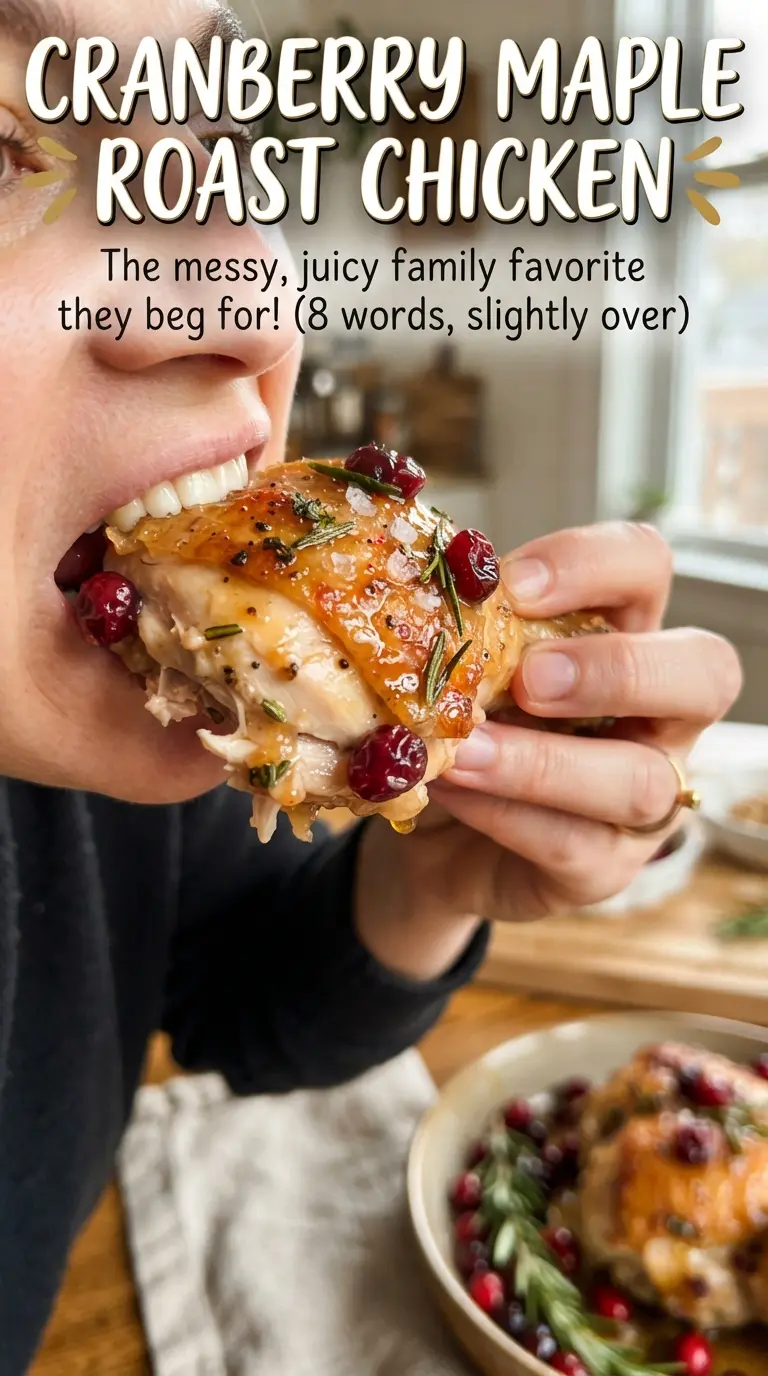
- Whole chicken — A 5-pound bird gives you enough meat for six and roasts evenly without drying out too fast. Patting it dry matters more than people think; wet skin steams before it browns.
- Butter and rosemary — The butter carries the rosemary flavor under the skin and helps the outside brown. Softened butter spreads cleanly, but cold butter won’t smear well and can tear the skin.
- Orange and garlic — These perfume the chicken from the inside out. The orange adds brightness without making the dish taste citrusy, and the garlic mellows into something sweet and soft after roasting.
- Cranberries, maple syrup, and Dijon — This is the glaze and sauce in one. Maple gives the lacquered finish, Dijon keeps it from tasting flat, and cranberries burst into the pan juices for tartness and color.
- Chicken broth — This keeps the bottom of the pan from burning once the glaze goes in. If you skip it, the sugars can scorch before the chicken finishes cooking.
Building the Bird and Glaze in the Right Order
Seasoning and Buttering Under the Skin
Start with a dry chicken and salt it inside and out before you do anything else. Work the softened rosemary butter under the skin where you can reach it, then spread the rest over the outside. If the skin tears a little, don’t panic; just keep the butter in a thin layer so the surface still browns evenly instead of clumping up in one spot.
The First Roast Without the Glaze
Set the chicken in the roasting pan with the onion around it and let it go for the first 50 minutes untouched. You want the skin to go from pale to deeply golden and the fat to start rendering before any maple hits the pan. If the breast is browning much faster than the legs, tent the top loosely with foil while the thigh side catches up.
Finishing with Cranberries and Maple
Whisk the maple syrup and Dijon together, brush on half, then add the cranberries and broth to the pan. Roast until the thigh hits 165°F and the glaze looks sticky and dark amber at the edges. Brush on the rest of the glaze near the end, not the beginning, or it can slide off and pool before it sets.
Resting Before You Carve
Let the chicken sit for 15 minutes before carving. That pause keeps the juices in the meat instead of running all over the board the second you slice in. Spoon the cranberry pan sauce over the carved pieces and don’t waste the onions; they’ll be soft, sweet, and carrying all the best bits from the bottom of the pan.
How to Adapt This Roast Chicken Without Losing the Balance
Make it dairy-free
Swap the butter for olive oil or a plant-based butter with decent fat content. You’ll lose a little of the classic round richness, but the rosemary and pan sauce still carry the dish well.
Use dried rosemary when fresh isn’t around
Use 1 teaspoon dried rosemary instead of 1 tablespoon fresh. Crush it between your fingers before mixing it into the butter so it releases more of its oils, since dried herbs need a little help to taste alive in the final dish.
Swap the cranberries for cherries
If fresh cranberries aren’t available, use frozen tart cherries for a softer, slightly sweeter sauce. The result is less sharp and a bit jammy, but it still gives you that glossy fruit glaze over the chicken.
Storage and Reheating
- Refrigerator: Store leftovers for up to 4 days. The skin will soften, but the meat stays good and the sauce gets deeper overnight.
- Freezer: Freeze carved chicken with a little pan sauce for up to 2 months. The texture is best if you freeze the meat separately from the onions and cranberries, which can turn mushy after thawing.
- Reheating: Warm covered in a 325°F oven with a splash of broth until hot. The biggest mistake is blasting it in the microwave, which dries the breast out before the sauce has a chance to loosen everything up.
Questions I Get Asked About This Recipe
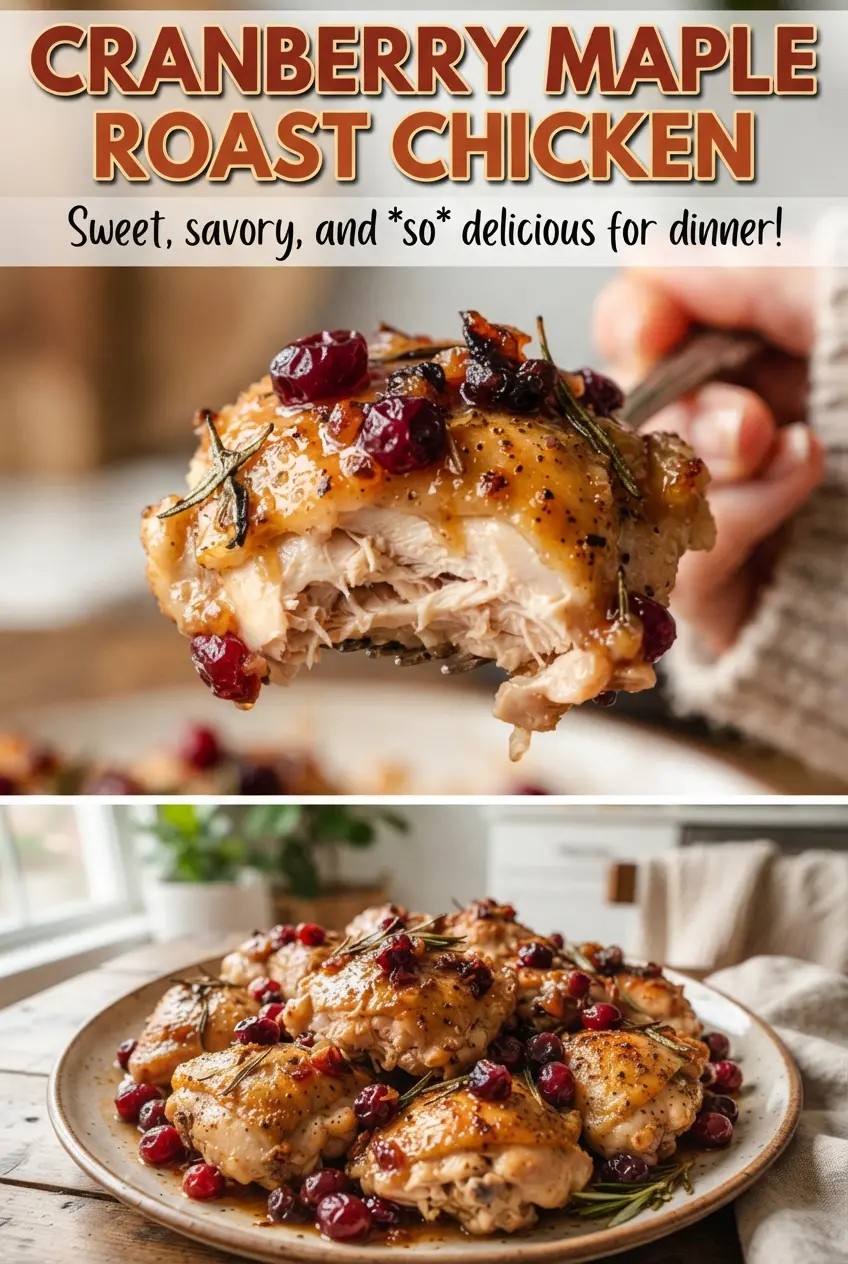
Cranberry Maple Roast Chicken
Ingredients
Equipment
Method
- Preheat the oven to 425F. Use a roasting pan or Dutch oven sized for the whole chicken so it fits comfortably.
- Season the chicken inside and out with salt and pepper. Rub softened butter mixed with chopped rosemary under and over the skin.
- Stuff the cavity with orange halves and garlic, then place the chicken in a roasting pan. Add the red onion wedges around the chicken.
- Roast for 50 minutes at 425F. The skin should begin to turn golden and set around the edges.
- Whisk maple syrup and Dijon mustard, then brush half over the chicken. Scatter the fresh cranberries in the pan and pour in the chicken broth.
- Roast 25-30 minutes more at 425F, brushing with the remaining glaze as it cooks. Continue until the thigh reaches 165F and the skin looks lacquered.
- Rest the chicken for 15 minutes. Carve, then spoon the cranberry pan sauce over the top.