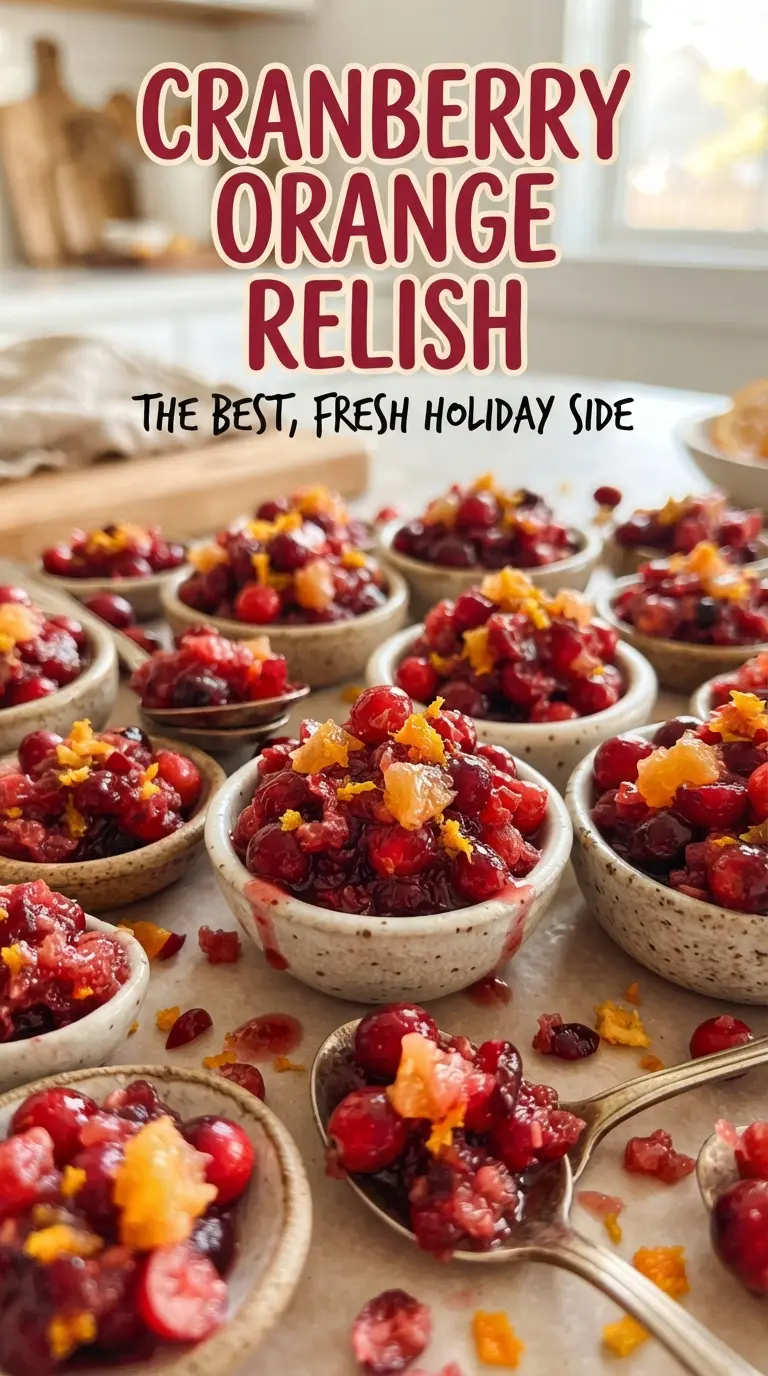
Cranberry orange relish wakes up a plate in a way cooked cranberry sauce just can’t. It’s bright, sharp, and juicy, with that clean pop from the berries and a citrusy bitterness from the orange peel that keeps every bite interesting. The sugar softens the edges without turning it jammy, so what you end up with is a fresh relish that tastes awake instead of heavy.
The key is grinding the cranberries and orange just enough to make everything small and cohesive, but not so far that you lose texture. Leaving the orange unpeeled gives the relish its signature fragrance, and the tiny bit of salt keeps the sweetness from flattening out. The chilling time matters, too: it gives the sugar a chance to draw out juices and mellow the raw edge so the whole bowl tastes balanced instead of harsh.
Below, I’ll show you the texture to aim for in the food processor, why the orange liqueur adds more than just sweetness, and how to keep this relish bright even if you make it a day ahead.
I pulsed it just until the cranberries were tiny pieces and the orange zest was speckled throughout. After an overnight chill, it thickened up beautifully and tasted fresh instead of bitter.
Save this cranberry orange relish for the holiday table when you want something bright, chunky, and make-ahead friendly.
The Real Trick Is Not Turning It Into Jam
The biggest mistake with cranberry orange relish is overprocessing. Once the cranberries and orange get past the chopped stage, the mixture turns soft and muddy instead of bright and textured. You want small, distinct pieces that hold together in a spoonful, with enough juice released to coat everything without becoming loose and soupy.
Chilling is part of the method, not just a waiting period. The sugar pulls moisture from the fruit, the orange mellows, and the whole mixture tightens up into that spoonable relish texture. If it tastes too sharp right after mixing, that’s normal. Give it time before adding more sugar, because the flavor changes a lot once it rests.
- Fresh cranberries — They need to be firm and bright. Soft or shriveled berries won’t chop evenly and can make the relish taste dull. Frozen cranberries work in a pinch, but pulse them straight from frozen and expect a slightly wetter result after thawing.
- Unpeeled navel orange — The peel is doing real work here. It brings aroma and a little bitterness that balances the sugar. Seed it well first, since any stray seeds will make the relish unpleasant to eat.
- Sugar — This isn’t just for sweetness. It softens the cranberry bite and helps the fruit juices turn syrupy as the relish rests. Start with the listed amount, then adjust after chilling if your orange was especially tart.
- Orange liqueur or orange juice — Liqueur adds depth and a rounder citrus note, while juice keeps it alcohol-free and still bright. If you use juice, choose one without added sweetness so you can control the balance yourself.
- Fresh mint — This is a finishing touch, not a required flavor base. Add it right before serving so it stays green and fresh instead of darkening in the bowl.
What Each Ingredient Is Actually Doing in This Recipe
- Primary ingredient (the star) — Quality matters most. Choose the best you can find.
- Cooking medium (oil, butter, or broth) — This carries flavors and prevents dryness.
- Seasonings (salt, pepper, spices, herbs) — Layer flavors so nothing overpowers. Build depth gradually.
- Aromatics (garlic, onion, herbs) — Cook with fat to bloom flavors. Become the foundation.
- Supporting ingredients — Complement the main ingredient without overpowering it.
- Sauce or liquid (if applicable) — Brings flavors together. Balance richness with acid.
- Acid (lemon, vinegar, wine, or other) — Brightens and prevents flat-tasting results.
- Final finish (garnish, glaze, or sauce) — Prevents one-dimensional taste and adds visual appeal.
Getting the Texture Right in a Few Quick Pulses
Pulsing the Fruit
Put the cranberries and orange chunks into the food processor and pulse in short bursts. Stop often and scrape the bowl so the larger orange pieces don’t ride above the blade while the cranberries get too fine. You’re looking for a finely chopped mixture with visible bits, not a paste. If the fruit starts to look wet and mushy, you’ve gone a little too far, and the final relish will be softer than you want.
Sweetening and Seasoning
Move the chopped fruit to a bowl and stir in the sugar, orange liqueur or juice, and salt. At this point the mixture may look loose and grainy, and that’s exactly right. The sugar won’t fully dissolve yet, but it will start drawing out juices almost immediately. Stir until everything is evenly coated so no pocket of sugar stays dry on the bottom.
Resting for the Flavor to Settle
Cover the bowl and chill it for at least four hours, or overnight if you’ve got the time. This resting period changes the whole texture, turning the sugar and fruit juice into a glossy relish instead of a rough chopped salad. Give it a good stir before serving, since the liquid settles as it sits. If it seems a touch loose at first, a little more time in the fridge usually fixes it.
Serving with the Fresh Finish
Spoon the relish into a serving bowl and top it with fresh mint right before it hits the table. The mint adds a clean lift that makes the cranberry and orange taste even brighter. Serve it cold or lightly chilled for the best texture. If you garnish too early, the mint wilts and loses that fresh contrast.
How to Adapt the Sweetness, Citrus, and Make-Ahead Timing
Orange Juice Instead of Liqueur
Use orange juice in the same amount if you want to keep it alcohol-free. The relish will taste a little cleaner and less rounded, but the citrus still comes through clearly. If your orange is very sweet, you may need a small pinch more salt to keep the flavor from flattening.
Less Sweet, More Tart
Cut the sugar back a couple of tablespoons if you like a sharper relish. Do this only after the first chill if you’re unsure, because the fruit tastes more tart before it rests. The final result will be brighter and more cranberry-forward, which works well next to rich savory dishes.
Lime or Lemon for a Different Citrus Edge
Swap part of the orange for lemon or lime if you want a sharper, more aromatic finish. Keep some orange in the mix so the relish still tastes familiar and balanced. Too much lemon on its own can make the peel bitterness stand out more than the fruit.
Storage and Reheating
- Refrigerator: Keeps well for 5 to 7 days in a covered container. The texture softens slightly as it sits, but the flavor stays bright.
- Freezer: It freezes fine for up to 2 months, though the orange texture will be a little softer after thawing. Thaw in the refrigerator and stir well before serving.
- Reheating: This relish is meant to be served cold, so don’t heat it. If it tastes too sharp after chilling, let it sit at room temperature for 10 to 15 minutes and stir again before serving.
Answers to the Questions Worth Asking
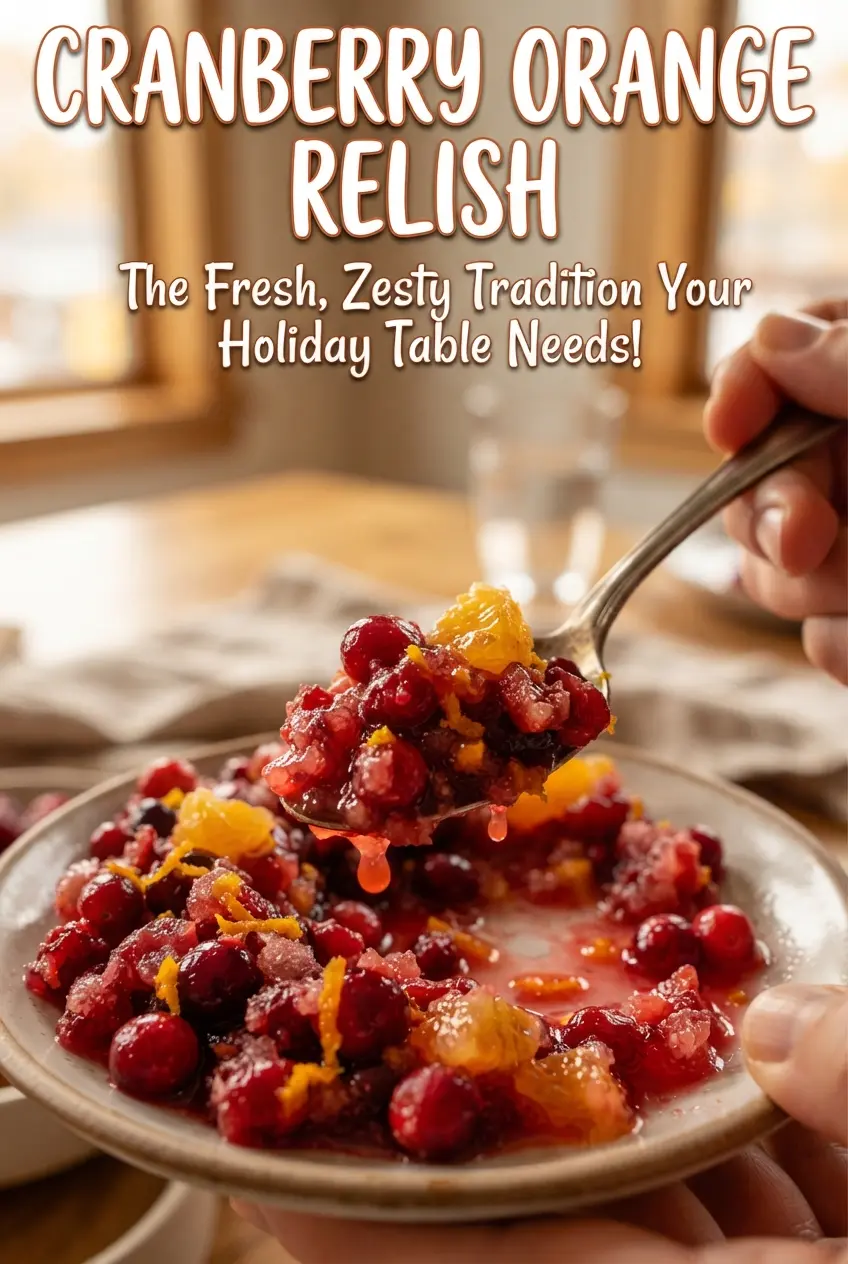
Cranberry Orange Relish
Ingredients
Equipment
Method
- Pulse the fresh cranberries and orange chunks in a food processor until finely chopped but not pureed. Scrape down once if needed so the texture stays mostly uniform.
- Transfer the chopped cranberry-orange mixture to a bowl and stir in the sugar, orange liqueur (or orange juice), and salt until evenly distributed. The sugar should look mostly damp and glossy.
- Cover the bowl and chill for at least 4 hours or overnight. Keep it cold so the relish thickens slightly and the flavors meld.
- Stir the relish well before serving to redistribute any liquid that may have released in the fridge. The chop should look bright and evenly coated.
- Garnish with fresh mint just before serving. Add mint leaves for a fresh green contrast over the cranberry-orange surface.