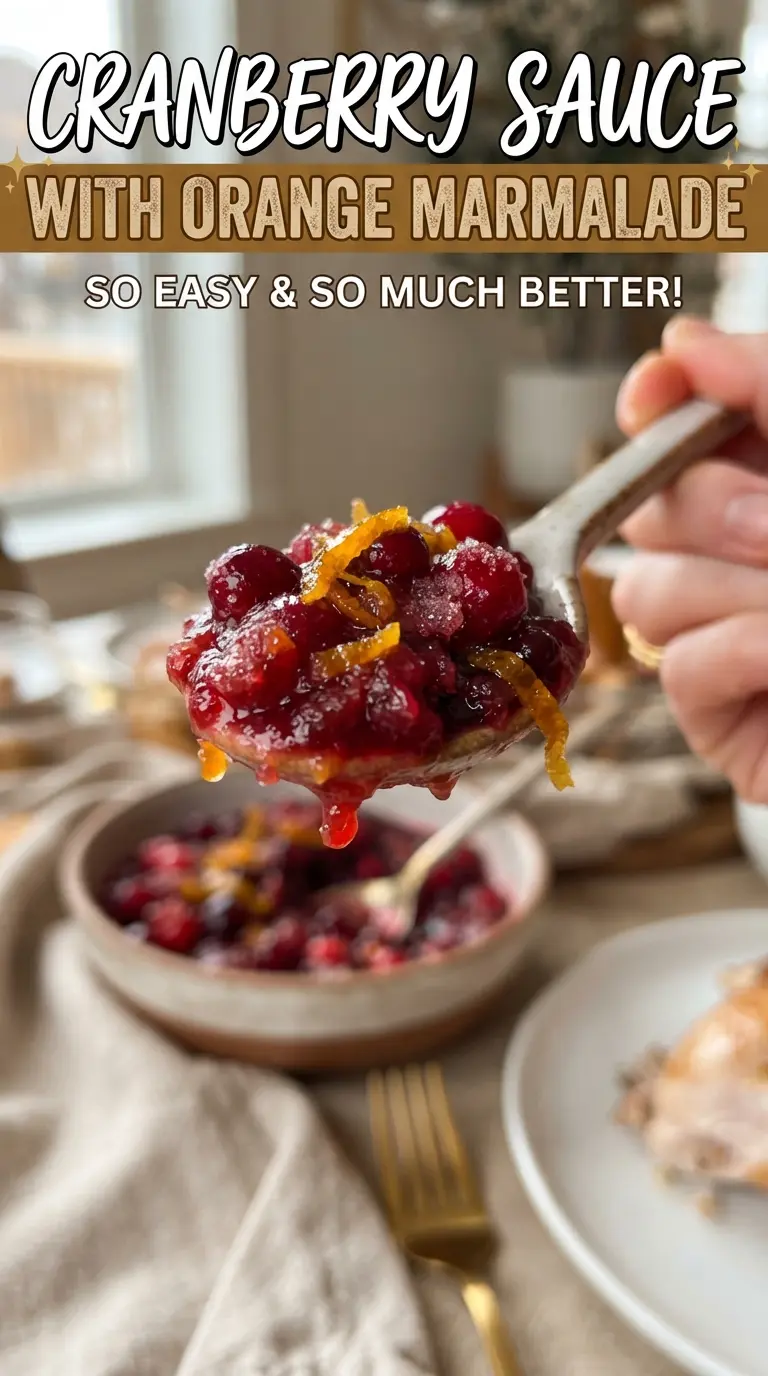
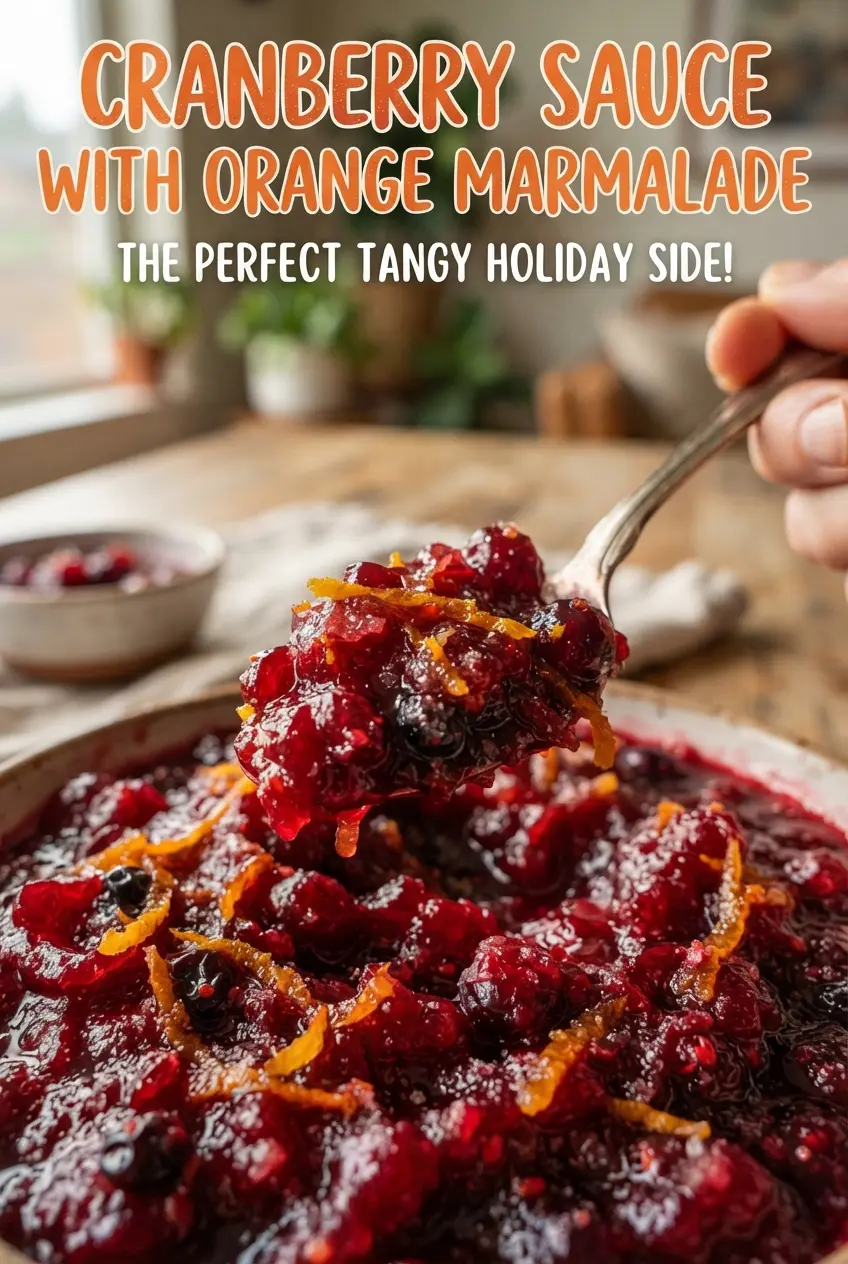
Bright cranberry sauce gets a lift from orange marmalade, and the difference is immediate: deeper citrus flavor, a glossy finish, and just enough bitterness from the peel to keep the sweetness in check. It sets up with a spoonable texture that feels fresh instead of canned, and it lands on the plate with that classic tart-sweet pop people expect at the table.
The trick is to let the cranberries burst first, then add the marmalade near the end so its texture stays lively instead of melting into the pot. The sugar-water base gives the berries a clean start, while lemon juice sharpens the flavor and keeps the sauce from tasting flat. A small pinch of salt matters here too; it doesn’t make the sauce salty, it just makes the fruit taste more like itself.
Below, you’ll find the one detail that keeps this sauce glossy instead of dull, plus a few easy swaps if your marmalade is extra chunky or you want a softer citrus edge.
The sauce thickened up beautifully and the marmalade left little bits of orange peel that made it taste homemade in the best way. I chilled it overnight and it was perfect on turkey sandwiches the next day.
Save this cranberry sauce with orange marmalade for a glossy, tart-sweet side that wakes up any holiday plate.
The Secret to Keeping Cranberry Sauce Bright Instead of Flat
The mistake with cranberry sauce is cooking it down until it tastes only sweet and thick. Cranberries bring their own pectin, so they thicken fast once they burst, and if you chase a jam-like texture for too long, the flavor goes dull. This version stays lively because the marmalade goes in after the berries have already broken down, which keeps the citrus aroma on top instead of buried in the pot.
Watch the simmer, not the clock alone. You want most of the berries to pop open and the liquid to turn slightly syrupy before the marmalade goes in. If the pan boils hard the whole time, the sauce can spit and reduce too quickly, leaving you with something stiff before the fruit has had time to soften properly.
- Cranberries — Fresh berries give the cleanest tart flavor and the best natural thickening. Frozen cranberries work too; don’t thaw them first, just add a minute or two to the simmer.
- Orange marmalade — This is the ingredient that gives the sauce its peel-flecked finish and deeper citrus note. A chunky marmalade adds texture, while a smoother one makes a silkier sauce.
- Lemon juice — It sharpens the cranberry flavor and keeps the sauce from leaning too sweet. If your marmalade is very sweet, this little bit of acid matters even more.
- Sugar and water — The sugar helps the berries cook into a glossy sauce, and the water gives them room to burst without scorching. Honey can work in a pinch, but it changes the flavor and can mute the bright cranberry edge.
What Each Ingredient Is Actually Doing in This Recipe
- Primary ingredient (the star) — Quality matters most. Choose the best you can find.
- Cooking medium (oil, butter, or broth) — This carries flavors and prevents dryness.
- Seasonings (salt, pepper, spices, herbs) — Layer flavors so nothing overpowers. Build depth gradually.
- Aromatics (garlic, onion, herbs) — Cook with fat to bloom flavors. Become the foundation.
- Supporting ingredients — Complement the main ingredient without overpowering it.
- Sauce or liquid (if applicable) — Brings flavors together. Balance richness with acid.
- Acid (lemon, vinegar, wine, or other) — Brightens and prevents flat-tasting results.
- Final finish (garnish, glaze, or sauce) — Prevents one-dimensional taste and adds visual appeal.
How to Build the Glossy Finish Without Overcooking the Fruit
Starting the Syrup
Bring the sugar and water to a full boil first, just until the sugar dissolves and the liquid looks clear. That gives the cranberries an even cooking bath from the start instead of making them fight grainy sugar at the bottom of the pan. Use a saucepan with enough room for the berries to move, because the first few bursts can bubble up fast.
Letting the Cranberries Pop
Add the cranberries and keep the heat at a steady simmer. After a few minutes, you’ll hear the first pops, then see the berries split and the liquid turn ruby red. Stop when most of the berries have burst but a few still hold their shape; if you cook until every berry collapses completely, the sauce gets too thick and loses freshness.
Finishing With Marmalade
Stir in the orange marmalade, lemon juice, and salt near the end, then simmer just long enough for the sauce to turn glossy and slightly thickened. This short finish keeps the marmalade bright and lets the citrus peel stay noticeable instead of dissolving away. Pull it off the heat while it’s still a touch loose, because cranberry sauce thickens a lot as it cools.
Cooling for the Right Texture
Let the sauce cool at room temperature before chilling it. If you refrigerate it while it’s still piping hot, the center can stay thin while the edges set too hard, which makes the texture uneven. Once chilled, it should mound softly on a spoon and hold clean lines when you drag a utensil through it.
What to Change When You Want a Sweeter or Sharper Sauce
Use a smoother marmalade for a silkier sauce
A fine-cut marmalade melts more evenly into the sauce and gives you a cleaner finish with less visible peel. The flavor stays the same, but the texture shifts from rustic and chunky to more polished.
Cut the sugar slightly for a tarter side
You can drop the sugar by a couple of tablespoons if you like a sharper cranberry bite, especially if your marmalade is already sweet. The sauce will still thicken, but the fruit will taste brighter and less dessert-like.
Make it vegan and naturally gluten-free
This recipe already fits both diets as written, which is part of why it works so well for a crowd. Just check that your marmalade is fruit-forward and not packed with odd add-ins, since the sauce depends on simple ingredients for its clean taste.
Scale it up for a bigger table
This sauce doubles easily in a wider pot. Give it a little extra simmer time after the cranberries burst so the larger batch has time to thicken evenly instead of staying watery in the center.
Storage and Reheating
- Refrigerator: Store covered for up to 1 week. It thickens as it chills, so don’t judge the final texture while it’s still warm.
- Freezer: Freezes well for up to 2 months in an airtight container, leaving a little room at the top for expansion.
- Reheating: Serve it cold or let it come to room temperature. If you want it warm, heat it gently over low heat with a splash of water; high heat can make it break down into a loose, overcooked jam.
Answers to the Questions Worth Asking
Cranberry Sauce with Orange Marmalade
Ingredients
Method
- Bring sugar and water to a boil in a saucepan, stirring until the sugar dissolves. Keep it at a steady boil with small bubbles for clear syrup.
- Add fresh cranberries and simmer for 10 minutes until the berries burst. You should see popping berries and a thickening ruby sauce.
- Stir in orange marmalade, lemon juice, and salt until fully combined. The color should turn glossy with golden-orange streaks.
- Simmer for 2-3 minutes until glossy, stirring occasionally. The sauce should coat a spoon lightly and look shiny.
- Cool the cranberry sauce to room temperature before serving. Cover it once cool and chill to help it set for a clean sliceable spoon.