Golden seared chicken breasts in a garlic Parmesan cream sauce earn their keep fast. The chicken stays juicy under a glossy, spoon-coating sauce, and the whole skillet tastes like it took a lot more effort than it did. It’s the kind of dinner that disappears while the sauce is still warm enough to cling to bread, potatoes, or a pile of pasta.
What makes this version work is the order. The chicken gets a hard sear first, which builds flavor in the pan and gives the sauce something worth scraping up. Then the garlic cooks briefly in butter before the wine or broth loosens every browned bit from the bottom. Parmesan goes into the cream over a gentle simmer, not a boil, so the sauce thickens smoothly instead of turning grainy.
Below, I’ve included the one timing detail that keeps the sauce glossy, plus a few swaps that still keep the skillet balanced if you’re working with what’s already in the kitchen.
The sauce thickened up exactly like you said and never turned grainy. I served it with mashed potatoes, and my husband kept going back to spoon more sauce over everything.
Save this creamy garlic Parmesan chicken for the night you want a silky skillet sauce with almost no cleanup.
The Sear Is Doing More Than Browning the Chicken
The biggest mistake with a cream sauce chicken skillet is treating the chicken and sauce like separate jobs. They’re not. The sear leaves caramelized bits in the pan, and those browned drippings are what give the sauce its depth instead of making it taste flat and milky.
Pull the chicken once it reaches 165°F, not when the outside just looks done. Thin breasts can overcook fast, and if you rush straight into the sauce before the pan cools a little, the cream can tighten up too fast and the Parmesan won’t melt cleanly. A brief rest keeps the meat juicy and gives you a better sauce window.
What Each Ingredient Is Actually Doing in the Pan
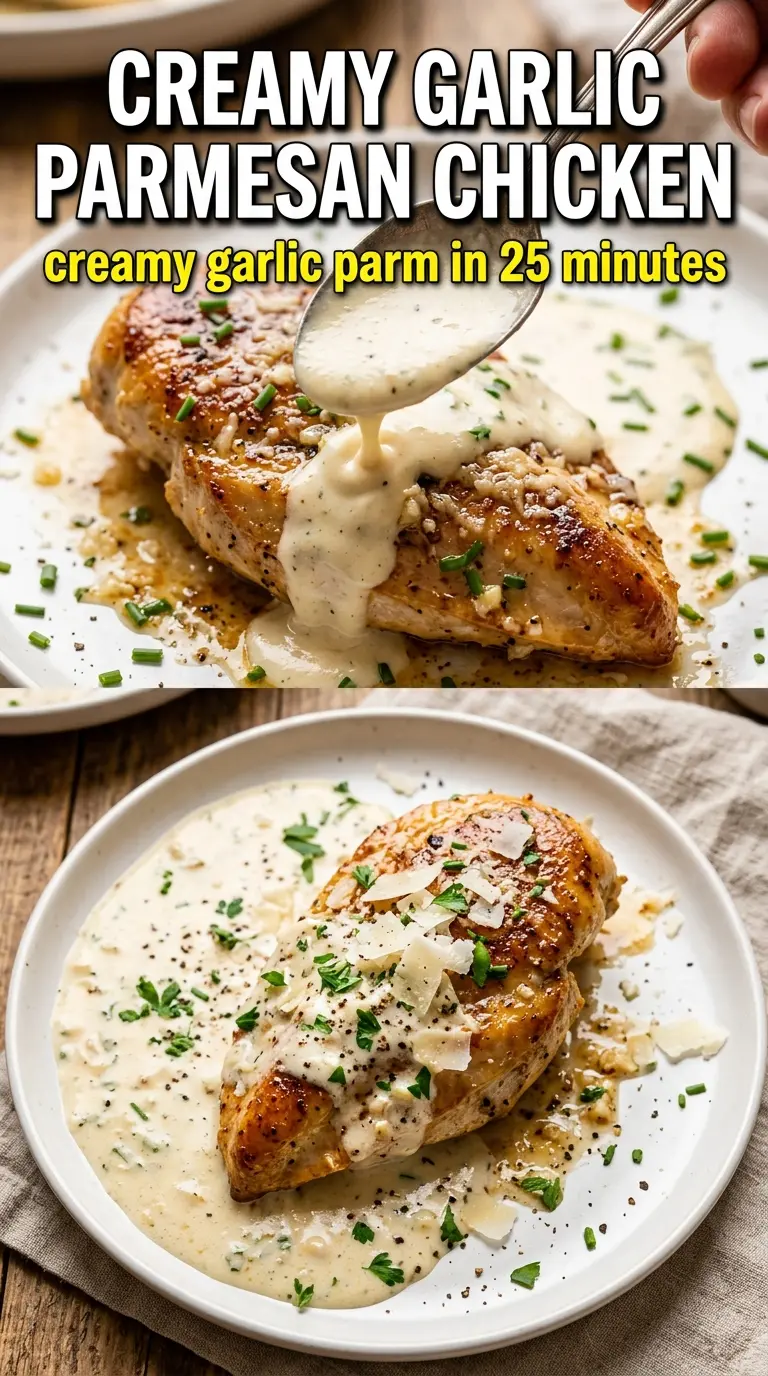
- Chicken breasts — Boneless, skinless breasts stay classic here because they sear well and slice cleanly under the sauce. If yours are very thick, pound them to an even thickness so the outside doesn’t dry out before the center cooks through.
- Freshly grated Parmesan — This is the ingredient that changes the sauce from thin cream to something that clings. Pre-grated cheese often has starches that make the sauce sandy or oddly thick; fresh grates melt smoother and taste sharper.
- Heavy cream — Heavy cream holds up to simmering without breaking as easily as half-and-half. That extra fat is what gives the sauce its velvet finish.
- Dry white wine or chicken broth — Wine adds a little acidity and depth, while broth keeps the skillet family-friendly and still deglazes the pan well. If you use broth, add a tiny splash of lemon at the end only if the sauce tastes heavy.
- Garlic — Six cloves sounds like a lot, but it’s what makes the sauce taste like garlic Parmesan instead of plain cream with cheese. Cook it just until fragrant; browned garlic turns bitter fast.
- Italian seasoning, thyme, and parsley — The seasoning builds the base, and the fresh herbs keep the sauce from feeling one-note. Parsley especially matters at the end because it cuts through the richness.
Building the Sauce Without Breaking It
Season and Sear First
Coat both sides of the chicken generously with salt, pepper, garlic powder, and smoked paprika, then sear it in hot olive oil until the surface is deep golden and the pan releases it without sticking. That color is flavor, and it also tells you the chicken has enough structure to finish in the sauce without falling apart. If the pan is crowded, the chicken will steam instead of browning, so give each breast room.
Use the Pan Drippings
Once the chicken comes out, add the butter and garlic straight into the same skillet. Stir just until the garlic smells sweet and fragrant, then pour in the wine or broth to lift the browned bits off the bottom. If those bits stay stuck, the sauce loses a lot of its depth, and if you let the garlic go too long before deglazing, it can taste harsh.
Simmer the Cream Gently
Add the cream, broth, Parmesan, and Italian seasoning, then let the sauce bubble at a low simmer until it thickens and turns glossy enough to coat a spoon. Keep the heat moderate or low; a hard boil can make the dairy separate and the cheese turn grainy. You’re looking for a sauce that slides slowly across the pan instead of looking thin and watery.
Finish the Chicken in the Sauce
Return the chicken to the skillet and spoon sauce over the top until each piece is glazed. Let it warm through for a minute or two, just long enough for the sauce to settle back around the chicken. Finish with thyme and parsley right before serving so the herbs stay fresh and don’t disappear into the cream.
How to Adapt This Skillet When You Need a Different Finish
Dairy-Free Version With a Different Kind of Richness
Use a full-fat unsweetened coconut cream or cashew cream in place of the heavy cream, and add a little extra broth so the sauce doesn’t get too thick. You’ll lose some of the classic dairy tang, but the sauce still coats the chicken well if you keep the heat low and whisk in the Parmesan-style alternative gently.
Gluten-Free by Default
This recipe is naturally gluten-free as written as long as your broth is certified gluten-free. The only place people get tripped up is with packaged seasoning blends, so check the label if you’re not using separate spices.
Chicken Thighs for a Juicier Skillet
Boneless, skinless thighs work well if you want a juicier cut and don’t mind a little more richness. They usually need a few extra minutes in the pan, and the sauce picks up even more savory depth from the drippings.
Make It Lighter Without Losing the Skillet Feel
You can use half chicken broth and half cream to lighten the sauce, but expect a thinner finish that won’t cling as heavily to the chicken. Let it simmer a minute longer if needed, but don’t push it to a hard boil or the sauce can split.
Storage and Reheating
- Refrigerator: Store leftovers in an airtight container for up to 3 days. The sauce will thicken as it chills.
- Freezer: Freezing isn’t my first choice for this one because cream sauces can separate after thawing. If you do freeze it, cool completely and reheat gently with a splash of broth.
- Reheating: Warm it slowly in a covered skillet over low heat with a spoonful of broth or cream. High heat is the mistake here; it can make the sauce look broken before the chicken is heated through.
Questions I Get Asked About This Recipe

Creamy Garlic Parmesan Chicken
Ingredients
Equipment
Method
- Season the chicken breasts generously on both sides with salt, pepper, garlic powder, and smoked paprika.
- Heat the olive oil in a large skillet over medium-high heat, then sear the chicken for 5-6 minutes per side until golden and an internal temperature of 165°F is reached; remove to a plate.
- Add the butter and minced garlic to the same pan and cook for 1 minute until fragrant, stirring as needed so the garlic doesn’t brown.
- Pour in the dry white wine and cook for 2 minutes, scraping up the browned bits (deglaze) so they dissolve into the pan juices.
- Stir in the heavy cream, chicken broth, Parmesan cheese, and Italian seasoning, then simmer for 4-5 minutes until the sauce is thick and glossy.
- Return the chicken to the pan and spoon the sauce over each breast so the tops are coated.
- Garnish with fresh thyme and parsley, then serve with any extra sauce from the skillet.