Golden chicken thighs over a creamy Parmesan orzo make the kind of dinner that disappears fast, mostly because every spoonful hits with something different: crisp-edged chicken, tender pasta, wilted spinach, and little bursts of sun-dried tomato. The orzo cooks right in the sauce, so it soaks up the chicken broth and cream instead of sitting on the side like a separate pasta that got dressed at the last minute. That gives you a dish that feels rich and cohesive without turning heavy or gluey.
The trick here is layering flavor in the pan. Browning the chicken first leaves behind the good stuff on the bottom, and the garlic and orzo pick it up before the broth goes in. Parmesan goes in after the pasta has softened, not before, which keeps the sauce smooth instead of grainy. Spinach and sun-dried tomatoes finish the dish with color and contrast, but they don’t need long cooking to do their job.
Below, I’ve included the small decisions that matter most: how to keep the orzo creamy, what to watch for when the sauce starts to tighten, and the best way to swap ingredients if you need to work with what’s already in your kitchen.
The orzo turned out creamy without getting mushy, and the chicken stayed juicy even after I nestled it back in at the end. My husband said the sun-dried tomatoes made it taste like something from a restaurant.
Save this creamy Parmesan chicken and orzo for the nights when you want one skillet, silky sauce, and juicy chicken without a pile of dishes.
The Sear That Gives the Orzo Its Best Flavor
The chicken needs to brown before anything else goes into the pan. That first sear builds the savory base for the whole dish, and it also gives the sauce depth that plain simmering never can. If the chicken is crowded or the pan isn’t hot enough, it steams instead of browns, and the final dish tastes flatter no matter how much Parmesan you add later.
Use medium-high heat and let the thighs sit long enough to release cleanly. They should have a deep golden crust and an internal temperature that’s fully cooked, because they won’t spend much time in the pan at the end. The orzo benefits from those browned bits left behind, so don’t wipe out the skillet after the chicken comes out.
What Each Ingredient Is Actually Doing in This Dish
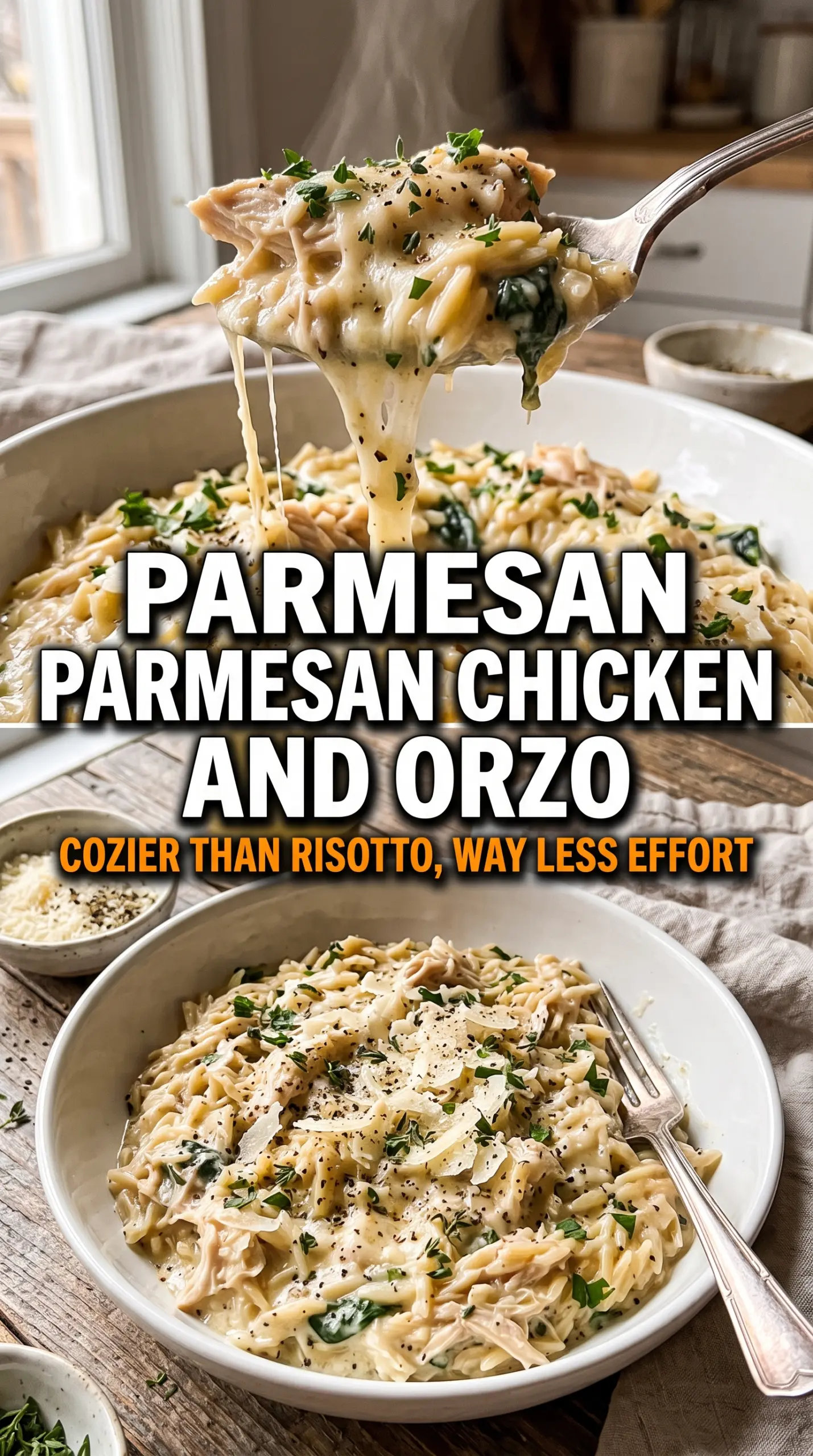
- Chicken thighs — Boneless, skinless thighs stay juicy through the sear and the final warm-up. Chicken breasts can work, but they dry out faster, so slice them thinner and pull them sooner if you use them.
- Orzo — This is the pasta that makes the sauce feel silky and spoonable. Regular long pasta won’t give you the same risotto-like texture because it doesn’t release and absorb in the same way.
- Heavy cream — Cream gives the sauce body without needing a flour slurry. Half-and-half can work in a pinch, but the sauce will be thinner and needs a little extra simmer time.
- Parmesan — Use grated Parmesan, not the powdery shelf-stable kind, if you want the sauce to melt smoothly. Add it off the hottest part of the flame so it doesn’t clump or turn gritty.
- Sun-dried tomatoes — These add a sweet-tart punch that keeps the dish from tasting one-note. Oil-packed tomatoes bring the best texture, but dry-packed ones are fine if you soak them briefly in hot water first.
- Spinach — Baby spinach wilts fast and disappears into the orzo without turning the dish watery. Chop larger leaves if yours are especially big so they fold in evenly.
Building the Sauce So It Stays Creamy, Not Gritty
Brown the Chicken First
Season the thighs well, then sear them in olive oil until both sides are deeply golden. You’re looking for color, not just doneness; that crust is where the best flavor starts. Pull the chicken to a plate once it’s cooked through so it doesn’t overcook while the orzo simmers.
Toast the Orzo in the Pan
Garlic goes in briefly, just long enough to smell fragrant, then the dry orzo follows. Stir for about a minute so the pasta gets coated in the fat and picks up the browned bits on the bottom. If the garlic starts to darken, the heat is too high and it’ll turn bitter fast.
Simmer Until the Liquid Tightens
Pour in the broth and cream, then keep the pot at a steady simmer, not a hard boil. Stir often because orzo sinks and sticks if you walk away, and the starch is part of what gives you that creamy finish. If the mixture looks too loose near the end, keep cooking; if it looks dry before the orzo is tender, add a splash more broth.
Finish Off the Heat
Stir in the Parmesan, spinach, and sun-dried tomatoes once the pasta is tender. The cheese melts best when the heat is lowered, and the spinach only needs a minute or two to wilt. Nestle the chicken back in at the end so it warms through without giving up all its juices.
Make It Lighter with Chicken Breast
Chicken breast works if that’s what you have, but it needs less time in the skillet and a gentler finish. Cut it into even cutlets so it cooks through before the outside dries out, and pull it as soon as the center hits temperature. You’ll get a slightly leaner dish with less richness, but the orzo still carries the creaminess.
Dairy-Free Version
Use full-fat canned coconut milk instead of heavy cream and skip the Parmesan, or swap in a dairy-free Parmesan-style cheese if you like. The sauce won’t taste as sharp or savory, but it will still turn creamy and cling to the orzo. Add a little extra salt and a squeeze of lemon at the end to wake it up.
Gluten-Free Adjustment
Use a gluten-free orzo or another small gluten-free pasta with a similar cook time. Keep an eye on the liquid, because some gluten-free pastas release less starch and may need a splash more broth to stay saucy. Stir often so nothing sticks to the bottom of the pan.
Extra Veggies Without Throwing Off the Texture
Mushrooms, chopped zucchini, or peas all fit here, but add them with the spinach or just before it. Anything watery should be cooked down first, or it’ll thin out the sauce. Keep the add-ins modest so the orzo stays the main event.
Storage and Reheating
- Refrigerator: Store in an airtight container for up to 4 days. The orzo will thicken as it sits.
- Freezer: It freezes, but the cream sauce can separate a little after thawing, so the texture won’t be as smooth. Freeze in portions for up to 2 months if you don’t mind a looser finish.
- Reheating: Reheat gently on the stove or in the microwave with a splash of broth or cream. High heat tightens the sauce too fast and makes the pasta dry before the center is hot.
Answers to the Questions Worth Asking

Creamy Parmesan Chicken and Orzo
Ingredients
Equipment
Method
- Season boneless skinless chicken thighs with salt, pepper, garlic powder, Italian seasoning, and smoked paprika to taste. Heat a large skillet with olive oil over medium-high heat and sear the chicken for 4-5 minutes per side until golden and cooked through, then remove.
- In the same pan, cook minced garlic for 30 seconds until fragrant. Add uncooked orzo and toast for 1 minute.
- Pour in chicken broth and heavy cream, then bring to a simmer. Cook uncovered for 10-12 minutes, stirring often, until orzo is tender and the sauce is creamy.
- Stir in Parmesan cheese, baby spinach, and sliced sun-dried tomatoes. Cook just until the spinach wilts.
- Nestle the seared chicken thighs back into the orzo and heat through for 2 minutes. Garnish with fresh basil and serve.