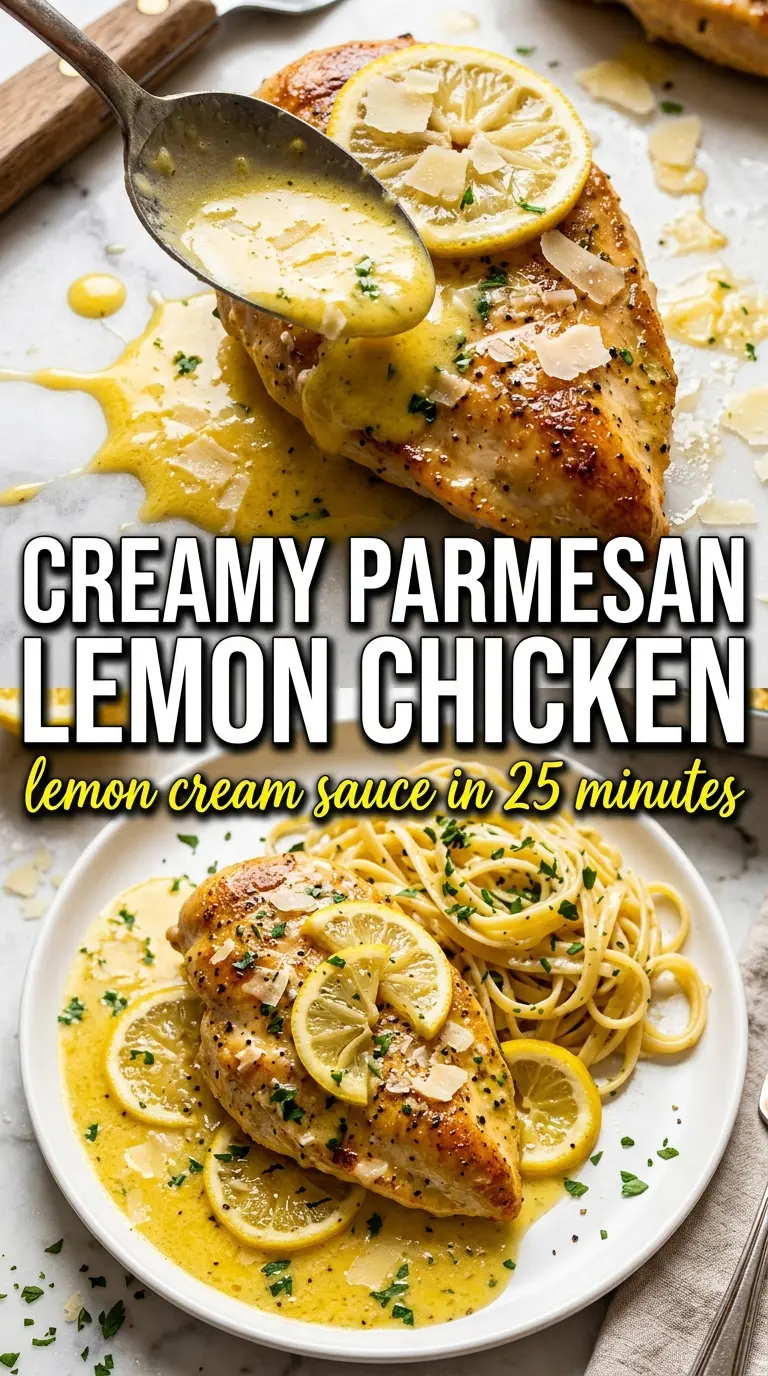
Golden seared chicken breasts tucked into a silky lemon Parmesan cream sauce earn their place on the regular dinner rotation fast. The chicken stays juicy, the sauce turns glossy without feeling heavy, and the lemon keeps the richness from going flat. It’s the kind of skillet dinner that looks restaurant-polished but lands on the table with very little fuss.
The trick is in the order: sear the chicken first, then build the sauce in the same pan so the browned bits can work for you. Freshly grated Parmesan melts cleanly into the cream, while lemon juice and zest go in near the end so the sauce stays bright instead of turning sharp or grainy. A quick swirl of butter at the finish gives it that sheen you want when you spoon it over the chicken.
Below, I’ll show you how to keep the sauce smooth, which ingredient is worth buying fresh, and the small timing details that keep this dish from going from silky to split.
The sauce stayed perfectly smooth and clung to the chicken instead of pooling on the plate. I used the chicken broth version and it still tasted rich, with just enough lemon to keep it bright.
Creamy Parmesan Lemon Chicken with that glossy lemon sauce belongs in your Pinterest dinner file.
The Sear Is Doing More Than Browning the Chicken
If the chicken goes pale and steamy instead of deeply golden, the sauce loses a lot of what makes this dish taste like it came from a good skillet, not a rushed one. That first sear builds flavor in the pan, gives the chicken a better texture, and leaves behind the browned bits that turn the sauce from flat to layered.
Heat matters here. Medium-high is hot enough to brown the chicken before it dries out, but not so hot that the garlic scorches later. If the chicken is sticking, it’s not ready to turn yet. Let it release on its own and you’ll get that clean crust instead of tearing the surface.
- Chicken breasts — Pound them to even thickness if one end is much thicker than the other. That keeps the cooking time consistent and stops the thinner side from drying out while you wait for the center to finish.
- Dry white wine or chicken broth — Wine adds a little edge and depth, but broth works well if that’s what you’ve got. Use something you’d actually drink if you choose wine; a harsh cooking wine will show up in the finished sauce.
- Freshly grated Parmesan — This is worth grating yourself. Pre-shredded cheese often has anti-caking agents that can leave the sauce grainy instead of smooth.
- Lemon juice and zest — Juice gives the brightness, zest gives the perfume. If you only use juice, the sauce tastes thinner; if you only use zest, it won’t have enough lift.
Building the Sauce Without Letting It Break
- Heavy cream — Use the real thing here. Lower-fat cream or half-and-half is more likely to curdle once the lemon goes in, especially if the pan is too hot.
- Butter — Stir it in at the end for gloss and a softer finish. It rounds out the lemon and helps the sauce cling to the chicken instead of looking a little thin.
- Garlic — Mince it fine so it cooks in 30 seconds and melts into the sauce. Bigger pieces are more likely to taste sharp or burn while you’re deglazing.
- Italian seasoning — It gives the chicken a background note without taking over. Since the sauce is already rich, you want enough herb flavor to balance it, not overwhelm it.
Getting the Chicken and Sauce to Finish at the Same Time
Season and Sear the Chicken
Season the chicken generously on both sides, then lay it into the hot oil and leave it alone long enough to form a deep golden crust. You want the surface to release cleanly before you turn it; if you force it, the coating tears and the pan loses that browned base. Cook until the internal temperature reaches 165°F, then move the chicken to a plate while you build the sauce.
Wake Up the Pan
Add the garlic and stir just until fragrant, about 30 seconds. It should smell sweet and savory, not sharp or bitter. Pour in the wine or broth and scrape up every browned bit from the bottom of the skillet, because that’s where the best flavor is hiding. Let it simmer for about 2 minutes so the liquid reduces a little and the raw edge cooks off.
Bring the Cream Sauce Together
Lower the heat before adding the cream, Parmesan, lemon juice, and zest. That drop in heat is what keeps the sauce smooth. Stir gently until the cheese melts and the sauce thickens enough to coat a spoon, then simmer just a few minutes more. If it starts looking grainy, the heat is too high; pull it back immediately and keep stirring over lower heat.
Finish With Butter and Return the Chicken
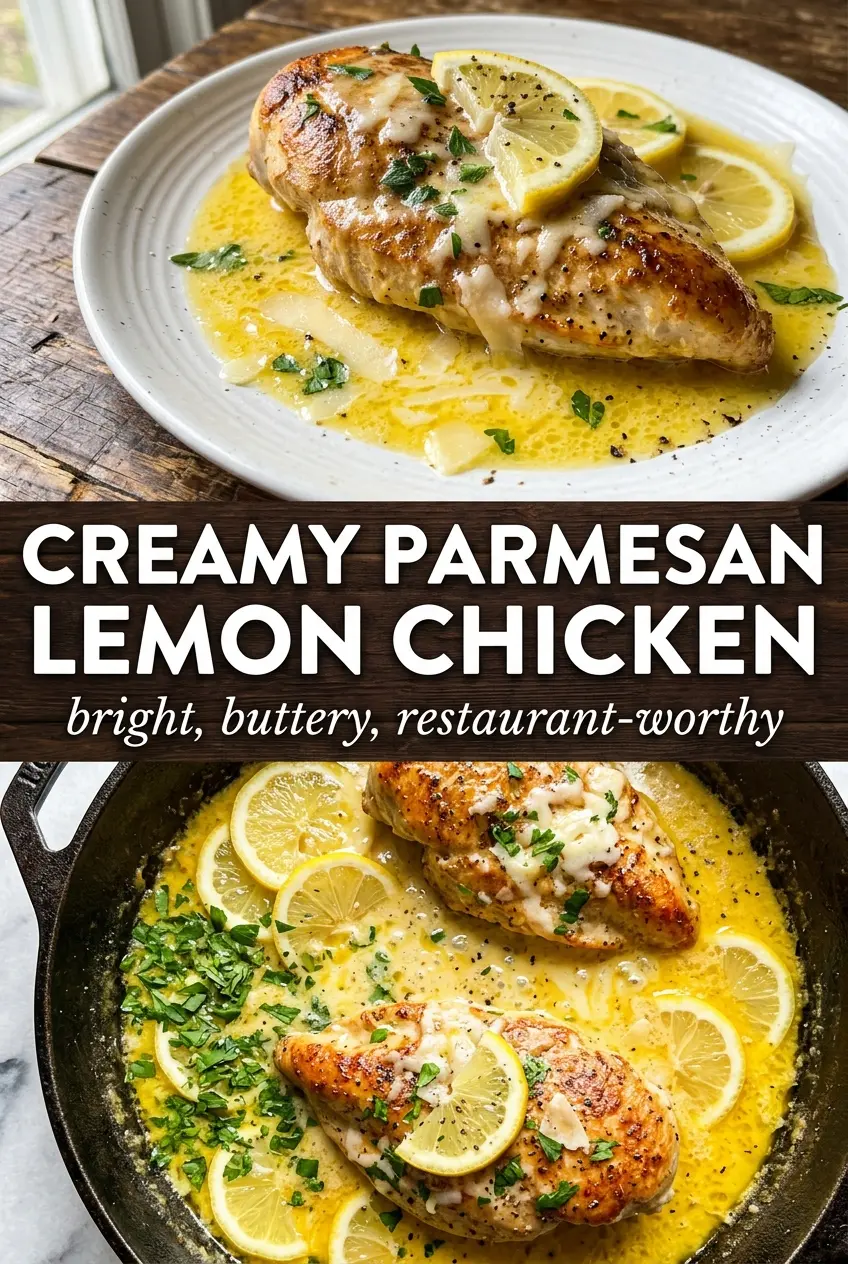
Swirl in the butter until the sauce turns glossy. Slide the chicken back into the skillet and spoon the sauce over each piece so it warms through and picks up the lemony finish. Garnish with parsley and lemon slices right at the end for freshness and a clean look.
How to Adapt This for a Lighter Table or a Bigger Crowd
Dairy-Free Version
Use full-fat coconut cream in place of heavy cream and skip the butter. The sauce won’t taste exactly the same, but it will still be rich and spoonable; keep the lemon a little lighter at first, then adjust at the end so the coconut flavor doesn’t get pushed too far.
Gluten-Free Dinner
This recipe is naturally gluten-free as written if your broth is certified gluten-free. The sauce needs no flour at all, so don’t add a roux unless you’re fixing a separate texture problem; the cream and Parmesan will thicken on their own.
Swap the Chicken Breasts for Thighs
Boneless skinless thighs work well if you want a little more richness and don’t mind a darker, juicier cut. They’ll usually need a few extra minutes in the skillet, but they’re more forgiving if you’re worried about dry chicken.
Make the Sauce for Pasta or Rice
If you want this to stretch farther, thin the finished sauce with a splash of broth and spoon it over pasta, rice, or mashed potatoes. The sauce clings best to wide noodles or something with a little texture, and it makes the whole dish feel more like a full pan meal.
Storage and Reheating
- Refrigerator: Store leftovers in an airtight container for up to 3 days. The sauce will thicken as it chills.
- Freezer: I don’t recommend freezing this one. Cream sauces often separate after thawing, and the texture won’t come back the same.
- Reheating: Warm it gently in a covered skillet over low heat with a splash of broth or cream. High heat is the fastest way to break the sauce and dry out the chicken.
Answers to the Questions Worth Asking
Creamy Parmesan Lemon Chicken
Ingredients
Equipment
Method
- Season the chicken breasts on both sides generously with salt, pepper, garlic powder, and Italian seasoning.
- Heat the olive oil in a large skillet over medium-high heat, then sear the chicken for 5-6 minutes per side until golden and the internal temperature reaches 165°F; remove to a plate.
- Add the minced garlic and cook for 30 seconds, then deglaze the pan with white wine and simmer for 2 minutes.
- Stir in the heavy cream, Parmesan cheese, fresh lemon juice, and lemon zest, then simmer for 4-5 minutes until the sauce thickens.
- Swirl in the butter until fully melted and the sauce looks glossy.
- Return the chicken breasts to the skillet, spoon the sauce over each breast, and garnish with fresh parsley and lemon slices.