Golden-seared chicken breasts in a silky tomato cream sauce earn a permanent spot in the dinner rotation because the sauce tastes like it simmered all afternoon, even though the whole dish lands on the table in under 40 minutes. The chicken stays juicy, the sauce turns a deep rosy pink, and the basil on top keeps the richness from feeling heavy.
The trick here is building the sauce in the same pan you used for the chicken. Those browned bits left behind are the backbone of the flavor, and a quick deglaze with white wine or broth lifts them cleanly into the sauce. Tomatoes bring the brightness, cream softens the edges, and Parmesan helps the sauce thicken without turning gloopy.
Below you’ll find the exact point where the sauce should look glossy instead of thin, plus a few smart swaps if you want to make this with what you’ve got on hand. It’s the kind of skillet dinner that feels a little more special than the effort it asks for.
The sauce turned that perfect rosy pink and clung to the chicken instead of pooling at the bottom of the pan. I served it with gnocchi and my husband asked if we could put it in the regular rotation.
Save this creamy tomato chicken for the nights when you want a silky skillet sauce with barely any cleanup.
The Sear That Keeps the Chicken Juicy Instead of Bland
The biggest mistake with creamy chicken dishes is rushing the first pan stage. If the chicken goes into a pan that isn’t hot enough, it steams before it browns, and the sauce has to work overtime to carry the flavor. A hard sear gives you a golden crust, better texture, and those browned bits that make the sauce taste like more than tomatoes and cream.
Cook the chicken in a single layer and leave it alone long enough to color deeply before turning. If it sticks, it usually needs another minute. Once it releases easily, the crust has set and the pan has done its job.
What Each Ingredient Is Actually Doing in This Sauce
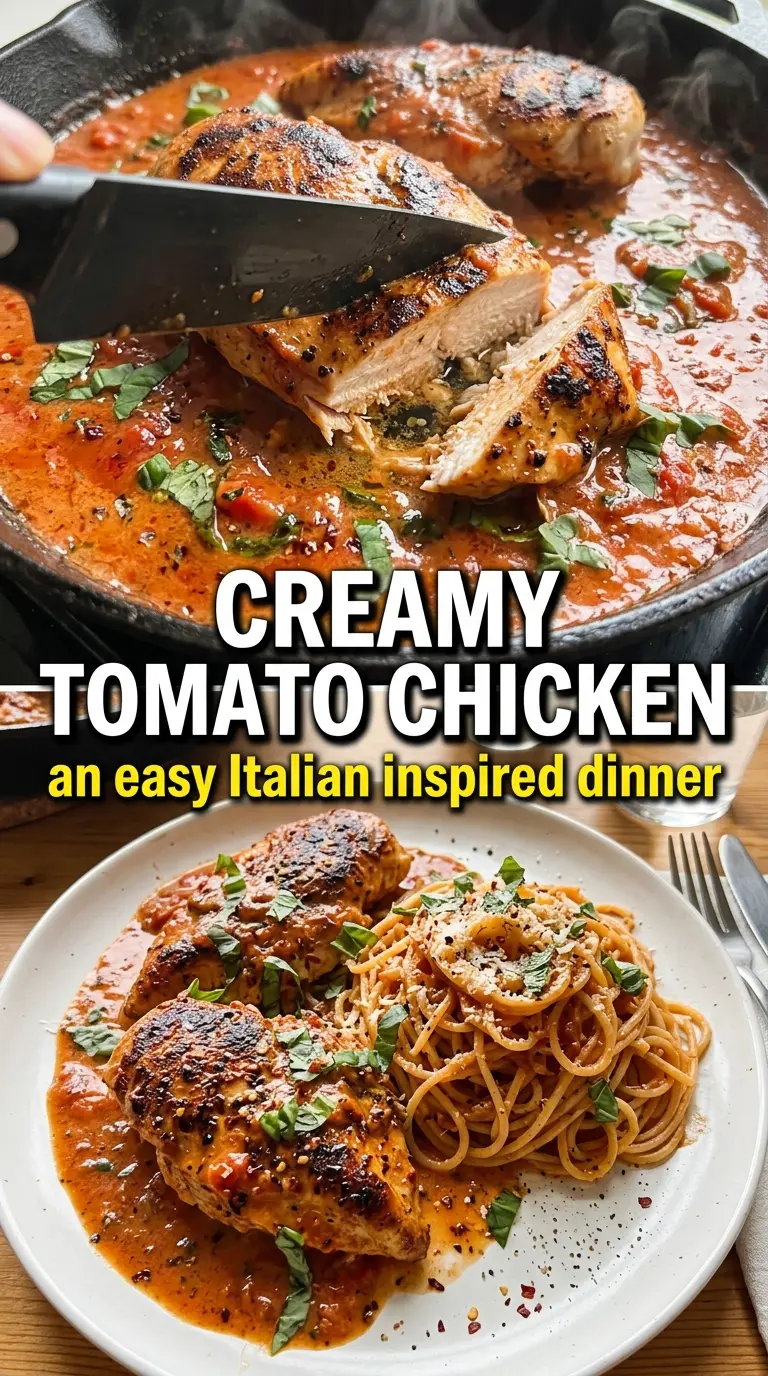
- Chicken breasts — Boneless, skinless breasts keep the cook time quick and let the sauce stay front and center. If yours are thick, pound them to an even thickness so the outside doesn’t overcook before the center reaches 165°F.
- Dry white wine or chicken broth — This is the deglazing step that pulls all the flavor off the pan. Wine gives the sauce a brighter edge, but broth works well if that’s what you have.
- Crushed tomatoes — Crushed tomatoes give the sauce body without making it chunky. If you use tomato sauce instead, the final texture will be smoother and a little less rustic.
- Heavy cream — Cream softens the acidity and turns the sauce rose-colored. Half-and-half can work in a pinch, but the sauce will be thinner and more likely to separate if it boils hard.
- Parmesan — Parmesan adds salt, depth, and a little natural thickening. Grate it finely so it melts into the sauce instead of clumping.
- Butter — Swirled in at the end, butter gives the sauce its glossy finish. Skip the high heat here; butter wants gentle heat or it can separate and lose that sheen.
Building the Sauce So It Stays Silky
Brown the Chicken First
Season the chicken well before it hits the pan, then sear it in olive oil over medium-high heat until both sides are deeply golden. The surface should look crisp at the edges and release without force when it’s ready to turn. Pull it out once it reaches 165°F in the center. If you leave it in while the sauce comes together, it will dry out before the finish is done.
Cook the Garlic Briefly, Then Deglaze
Garlic only needs about 30 seconds in the hot pan. You want it fragrant, not browned, because burnt garlic turns bitter fast. Pour in the wine or broth and scrape the pan until the browned bits lift cleanly into the liquid. That base is where the flavor lives, and skipping the scrape leaves a flat sauce.
Let the Tomatoes Simmer Before the Cream
Add the crushed tomatoes and Italian seasoning, then let them simmer for about 5 minutes. This takes the raw edge off the tomatoes and gives the sauce a stronger tomato backbone. Once the cream goes in, the color should shift to a rosy pink and the sauce should start to look smoother around the edges. If it still looks watery, give it another minute before moving on.
Finish Low and Slow
Stir in the cream, Parmesan, and red pepper flakes over low heat, then simmer gently until the sauce thickens. Don’t let it boil hard after the dairy goes in or the sauce can split and turn grainy. Finish with butter for shine, then return the chicken and spoon the sauce over the top so the meat warms through without overcooking.
Three Ways to Adapt This Skillet Chicken
Make It Dairy-Free
Swap the heavy cream for full-fat coconut milk and skip the Parmesan, or use a dairy-free Parmesan if you like a sharper finish. The sauce will still be creamy, but it will taste a little less savory and a little more rounded.
Use Chicken Thighs Instead
Boneless thighs bring more richness and stay juicy even if they cook a minute longer. They take a little more time to brown, but the payoff is a deeper, more forgiving main dish with a slightly richer sauce.
Make It Gluten-Free
This recipe is naturally gluten-free as written, as long as your broth and Parmesan are certified gluten-free. Serve it over polenta, rice, or gluten-free pasta and the sauce will still cling beautifully.
Add a Little Heat
Increase the red pepper flakes or add a pinch of cayenne with the tomatoes. That sharp little burn cuts through the cream and makes the sauce taste brighter, not just hotter.
Storage and Reheating
- Refrigerator: Store leftovers in an airtight container for up to 3 days. The sauce will thicken as it chills.
- Freezer: It freezes, but the cream sauce can separate a bit after thawing. If you plan to freeze it, cool it quickly and thaw gently in the fridge.
- Reheating: Warm it slowly over low heat with a splash of broth or water. High heat is the mistake here; it can make the cream break and the chicken dry out before the sauce loosens.
Questions I Get Asked About This Recipe
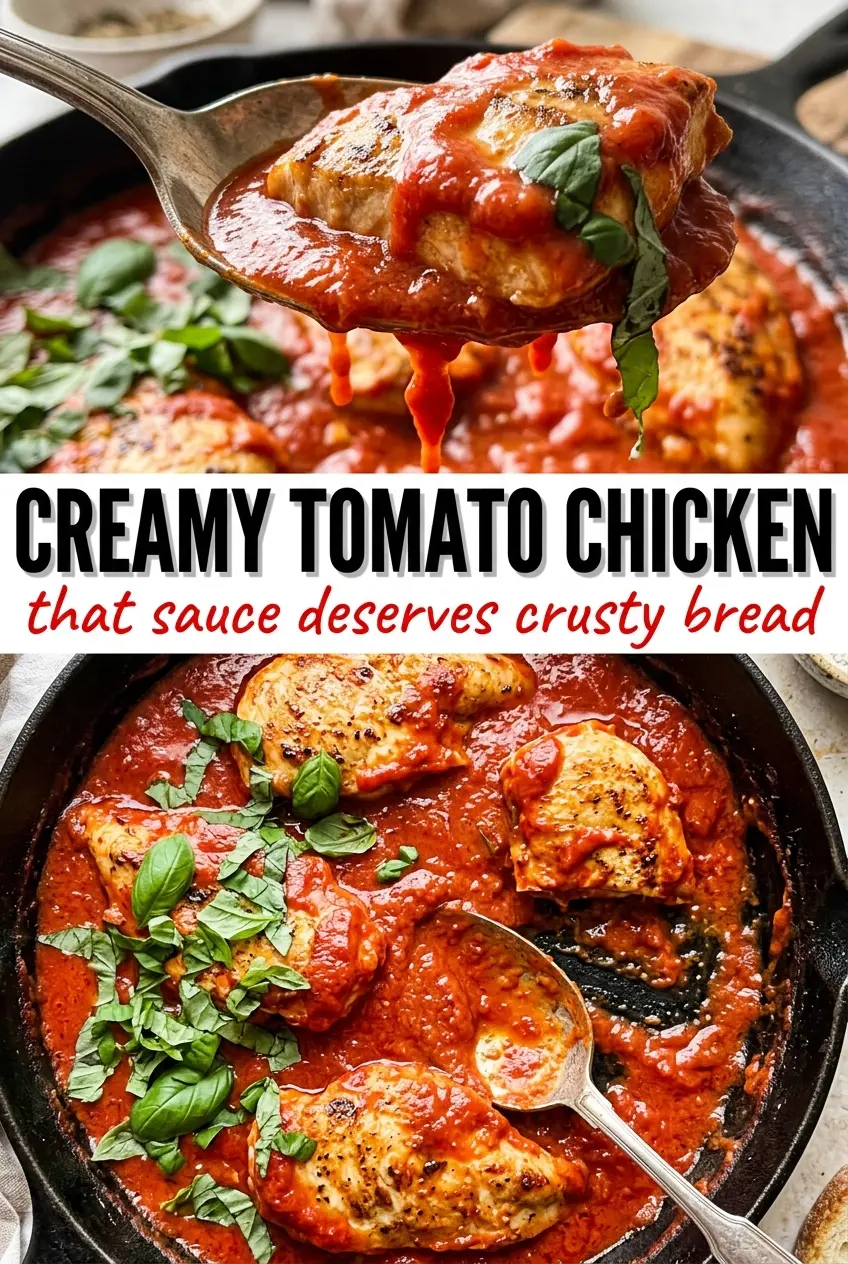
Creamy Tomato Chicken
Ingredients
Equipment
Method
- Pat chicken breasts dry and season both sides with salt, pepper, garlic powder, and Italian seasoning to taste. Heat the olive oil in a wide skillet over medium-high heat, then sear until deep golden with clear release from the pan, 5-6 minutes per side.
- Check doneness by measuring the thickest part of the chicken: internal temperature must reach 165°F. Remove chicken to a plate.
- Reduce heat to medium and add the minced garlic to the same skillet, cooking until fragrant, about 30 seconds. Pour in the white wine (or chicken broth) to deglaze, scraping up browned bits from the bottom.
- Stir in crushed tomatoes and the 1 teaspoon Italian seasoning, then bring to a simmer. Simmer for 5 minutes, stirring occasionally, until slightly thickened.
- Stir in heavy cream, Parmesan, and red pepper flakes. Simmer until the sauce thickens and turns rose-colored, about 4-5 minutes.
- Turn off the heat and swirl in the butter until fully melted and glossy.
- Return chicken breasts to the skillet and spoon the tomato cream sauce over the top of each piece. Garnish with fresh basil and serve over pasta or gnocchi.