Golden-seared gnocchi in a creamy skillet sauce is the kind of dinner that disappears fast because every bite hits something different: tender pasta pillows, salty sausage, sweet sun-dried tomatoes, and spinach that melts right into the cream. The best versions don’t feel heavy or one-note. They taste layered, with enough richness to coat the gnocchi without turning the whole pan into glue.
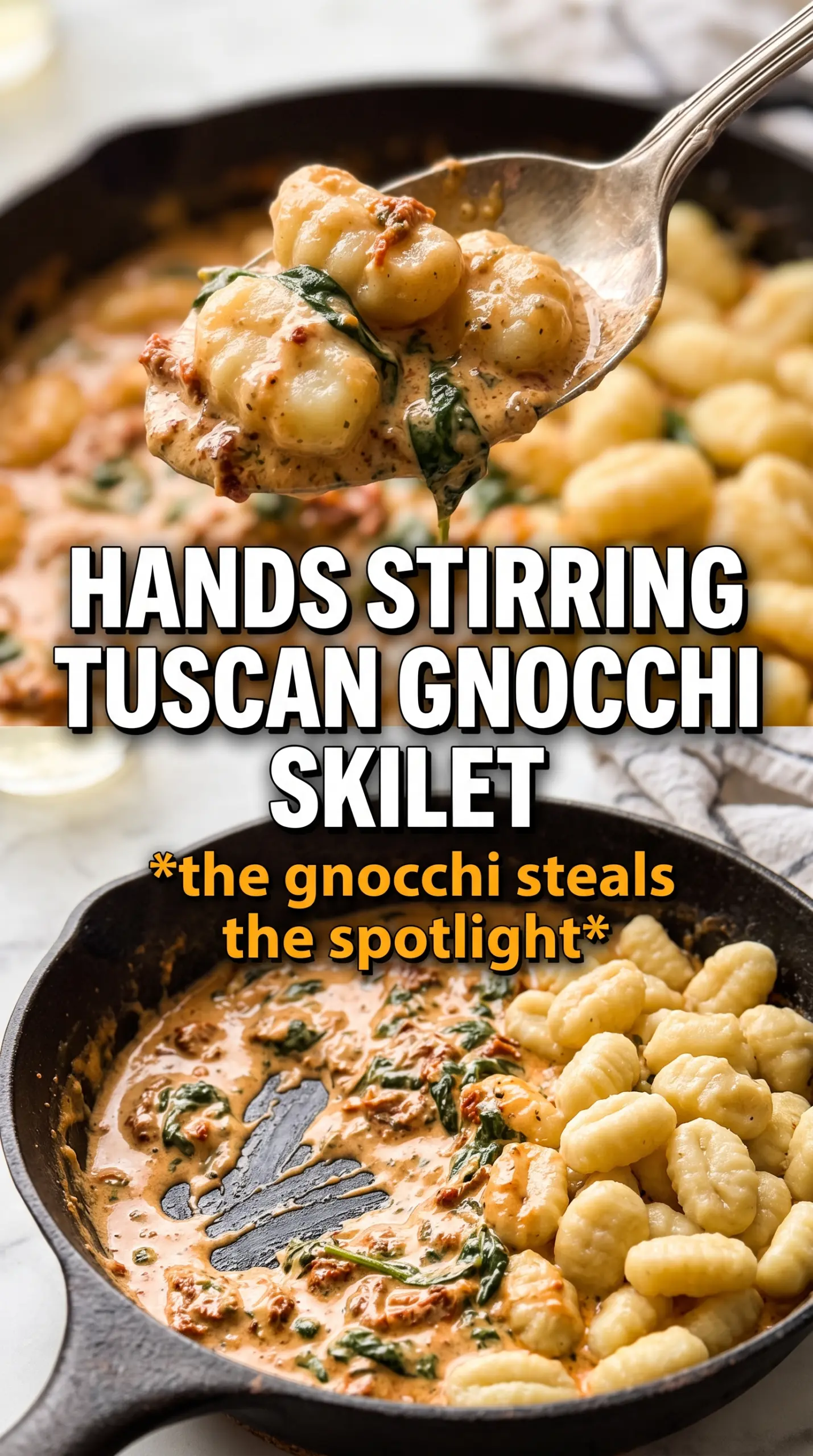
What makes this one work is that the sauce starts where the flavor already is. The sausage browns first, the garlic and sun-dried tomatoes go into that oil, and the cream only comes in after the pan has something worth building on. Parmesan thickens the sauce at the end instead of turning grainy, and the gnocchi are added straight into the skillet so they pick up the sauce instead of getting drained away from it.
Below, I’ll walk through the one detail that keeps the sauce smooth, the ingredient swaps that still make sense, and the small timing choices that keep the gnocchi tender instead of gummy.
The sauce came together silky smooth, and the gnocchi held their shape instead of getting mushy. I used hot Italian sausage and the little kick with the sun-dried tomatoes was perfect.
Save this Tuscan gnocchi for the nights when you want a creamy skillet dinner with browned sausage, sun-dried tomatoes, and barely any cleanup.
The Part Most People Rush: Building the Sauce Before the Cream
The biggest mistake with skillet gnocchi is dumping everything together and hoping the cream covers the rest. It won’t. This dish tastes full because the sausage leaves browned bits behind, and the sun-dried tomato oil carries flavor into the garlic before any dairy shows up. That base is what keeps the sauce from tasting flat.
Keep the heat at medium when the cream goes in. If the pan is screaming hot, the dairy can tighten up too fast and the parmesan has a better chance of turning a little sandy instead of melting into the sauce. A steady simmer is what you want: enough movement to thicken, not enough to separate.
- Browned sausage — This is your main seasoning, so let it take on color. Pale sausage tastes cooked; properly browned sausage tastes finished.
- Sun-dried tomato oil — Use it. It carries the tomato flavor into the garlic and gives the sauce a deeper, more rounded finish than plain olive oil.
- Parmesan — Grate it finely so it melts smoothly. Pre-shredded cheese often contains anti-caking agents that can make the sauce a little gritty.
- Gnocchi — Shelf-stable or refrigerated both work, but they need only a short cook. Overcooked gnocchi get dense and lose that soft, pillowy middle.
What Each Ingredient Is Actually Doing in This Skillet
- Italian sausage — This gives the dish its backbone. Hot sausage adds more kick; mild sausage keeps the sauce softer and lets the tomatoes lead.
- Heavy cream — This is what turns the pan juices into a real sauce. Half-and-half can work in a pinch, but it makes a thinner finish and needs a little more simmer time.
- Baby spinach — It looks like a lot, then collapses almost instantly. Add it at the end so it stays green and fresh instead of disappearing into the sauce.
- Sun-dried tomatoes — Chop them small so they spread through the pan instead of clumping in one bite. The oil-packed kind gives the best texture and the richest flavor.
- Gnocchi — The shortcut that makes this dinner feel much bigger than the effort it takes. Cook them just until they float or turn tender, then move them straight into the skillet so they absorb the sauce.
The Few Minutes That Keep the Gnocchi Tender and the Sauce Smooth
Getting Color on the Sausage
Cook the sausage in a large skillet until it’s deeply browned in spots and no longer pink. Don’t stir constantly; let it sit long enough to develop color, because that browning is where a lot of the flavor comes from. If the pan fills with too much fat, drain off the excess, but leave a little behind so the garlic and tomatoes can bloom in it.
Building the Tomato-Garlic Base
Add the garlic and chopped sun-dried tomatoes to the hot oil and cook for about two minutes. The garlic should smell fragrant, not sharp, and the tomatoes should soften a little around the edges. If the garlic starts to brown hard, the heat is too high and the whole skillet will taste bitter.
Letting the Cream Thicken
Pour in the cream, broth, Italian seasoning, and red pepper flakes, then simmer until the sauce thickens slightly and clings to the spoon. This is the point where people get impatient and crank the heat up, but that’s how cream can split or reduce too fast. Slow bubbling gives you a sauce that stays smooth and coats the gnocchi instead of pooling at the bottom of the pan.
Finishing With Cheese, Gnocchi, and Spinach
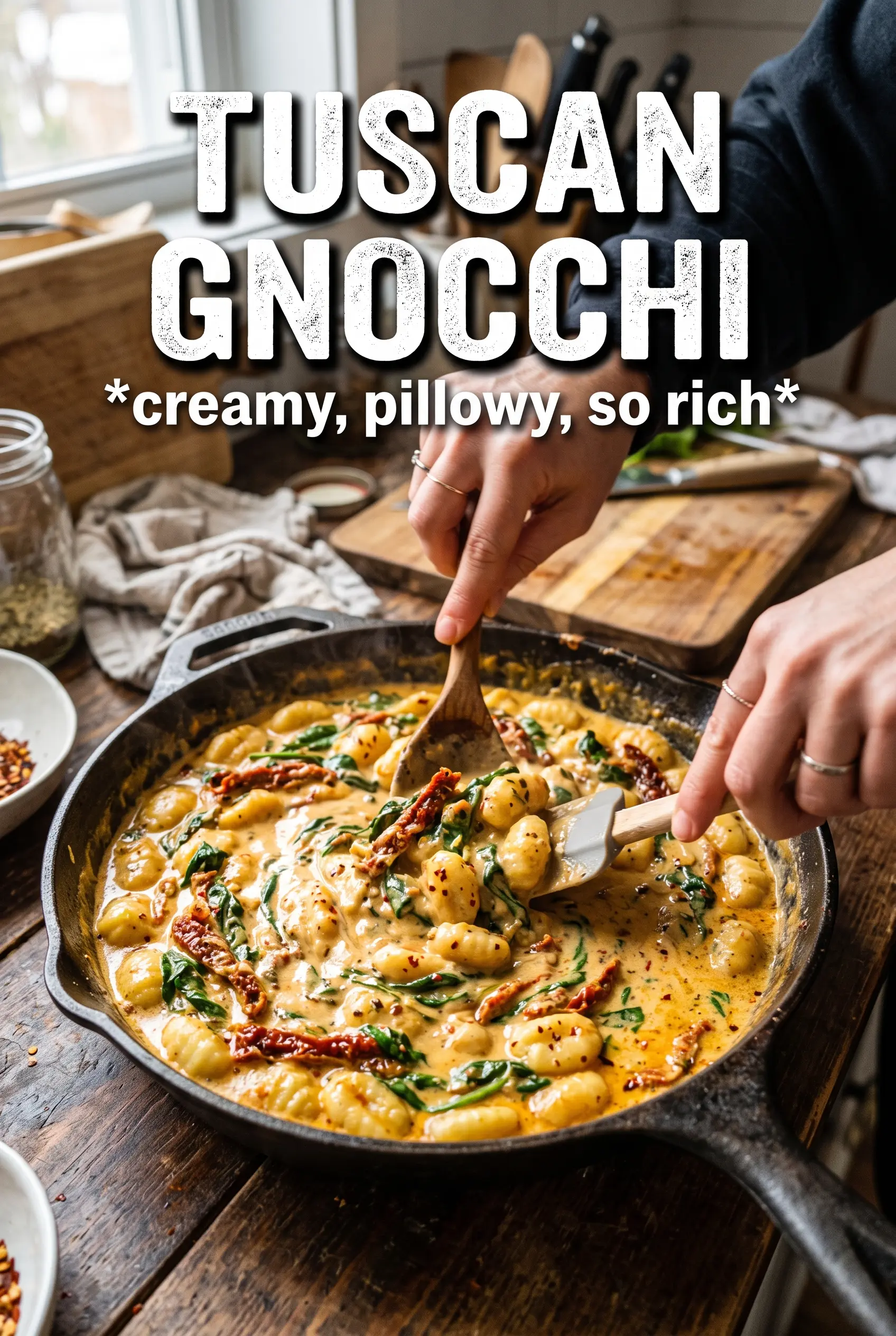
Stir in the parmesan off the hottest part of the burner, then add the cooked gnocchi and sausage back to the pan. Finish with the spinach and toss just until it wilts. If the skillet sits too long before serving, the gnocchi keep drinking up the sauce, so bring it to the table while it still looks glossy.
How to Adapt This Tuscan Gnocchi Without Losing the Good Part
Make It Gluten-Free
Use certified gluten-free gnocchi and check the sausage label, since some brands add fillers that contain gluten. The sauce itself stays the same, so you don’t lose any of the creamy texture or the sun-dried tomato flavor.
Make It Lighter With Half-and-Half
Half-and-half works if that’s what you have, but the sauce will be thinner and less rich. Let it simmer a little longer before adding the parmesan, and keep the heat lower so it doesn’t separate.
Swap the Sausage for a Vegetarian Version
Use a plant-based Italian sausage or browned mushrooms if you want the same savory shape without the meat. Mushrooms give you great depth, but you’ll want to season a little more assertively since they don’t bring the same salt and spice as sausage.
Storage and Reheating
- Refrigerator: Store in an airtight container for up to 3 days. The gnocchi will absorb more sauce as it sits, so expect a thicker, less saucy texture.
- Freezer: I don’t recommend freezing this one. Cream sauces can separate after thawing, and the gnocchi turn soft.
- Reheating: Warm gently in a skillet over low heat with a splash of broth or cream. High heat is the mistake here — it can make the sauce break and the gnocchi toughen around the edges.
Questions I Get Asked About This Recipe
Tuscan Gnocchi
Ingredients
Equipment
Method
- Heat a large skillet over medium-high heat and cook the Italian sausage until browned, breaking it up as needed. Drain and set aside, leaving any useful browned bits in the pan.
- In the same skillet, sauté the garlic and sun-dried tomatoes for 2 minutes in the sun-dried tomato oil. Stir frequently until fragrant.
- Add the heavy cream, chicken broth, Italian seasoning, and red pepper flakes, then simmer for 4 minutes. Keep the simmer gentle so the sauce stays smooth.
- Stir in the grated parmesan until melted and the sauce looks glossy. Scrape the bottom of the pan to fully incorporate.
- Cook the potato gnocchi according to package directions, then add the gnocchi directly to the sauce. Toss gently so the gnocchi is coated.
- Return the sausage to the skillet and add the baby spinach, then toss until wilted. Cook just until the spinach collapses.
- Season with salt and pepper to taste, then top with fresh basil. Serve hot so the basil stays bright.