Crispy gochujang potato salad hits that sweet spot between warm, savory roasted potatoes and a punchy dressing that clings to every crackly edge. The potatoes stay firm enough to hold their shape, but the centers turn soft and fluffy, which gives you the kind of bite that keeps pulling people back for another forkful.
The trick is roasting the potatoes until the cut sides are deeply browned before they ever meet the dressing. That cooling time matters too. If you toss them while they’re steaming hot, the mayo loosens, the sesame oil disappears into the heat, and the potatoes lose the crisp edges that make this dish worth making in the first place.
Below, you’ll find the exact balance that keeps the dressing creamy without becoming heavy, plus a few swaps that still keep the Korean-inspired character intact. I’ve also added the timing detail that keeps the salad tasting bright instead of muddled.
The potatoes stayed crisp on the edges even after tossing, and the gochujang dressing had just enough heat without drowning everything. I served it at room temperature with grilled chicken and there wasn’t a spoonful left.
Save these crispy gochujang potatoes for the side dish that brings heat, crunch, and creamy sesame dressing to the table.
The Crisp Matters More Than the Dressing Here
Most potato salad problems start long before the bowl is mixed. If the potatoes are soft and pale, the dressing has to do all the work, and the result tastes flat and heavy. Roasting at a higher heat gives you browned edges that stand up to the gochujang mixture, so the salad still tastes layered after it sits.
Cooling the potatoes for 30 minutes is not a fussy extra step. It keeps the mayonnaise from turning loose and lets the vinegar and honey settle into the potatoes instead of sliding off. The salad is best when the potatoes are warm enough to carry flavor but cool enough to keep their structure.
What the Gochujang Dressing Is Really Doing
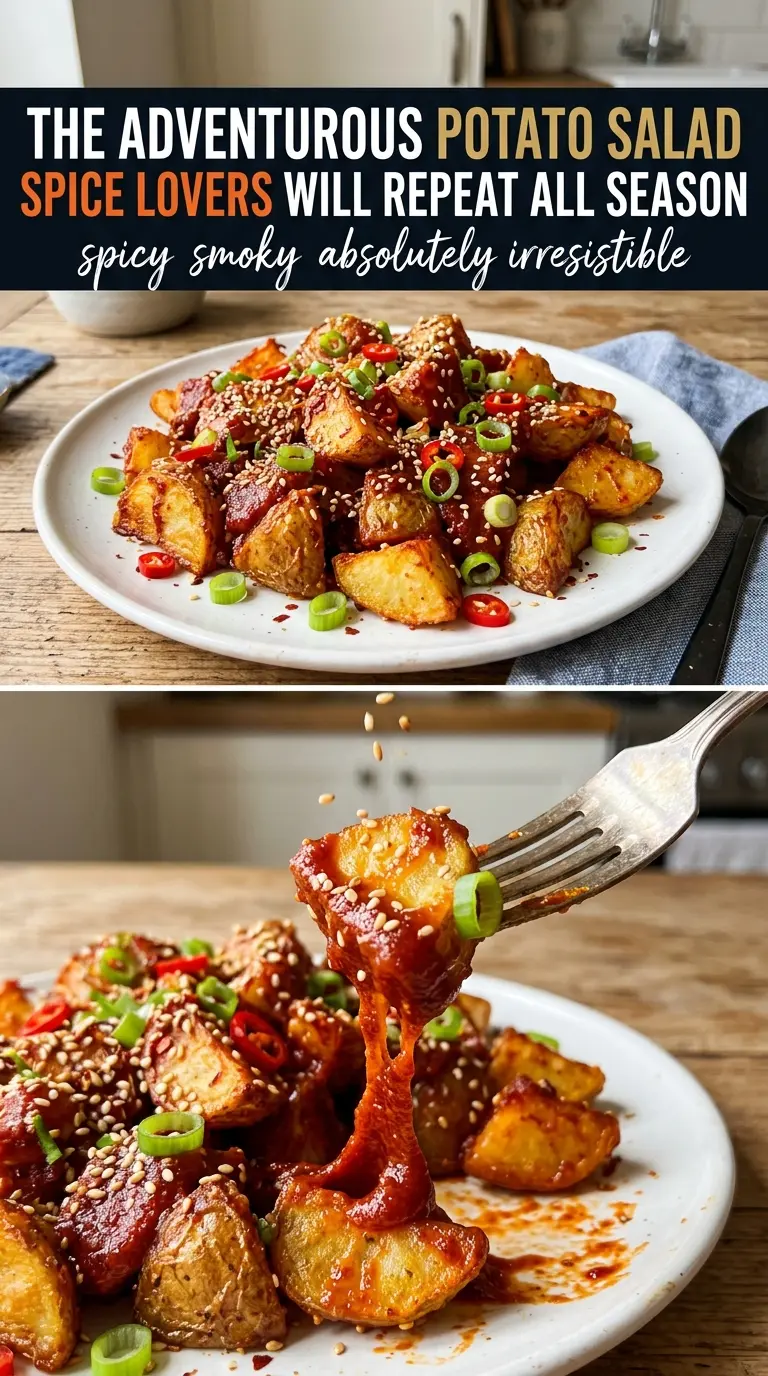
- Baby potatoes — Their waxy texture holds up after roasting and tossing. If you swap in larger potatoes, cut them into even chunks so they roast at the same pace. Starchy potatoes can work, but they’re more likely to crumble when you mix everything together.
- Gochujang — This is the backbone of the dish. It brings heat, fermented depth, and a little sweetness, so there’s no real substitute that gives the same result. If yours is very salty, start with a slightly smaller amount and taste the dressing before adding more.
- Mayonnaise — It softens the gochujang into a creamy coating without muting the flavor. Plain yogurt makes the dressing sharper and thinner, which can be nice, but it won’t cling as well to the potatoes.
- Rice vinegar and honey — These keep the dressing balanced. The vinegar lifts the richness, and the honey smooths out the heat. If you skip the honey, the dressing can taste one-note and aggressive instead of rounded.
- Sesame oil, sesame seeds, and green onions — Sesame oil adds the aroma that makes the whole bowl smell unmistakably Korean-inspired, while the seeds and scallions finish it with crunch and freshness. Use toasted sesame seeds if you have them; they give more payoff for the same amount of effort.
Roasting, Cooling, and Tossing Without Losing the Crunch
Getting the Potatoes Browned Enough
Heat the oven to 425°F, then toss the halved potatoes with olive oil, salt, and pepper until they’re lightly coated but not slick. Spread them in a single layer with the cut sides facing down wherever possible. If the pan is crowded, the potatoes steam instead of crisp, and you’ll lose the texture that makes this salad work. They’re ready when the bottoms are deeply golden and the edges look blistered.
Mixing the Dressing in the Right Order
Stir together the gochujang, mayonnaise, rice vinegar, honey, and sesame oil until the mixture looks smooth and glossy. If the gochujang stays in streaks, keep stirring; it needs to be fully dispersed before it hits the potatoes. Taste it now, not after the potatoes are folded in, because this is your last clean chance to adjust the balance of heat, sweetness, and tang.
Tossing at Room Temperature
Let the roasted potatoes cool for 30 minutes before mixing. They should still be a little warm, but not hot enough to steam the dressing. Add the dressing and toss gently so the edges stay intact instead of breaking apart. Finish with sesame seeds and sliced green onions, then serve it at room temperature, when the flavors are settled and the texture is at its best.
How to Adapt This for Different Tables
Make it dairy-free without changing the texture
This recipe is already dairy-free as written, which is one reason it’s such an easy dish to bring to a mixed table. Keep the mayonnaise in place for the creamiest result. If you need to avoid egg too, use a thick vegan mayo; thinner dressings tend to slide off the potatoes instead of coating them.
Swap in Greek yogurt for a tangier finish
Replace half or all of the mayonnaise with thick Greek yogurt if you want a brighter, sharper salad. The dressing will be lighter and a little less plush, and it may need an extra pinch of salt to wake it up. This version is best eaten the same day, because yogurt loosens more as it sits.
Make it gluten-free with one label check
The dish can be gluten-free, but only if your gochujang is certified gluten-free. Some brands use wheat in the fermentation process, and that’s the ingredient that trips people up. The rest of the recipe stays exactly the same.
Turn it into a heartier side with extras
Add shredded cabbage, thin cucumber slices, or a handful of edamame after the potatoes cool if you want more crunch and a little more bulk. Keep the add-ins fresh and dry so they don’t water down the dressing. This version stretches the salad farther without changing the core flavor.
Storage and Reheating
- Refrigerator: Store covered for up to 3 days. The potatoes will soften as they sit, but the flavor stays good.
- Freezer: I don’t recommend freezing this salad. The potatoes turn mealy and the dressing separates after thawing.
- Reheating: Serve leftovers cold or let them come to room temperature. If you want the potatoes warmer, use a low oven for a few minutes before dressing them, not the microwave, which makes the edges soggy fast.
Answers to the Questions Worth Asking
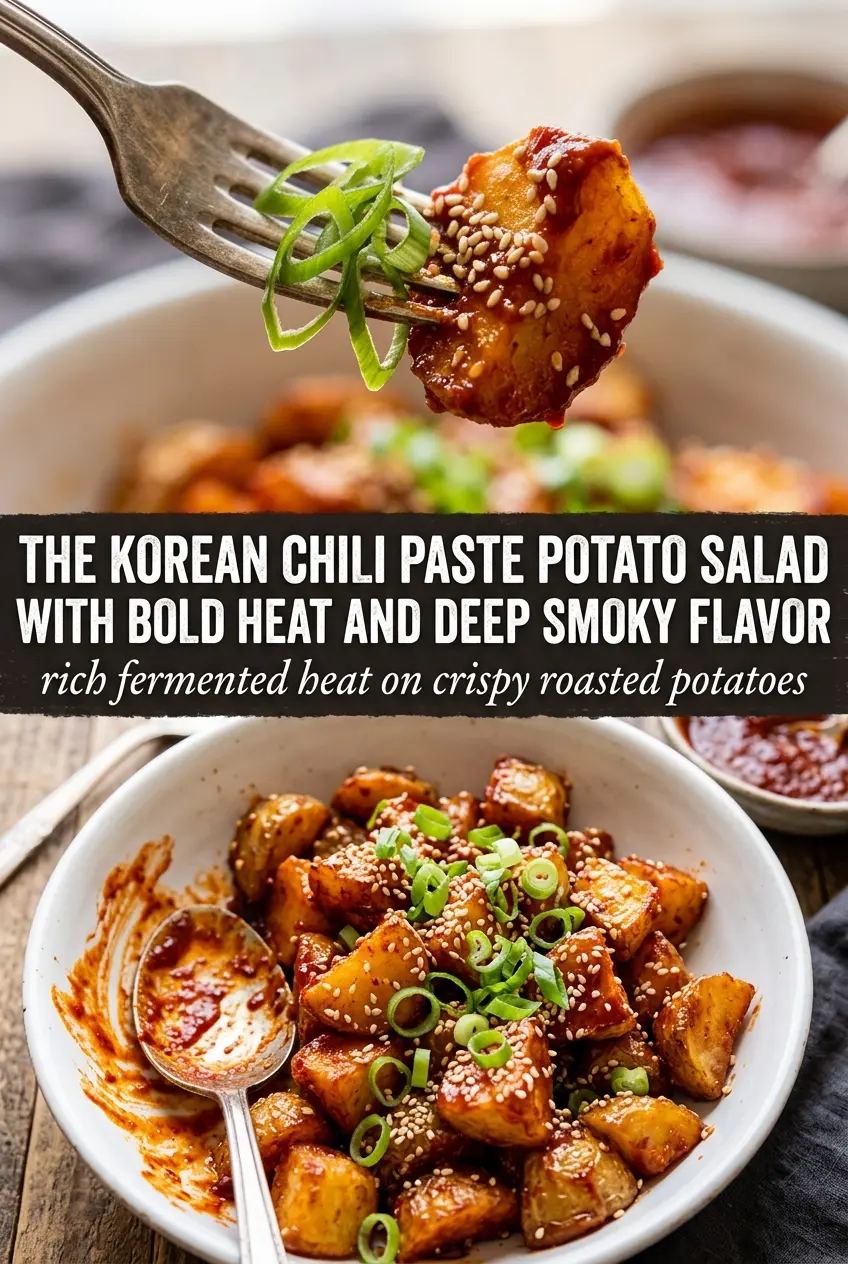
Crispy Gochujang Potato Salad
Ingredients
Equipment
Method
- Preheat the oven to 425°F and set out a sheet pan. This hot oven helps the cut sides crisp instead of steam.
- Toss the halved baby potatoes with olive oil, salt, and pepper until evenly coated. Spread them cut-side down in a single layer for maximum browning.
- Roast for 30-35 minutes, flipping once if needed, until golden and crispy. Look for deep caramelized edges and a dry, crunchy surface.
- Let the roasted potatoes cool for 30 minutes. Cooling firms the crispy exterior so the salad holds together.
- Mix gochujang, mayonnaise, rice vinegar, honey, and sesame oil until smooth and glossy. The dressing should look thick enough to coat potatoes.
- Toss the cooled potatoes with the gochujang dressing until well coated. Ensure every piece gets a thin, sticky glaze.
- Top with sesame seeds and sliced green onions. Add them right before serving for the best crunch and freshness.
- Serve at room temperature. Room-temp resting balances the sweetness and heat so the glaze clings well.