Glossy cucumber rounds and juicy cherry tomatoes are at their best when they’re dressed just enough to wake them up, not drown them. This cucumber tomato salad stays crisp, bright, and tangy, with enough herbiness to taste like something you made on purpose instead of a bowl of odds and ends pulled from the crisper drawer.
The trick is simple: salt and time do some of the work for you. A short marinating rest lets the cucumbers and tomatoes release a little juice, which mixes with the vinaigrette and turns into a light, flavorful dressing that clings to every slice. Red onion adds bite, honey softens the vinegar, and fresh dill gives the whole bowl that clean, garden-fresh finish.
Below, I’ll walk through the part that matters most — how to keep the vegetables crisp while still getting enough flavor into the bowl. I’ve also included a few smart swaps and storage notes, because this is the kind of salad people end up making again the same week.
The cucumbers stayed crisp, and after the 15-minute rest the dressing picked up just enough tomato juice to taste like it had been sitting there longer. My husband kept sneaking forkfuls straight from the bowl.
Save this cucumber tomato salad for the kind of side dish that stays crisp, tangy, and fresh after a short marinate.
The Secret to Keeping Cucumber Salad Crisp Instead of Watery
The most common mistake with cucumber tomato salad is rushing the dressing or over-salting the vegetables too early. Cucumbers hold a lot of water, and once they sit in salt for too long, they can go limp before the salad ever reaches the table. Here, the short 15-minute rest is enough to blend the flavors without turning the bowl soggy.
Using English cucumbers helps because the skin is thin and the seeds are smaller, which means less watery runoff and a cleaner bite. Cherry tomatoes also hold their shape better than chopped slicing tomatoes, so the salad stays bright and chunky instead of collapsing into juice.
- Keep the cucumber slices around 1/4-inch thick so they stay crisp after tossing.
- Add the fresh herbs at the end so they stay vivid and don’t get bruised in the dressing.
- If your onions taste sharp, soak them in cold water for 5 minutes first, then drain well.
- Don’t skip the second toss and final taste — the juices in the bowl change the seasoning after marinating.
What Each Ingredient Is Actually Doing in the Bowl
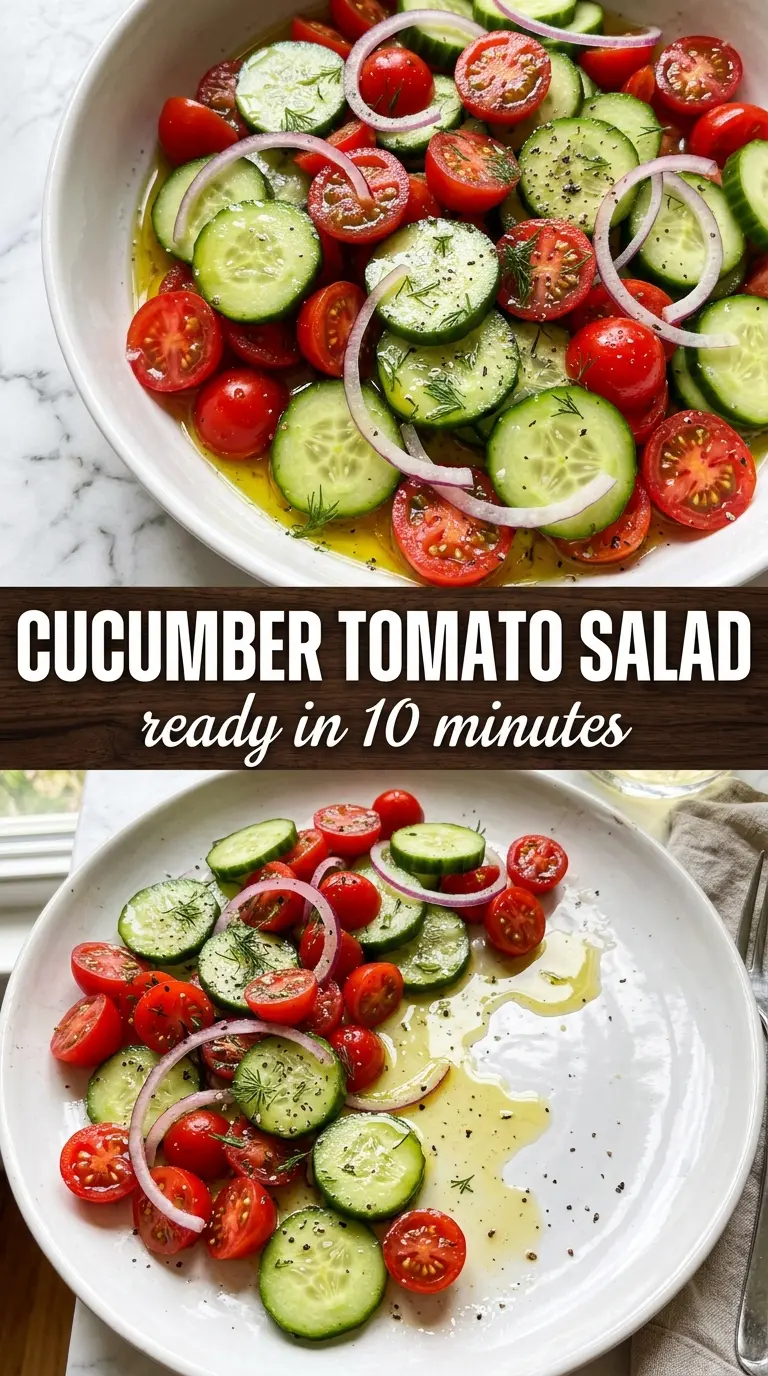
- English cucumbers — These bring the cool crunch that defines the salad. Regular cucumbers work, but if they have thick waxy skin or big seeds, peel them and scoop out the center so the salad doesn’t get watery.
- Cherry tomatoes — Their smaller size and firmer flesh mean they hold up in the vinaigrette instead of turning mushy. Grape tomatoes work too, but chop larger tomatoes only if they’re ripe and not seedy.
- Red onion — This gives the salad a sharp edge that balances the sweet-tangy dressing. If yours is strong, slice it very thin or soak it briefly in cold water to soften the bite.
- Red wine vinegar and honey — This is the balance point of the dressing. The vinegar brings the brightness, and the honey rounds it out just enough so the salad tastes lively instead of aggressively sour.
- Fresh dill and parsley — Dill gives the salad its classic garden flavor, while parsley keeps it from tasting one-note. Dried herbs won’t give you the same freshness here, so fresh is worth it.
Letting the Dressing Work Without Softening the Vegetables
Build the Vinaigrette First
Whisk the olive oil, vinegar, honey, garlic powder, salt, and pepper until the dressing looks slightly thickened and cohesive. If the honey is sitting in streaks at the bottom, keep whisking for a few more seconds. A blended dressing coats the vegetables better, which means less pooling in the bottom of the bowl.
Toss the Vegetables While They’re Dry
Combine the cucumbers, tomatoes, and onions in a large bowl before adding the dressing. If you wash the vegetables ahead of time, dry them well so the vinaigrette doesn’t slide right off. A wet bowl is the fastest way to end up with bland salad water instead of seasoned vegetables.
Give It a Short Marinate
Pour the dressing over the vegetables and toss until everything is evenly coated, then let the salad sit at room temperature for 15 minutes. That resting time is long enough for the flavors to settle in but short enough to keep the cucumbers snappy. If you let it sit much longer, the tomatoes will start releasing too much juice.
Finish with Herbs and Final Seasoning
Toss the salad again, taste it, and adjust the salt and pepper before adding the dill and parsley. Herbs taste brightest when they go in at the end, after the vegetables have already absorbed the dressing. Serve it right away while the cucumbers still have their crunch and the onions still have a little snap.
How to Adapt This for a Bigger Bowl, a Dairy-Free Table, or a Different Herb Finish
Make It Ahead for Picnics
You can slice the vegetables and mix the dressing a few hours ahead, but keep them separate until about 15 minutes before serving. If the salad sits dressed too long, the cucumbers soften and the tomatoes lose their fresh bite. This version is best when the marinating window stays short.
Make It Dairy-Free and Naturally Vegan
This salad already fits a dairy-free and vegan table as written. If you want a little extra richness without changing that, add a drizzle more olive oil and a pinch more salt right before serving. That gives the dressing a fuller finish without weighing it down.
Swap the Herbs Based on What’s Growing
If you don’t have dill, use basil or a mix of dill and mint for a different kind of freshness. Basil makes the salad taste sweeter and softer, while mint gives it a cooler finish. Parsley is the safer backbone herb, so keep some kind of leafy green herb in the mix if you can.
Turn It Into a Fuller Side Dish
Add crumbled feta or chickpeas if you want the salad to eat more like a lunch bowl. Feta brings salt and creaminess, while chickpeas make it heartier and more filling. Add either one right before serving so they don’t soak up all the dressing during the rest time.
Storage and Reheating
- Refrigerator: Store leftovers in an airtight container for up to 2 days. The cucumbers will soften a bit, but the flavor stays good.
- Freezer: Don’t freeze this salad. The cucumbers and tomatoes turn mushy once thawed.
- Reheating: No reheating needed. If the salad has chilled, let it sit at room temperature for 10 to 15 minutes, then drain off any extra liquid and toss again before serving.
Answers to the Questions Worth Asking
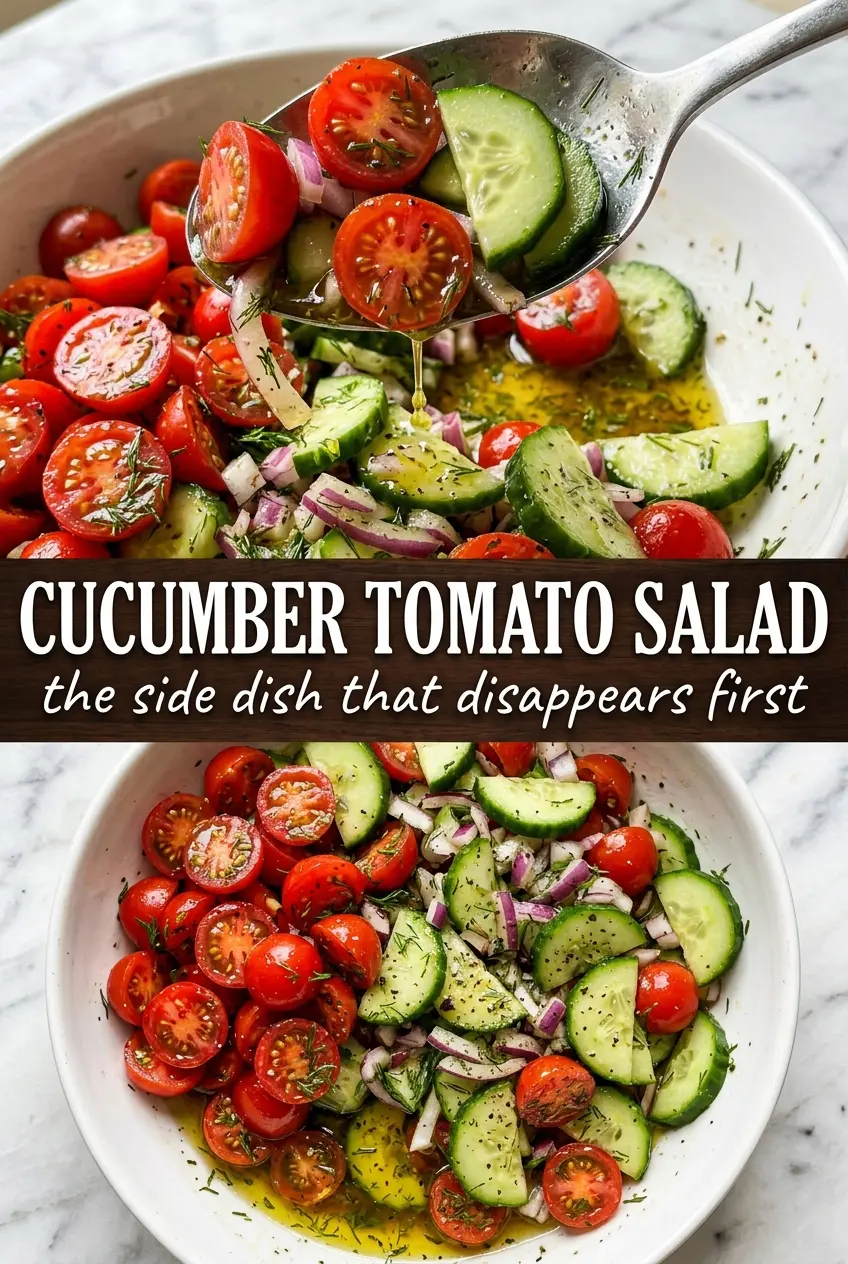
Cucumber Tomato Salad
Ingredients
Method
- Add the English cucumber rounds, halved cherry tomatoes, and thinly sliced red onion to a large bowl.
- Whisk the olive oil, red wine vinegar, honey, garlic powder, salt, and black pepper together in a small bowl until evenly combined.
- Pour the vinaigrette over the vegetables and toss well to coat every cucumber round and tomato half.
- Let the salad marinate at room temperature for 15 minutes to allow the flavors to develop, keeping the bowl covered if possible.
- Toss the salad again, taste, and adjust seasoning with more salt and black pepper if needed.
- Top with chopped fresh dill and chopped fresh parsley, then serve immediately for best crunch and bright color.