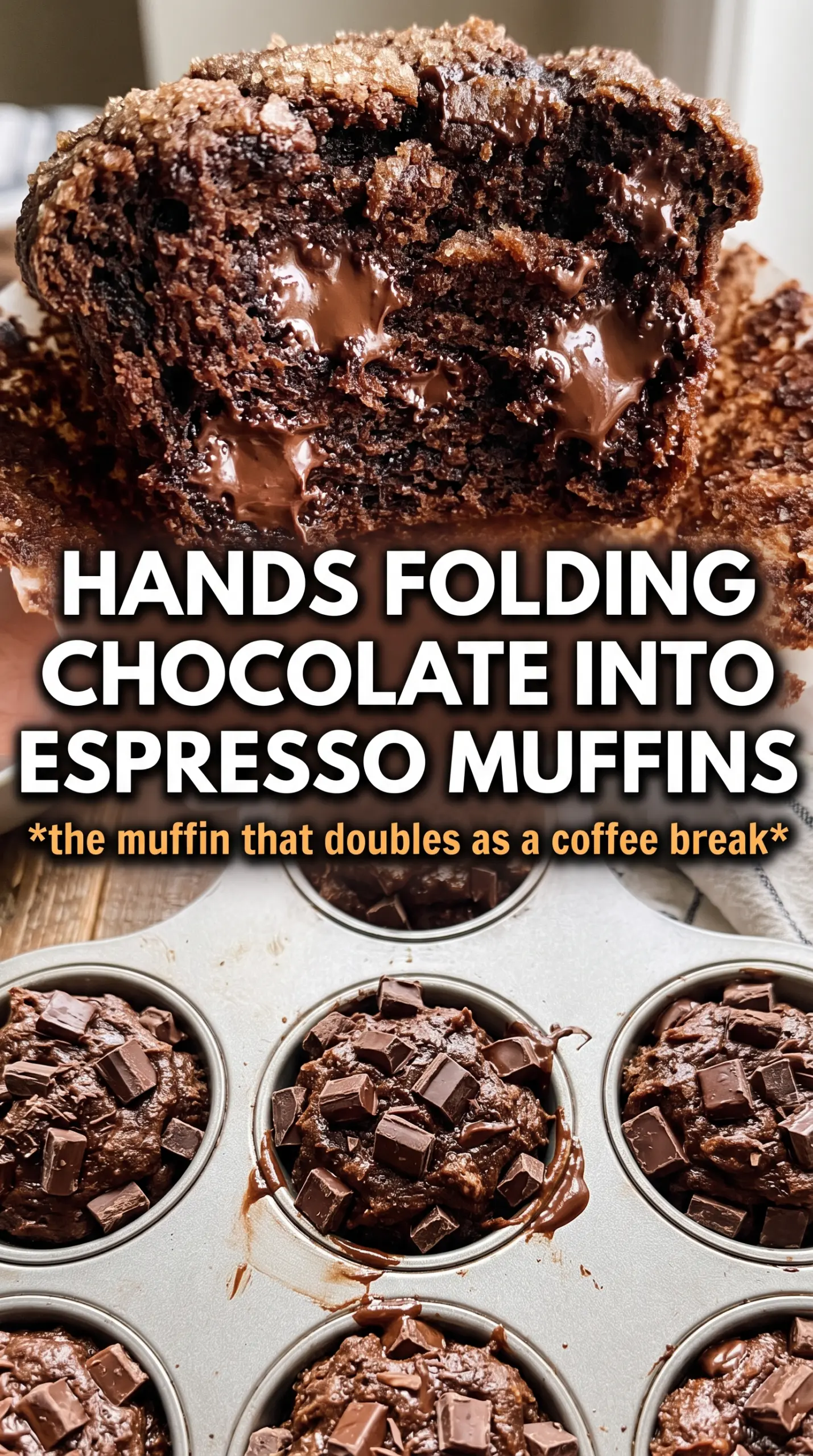
Deep chocolate muffins with a coffee edge earn their place fast when the tops bake up tall, the crumb stays soft, and the chocolate chips melt into little pockets throughout. These double chocolate espresso muffins taste like a bakery case treat, but they bake in one bowl for the batter and come together without any fussy steps.
The trick here is the high first blast of heat. Starting at 425°F gives the muffins lift before the centers set, which is what builds those domed tops instead of flat ones. Espresso powder goes into the batter and over the top, so the coffee flavor reads clearly without tasting like a cup of coffee. Buttermilk keeps the crumb tender, and the mix of granulated sugar plus brown sugar gives the muffins enough sweetness with a little moisture and depth.
Below you’ll find the small details that matter most: how to avoid overmixing the cocoa batter, why the oven temperature changes partway through, and how to keep the chocolate chips from sinking.
The tops came out beautifully domed, and the espresso powder gave the chocolate a deeper taste without making them taste like coffee cake. I baked them right at 425 first, and they rose so much better than my usual muffins.
Save these double chocolate espresso muffins for the mornings when you want a tall, mocha-rich muffin with melted chocolate in every bite.
The High-Heat Start That Gives These Muffins Their Lift
The first 5 minutes at 425°F do the heavy lifting. That burst of heat sets the outer structure fast, so the batter rises before the center has time to spread. If your muffins bake flat, it’s usually because the oven starts too cool or the tin isn’t filled high enough.
Once the domes have started to form, the temperature drops to 350°F so the centers can finish baking without drying out the edges. That two-temperature method is what gives you a muffin that looks bakery-style but still tastes soft and tender inside.
- Don’t overmix after the dry ingredients go in. Cocoa batter gets tight and thick fast. Stir just until the flour disappears, or the muffins will bake up dense instead of fluffy.
- Fill the cups all the way to the top. These muffins need that extra height in the pan to build a true dome.
- Use fresh baking powder and baking soda. Old leaveners can flatten the rise, even if everything else is done right.
What Each Ingredient Is Actually Doing in This Recipe
- Primary ingredient (the star) — Quality matters most. Choose the best you can find.
- Cooking medium (oil, butter, or broth) — This carries flavors and prevents dryness.
- Seasonings (salt, pepper, spices, herbs) — Layer flavors so nothing overpowers. Build depth gradually.
- Aromatics (garlic, onion, herbs) — Cook with fat to bloom flavors. Become the foundation.
- Supporting ingredients — Complement the main ingredient without overpowering it.
- Sauce or liquid (if applicable) — Brings flavors together. Balance richness with acid.
- Acid (lemon, vinegar, wine, or other) — Brightens and prevents flat-tasting results.
- Final finish (garnish, glaze, or sauce) — Prevents one-dimensional taste and adds visual appeal.
What the Espresso Powder Is Doing Beyond Flavor
Espresso powder is there for more than a coffee note. It deepens the chocolate and makes the cocoa taste fuller, almost darker, without turning the muffins into coffee muffins. A little goes a long way, and this recipe uses it in two places so the flavor shows up in the batter and on the top.
Buttermilk matters here too. It reacts with the baking soda and adds tang, which keeps the muffins from tasting one-note sweet. If you don’t have buttermilk, milk mixed with a little plain yogurt works better than plain milk because the batter still needs that acidity.
- Espresso powder — Instant coffee won’t give the same clean, concentrated flavor. If that’s all you have, use a slightly smaller amount and expect a milder result.
- Buttermilk — This keeps the crumb tender and helps the rise. Plain milk will work in a pinch, but the texture won’t be quite as soft.
- Dark chocolate chips — Use chips, chunks, or a chopped chocolate bar. Chopped chocolate melts into bigger pools, while chips hold their shape more.
- Cocoa powder — Natural cocoa keeps the muffin flavor sharp and chocolate-forward. Dutch-process can still work, but the rise and flavor will shift a bit.
The Mixing Order That Keeps the Crumb Tender
Building the Dry Base
Whisk the flour, cocoa, baking powder, baking soda, espresso powder, and salt until the mixture looks uniform and there are no streaks of cocoa hiding in the corners. Cocoa loves to clump, and those pockets don’t break up well once the wet ingredients go in. A quick whisk now saves you from gray streaks later. This is also the point where the leaveners get evenly distributed, which matters for an even rise.
Combining the Wet Ingredients
Whisk the sugars, eggs, buttermilk, oil, coffee, and vanilla until the mixture looks smooth and glossy. The batter won’t look fluffy, and that’s fine; you’re looking for everything to emulsify so the oil doesn’t separate. The cooled coffee should be at room temperature or close to it, because hot coffee can start cooking the eggs and thin the batter too much.
Bringing the Batter Together
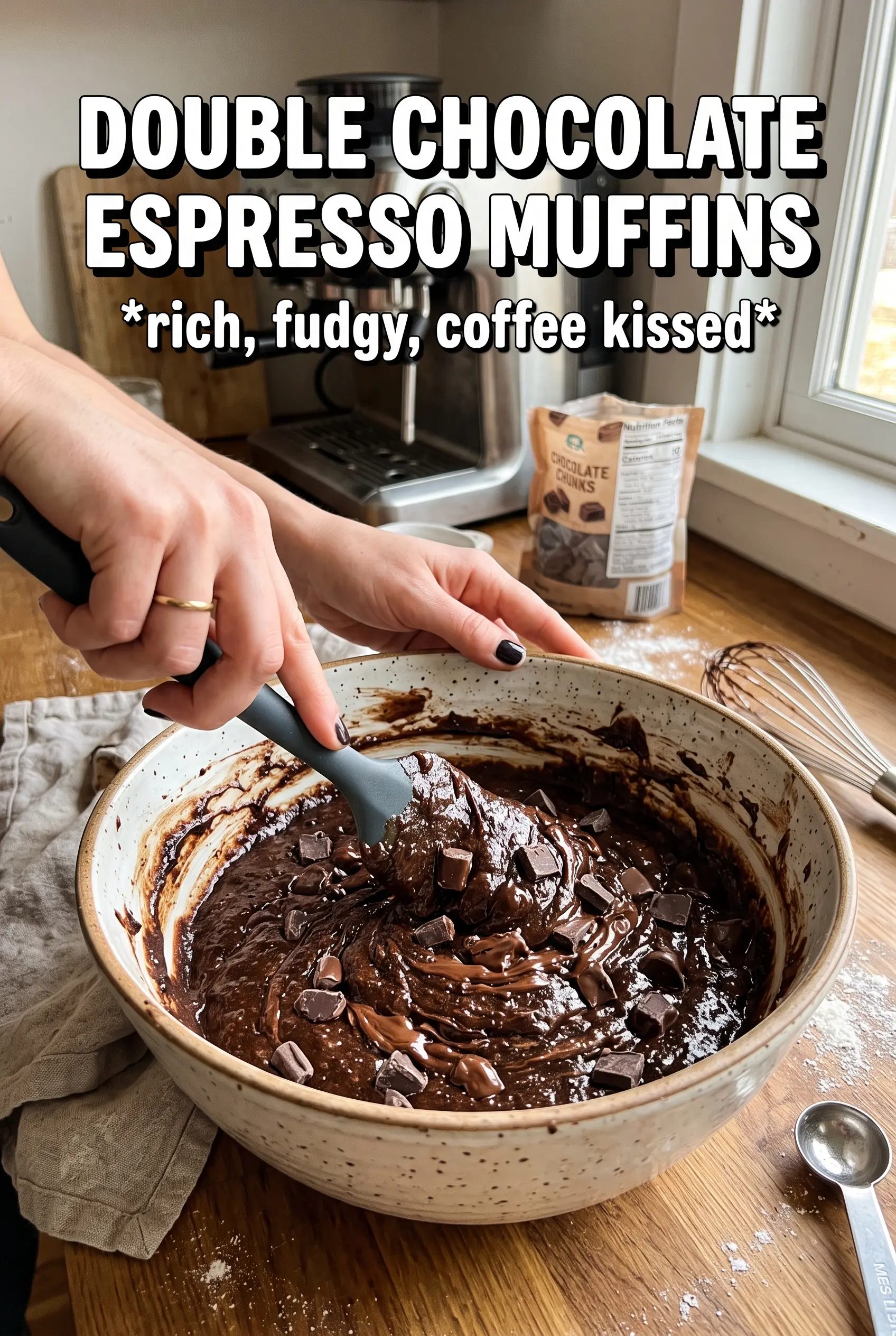
Fold the dry ingredients into the wet just until you stop seeing flour. The batter will be thick, and that’s exactly what you want for tall muffin tops. Add the chocolate chips at the very end so they stay distributed instead of sinking to the bottom of the bowl. If you stir until the batter looks perfectly smooth, you’ve gone too far.
Baking for Domes and Melty Centers
Divide the batter among the muffin cups, filling each one to the top, then sprinkle a little espresso powder over each muffin before baking. Bake at 425°F for 5 minutes, then lower the oven to 350°F and keep baking until the tops are set and a tester comes out with a few moist crumbs. The center should spring back lightly when touched. Let them sit in the pan for a few minutes before moving them, or the tops can wrinkle and tear.
How to Tweak These Muffins Without Losing the Texture
Dairy-Free Version
Swap the buttermilk for an unsweetened plant milk mixed with 1 tablespoon lemon juice or vinegar, then let it sit for 5 minutes. The result is a little less rich than the original, but the acidity still gives the muffins lift and keeps the crumb tender.
Gluten-Free Swap
Use a cup-for-cup gluten-free flour blend that includes xanthan gum. The texture will be a touch more delicate and slightly less springy, but the high-heat start still helps the muffins rise well.
Milk Chocolate Instead of Dark
Use milk chocolate chips if you want a sweeter muffin with a softer cocoa edge. They melt a little more softly than dark chocolate, so the finished muffins taste sweeter and less intense.
Storage and Reheating
- Refrigerator: Store in an airtight container for up to 4 days. The chocolate will firm up a little in the fridge, but the muffins stay moist.
- Freezer: These freeze well. Wrap each muffin individually, then store in a freezer bag for up to 2 months.
- Reheating: Warm in the microwave for 15 to 20 seconds or in a 300°F oven for about 5 minutes. Don’t overheat them or the chocolate chips will seize up and the crumb will dry out.
Questions I Get Asked About This Recipe
Double Chocolate Espresso Muffins
Ingredients
Equipment
Method
- Preheat the oven to 425F and line a 12-cup muffin tin. Use liners if desired so the domed muffins release cleanly.
- Whisk together all-purpose flour, cocoa powder, baking powder, baking soda, espresso powder, and salt until evenly combined. You should see no streaks of cocoa.
- Whisk granulated sugar, brown sugar, eggs, buttermilk, vegetable oil, strong brewed coffee, cooled, and vanilla until smooth and glossy. Pause to scrape the bowl so no egg is left unmixed.
- Fold the dry ingredients into the wet ingredients until just combined. Stop as soon as no dry pockets remain for a tender crumb.
- Fold in the dark chocolate chips. The batter should look thick and speckled, with chips suspended throughout.
- Fill the muffin cups to the very top and sprinkle espresso powder over each. The tops should look evenly dusted.
- Bake at 425F for 5 minutes. The high initial heat should help the muffins rise quickly into domed tops.
- Reduce the oven to 350F and bake 13-15 more minutes. They’re done when the centers spring back lightly and a toothpick comes out with moist crumbs.