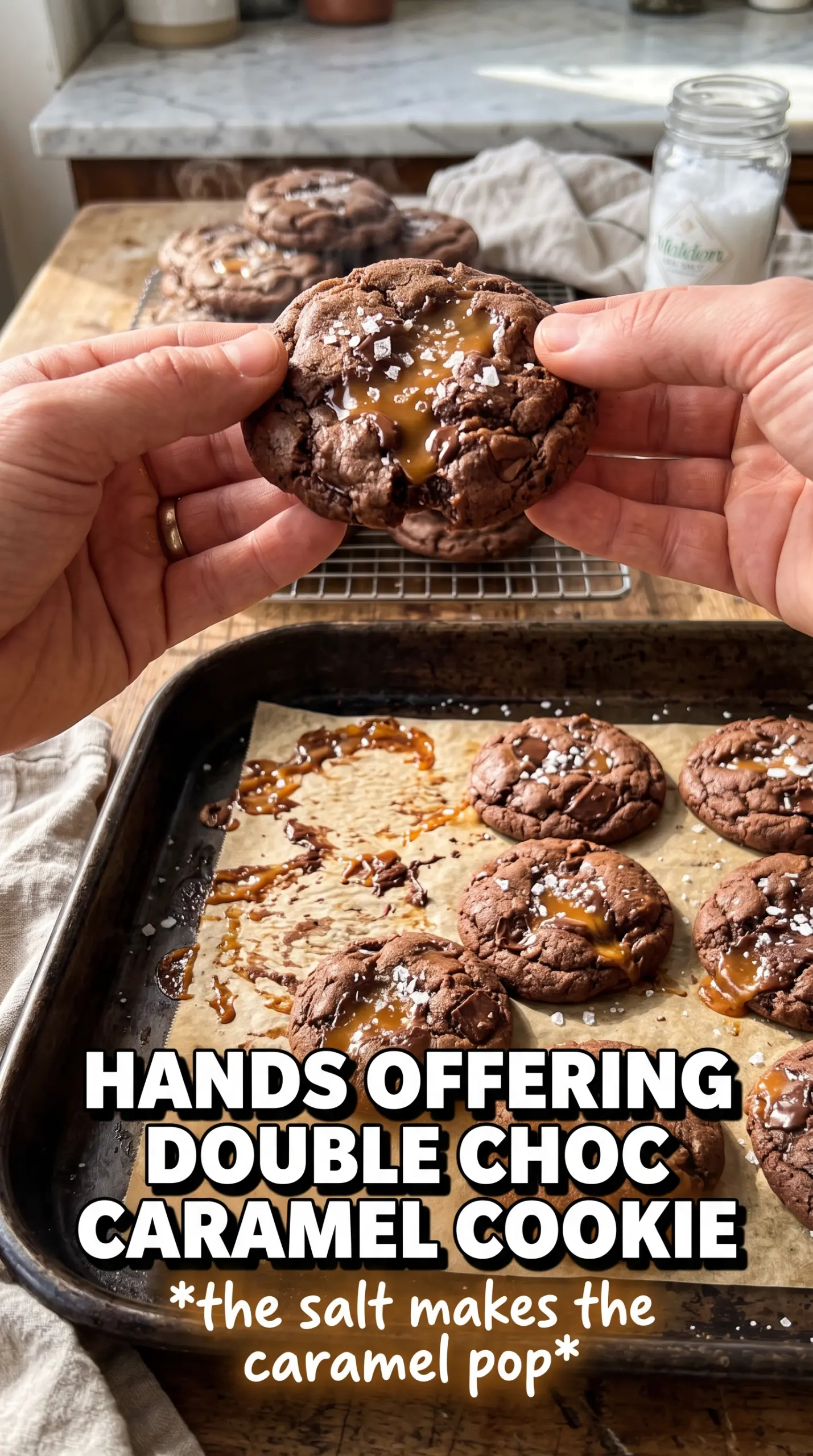
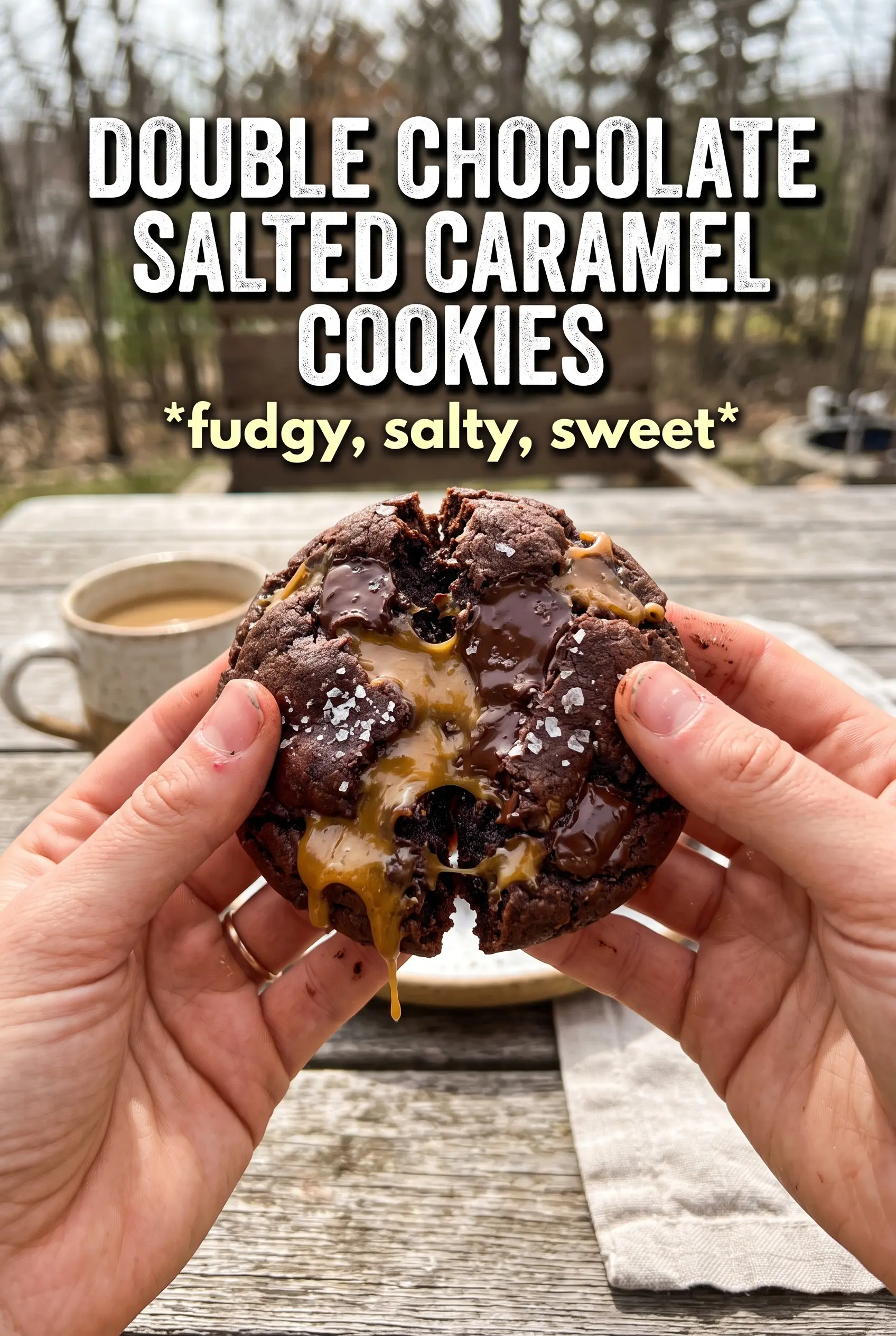
Double chocolate salted caramel cookies bake up with crisp edges, fudgy centers, and a molten caramel middle that turns every bite into the good kind of mess. The dark chocolate dough stays rich without tasting dry, and the flaky sea salt on top keeps the sweetness in check instead of letting it run away with itself.
The trick is keeping the dough thick enough to fully seal around each caramel. If the caramel peeks out, it leaks onto the pan and you lose that soft center. Cocoa powder gives the cookie its deep chocolate base, while brown sugar keeps the texture chewy and helps the cookies stay soft even after they cool.
Below, I’ll walk through the small things that matter here: how to wrap the caramel so it stays tucked inside, why the cookies need just a short bake, and the best way to keep that center gooey without overbaking the edges.
The caramel stayed soft in the middle and the cookies didn’t spread into a mess. I followed the sealing step carefully and every one baked up with those chocolate puddles on top.
Like these double chocolate salted caramel cookies? Save them to Pinterest for the nights when you want a fudgy cookie with a gooey caramel center and a salty finish.
The caramel leaks when the cookie is under-sealed
The biggest failure point here isn’t the chocolate dough. It’s what happens when the caramel isn’t completely enclosed. If the dough seams are thin or open, the caramel melts out onto the pan before the cookie sets, which leaves you with flat cookies and burnt sugar on the parchment. Press the dough around the caramel until there’s no visible candy showing at all, then roll it smooth between your palms.
These cookies also need a hot oven and a short bake. The centers should still look soft when you pull them out, because that caramel finishes melting as the cookies cool. If you wait until they look fully baked in the oven, you’ve gone too far and the middle turns thick instead of gooey.
What each ingredient is doing in the dough
- All-purpose flour — Gives the cookies enough structure to hold the caramel center. Don’t cut it too far or the dough gets too soft to seal properly.
- Cocoa powder — This is where the deep chocolate flavor comes from, so use a good unsweetened cocoa if you can. Dutch-process cocoa makes the cookies darker and a little smoother in taste, but natural cocoa works fine.
- Brown sugar — This keeps the texture chewy and helps the cookies stay tender after baking. The molasses also plays nicely with the caramel and dark chocolate.
- Dark chocolate chips — These create those chocolate puddles on top and melt into little pockets throughout the dough. Semi-sweet chips work if that’s what you have, but dark chocolate keeps the cookies from tasting too sweet.
- Soft caramel candies — Use soft, unwrapped caramels that melt cleanly in the center. Firmer caramel candies can stay tacky instead of turning properly gooey.
- Flaky sea salt — This goes on right after baking so it sticks to the warm tops and sharpens the sweetness. Table salt won’t give you the same finish.
How to keep the centers gooey without overbaking the edges
Whisk the dry ingredients first
Start by whisking the flour, cocoa powder, baking soda, and salt until the mixture looks uniform and there are no cocoa streaks. Cocoa clumps easily, and if you skip this, you’ll end up with bitter pockets in the dough. Set the bowl aside once it’s combined; the wet ingredients need to be ready before you fold the dry mix in.
Beat the butter and sugars until pale
Beat the softened butter with both sugars until the mixture looks lighter in color and a little fluffy. This step traps air, which helps the cookies bake up with edges that set before the centers dry out. If the butter is too cold, it won’t cream properly; if it’s greasy and melting, the dough will spread too much.
Wrap the caramel completely
Scoop the dough into 2-tablespoon portions, flatten each one slightly, and place a caramel in the center. Pull the dough up and around the candy, then pinch the seams closed before rolling it into a ball. You want a smooth surface with no cracks, because any opening gives the caramel a path out during baking.
Watch for set edges and soft middles
Bake just until the edges look set and the tops have lost their raw shine, about 10 to 12 minutes. The cookies will still look soft in the center, and that’s what you want. Pull them out, sprinkle immediately with flaky sea salt, and let them sit for 8 minutes on the pan so the caramel settles instead of spilling out when you move them.
Three ways to work this recipe around what you’ve got
Make them gluten-free with a 1:1 baking blend
Use a good 1:1 gluten-free flour blend in place of the all-purpose flour. The cookies will still hold the caramel well, but the texture may be a touch more delicate, so let them cool on the baking sheet before moving them.
Swap in milk chocolate chips for a sweeter cookie
Milk chocolate softens the bitter edge of the cocoa and makes the cookies taste more candy-like. The tradeoff is less contrast, so the flaky sea salt matters even more if you go this route.
Use dairy-free butter and dairy-free caramels
A plant-based butter block works better than a tub spread because it behaves more like regular butter in the dough. Pair it with dairy-free caramels and the cookies still bake up chewy with that soft center, though the flavor will be a little less rich.
Freeze the dough balls for later baking
Shape the filled dough balls first, then freeze them on a tray until solid and move them to a bag. Bake from frozen with an extra minute or two in the oven. This is the best move if you want fresh cookies without having to unwrap caramels and mix dough on the spot.
Storage and Reheating
- Refrigerator: Store in an airtight container for up to 5 days. The caramel firms up a bit in the fridge, but the cookies stay chewy.
- Freezer: Freeze baked cookies for up to 2 months, wrapped well and layered with parchment. You can also freeze the filled dough balls and bake them straight from frozen.
- Reheating: Warm a baked cookie in the microwave for 8 to 10 seconds to soften the caramel again. Longer heating makes the caramel bubble out and the cookie turn greasy.
Answers to the questions worth asking
Double Chocolate Salted Caramel Cookies
Ingredients
Equipment
Method
- Preheat the oven to 375F and line baking sheets with parchment.
- In a bowl, whisk together all-purpose flour, cocoa powder, baking soda, and salt.
- In a mixing bowl, beat unsalted butter, brown sugar, and granulated sugar until very light and fluffy.
- Beat in the eggs and vanilla extract until smooth.
- Fold the dry flour mixture into the wet ingredients until just combined.
- Fold in dark chocolate chips so the dough looks thick and studded.
- Scoop 2-tablespoon portions of dough and flatten slightly.
- Place one soft caramel candy in the center and wrap dough around it, sealing completely.
- Roll the filled dough into a ball and place on the baking sheet.
- Bake at 375F for 10 to 12 minutes, until the edges are set and the caramel is gooey inside.
- Sprinkle immediately with flaky sea salt.
- Cool for 8 minutes before eating.