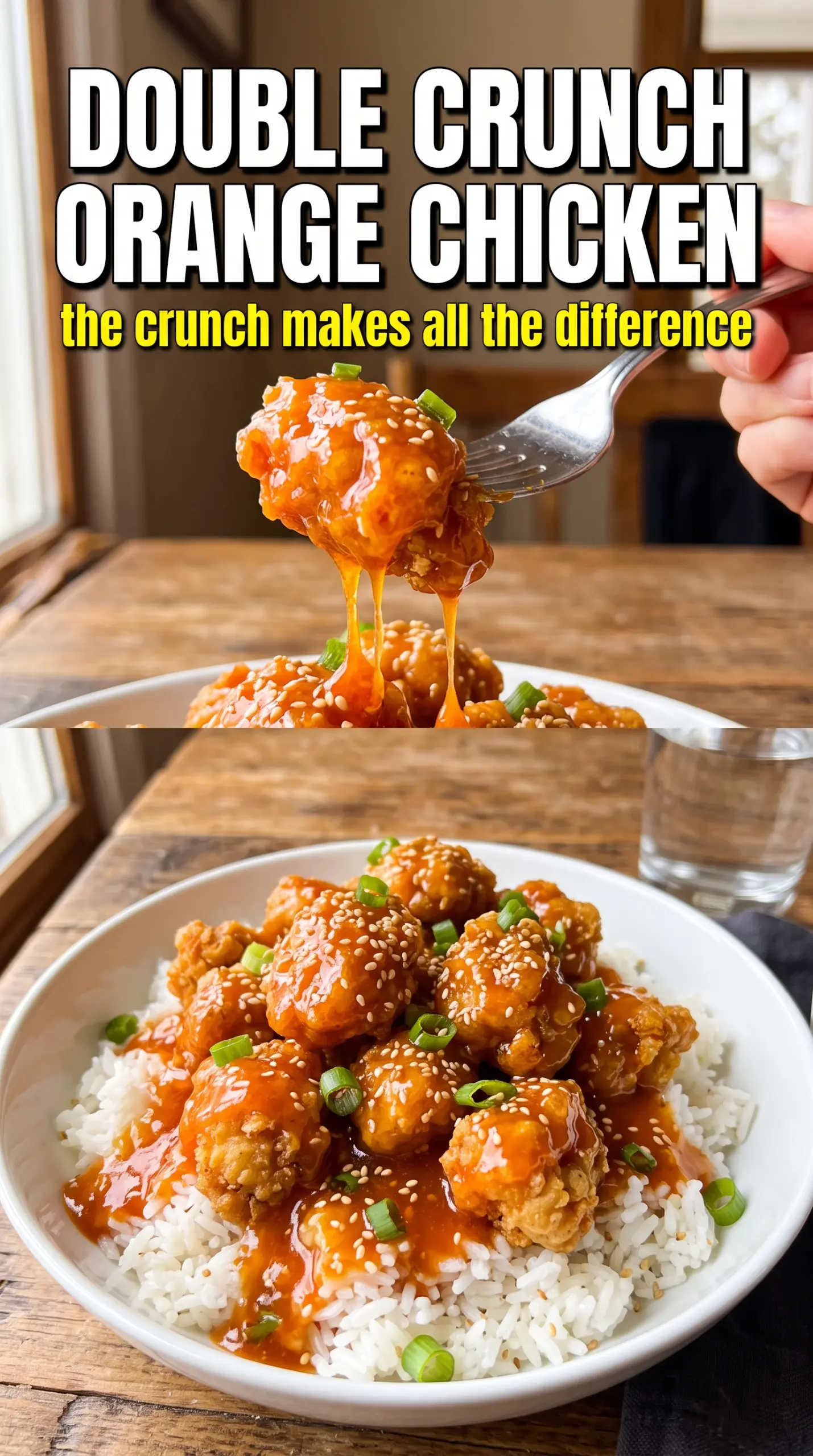
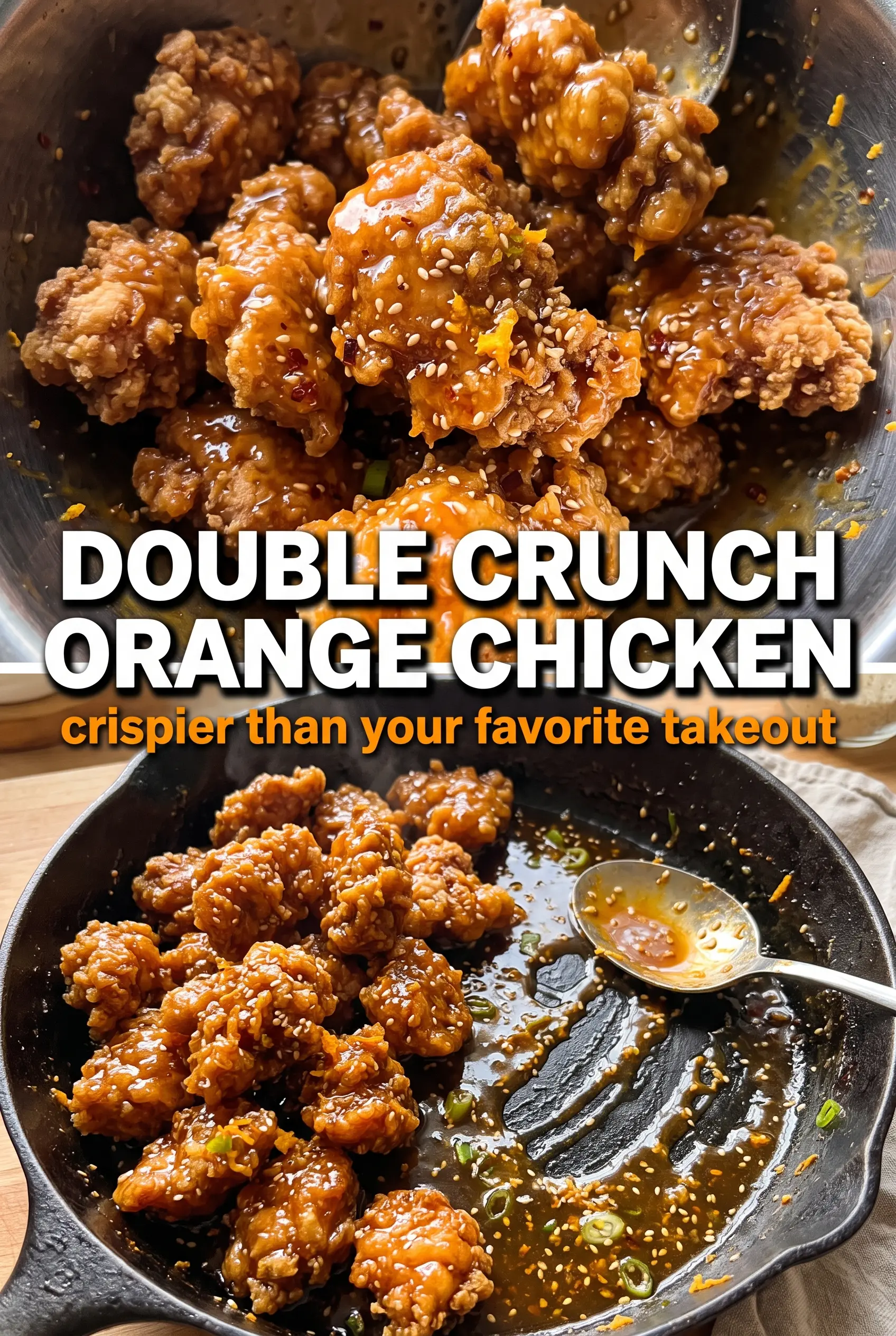
Double Crunch Orange Chicken lands with the kind of crisp edge that holds up under sauce instead of collapsing into it. The coating stays rugged and craggy, the orange glaze clings in a shiny layer, and every bite gives you that sharp hit of citrus followed by savory, sticky sweetness. It eats like takeout, but fresher, brighter, and with a crust that actually keeps its bite.
The double-dip is the whole trick here. The first coat builds the base, the second pass gives you those extra rough bits that fry up into a louder crunch. Using both cornstarch and flour matters too: cornstarch brings the snap, flour adds a little structure, and together they make a coating that doesn’t go sandy or heavy. The sauce is balanced on purpose with orange juice, zest, soy sauce, vinegar, and just enough brown sugar to caramelize at the edges without turning candy-sweet.
Below, I’ll walk through the part that matters most: getting the chicken crisp before it ever meets the sauce, plus the small sauce details that keep the finish glossy instead of thin or dull.
The chicken stayed crunchy even after I tossed it in the sauce, and the orange glaze thickened up fast without tasting syrupy. My husband said it beat our usual takeout spot.
Like this double crunch orange chicken? Save it to Pinterest for the nights when you want takeout-style crispy chicken with a glossy citrus sauce.
The Crust Has to Happen Before the Sauce Exists
The biggest mistake with orange chicken is rushing the coating into the pan before the oil is hot enough or skipping the second dredge. That gives you a pale shell that softens almost immediately once the sauce hits. A true double crunch depends on a rough, dry surface and steady frying heat, so the coating can blister and brown instead of soaking up oil.
Keep the chicken pieces small and even. If some chunks are much larger than others, the small pieces overcook while the bigger ones are still catching up. The goal is deep golden chicken with a surface that feels crisp before it ever goes into the sauce.
- Cornstarch — This is what gives the coating its shattering crunch. You can swap in more flour if you must, but the crust will turn softer and more bready.
- All-purpose flour — Flour keeps the coating from feeling too brittle and helps the dredge cling evenly. It works with the cornstarch instead of fighting it.
- Chicken thighs — Thighs stay juicy through frying better than breast meat. Breast will work, but it needs tighter timing or it dries out fast.
- Orange zest — Zest carries the strongest orange flavor here. Fresh juice alone tastes flat by comparison, so don’t skip it.
What Each Ingredient Is Actually Doing in the Sauce
- Fresh orange juice — This gives the sauce its bright top note. Bottled juice tastes dull and usually too sweet, so use fresh if you can.
- Soy sauce — This keeps the glaze savory enough to balance the sugar and citrus. Low-sodium soy sauce works if that’s what you have, but the sauce may need a small extra pinch of salt at the end.
- Brown sugar — Sugar thickens the glaze and helps it cling to the chicken. It also gives the edges that slightly caramelized finish when the sauce hits the hot pan.
- Rice vinegar and hoisin — Vinegar sharpens the sauce so it doesn’t taste heavy, and hoisin adds depth. Together they make the orange flavor taste more complete, not just sweet.
- Cornstarch slurry — This is what turns the sauce glossy and spoon-coating. Don’t add the slurry over low heat and walk away; it needs a brief boil to thicken properly.
Frying the Chicken First, Then Building the Glaze
Mixing the Dredge
Whisk the flour, cornstarch, garlic powder, salt, and pepper until the mixture looks evenly pale and powdery. Dip each piece of chicken in egg, then into the flour mixture, then back into egg and flour again. That second coat is where the extra crunch comes from, so press the coating on a little before it hits the oil.
Frying to a Deep Gold
Heat the oil to 375°F and fry in batches. If the oil drops too low, the chicken drinks grease instead of crisping, and the coating will look dull. You want the pieces to turn deeply golden and feel firm when lifted out of the pan, with no wet spots hiding in the folds of the crust.
Thickening the Orange Sauce
Combine the orange juice, zest, soy sauce, brown sugar, rice vinegar, hoisin, garlic, ginger, and sesame oil in a saucepan and bring it to a boil. Once the slurry goes in, the sauce should turn glossy and lightly syrupy within a couple of minutes. If it stays thin, the heat wasn’t high enough to activate the cornstarch.
Tossing Without Losing the Crunch
Add the fried chicken to the sauce and toss quickly until every piece is coated. Don’t let it sit in the pan for minutes on end or the crust will soften fast. Serve it right away over steamed rice so the bottom stays saucy and the top still gives you that crisp bite.
How to Adapt This for Different Nights
Gluten-Free Version
Swap the all-purpose flour for a gluten-free all-purpose blend and use a gluten-free soy sauce or tamari. The coating still fries up crisp, but it may brown a little faster, so watch the oil closely.
Bake It Instead of Frying
You can bake the coated chicken on a well-oiled sheet pan at high heat, but the crust won’t match the same shattery texture. It’s a workable weeknight version when you don’t want to deal with frying, just expect a drier, more lightly crisp finish.
Make It Spicier
Stir a pinch of red pepper flakes or a little chili paste into the sauce. The heat cuts the sweetness and makes the orange flavor taste sharper, which is especially nice if you’re serving it with plain rice.
Storage and Reheating
- Refrigerator: Store leftovers in an airtight container for up to 3 days. The coating softens as it sits, but the flavor holds up well.
- Freezer: Freeze the fried chicken pieces and sauce separately if you want the best texture. The sauce freezes well; the chicken will never be as crisp after thawing, but it still works for a second meal.
- Reheating: Reheat the chicken in a hot oven or air fryer until the exterior wakes back up, then warm the sauce separately and toss just before serving. Microwaving everything together turns the crust soggy fast.
Answers to the Questions Worth Asking
Double Crunch Orange Chicken
Ingredients
Equipment
Method
- In a shallow bowl, mix cornstarch, all-purpose flour, garlic powder, salt, and pepper until evenly combined; set beside the beaten eggs with a clear double-dip path. Visual cue: the coating should look uniform, with no streaks of flour.
- Dip the chicken pieces into the beaten eggs, letting excess drip back into the bowl for a light, even coating. Visual cue: each piece should be glossy with egg before it touches the flour mix.
- Dredge the egg-coated chicken in the flour mixture, pressing lightly so the coating clings; shake off any loose powder. Visual cue: the chicken should look matte and dusted, not wet.
- Dip the coated chicken back into the beaten eggs for the second dip, coating each piece thoroughly. Visual cue: you should see a fresh, shiny egg layer over the first crust.
- Dredge again in the flour mixture, pressing gently and shaking off excess to form a thick crust. Visual cue: the surface should be very rough and thick, ready to fry.
- Heat vegetable oil in a Dutch oven to 375°F. Visual cue: the oil should actively shimmer; drop in a small piece of chicken to confirm it sizzles immediately.
- Fry the chicken at 375°F for 5-6 minutes until deeply golden and cooked through, turning once if needed for even browning. Visual cue: the crust should be a rich gold with crisp edges.
- Drain the fried chicken on a sheet pan until any surface oil is set. Visual cue: the crust stays crisp-looking, not soggy.
- In a saucepan, combine fresh orange juice, orange zest, soy sauce, brown sugar, rice vinegar, hoisin sauce, minced garlic, grated ginger, and sesame oil. Visual cue: the sauce mixture should be bright orange and fragrant before heating.
- Bring the sauce to a boil, then stir to dissolve the sugar. Visual cue: small bubbles should rapidly cover the surface.
- Stir the cornstarch slurry (cornstarch mixed with water) into the boiling sauce and cook 2-3 minutes, stirring constantly, until thick and glossy. Visual cue: the sauce should coat a spoon and leave a clear trail as you draw a line through it.
- Toss the crispy chicken in the orange sauce until evenly coated. Visual cue: the sauce should cling to the crust and look lacquered, not runny.
- Serve the double crunch orange chicken over steamed rice, then top with sesame seeds and sliced green onions. Visual cue: a mound of glossy chicken with visible crisp texture and bright green accents.