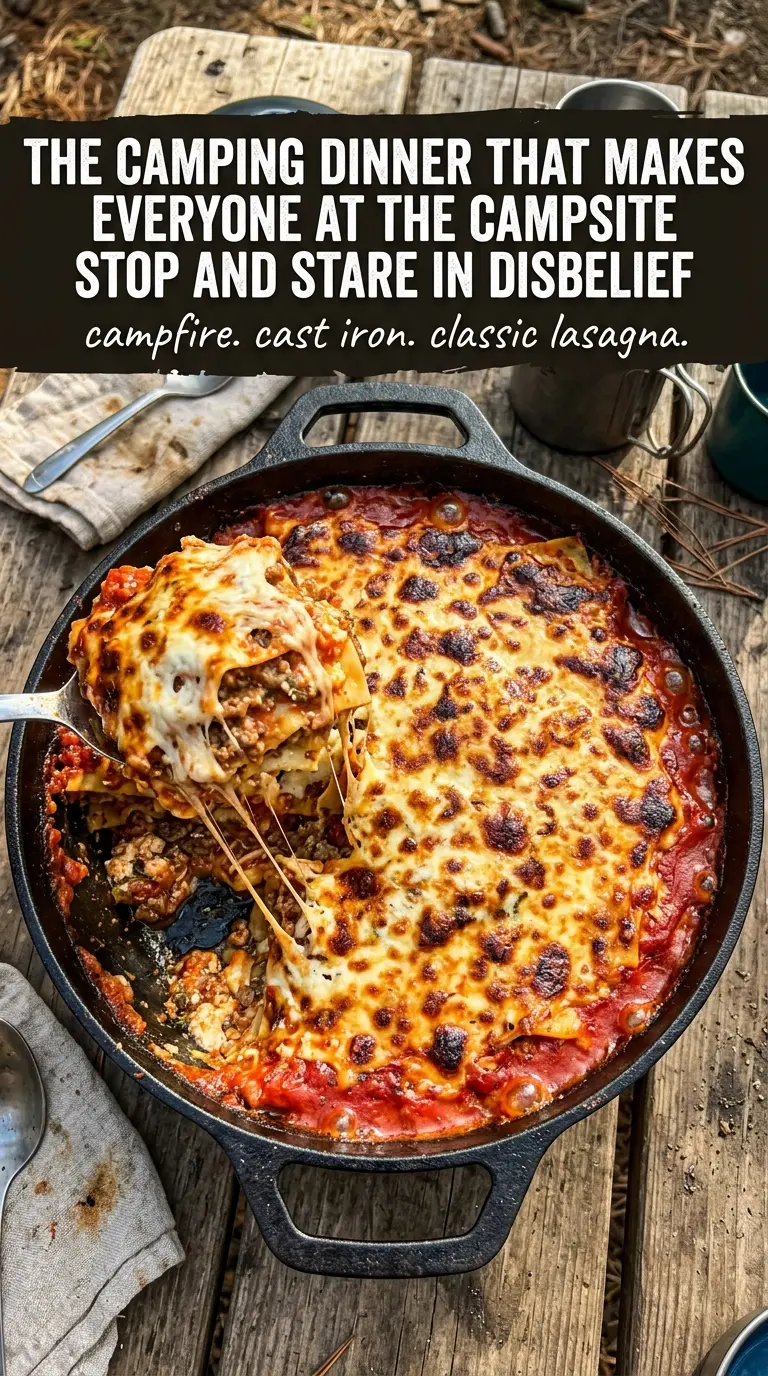
Deep, saucy lasagna with a bronzed cheese top doesn’t need an oven to earn a place at the table. In a Dutch oven, the noodles soften right in the sauce, the ricotta melts into the middle, and the mozzarella on top turns bubbly and spotted gold instead of drying out. The result is sturdy enough to slice, but still creamy in the center where it matters.
The trick here is balance: enough sauce to cook the noodles through, but not so much that the layers collapse into soup. Using uncooked noodles keeps the whole process straightforward, and the Dutch oven holds steady heat from both the bottom and the lid, which helps everything cook evenly. A little rest at the end matters too, because that’s what lets the slices settle instead of running across the pan.
Below, I’ll walk through the layering order that keeps the noodles tender, plus a few smart swaps if you’re cooking outdoors, feeding a bigger crowd, or need to adjust for what’s already in your pantry.
The noodles came out perfectly tender and the top stayed bubbly instead of drying out. I was nervous about cooking lasagna over coals, but the timing was spot on and the cheese layer set up beautifully after the rest.
Save this Dutch Oven Lasagna for the next campfire dinner when you want cheesy layers, tender noodles, and one pan to feed a crowd.
The Part That Makes Dutch Oven Lasagna Cook Evenly
The biggest mistake with Dutch oven lasagna is underestimating how much heat the noodles need. Uncooked noodles will cook through here, but only if the sauce is generous enough to hydrate them and the layers stay compact. If the pan looks dry before it goes on the coals, the top can brown before the pasta underneath is tender.
The other piece people miss is the lid heat. Coals on top matter just as much as heat underneath because they push the dish into that steady, oven-like zone. Without that top heat, the center takes forever and the edges can overcook while the middle stays firm. Resting after cooking matters too; it gives the sauce time to thicken and keeps the lasagna from sliding apart the second you cut it.
What Each Ingredient Is Actually Doing in Dutch Oven Lasagna
- Dutch oven (the cooking vessel, conducts heat evenly) — A Dutch oven’s heavy construction distributes heat evenly. Thinner pans create hot spots that overcook some layers.
- Heat source (coals under and on top for even cooking) — Campfire lasagna needs heat from below and above. Coals on the lid are as important as coals under the pot.
- Noodle layers (overlap slightly, no gaps) — Gaps in the noodles create dry pockets. Overlapped noodles cook evenly and hold together better.
- Sauce (enough to coat each layer, not drenched) — The sauce carries heat through the lasagna. Too little and the top dries out; too much and the bottom gets mushy.
- Cheese layers (distributed throughout, not just on top) — Cheese between layers melts and binds everything. Cheese only on top creates a heavy top and a dry bottom.
- Meat layer (if using, cooked through before adding) — The meat should be cooked before layering. It won’t cook properly sandwiched between noodles.
- Cooking time (low and slow, not high and fast) — Campfire cooking is unpredictable. Low heat prevents the edges from burning before the center cooks.
- Resting time (10 minutes before serving) — The lasagna needs to set slightly so it doesn’t fall apart when served. Let it rest in the covered Dutch oven off heat.
What Each Layer Is Doing In The Pot
Ground beef gives the lasagna structure and keeps it from feeling too soft or overly rich. A jarred spaghetti sauce works fine here because it already has the acidity and seasoning needed to carry the noodles, and it’s one of the few places I won’t waste time making sauce from scratch outdoors. If your sauce is on the thin side, use it as-is; a thicker sauce can make the bottom layers cook more slowly.
- Ricotta mixture — The ricotta, egg, Parmesan, mozzarella, and Italian seasoning form the creamy middle that sets up once heated. The egg helps it hold together instead of leaking into the meat sauce, and the Parmesan adds enough salt and sharpness to keep the layer from tasting flat.
- Uncooked lasagna noodles — These are the reason the method stays simple. Break them to fit the Dutch oven, but don’t overlap them too much or the thick spots will stay chewy while the rest softens.
- Mozzarella — Some goes into the filling and the rest belongs on top. The top layer melts into that stretchier, browner finish, while the mixed-in cheese helps the center taste cohesive instead of separate.
- Ground beef — Leaner beef is easier outdoors because there’s less grease pooling in the pan. If you use a fattier blend, drain it well before adding the sauce so the lasagna doesn’t turn oily.
Building The Layers So The Noodles Soften, Not Snarl
Cooking The Beef And Sauce Together
Brown the ground beef first until no pink remains and the edges pick up a little color. That browned flavor carries the whole dish, so don’t rush it. Stir in the spaghetti sauce and let it heat through before you start layering; cold sauce slows everything down once the Dutch oven goes over the coals. If the pan looks greasy, spoon off the excess before assembling.
Mixing The Cheese Filling
Stir the ricotta, one cup of mozzarella, Parmesan, egg, and Italian seasoning until the mixture looks uniform and thick. You want it spreadable, not loose. If the filling is runny, the egg wasn’t fully incorporated or the ricotta was watery; drain excess liquid from the ricotta before mixing next time.
Layering In The Dutch Oven
Spray the Dutch oven, then spread a thin layer of meat sauce on the bottom so the first noodles don’t stick. Add three broken noodles, half the ricotta mixture, and half the remaining sauce, keeping the layers even all the way to the edges. Repeat, then finish with the last noodles, the remaining sauce, and the final mozzarella. Leave the top sauce layer exposed around the edges so the pasta can absorb moisture from every side.
Cooking Over The Coals
Set the Dutch oven on campfire coals and place coals on the lid. That top heat is what gives you the cooked-through center and the browned cheese finish at the same time. Start checking at 45 minutes; the lasagna is ready when the noodles are tender and the cheese is melted and bubbling. If the top is browning too quickly, pull a few coals off the lid before the center finishes.
Letting It Set Before You Serve
Give the lasagna a full 10-minute rest after it comes off the heat. That pause lets the sauce thicken and the layers tighten enough to slice cleanly. Skip the rest and the first servings will spread across the plate instead of holding together.
How To Adjust Dutch Oven Lasagna For Your Crowd And Your Gear
Make It Sausage-Forward
Swap half or all of the ground beef for Italian sausage if you want a bolder, more seasoned filling. Sausage brings more fat and spice, so drain it well and use a slightly lighter hand with extra seasoning. The lasagna will taste richer and a little less classic-red-sauce, but it works beautifully over campfire heat.
Go Meatless Without Losing The Structure
Replace the beef with a hearty meatless crumble or a chopped mushroom-and-spinach mixture that’s been cooked down until most of the moisture is gone. The key is removing extra liquid before layering, or the noodles won’t cook evenly. This version still slices nicely and keeps the same creamy-cheesy middle.
Gluten-Free Lasagna
Use gluten-free lasagna noodles, but check the package for the right cook time because some brands soften faster than standard noodles. If the noodles are especially fragile, handle the layers gently and let the lasagna rest a full 15 minutes before serving. The texture will be a little more delicate, but the flavor stays the same.
Storage and Reheating
- Refrigerator: Store leftovers covered for up to 4 days. The noodles keep absorbing sauce, so the texture gets a little firmer by day two.
- Freezer: It freezes well in portions. Cool completely, wrap tightly, and freeze for up to 2 months. Thaw overnight in the refrigerator before reheating.
- Reheating: Reheat covered in a 325°F oven until hot in the center, or warm single portions in the microwave with a splash of sauce or water to keep the noodles from drying out. High heat is what makes the cheese tough and the edges stringy.
Answers To The Questions Worth Asking

Dutch Oven Lasagna
Ingredients
Equipment
Method
- Heat a cast iron skillet over medium-high heat and brown the ground beef until no longer pink, then stir in the spaghetti sauce to combine.
- Continue heating for 2-3 minutes until the sauce is hot and evenly mixed, then remove from heat so it’s ready for layering.
- In a bowl, mix ricotta cheese, 1 cup mozzarella, Parmesan, egg, and Italian seasoning until smooth and evenly combined.
- Spray the Dutch oven with cooking spray, then spread a thin layer of meat sauce over the bottom.
- Place 3 lasagna noodles (broken to fit) on top, then spread half the ricotta mixture evenly over the noodles.
- Spoon on half the remaining meat sauce and spread it to cover the ricotta layer.
- Repeat the layers using 3 more noodles (broken to fit), the rest of the ricotta mixture, and the rest of the meat sauce.
- Top with the final 3 noodles (broken to fit) and spread the remaining sauce over them.
- Sprinkle the remaining mozzarella over the top for a melty, bubbly finish.
- Cover the Dutch oven and place it on campfire coals with additional coals on the lid, cooking for 45-50 minutes until hot through and golden and bubbly on top.
- Remove the Dutch oven from the heat and let it rest for 10 minutes before serving so the layers set cleanly.