Silky pasta, charred corn, and crisp bacon land in the same bowl here, and the result tastes like two comfort foods that were meant to meet. The sauce stays glossy instead of turning clumpy, the corn brings sweetness and smoke, and the Tajín gives every bite that little jolt of chile, lime, and salt that keeps you going back for one more forkful.
What makes this version work is the timing. The egg yolks and cheese go in off the heat, then the hot pasta and a splash of starchy water do the work of turning everything into a creamy coating. That keeps the sauce from scrambling and gives you the thick, clingy texture people want from carbonara without weighing the dish down. The corn also matters here: letting it pick up color in the bacon fat gives the pasta a roasted, almost grilled note that fresh corn alone can’t give you.
Below you’ll find the one part that matters most for a smooth sauce, plus a few ways to adapt this dish if you need to swap cheeses, skip the bacon, or make it work with what you already have.
The sauce turned out silky and never got grainy, and the charred corn with the Tajín made it taste bright instead of heavy. I used the full cup of pasta water and it coated every strand perfectly.
Pin this creamy Elote Pasta Carbonara for the nights when you want smoky corn, bacon, and a glossy Tajín-kissed sauce in one skillet.
The Sauce Breaks When the Eggs Hit Heat Too Soon
Carbonara only behaves when the eggs stay out of the direct heat until the very end. If the skillet is still on the burner when the yolks go in, they tighten into little bits instead of emulsifying with the pasta water and cheese. That is the difference between a glossy sauce and scrambled pasta.
The safest move is to pull the pan off the heat before you add the egg mixture, then toss quickly and add hot pasta water in small splashes. The starch in the water helps the sauce cling to the spaghetti, while the residual heat from the noodles cooks the yolks just enough to thicken everything without curdling it. If the sauce starts looking tight or pasty, it needs more pasta water, not more cheese.
- Off-heat tossing keeps the yolks smooth instead of grainy.
- Hot pasta water loosens the sauce and helps it emulsify.
- Fast movement gives the cheese no chance to clump before it melts into the noodles.
What Each Ingredient Is Actually Doing in This Dish
- Egg yolks — These are the backbone of the carbonara-style sauce. Whole eggs can work in a pinch, but yolks give you the richer, silkier texture without watering things down.
- Cotija and Parmesan — Cotija brings the salty, crumbly punch that makes this taste like elote, while Parmesan helps the sauce melt more smoothly. If you only have one, use it, but the blend gives better flavor and better texture.
- Tajín — This is what gives the dish its bright chile-lime edge. If you skip it, the pasta tastes flatter, even if the salt level is right.
- Fresh corn — Fresh kernels char more cleanly and stay sweet under heat. Frozen corn works if that’s what you have; thaw it first and cook off the extra moisture so it can brown instead of steam.
- Bacon fat — Don’t pour it off before the corn goes in. It carries the smoky base flavor and helps the kernels pick up color fast.
- Lime juice and cilantro — Add these at the end so the dish finishes bright. Cilantro folded in too early gets dull, and lime added too soon disappears into the heat.
Building the Creamy Coating Without Scrambling the Eggs
Cooking the Pasta to the Right Edge
Boil the spaghetti in well-salted water until it’s al dente with just a little bite left in the center. That matters because the pasta keeps softening when it hits the hot skillet, and overcooked noodles turn the sauce loose and heavy. Reserve a full cup of the starchy water before draining; if you forget that, the sauce has no easy way to loosen and cling at the same time.
Crisping the Bacon and Browning the Corn
Cook the chopped bacon until it’s crisp and the fat has rendered out, then lift it out and leave the drippings behind. Add the corn directly to that fat and let it sit long enough to take on char in spots instead of stirring constantly; that little pause is what gives you the roasted elote flavor. If the pan looks dry, the bacon wasn’t fatty enough, and a small spoonful of butter can help the corn brown instead of sticking.
Coating the Pasta Off the Heat
Combine the hot pasta with the corn mixture with the burner off, then add the egg and cheese mixture right away. Toss constantly so the eggs hit the hot noodles in a thin layer and don’t set in one clump. Add pasta water a splash at a time until the sauce turns glossy and just clings to the spaghetti instead of pooling at the bottom of the pan.
Finishing With the Bright, Salty Details
Fold the bacon back in, then season with lime juice, salt, and pepper. Taste before adding extra salt, because bacon, Cotija, and Parmesan already bring plenty. Serve it immediately while the sauce is still loose and silky; carbonara-style pasta tightens as it sits, and this one is best when the bowl is steaming and glossy.
How to Adapt This for Different Kitchens and Different Eaters
Make It Vegetarian Without Losing the Elote Feel
Skip the bacon and cook the corn in olive oil or butter until you get good color in the pan. Add a pinch of smoked paprika if you want a little of that savory depth back, but don’t overdo it or it will bury the corn. The dish will be lighter and a little cleaner-tasting, but the creamy sauce and Tajín still carry the whole bowl.
Use Frozen Corn When Fresh Isn’t in the Fridge
Frozen corn works well, but thaw it first and pat it dry so it can char instead of steaming. You may need an extra minute or two in the skillet to get the browned edges this recipe needs. The flavor stays sweet, though fresh corn still gives the best pop.
Make It Gluten-Free
Use a sturdy gluten-free spaghetti that holds up in the toss and reserve the pasta water just the same. Gluten-free noodles can go from underdone to soft fast, so pull them when they still have a firm center. The sauce method stays the same; the key is handling the pasta gently once it’s cooked.
Swap the Cheese if Cotija Is Hard to Find
Feta is the closest stand-in for Cotija in terms of saltiness and crumbly texture. It will taste a little tangier, so back off on the Tajín at first and adjust after tasting. Parmesan alone can carry the sauce, but you’ll lose some of the elote-like character that makes this dish stand out.
Storage and Reheating
- Refrigerator: Store leftovers in an airtight container for up to 3 days. The sauce will tighten as it chills, and the corn will soften a bit.
- Freezer: I don’t recommend freezing this one. Egg-based sauces and pasta both suffer in texture after thawing, and the sauce tends to separate.
- Reheating: Warm it slowly in a skillet over low heat with a splash of water or milk, tossing until the sauce loosens again. High heat is the mistake here; it turns the eggs grainy and dries out the noodles.
Answers to the Questions Worth Asking
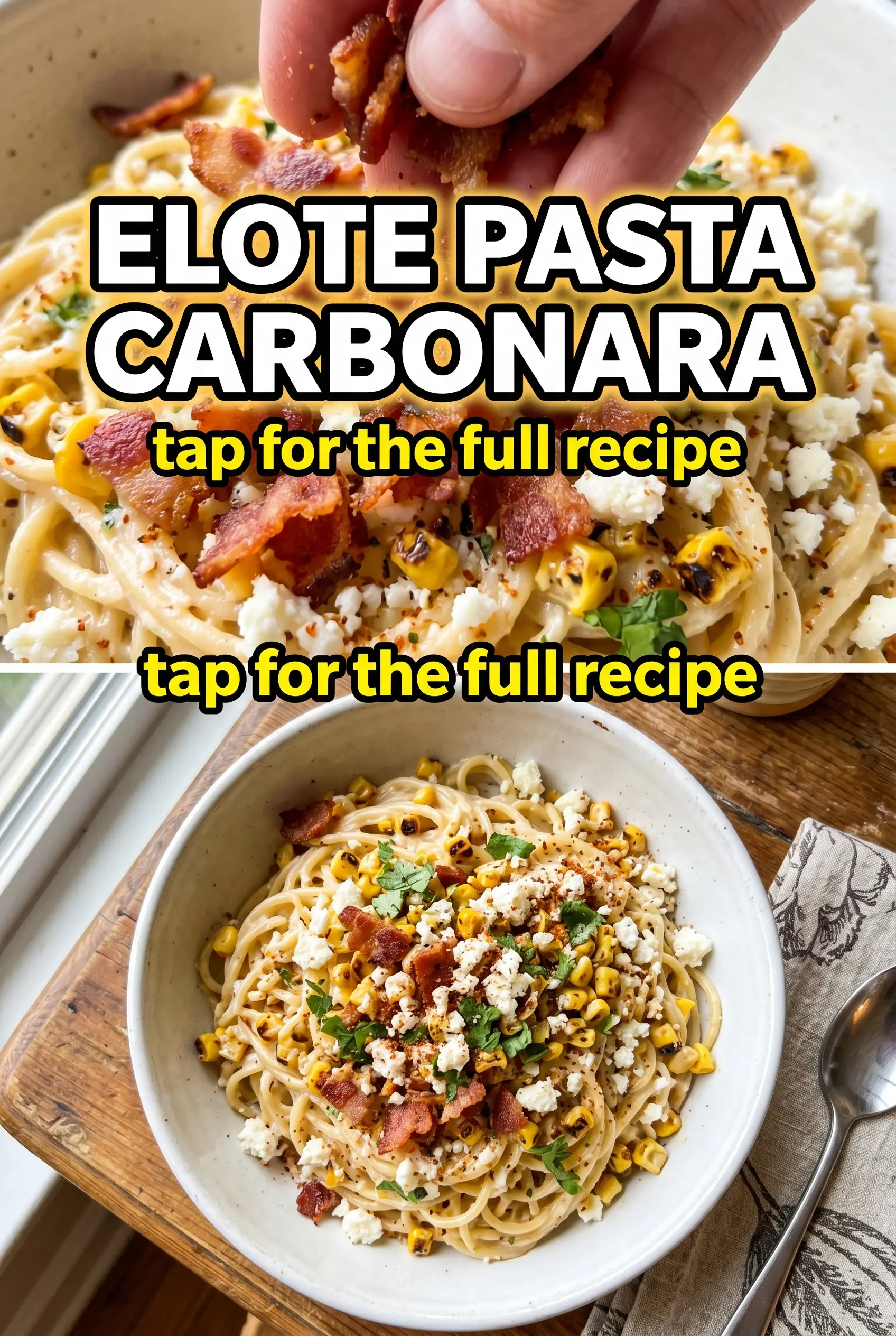
Elote Pasta Carbonara
Ingredients
Equipment
Method
- Bring a large pot of salted water to a boil and cook spaghetti until al dente, about 8–10 minutes (boiling). Reserve 1 cup pasta water, then drain the pasta and set it aside.
- In a bowl, whisk egg yolks with Cotija, Parmesan, tajín, and cilantro until smooth and pale, 1–2 minutes of whisking (room temperature).
- Cook bacon in a large skillet over medium heat until crispy, about 7–10 minutes, then remove to a plate while leaving the bacon fat in the pan.
- Add corn kernels to the bacon fat and cook, stirring occasionally, until charred in spots, 3–4 minutes (medium heat).
- Combine hot pasta with the corn mixture off heat, then pour in the egg mixture quickly while stirring continuously to prevent scrambling.
- Add reserved pasta water a little at a time, about 1/4 cup at a time, stirring until the sauce turns creamy and glossy, 1–2 minutes (off heat).
- Toss in crispy bacon, then season with lime juice, salt, and pepper; serve immediately while hot.