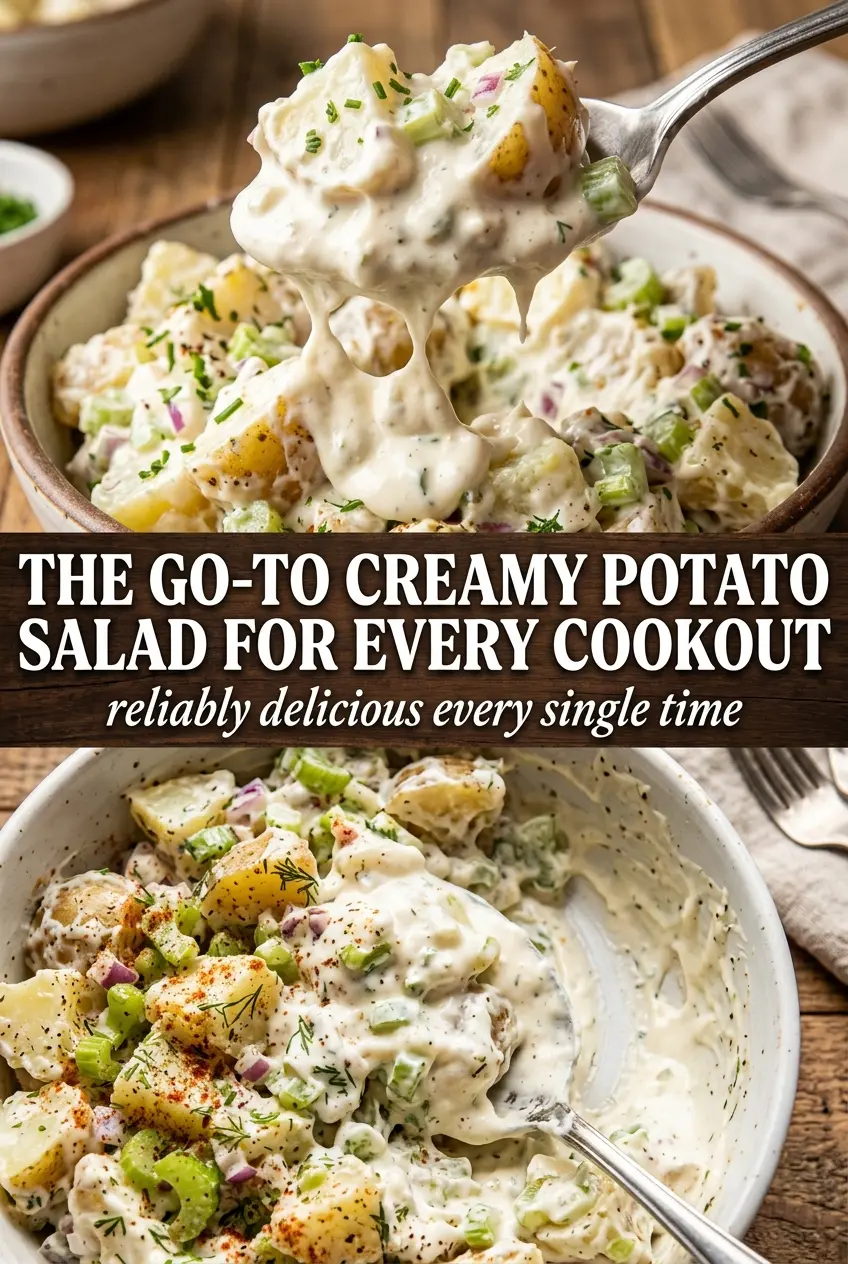
Ultra-creamy potato salad earns its place on the table when the dressing clings to every cube without turning gluey, the eggs stay tender, and the whole bowl tastes like it was mixed with care instead of dumped together. This version leans into that classic, rich texture with russet potatoes that break down just enough at the edges to help the dressing coat everything. The result is a salad that feels familiar, but fuller and smoother than the watery versions that get rushed to the fridge too soon.
The trick is in the balance: mayonnaise for body, sour cream for a little tang and softness, yellow mustard for backbone, and a splash of vinegar to keep the dressing from tasting flat. The potatoes need to be cooked until just tender, then cooled enough to stop steaming before the dressing goes in. If they’re too hot, they absorb too much dressing and the salad turns loose instead of creamy.
Below, I’ve laid out the part that matters most: how to keep the texture rich, not heavy, and how to make it taste even better after chilling. There’s also a simple note on substitutions if you want to tweak the dressing without losing that old-school potato salad feel.
The dressing coated everything beautifully, and after chilling the potatoes held their shape without getting watery. My husband kept sneaking spoonfuls straight from the bowl.
Save this ultra-creamy potato salad for potlucks, cookouts, and any meal that needs a rich, classic side dish.
The Small Mistake That Makes Potato Salad Watery
Potato salad gets blamed for being heavy when the real problem is usually excess steam and overworked potatoes. Russets are the right choice here because they’re starchy enough to absorb the dressing, but that same starch turns pasty if you stir too hard or dress them while they’re still hot. The goal is a creamy bowl that holds together, not mashed potatoes with eggs in it.
Let the potatoes cool until they’re warm, not hot. That gives the dressing enough time to cling without thinning out. Fold, don’t mash. The moment you start stirring like you’re mixing batter, you break down the cubes and the whole salad loses its clean, creamy texture.
- Russet potatoes — They give you that soft, creamy interior that makes the dressing feel thick and luxurious. Waxy potatoes stay firmer and can make the salad feel a little slick instead of rich.
- Mayonnaise — This is the backbone of the dressing. Use a mayo you like straight from the jar, because its flavor shows up in every bite.
- Sour cream — It lightens the mayonnaise just enough and keeps the salad from tasting flat. Plain Greek yogurt works in a pinch, but it brings a sharper tang and a slightly looser finish.
- Sweet pickle relish — It adds sweetness and little bursts of crunch without extra chopping. If you use chopped pickles instead, add a pinch more sugar to keep the balance right.
What Each Ingredient Is Actually Doing to Prevent Wateriness

- Potatoes (waxy varieties, cooked properly) — Waxy potatoes like red potatoes or Yukon Gold don’t break down and release liquid. Starchy potatoes turn to mush.
- Cooling completely before dressing — Hot potatoes release liquid. Cool potatoes absorb dressing without becoming waterlogged.
- Dressing consistency (thick, not thin) — Thin dressing makes the salad watery. A proper potato salad dressing is thick and creamy.
- Additional vegetables (drained well if canned) — Canned vegetables release liquid. Drain thoroughly and pat dry before adding to the salad.
- No excess liquid in the dressing — Don’t thin the mayo with milk or water. Keep the dressing thick so it doesn’t make the salad watery.
- Minimal chilling time before serving — The longer the salad sits, the more liquid vegetables release. Serve within a few hours of assembling.
- Toss right before serving (if made ahead) — The salad might separate if it sits too long. A final toss brings everything back together.
- Optional: hold back some dressing if making ahead — Add just enough dressing to coat, then add more just before serving if the salad has absorbed it.
Building the Creamy Texture Without Breaking the Potatoes
Cooking the Potatoes Just Until Tender
Boil the peeled, cubed potatoes until a fork slips in without resistance, but stop before they start collapsing at the edges. If they’re undercooked, the salad feels chalky; if they’re overcooked, the cubes fall apart as soon as you fold in the dressing. Drain them well and spread them out for a few minutes so the surface steam can escape.
Mixing the Dressing First
Whisk the mayonnaise, sour cream, mustard, vinegar, sugar, salt, and pepper until the mixture looks smooth and loose. That matters because the dressing coats better when it’s already blended, instead of getting mixed unevenly once it hits the potatoes. The mustard and vinegar keep the richness from tasting heavy, and the sugar rounds out the sharp edges.
Folding for a Creamy Finish
Add the potatoes, eggs, celery, onion, and relish to the bowl, then pour the dressing over the top and fold gently from the bottom up. You want every piece coated, but the potatoes should still look like cubes, not a thick mash. If the salad seems loose at first, don’t panic; it tightens as it chills and the potatoes absorb the dressing.
Letting the Salad Chill and Set
Refrigerate the salad for at least 2 hours before serving, and longer if you have the time. This isn’t just about temperature. The chill gives the flavors a chance to settle and the dressing to thicken around the potatoes. Give it one final taste before serving, because cold potato salad often needs a small pinch more salt.
Add a little Dijon for a sharper bite
Swap 1 tablespoon of the yellow mustard for Dijon if you want a stronger, more savory edge. It won’t change the texture, but it does make the dressing taste less sweet and a little more grown-up.
Make it dairy-free without losing the creamy body
Use a dairy-free sour cream or skip it and add a little extra mayonnaise with a splash more vinegar. You’ll lose some tang, so taste the dressing before mixing and adjust the salt and mustard to keep it balanced.
Turn it into a gluten-free party side
This recipe is naturally gluten-free as written, as long as your mayonnaise, mustard, and relish are certified or labeled gluten-free. That’s the easiest kind of adaptation because the texture stays exactly the same.
Storage and Reheating
- Refrigerator: Store covered for up to 4 days. The salad may thicken as it sits, and the potatoes can soften a bit more over time.
- Freezer: Don’t freeze it. The mayonnaise and sour cream separate, and the potatoes turn grainy after thawing.
- Reheating: This salad is meant to be served cold, not reheated. If it’s been in the fridge overnight, let it sit out for 10 to 15 minutes so the dressing loosens slightly and the flavor opens up.
Answers to the Questions Worth Asking
Creamy Potato Salad
Ingredients
Equipment
Method
- Bring a full Dutch oven of water to a boil, then add peeled and cubed russet potatoes and boil at 100°C (212°F) until tender, about 15–20 minutes. Drain and cool the potatoes until just warm, not hot.
- In a large mixing bowl, combine the cooled potatoes, chopped hard-boiled eggs, finely diced celery, finely diced onion, and sweet pickle relish. Stir gently so the mixture stays intact.
- In a separate bowl, mix mayonnaise, sour cream, yellow mustard, white vinegar, sugar, salt, and pepper until smooth, 1–2 minutes. Taste and adjust seasoning as needed.
- Pour the dressing over the potato mixture and fold gently until very creamy and evenly coated. Fold slowly to prevent the potatoes from breaking down.
- Refrigerate the salad for at least 2 hours to thicken and develop flavor. Serve cold with a traditional presentation.