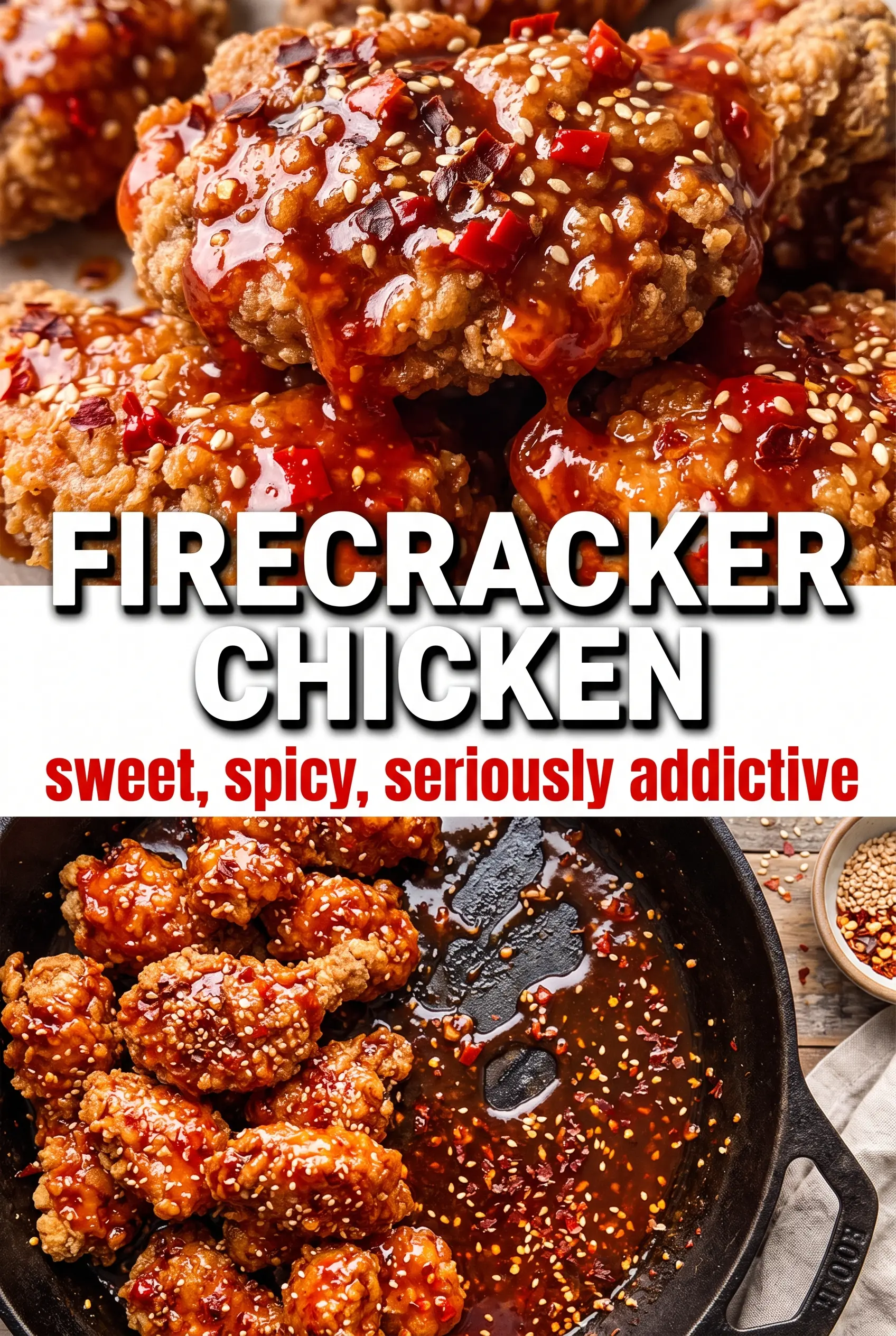
Crispy firecracker chicken lands with that fast, sticky hit that makes takeout feel optional. The chicken stays shatteringly crisp under a glossy red-orange sauce that clings in all the right places, then settles into sweet heat with just enough vinegar to keep it from tasting flat. It’s the kind of dinner that disappears from the bowl before the rice is finished.
What makes this version work is the balance between the coating and the sauce. Cornstarch teams up with flour so the chicken fries up with a light, craggy shell instead of a heavy batter, and the sauce uses butter and brown sugar to gloss everything without turning syrupy. A short rest in the sauce at the end is what gives you those caramelized edges instead of a thin coating that slides off.
Below, I’ve laid out the exact point where the chicken turns from pale to crisp, how to keep the sauce smooth, and the small substitutions that still give you that sweet-spicy finish without losing the texture that makes this dish worth making.
The sauce thickened up into that sticky glaze right in the pan, and the chicken stayed crisp even after tossing. I served it over rice with extra green onions and my husband went back for seconds before I sat down.
Like this firecracker chicken? Save it to Pinterest for a crispy sweet-heat dinner with glossy sauce and zero soggy bites.
The Coating Has to Fry, Not Steam
The mistake that ruins firecracker chicken is crowding the pan or using oil that isn’t hot enough. When that happens, the flour and cornstarch coating drinks in oil and goes soft before the sauce ever hits it. You want 375°F oil and enough space between pieces that each bite can fry instead of simmer.
Cornstarch is what gives you that lighter crunch, while the flour helps the coating cling through the toss in sauce. That combo matters more than a thick batter here. If you skip the cornstarch, the crust turns heavier and less crisp; if you skip the flour, the coating can shed too easily when it gets sauced.
- Chicken breasts — Breasts stay tender if you cut them into even bite-sized pieces. Thighs work too and bring a little more richness, but they cook a touch longer and won’t give quite the same lean, crisp bite.
- Cornstarch — This lightens the coating and helps it fry into that brittle shell. Arrowroot can stand in, but it browns a little differently and doesn’t give quite the same dry crispness.
- Hot sauce — Frank’s-style hot sauce gives the right vinegar bite and enough body to make the glaze taste bright, not just sweet. A thicker, less acidic hot sauce will work, but the sauce will taste heavier and less sharp.
- Brown sugar — This is what turns the sauce from hot-and-buttery into sticky firecracker glaze. White sugar can work in a pinch, but you lose some of the molasses depth that makes the coating taste rounder.
How to Build the Sauce So It Stays Glossy
Coat the Chicken Evenly
Toss the chicken until every surface looks dusty and dry, with no wet patches hiding underneath. If the pieces look gummy, too much moisture is hanging around and the coating will clump in the oil. Let the chicken sit for a minute after tossing so the flour and cornstarch hydrate slightly and cling better.
Fry Until the Crust Turns Deep Gold
Slide the chicken into the oil in batches and leave it alone long enough for the edges to set. You’re looking for a deep golden crust, not pale blond chicken that needs a second fry to get there. If the oil temperature drops too much, the coating softens, so keep the heat steady and drain the pieces on a rack or paper towel as soon as they come out.
Cook the Sauce Just Until It Looks Unified
Warm the sauce over medium heat until the butter melts, the sugar dissolves, and everything turns smooth and glossy. Don’t let it boil hard; that’s how butter can separate and the sauce turns greasy instead of shiny. The sauce should coat a spoon in a thin lacquer, not reduce into candy.
Caramelize the Toss
Add the fried chicken to the pan and turn it gently until each piece is lacquered red-orange. Give it one to two minutes back in the pan so the sauce grabs onto the crust and tightens into a sticky finish. If the sauce looks like it’s slipping off, the chicken was either too wet from frying too soon or the sauce wasn’t reduced enough before tossing.
Three Ways to Bend the Heat Without Losing the Crunch
Gluten-Free Firecracker Chicken
Swap the all-purpose flour for a gluten-free 1:1 blend and keep the cornstarch. You’ll still get a crisp shell, though the coating may be a little more delicate, so fry in smaller batches and handle the chicken gently when tossing it in the sauce.
Lower-Heat Version
Cut the red pepper flakes in half and use the lower end of the hot sauce amount. You’ll keep the sweet, tangy glaze and the glossy finish, but the burn stays in the background instead of taking over the whole bite.
Baked Instead of Fried
Toss the coated chicken with a little oil and bake it on a wire rack at 425°F until crisp and cooked through, then sauce it at the end. The flavor still lands, but the crust won’t be as shattering as the fried version, and you’ll want to serve it right away so the coating stays lively.
Storage and Reheating
- Refrigerator: Store leftovers in an airtight container for up to 3 days. The coating softens in the sauce, but the flavor stays strong.
- Freezer: The sauced chicken doesn’t freeze well because the crust loses its texture. If you want to freeze it, freeze the fried chicken pieces unsauced and add fresh sauce after reheating.
- Reheating: Reheat in a 375°F oven or air fryer until hot and re-crisped. The common mistake is microwaving it straight from the fridge, which turns the coating soft and pushes the sauce into the breading.