Foil packet fish cooks up tender, flaky, and full of clean lemony flavor without demanding much attention at the fire or grill. The packets trap steam around the fillets, which keeps lean fish from drying out and lets the zucchini and bell pepper soften in the same pan-free space. When you open the foil, you get the best part: hot butter, herbs, and lemon running right over the fish.
This version works because the fish sits on a bed of vegetables instead of directly against the foil, which keeps it from sticking and gives the heat a little buffer. Heavy-duty foil matters here, too. Thin foil tears more easily once the juices and steam build up, and that’s the last thing you want when you’re cooking over open heat. A quick pat of butter, a few slices of lemon, and some garlic are enough to season the whole packet without burying the fish.
Below you’ll find the exact timing that keeps the fish flaky instead of dry, plus a few smart swaps if you’re using a different fillet or cooking for a crowd.
The packets came out perfect after 18 minutes, and the fish lifted apart in big flakes without drying out. The lemon and butter at the bottom tasted like a built-in sauce.
Save these foil packet fish packets for easy campfire dinners with lemon, herbs, and tender vegetables.
The Reason Foil Packets Keep Fish Moist Over Open Heat
Fish cooks fast, and that’s where foil packet dinners go wrong when people treat them like a slow roast. Open heat can turn a delicate fillet dry in a few minutes, but a sealed packet changes the whole equation by steaming the fish gently while the vegetables release just enough moisture to help carry the heat. You’re not blasting the fish directly. You’re cooking it in its own little covered pan.
The other thing that matters is layering. The vegetables go under and around the fish, not on top of it, so the fillet gets steam and flavor without being weighed down. If you stack everything too tightly, the fish can cook unevenly and the center may still look translucent while the edges are already overdone. Keep the packet snug, not crowded, and give the fish a little breathing room inside the foil.
What the Lemon, Butter, and Vegetables Are Doing Here
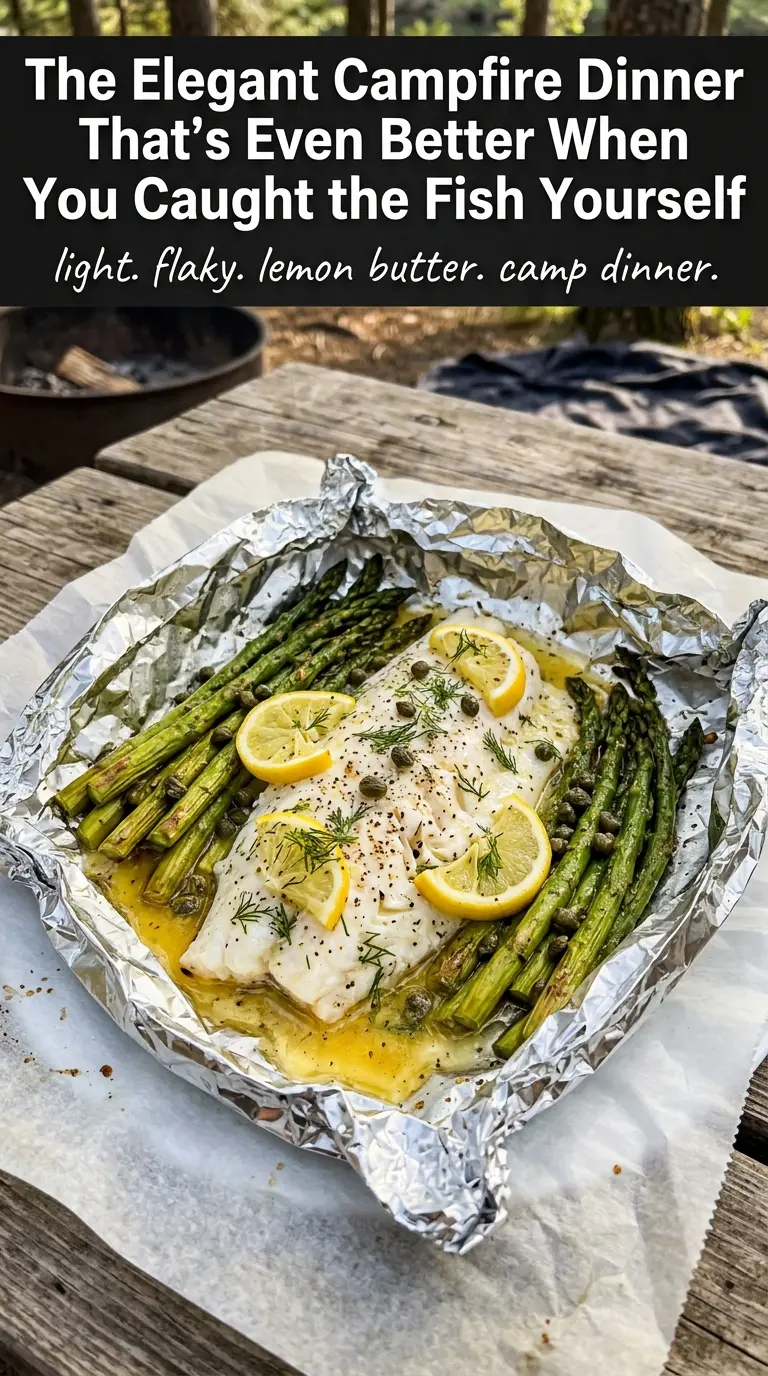
- Fish fillets — Salmon brings the richest flavor and holds up best on the grill. Trout is a little more delicate but works beautifully. Tilapia is the mildest choice and cooks quickly, which is helpful if your fire runs hot. Whatever you use, try to keep the fillets similar in thickness so they finish at the same time.
- Heavy-duty aluminum foil — This is not the place to use flimsy foil. You need something that can hold steam, juices, and a little movement when you lift the packet off the grate. If you only have standard foil, double it so the packets don’t tear when you open them.
- Butter and lemon — Butter melts into the fish and vegetables and gives you that built-in pan sauce effect at the bottom of the packet. Lemon does more than add brightness; its acid keeps the whole dish tasting fresh and prevents the butter from feeling heavy. Thin slices work better than juice alone because they soften and perfume everything as they cook.
- Zucchini and bell pepper — These vegetables cook fast enough to finish alongside the fish and they hold enough moisture to help the packet steam. Slice them thin so they soften before the fish overcooks. If the pieces are too thick, the fish will be done before the vegetables are tender.
- Garlic and herbs — Garlic gives the packets a savory backbone, while dill or parsley keeps the flavor clean and sharp. Fresh herbs are best, but dried dill can work in a pinch if you use less. The key is not overloading the packets; a little goes a long way once the steam starts moving.
How to Build the Packet So the Fish Stays Flaky
Start With a Vegetable Bed
Lay the zucchini and bell pepper down first, then set the fish on top. That keeps the fillet from sitting directly against the foil, which can lead to sticking and uneven heat on the bottom. The vegetables also act like a buffer so the fish steams instead of seizing up from sudden direct contact with the grate. If your slices are thick, cut them thinner before you start packing.
Season Before You Seal
Scatter the garlic, herbs, salt, and pepper over the fish before the butter goes on. The butter helps carry those seasonings as it melts, and the lemon on top perfumes the whole packet from the start. Don’t drown the fish in extra liquid; the vegetables and lemon already provide enough moisture for a clean steam. Too much liquid can make the packets leak and wash the seasoning off the fillets.
Seal Tight, But Leave a Little Space
Fold the foil into secure packets with enough room for steam to circulate. You want the packets closed enough that nothing escapes, but not so tight that the fish is pressed flat. A tight seal keeps the moisture inside and helps the fish cook evenly. If the packet is pinched too hard against the fillet, the center can overheat before the edges have fully flaked.
Cook to the Flake, Not the Clock Alone
Set the packets over medium heat for 15 to 20 minutes, then check one carefully. The fish is ready when it flakes easily with a fork and looks opaque all the way through, with just a little shine left from the butter. Thicker salmon fillets usually need the full time, while thin tilapia can be done sooner. If the packets have been over direct flames instead of steady heat, start checking early so the edges don’t dry out.
Use Salmon for a Richer Result
Salmon gives you the boldest flavor and stands up best if your grill runs a little hot. It stays moist even if the packet goes a minute or two past ideal, which makes it forgiving for campfire cooking. The tradeoff is a stronger fish flavor, so keep the lemon and herbs in play.
Make It Dairy-Free
Swap the butter for olive oil or a plant-based butter with a decent fat content. You’ll lose a little of that classic buttery sauce in the bottom of the packet, but the fish will still stay moist and the lemon will keep the dish bright. Olive oil gives a cleaner finish, while vegan butter mimics the richer mouthfeel more closely.
Change the Vegetables by Season
Broccoli florets, asparagus, or thin-sliced onions can step in for the zucchini and bell pepper. Use vegetables that cook in the same window as the fish, or blanch harder vegetables first so they don’t stay crunchy while the fish is done. This keeps the packet balanced and prevents one ingredient from overcooking while another is still raw.
Storage and Reheating
- Refrigerator: Store leftovers in an airtight container for up to 2 days. The fish will stay safe longer than that, but the texture starts to dry out and the vegetables lose their best bite.
- Freezer: This doesn’t freeze well once cooked. The fish turns a little mealy after thawing and the vegetables get soft in a way that can’t be fixed.
- Reheating: Warm leftovers gently in a covered skillet over low heat or in a low oven until just heated through. High heat is the mistake here; it finishes drying out already-cooked fish before the center is warm.
The Questions People Ask Before They Start the Fire
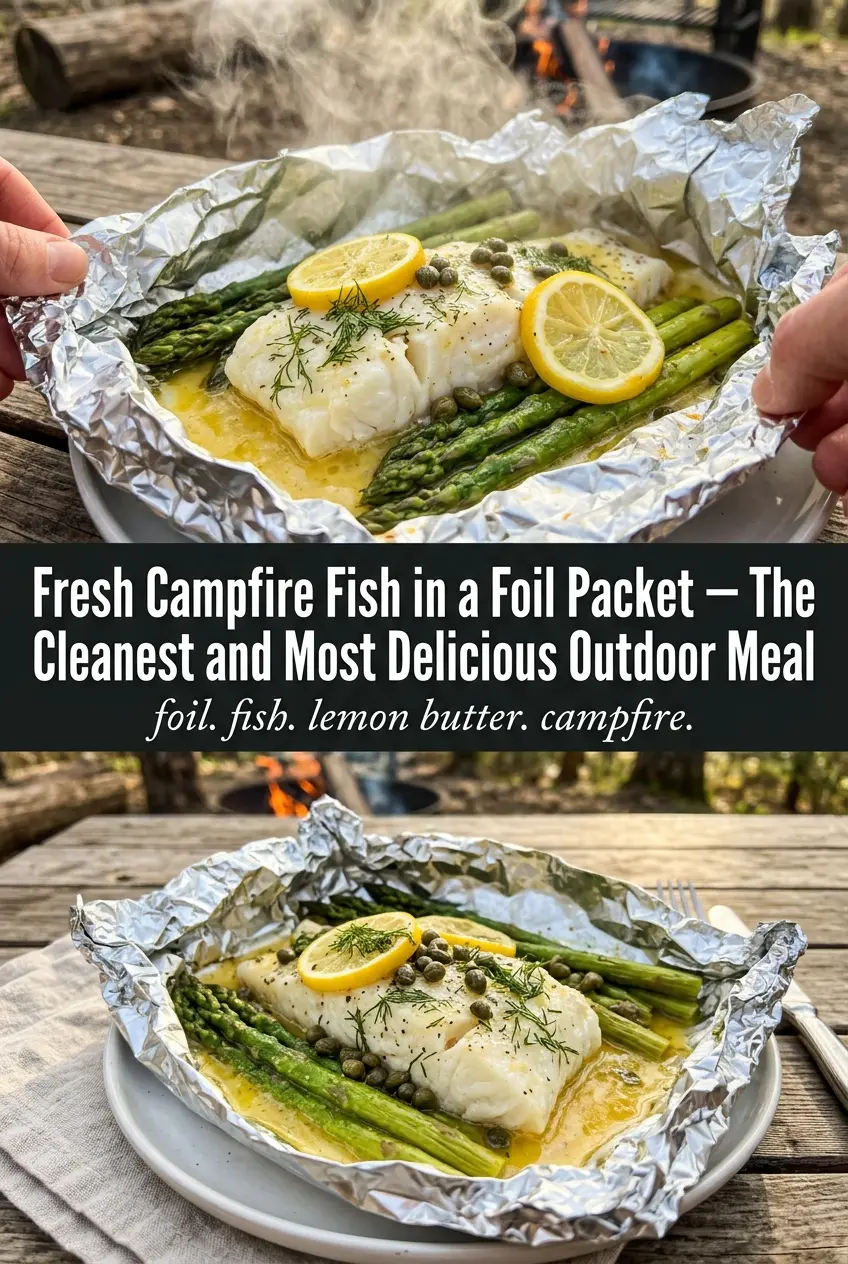
Foil Packet Fish
Ingredients
Method
- Place each fish fillet on a sheet of heavy-duty aluminum foil. Arrange the fillets so they sit centered and flat on their foil.
- Top each fillet with minced garlic, dill or parsley, salt, and pepper, then add a pat of butter. Distribute the toppings evenly so every bite cooks through.
- Arrange lemon slices over the fish and surround it with sliced zucchini and bell pepper. Keep the vegetables close to the fish so they steam in the packet.
- Fold the foil into sealed packets. Crimp the edges tightly so steam stays trapped during cooking.
- Place the packets on a campfire grate over medium heat for 15-20 minutes until the fish flakes easily with a fork. Look for visible steam through the foil opening points and check doneness at the 15-minute mark.
- Carefully open the packets and serve. Keep your face and hands back as the lemony steam releases.