Foil packet sausage and peppers comes out smoky, juicy, and packed with sweet pepper-and-onion flavor, all without dirtying a skillet or hovering over the stove. The sausage steams in its own fat while the vegetables soften just enough to turn silky at the edges, and the foil keeps every bit of that seasoned juice right where it belongs.
What makes this version work is the balance inside the packet: enough olive oil to keep the onions from scorching, enough space for the sausages to cook through evenly, and just enough seasoning to echo the Italian sausage instead of fighting it. Heavy-duty foil matters here. Thin foil tears once the vegetables soften and the rendered fat starts moving around the packet.
Below, you’ll find the little details that keep the packets from leaking and the peppers from turning mushy. There’s also a simple way to turn this into an easy sandwich dinner or serve it straight off the foil with a fork.
The peppers stayed tender but still had some bite, and the sausages came out juicy instead of dried out. I opened the packets straight onto rolls and the juices soaked in just enough without making a mess.
Save these foil packet sausage and peppers for an easy campfire dinner with juicy sausage and tender peppers.
The Trick That Keeps the Sausages Juicy in the Packet
The biggest mistake with foil packet sausage and peppers is packing everything too tightly. When the ingredients are compressed into a flat, crowded bundle, the peppers steam aggressively and the sausage can end up unevenly cooked. Give the packets a little room and keep them sealed, not smashed. You want trapped heat and fat, not a pressed-down parcel.
Flipping halfway through matters too. It evens out the heat from the grate and helps the sausage cook through without scorching the bottom side. If your campfire runs hot, move the packets to the cooler edge of the grate after the first few minutes. The goal is a gentle sizzle inside the foil, not a hard sear outside it.
- Heavy-duty foil — This is the one place I wouldn’t downgrade. Regular foil tears more easily once the vegetables soften and the sausages release their juices.
- Italian sausage — Sweet or hot both work. Fresh sausage gives the best texture and flavor here because it stays juicy as it cooks inside the packet.
- Bell peppers — Use a mix of colors for the best balance of sweetness and a little bite. Thicker slices hold up better than thin slivers.
- Onions — They turn soft and sweet in the packet. Yellow or white onions are the most forgiving, but red onions work if you want a sharper edge.
What Each Ingredient Is Actually Doing in Sausage Packet
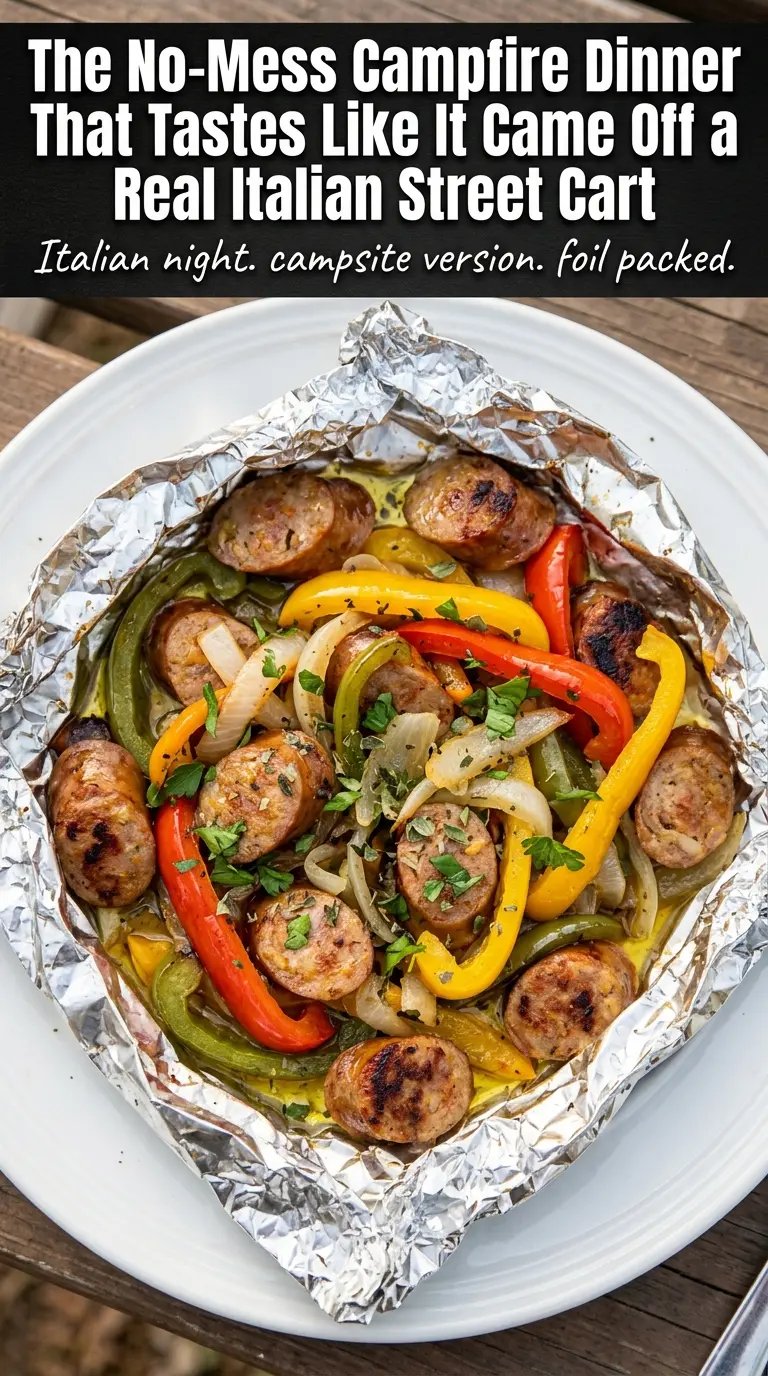
- Sausages (good quality, all the same size) — The sausages must be the same thickness so they cook evenly. Good quality keeps the filling from seeping out.
- Foil packet (sealed well so juices don’t escape) — The seal traps the juices that keep everything moist. A loose seal lets juices escape and things dry out.
- Fat or oil (protecting the sausages) — A little oil prevents the sausages from sticking to the foil and drying out. It also helps distribute heat evenly.
- Vegetables (cut small so they cook with the sausages) — If vegetables are too large, they won’t cook through before the sausages overcook. Keep pieces small and similar in size.
- Seasoning (distributed throughout the packet) — Season each layer so flavor is even. Don’t just sprinkle on top of the sausages.
- Liquid (a little broth or juice for steaming) — A small amount of liquid helps everything cook evenly and keeps the sausages from drying out.
- Fire temperature (medium coals, not high flames) — High heat can split the sausage casing before the inside cooks. Medium heat cooks gently inside the sealed packet.
- Resting time (let it cool slightly before opening) — The packet is extremely hot. Let it cool a moment so you don’t burn yourself and the juices stay inside.
Building the Packets So Nothing Leaks or Goes Soft
Cutting and Layering for Even Cooking
Lay each sheet of foil flat and divide the sausage evenly so every packet cooks at the same pace. Top the sausage with peppers and onions rather than burying the meat under the vegetables; that keeps the sausage exposed to heat while the vegetables soften from the steam it creates. Drizzle the oil over the top so it coats the vegetables as the packet heats. If you skip the oil, the onions can stick to the foil and dry out at the edges.
Sealing for the Campfire
Fold the foil over the filling and crimp the edges tightly, leaving a little air space inside. That pocket of steam is what cooks everything evenly. The packet should be sealed enough that juices don’t escape, but not packed so tightly that the foil can split when the sausage renders. If you’re cooking over an open fire, place the packets on a grate over medium heat instead of directly in the flames.
Knowing When It’s Done
Cook for 20 to 25 minutes, flipping once halfway through. The peppers should be softened and glossy, the onions tender, and the sausage should register 160°F in the center if you check it with a thermometer. If the vegetables look ready but the sausage still feels firm, give it a few more minutes; undercooked sausage is the only part of this meal you can’t fix at the table.
Make It with Chicken Sausage
Chicken sausage works well if you want a lighter packet, but it won’t release quite as much fat, so keep the olive oil in place. Cook time may drop a few minutes if the sausage is fully cooked, and the peppers will take on more of the seasoning from the sausage itself.
Turn It Into a Gluten-Free Camp Dinner
The packet itself is naturally gluten-free as long as your sausage is certified gluten-free. Skip the hoagie roll and serve it straight from the foil with a fork, or over roasted potatoes if you want something more filling.
Add a Sandwich Finish
If you’re serving these on rolls, split the hoagies before the packets come off the heat so the bread is ready to catch the juices. The rolls soften fast, which is exactly what you want if you’re after that classic sausage-and-peppers sandwich feel.
Storage and Reheating
- Refrigerator: Store leftovers in an airtight container for up to 4 days. The peppers soften a little more after chilling, but the flavor holds up well.
- Freezer: Freeze the cooked sausage and peppers for up to 2 months. Let them cool first, then wrap tightly and thaw overnight before reheating.
- Reheating: Warm gently in a covered skillet over low heat or in the oven at 325°F. High heat dries out the sausage and turns the peppers mushy before the center is hot.
Questions I Get Asked About This Recipe
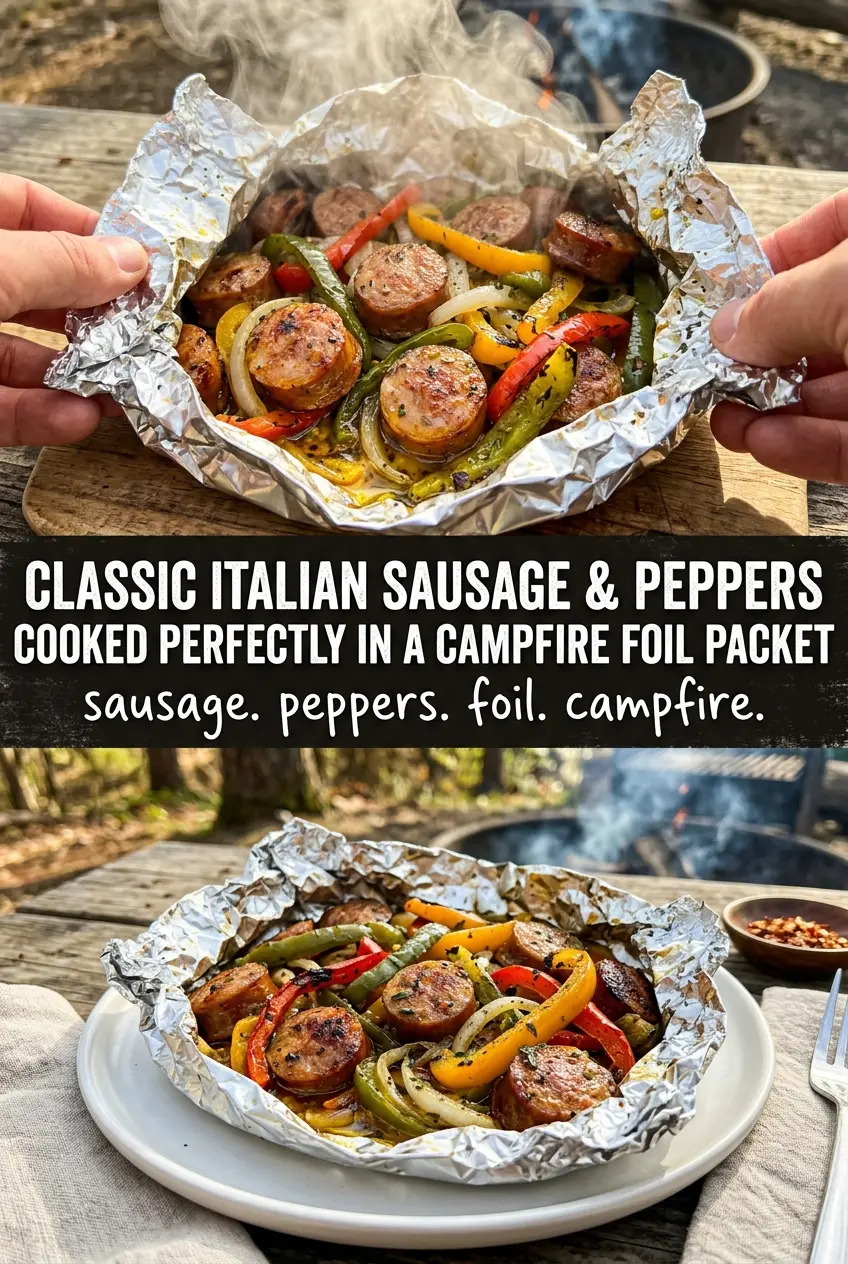
Foil Packet Sausage and Peppers
Ingredients
Equipment
Method
- Lay out 4 sheets heavy-duty aluminum foil and divide the Italian sausages among them. Place the sausages in the center so packets seal easily.
- Top each packet with sliced bell peppers and sliced onions. Arrange them so they sit around the sausages for even steaming.
- Drizzle 2 tablespoons olive oil over the sausages and vegetables, then sprinkle with Italian seasoning, salt, and black pepper. Make sure seasoning lands on both the sausage and the peppers and onions.
- Fold the foil around the filling and crimp the edges to form sealed packets. Press the seams firmly so steam stays inside.
- Place the packets on a grill grate over medium heat for 20-25 minutes, turning them halfway. Look for steady steam to build inside the foil.
- Carefully open the foil packets and serve the sausages and peppers, either as-is or on hoagie rolls. Watch for continued steam when you open one packet as the hero reveal.