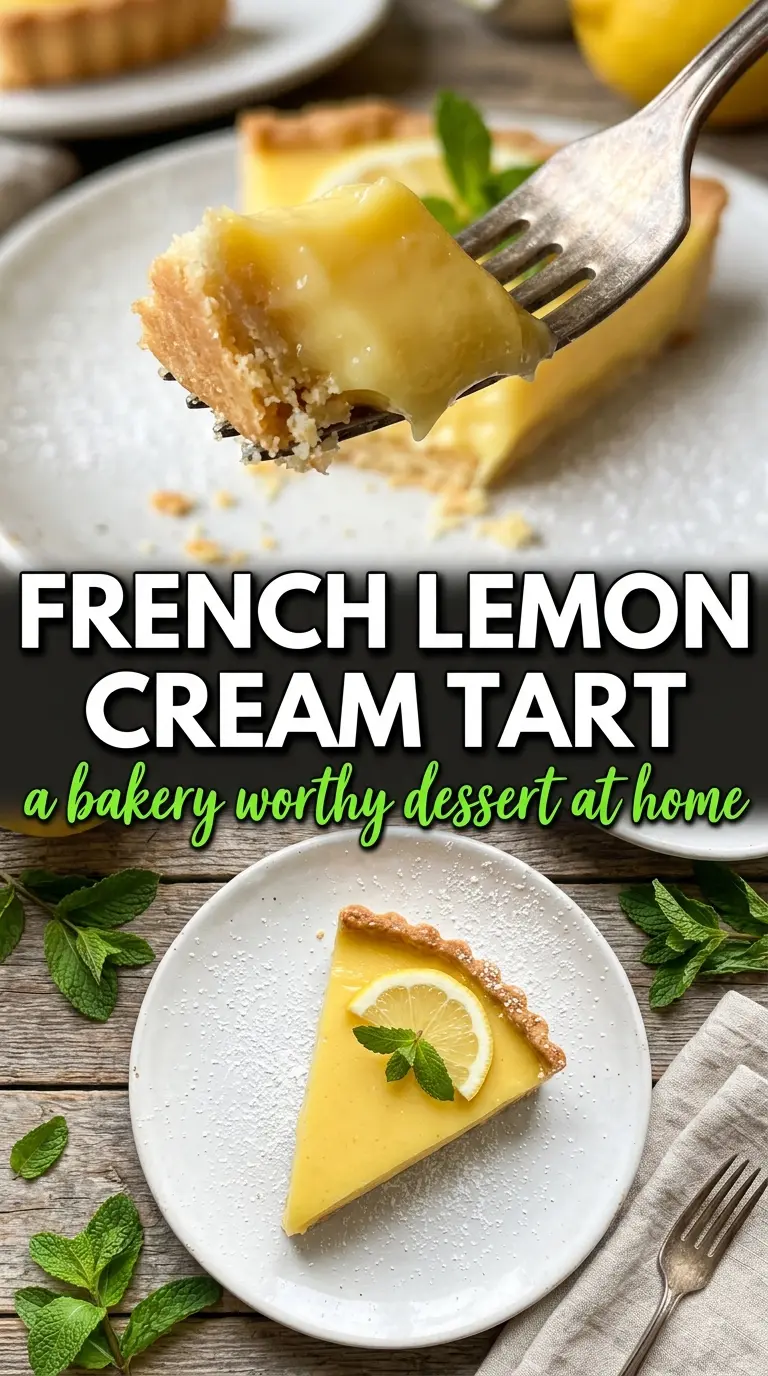
Silky lemon cream, a crisp buttery shell, and that crackling sugar top give this tart the kind of finish that makes people go quiet for a second at the table. The filling sits somewhere between a rich lemon curd and a pastry cream, with enough body to slice cleanly but still a soft, lush texture that melts on the tongue. The bruleed sugar on top adds a sharp little snap that keeps each bite from feeling too sweet.
The shell matters here. A pate sucree made with powdered sugar bakes up tender and short, not flaky, which is exactly what you want under a smooth citrus filling. The lemon mixture also needs steady heat and constant stirring so the eggs thicken gently instead of scrambling. Straining it before the butter goes in catches any tiny bits of cooked egg and leaves you with a glossy cream that looks polished enough for a patisserie window.
Below, I’ve included the small details that make this tart dependable: how to keep the crust crisp, what to watch for when the cream thickens, and how to brulee the top without melting the filling underneath.
The lemon cream thickened exactly when you said it would, and straining it made the filling unbelievably smooth. The sugar top cracked beautifully with the torch and the tart held neat slices after chilling.
Save this French Lemon Cream Tart for the crisp sugar top, smooth lemon filling, and tender pâte sucrée shell.
The Part Most Lemon Tarts Get Wrong: A Watery Filling
The filling needs enough heat to thicken the eggs, but not so much that the mixture turns grainy or starts to curdle. The constant stirring matters because the eggs are doing the setting work here; if they sit still on a hot burner, you get little scrambled bits instead of a smooth cream. Pull the pan from the heat as soon as the mixture coats the back of a spoon and leaves a clean trail when you swipe a finger through it.
The other common failure is a soggy shell. A tart crust that isn’t fully baked will soften once the lemon cream goes in, especially after chilling. Bake the shell until it looks dry and lightly golden all over, and let it cool completely before filling so the butter in the cream doesn’t melt into the pastry.
What Each Ingredient Is Actually Doing In This Tart
- Powdered sugar in the crust — This is what gives pâte sucrée its delicate, tender bite. Granulated sugar works in a pinch, but it won’t dissolve as smoothly and the crust will bake up a little more rustic.
- Cold butter for both the shell and filling — Cold butter keeps the crust short and flaky-tender, then melts into the hot lemon base for a glossy finish. Soft butter won’t cut into the flour properly for the crust, and it won’t emulsify into the cream as cleanly at the end.
- Fresh lemon juice and zest — Bottled juice tastes flat here. You need the fresh acid for brightness, and the zest carries the oils that make the filling taste like actual lemon, not just sour.
- Eggs — These are the thickener. If your filling has ever stayed loose after chilling, the most likely problem was undercooking the custard base before it went into the shell.
- Fine straining — Don’t skip it. Even if the mixture looks smooth in the pan, straining removes cooked egg threads and zest pieces so the final tart has that clean, silken texture.
How to Build the Tart So the Filling Stays Smooth and the Crust Stays Crisp
Making the Pâte Sucrée
Pulse the flour, powdered sugar, salt, and cold butter until the mixture looks like fine crumbs with a few pea-sized bits left. Those little pieces of butter help the crust bake tender instead of dense. Add the yolk and cold water just until the dough comes together; if you keep processing it after that, the crust shrinks and turns tough. Press it into the pan firmly and evenly, then chill it so the butter firms back up before baking.
Blind Baking Until Pale Gold
Line the chilled shell and weigh it down before it goes into the oven. You want the crust set and lightly golden at the edges, with no wet-looking patches in the center. If the bottom puffs or slumps, it usually needed more chilling or the weights weren’t pressed all the way into the corners. Cool the shell completely before you even think about the filling.
Cooking the Lemon Cream
Whisk the eggs, sugar, lemon juice, and zest in a saucepan over medium heat, then keep the mixture moving the entire time. It will seem thin for several minutes before it suddenly thickens and starts to coat the spoon. The moment it reaches that point, take it off the heat and strain it right away. Waiting even a minute longer is how you end up with scrambled egg flecks.
Finishing and Chilling the Tart
Whisk the cold butter into the strained lemon base one cube at a time until the filling turns glossy and smooth. Pour it into the cooled shell and level the top with a spatula so the surface sets evenly. Refrigerate it until firm and fully chilled, which makes the slices clean and keeps the cream from oozing when you cut it. The brulee sugar goes on only at the end, after chilling, or it will melt into the filling instead of cracking on top.
Three Ways to Work This Tart Into Your Own Kitchen
Gluten-Free Tart Shell
Swap in a good 1:1 gluten-free baking flour for the crust only. The filling is naturally gluten-free, but the shell will bake a little more fragile, so chill it well and handle it gently when unmolding.
Dairy-Free Version
Use a plant-based butter with a firm texture for both the crust and the filling. The tart will still set, but the cream won’t taste quite as rich or buttery, so the lemon should stay bright and well-zested.
No Torch, No Problem
If you don’t have a kitchen torch, skip the brulee and finish with a light snowfall of powdered sugar and extra lemon zest. You lose the crackly top, but the tart still tastes elegant and sharp.
Make-Ahead Timing
Bake the shell a day ahead and chill the filled tart overnight. Wait to brulee the sugar until right before serving so the top stays crisp instead of dissolving into a sticky glaze.
Storage and Reheating
- Refrigerator: Keep covered for up to 3 days. The crust will soften a little after the first day, but the filling stays smooth.
- Freezer: Not ideal once assembled. The custard can weep after thawing, and the brulee top won’t hold its crackly texture.
- Reheating: Don’t reheat the finished tart. Serve it cold or slightly cool from the fridge, and brulee only the portion you plan to slice and eat right away.
Questions I Get Asked About This Recipe

French Lemon Cream Tart
Ingredients
Equipment
Method
- Pulse all-purpose flour, powdered sugar, salt, and cold butter until crumbly, then add large egg yolk and cold water and pulse just until the dough comes together with no dry bits. The mixture should look like moist clumps that hold together when pressed.
- Press the dough into a 9-inch tart pan, then chill for 30 minutes so it firms up. You want the dough to feel cold and set before baking.
- Blind bake the shell at 375°F for 18-20 minutes until golden, then remove from the oven and let it cool. Watch for edges turning deeper golden and the center looking set.
- Whisk large eggs, granulated sugar, fresh lemon juice, and lemon zest in a saucepan until fully combined. The mixture should be smooth and pale before heating.
- Cook over medium heat, stirring constantly, until thick enough to coat the back of a spoon, about 8-10 minutes. Visual cue: the curd should leave a clear trail when you draw a finger through it.
- Remove from the heat and strain through a fine sieve for a silky texture, then whisk in cold butter cubes one at a time until smooth and glossy. The filling should look bright and emulsified, with no lumps.
- Pour the lemon cream into the cooled tart shell and smooth the top, then refrigerate for 3 hours until set. The surface should jiggle only slightly and feel firm to the touch.
- Before serving, sprinkle 2 tablespoons sugar over the surface evenly for a thin melting layer. The top should look lightly dusted with a uniform sparkle.
- Brulee with a kitchen torch until amber and crackled, then let the crust sit briefly so it hardens. Visual cue: you should see a glassy, caramelized layer that makes a crisp sound when tapped.
- Garnish with lemon zest curls just before serving. Place curls on top so they stand out against the amber brulee.