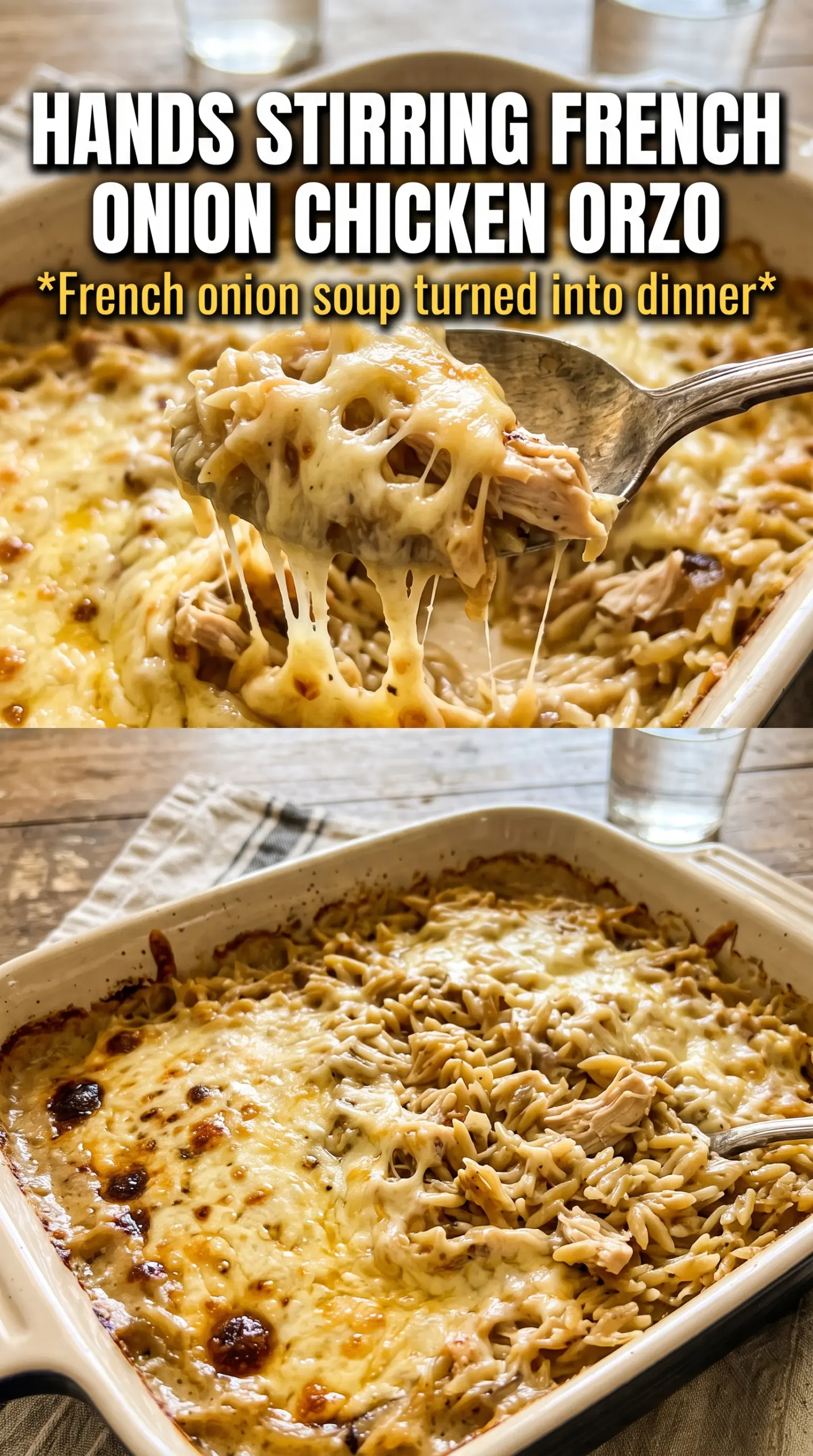
French onion chicken orzo casserole lands with the kind of deep, savory comfort that makes a pan scrape clean before dinner is even over. The onions cook down into something sweet and jammy, the orzo turns creamy without needing a separate sauce, and the Gruyere bakes into a browned top that cracks just a little when you spoon through it. It eats like a cross between French onion soup and a hearty baked pasta, which is exactly why it earns a place in the rotation.
The part that makes this version work is patience with the onions and restraint with the liquid. Caramelized onions need time to lose their sharp bite and build that dark, mellow base, and the orzo cooks right in the broth so it picks up all of that flavor instead of tasting boiled. The cream cheese melts in at the end to round everything out without turning the filling thin.
Below you’ll find the timing cues that matter most, plus a few smart swaps if you need to adjust the cheese, the wine, or the make-ahead plan.
The onions turned sweet and silky, and the orzo was creamy without getting mushy. My husband went back for seconds and said it tasted like French onion soup turned into a casserole.
Like this French Onion Chicken Orzo Casserole? Save it for nights when you want a caramelized onion crust and creamy baked orzo in one pan.
The Onion Browning That Keeps This Casserole from Tasting Flat
Most casseroles that lean on onion flavor shortchange the onions. They soften, maybe turn translucent, and then get buried under cheese. Here the onions are the base of the whole dish, so they need to cook until they’re deep gold and starting to stick to the pan before the wine goes in. That’s where the sweet, almost jammy flavor comes from.
If you rush this part, the casserole still works, but it tastes thinner and more one-note. The pan should look a little stained and glossy from the onions, with browned bits on the bottom that loosen when the wine hits. Those bits are the foundation of the sauce, not something to scrub away.
- Caramelized onions — These need time, not high heat. Medium heat gives you color without scorching, and that slow browning is what makes the final dish taste like French onion soup instead of onion pasta.
- Dry white wine — The wine deglazes the pan and adds sharpness to balance the cream cheese and Gruyere. If you don’t cook it for a minute or two, the casserole can taste boozy instead of rounded.
- Beef broth — This is what gives the dish its French onion backbone. Chicken broth works in a pinch, but it tastes lighter and loses some of that classic savory depth.
- Gruyere — Use the real thing if you can. It melts smoothly and browns with a nutty edge. Swiss is the closest backup, but it won’t have the same depth.
What Each Ingredient Is Doing in the Pan
- Chicken breast — Diced chicken cooks quickly and stays tucked into the orzo instead of drying out in big chunks. Cut it evenly so it finishes at the same time as the pasta. Thighs also work and stay a little juicier.
- Orzo — Uncooked orzo is the trick that turns this into a casserole instead of a skillet sauce. It absorbs the broth and wine as it bakes, which means you get a creamy texture without having to boil and drain a separate pot.
- Cream cheese — This is the ingredient that gives the filling its body. Cube it first so it melts faster and more evenly. If it’s cold from the fridge and left in big blocks, you’ll chase little lumps around the pan.
- Worcestershire sauce — A small amount sharpens the savory flavor and deepens the browned onion notes. It’s subtle, but it keeps the casserole from tasting heavy.
- Fresh thyme — Add it at the end as garnish for a brighter herbal note. The dried thyme does the work in the casserole itself; the fresh thyme wakes everything up on the plate.
How to Layer the Flavor So the Orzo Stays Creamy
Caramelizing the Onions Slowly
Melt the butter in a large oven-safe skillet and add the onions with a pinch of salt. Let them cook over medium heat, stirring often enough to keep the edges from burning, until they’re deeply golden and soft enough to collapse on the spoon. This usually takes longer than people expect, and that’s the point. If the heat is too high, the onions brown on the outside before they lose their raw sharpness inside, and the casserole ends up tasting harsh.
Building the Broth Base
Once the garlic and thyme hit the pan, let them cook just long enough to smell fragrant, then pour in the wine and let it bubble for a minute or two. That brief simmer cooks off the rough edge and pulls the browned onion bits off the skillet. Add the broth, Worcestershire, and uncooked orzo, then stir in the chicken so every piece is coated before the dish goes into the oven.
Finishing in the Oven
Stir in the cream cheese until the broth looks glossy and lightly thickened, then scatter the Gruyere over the top. Bake until the orzo is tender, the chicken is cooked through, and the cheese has melted into a browned top with crisp spots around the edges. If the casserole looks dry before it goes in the oven, the broth should still be loose; the orzo keeps absorbing liquid as it bakes, so a tight mixture at this stage usually means a dry pan later.
Make It Without Wine
Swap the wine for an equal amount of additional beef broth plus a teaspoon of white wine vinegar or lemon juice. You still get brightness and deglazing power, just without the alcohol. Skip the vinegar if you want a softer, more mellow casserole.
Dairy-Free Adaptation
Use a dairy-free butter and a plain unsweetened dairy-free cream cheese that melts well. The top won’t brown the same way without Gruyere, so finish with a sprinkle of dairy-free cheese that actually melts, or leave the top off and serve with fresh thyme for a cleaner finish.
Use Chicken Thighs Instead
Boneless skinless thighs bring a richer flavor and stay juicier during the bake. They can handle the full cook time a little better than breast meat, which makes them a good pick if your oven runs hot. Cut them into the same size pieces so they finish evenly with the orzo.
Make It Ahead for a Crowd
You can caramelize the onions and build the base earlier in the day, then add the orzo, chicken, and cheese just before baking. That keeps the pasta from soaking up too much liquid before it hits the oven. If you assemble the whole dish ahead, add a splash of broth before baking because the orzo will continue to drink up moisture in the fridge.
Storage and Reheating
- Refrigerator: Store covered for up to 4 days. The orzo will firm up as it sits, but the flavor gets deeper.
- Freezer: Freezes well for up to 2 months, though the texture softens a bit after thawing. Cool completely, wrap tightly, and freeze in portions for the easiest reheating.
- Reheating: Warm in a covered oven-safe dish at 350F with a splash of broth to loosen the sauce. Microwaving works for single servings, but stop and stir halfway through so the cheese doesn’t separate and the orzo doesn’t dry out at the edges.
Questions I Get Asked About This Recipe
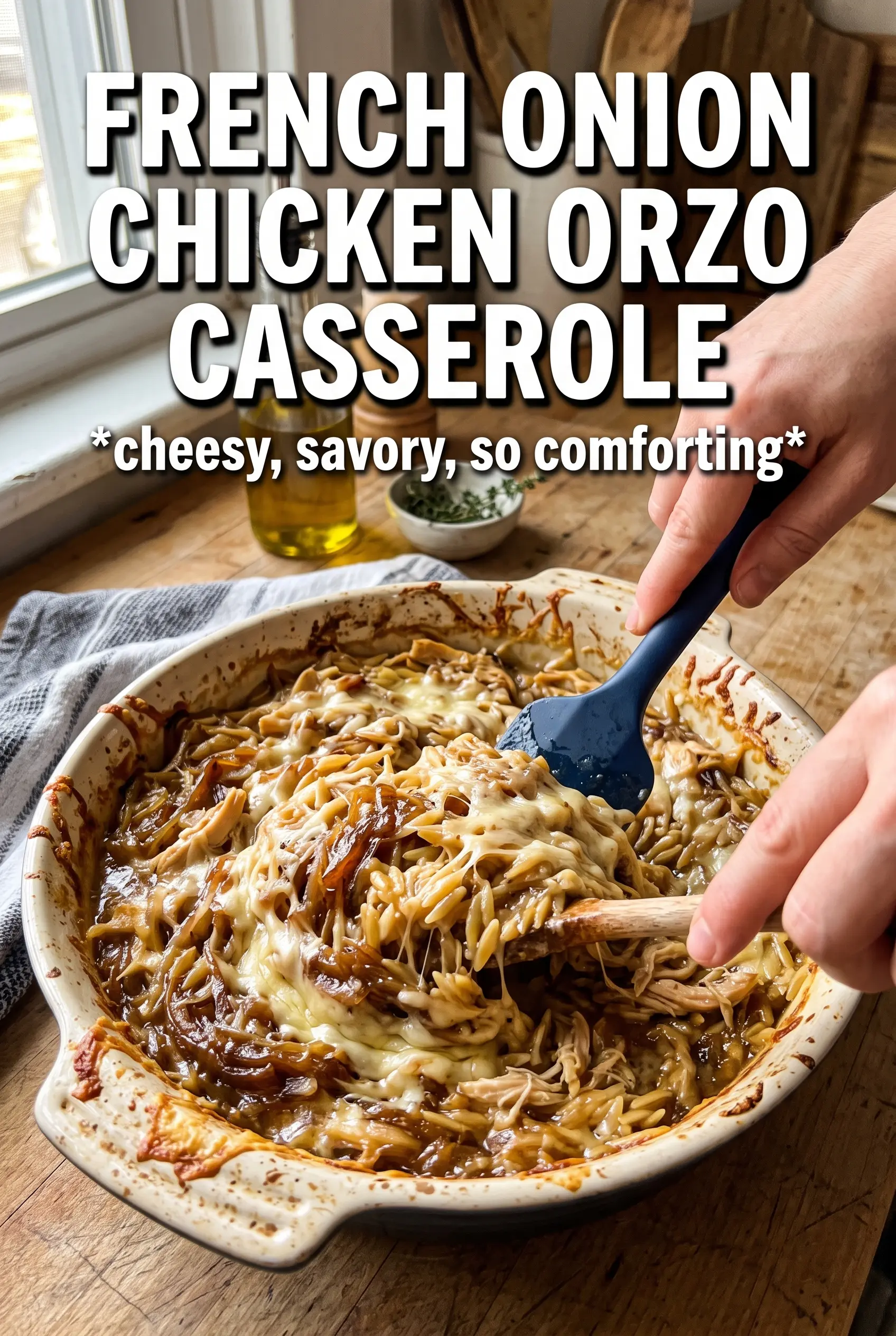
French Onion Chicken Orzo Casserole
Ingredients
Equipment
Method
- Preheat oven to 375°F.
- Melt butter in a large oven-safe skillet over medium heat, then cook onions 30-35 minutes until deeply caramelized, stirring occasionally so they brown evenly.
- Add garlic and dried thyme and cook for 2 minutes, until fragrant and the thyme darkens slightly.
- Pour in the dry white wine and cook for 2 more minutes, scraping up any browned bits from the skillet.
- Add beef broth, Worcestershire sauce, and uncooked orzo, then stir to combine with the onions.
- Stir in the diced chicken, then bring the mixture to a simmer over medium heat.
- Stir in the cubed cream cheese until fully melted and the mixture looks creamy.
- Season with salt and pepper to taste, then scatter shredded Gruyere over the top.
- Bake 25-30 minutes at 375°F until the orzo is cooked through, the chicken is done, and the cheese is golden with browned edges.
- Garnish with fresh thyme before serving so you get a fresh herbal finish.