Golden-browned meatballs tucked into deeply caramelized onions make this skillet dinner taste like classic French onion soup turned into a proper main dish. The broth gets rich and savory, the cheese melts into a bubbling blanket, and every bite has that mix of tender beef, sweet onions, and a little sharp Gruyere pull that keeps you going back for another forkful.
The part that makes this version worth making is the onion base. Those onions need time — not high heat — so they soften first, then slowly turn jammy and brown without burning. Browning the meatballs before they go into the sauce gives the skillet more flavor too, and it keeps them from falling apart while the broth simmers. A splash of white wine lifts the browned bits from the pan and gives the sauce that deep, restaurant-style finish.
Below you’ll find the easiest way to keep the onions moving without rushing them, plus the one broiling mistake that can turn melted Gruyere from bubbly and golden to greasy in seconds.
The onions turned out silky and sweet, and the Gruyere melted into the broth instead of just sitting on top. I served it with crusty bread and my husband went back for seconds before I even sat down.
Save this French Onion Meatball Skillet for the night you want bubbling Gruyere, sweet onions, and a skillet dinner that eats like comfort food with a little extra polish.
The Onion Stage Is Where Most Skillets Rush and Regret It
The biggest mistake in a French onion skillet is treating the onions like garnish instead of the backbone of the dish. If they stay pale, the sauce tastes flat. If the heat is too high, they scorch before their natural sugar has time to develop, and you get bitterness instead of that deep, savory sweetness everyone wants.
Medium-low heat is the right call here. The onions should soften first, then slowly collapse into a glossy, browned mass that smells sweet and almost jammy. When the pan starts to look dry, a small splash of broth or wine can loosen the fond at the bottom, but don’t flood the skillet early or you’ll steam the onions and lose the caramelized base.
- Butter — This carries the onions and helps them brown evenly. You can use olive oil in a pinch, but butter gives the sauce the rounder, sweeter finish this dish needs.
- Dry white wine — It pulls the browned bits off the pan and adds brightness that keeps the sauce from tasting heavy. Use something dry, not sweet; if you skip it, the sauce will be a little less layered but still good with extra broth.
- Gruyere — This is the cheese that gives you the classic French onion pull. It melts smoothly and stays flavorful under the broiler, while a cheaper pre-shredded Swiss will work but won’t melt as silkily.
What Each Ingredient Is Actually Doing in the Skillet
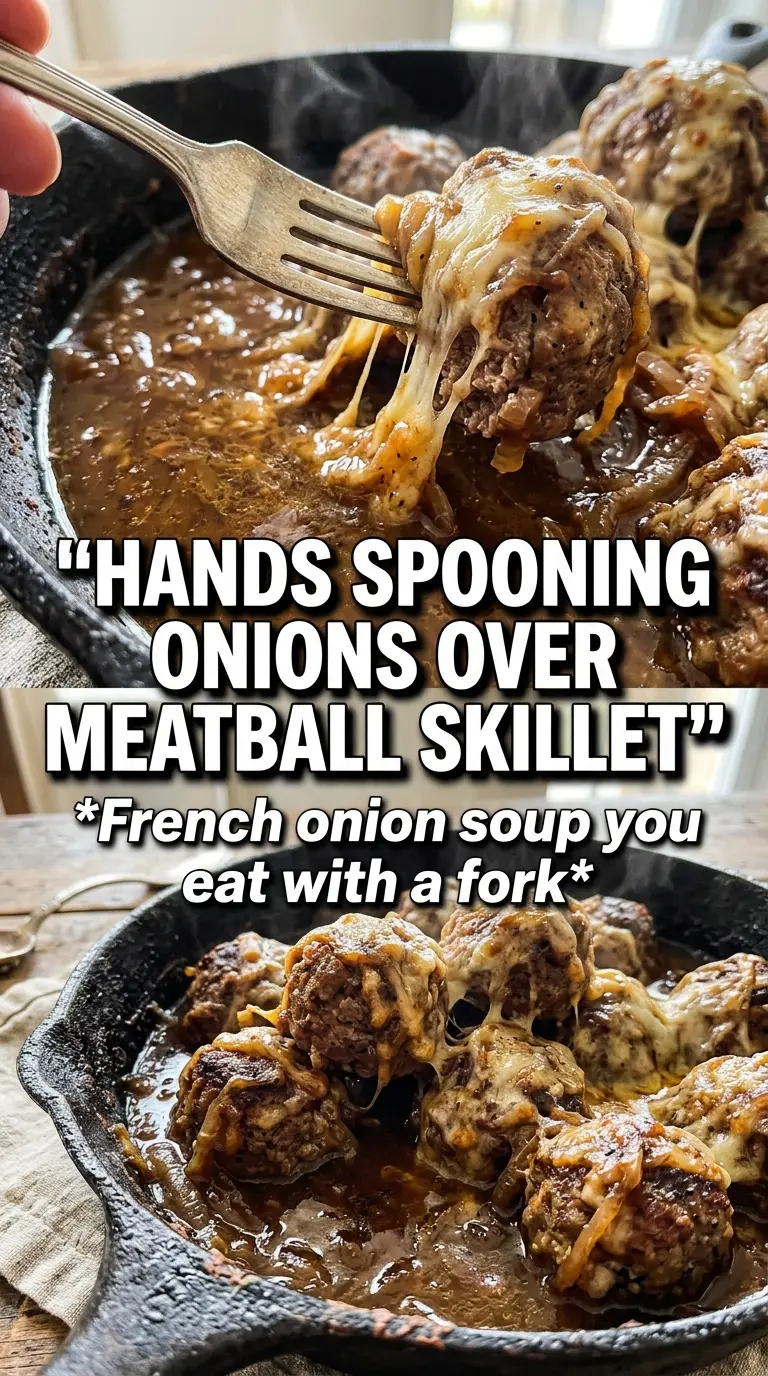
- Ground beef — Gives the meatballs enough fat to stay juicy while they finish in the sauce. An 80/20 blend is ideal; very lean beef can turn dry before the broil is done.
- Breadcrumbs and egg — These hold the meatballs together and keep them tender instead of dense. If you need a gluten-free swap, use gluten-free breadcrumbs or crushed gluten-free crackers in the same amount.
- Worcestershire — It deepens both the meatballs and the onion broth with a savory note that tastes like the dish simmered longer than it did. There isn’t a perfect replacement, but a little soy sauce can stand in for the same salty backbone.
- Fresh thyme — This is the herb that makes the whole skillet taste unmistakably French onion. Dried thyme works at about one-third the amount, but fresh gives a cleaner, brighter finish.
- Beef broth — Use a broth you’d actually sip; a weak one makes the whole dish taste thin. If you only have low-sodium broth, just season the sauce at the end after the cheese goes on.
Building the Skillet So the Sauce Stays Rich, Not Watery
Browning the Meatballs First
Roll the meatballs evenly so they cook at the same pace, then brown them in butter in an oven-safe skillet until they’ve picked up a deep golden crust on the outside. They don’t need to be cooked through at this stage; the goal is color and flavor. If you crowd the pan, they’ll steam and you’ll lose the browned bits that help build the sauce.
Slow-Cooking the Onions
Use the same skillet and keep the heat at medium-low while the onions soften and caramelize. Stir often enough to prevent scorching, but not so constantly that they never sit long enough to brown. If the onions start catching too fast, lower the heat and add a spoonful of broth to loosen the pan.
Deglazing and Simmering
When the onions are deep golden, add the garlic and thyme for just a minute, then pour in the white wine and scrape up every browned bit stuck to the pan. Let the wine cook down before adding the broth and Worcestershire so the sauce tastes balanced instead of sharp. Nestle the meatballs back in and simmer until they’re cooked through and the sauce has thickened slightly around them.
The Broiler Finish
Cover everything with Gruyere and broil just until the cheese melts, bubbles, and takes on a few browned spots. Stay close to the oven because the line between golden and greasy is short with shredded cheese. If your skillet is too far from the broiler, the cheese melts before it browns and the top can turn dull instead of blistered.
Make It Gluten-Free Without Losing the Structure
Swap the breadcrumbs for certified gluten-free breadcrumbs or crushed gluten-free crackers. Keep the amount the same so the meatballs still hold together, and don’t overmix or they’ll turn tight. The finished dish still feels hearty and rich, just with the coating adjusted.
Use Ground Turkey for a Lighter Pan
Ground turkey works, but it needs a little more attention because it dries out faster than beef. Choose turkey that isn’t extra lean if you can, and shorten the broil just enough to keep the meatballs tender. The sauce still carries the dish, so you won’t lose the French onion character.
Skip the Wine and Keep the Depth
If you don’t cook with wine, deglaze with extra beef broth and a small splash of apple cider vinegar or lemon juice. You lose a little of the roundness wine brings, but you still get the pan flavor loosened into the sauce instead of left behind on the bottom.
Storage and Reheating
- Refrigerator: Store leftovers in an airtight container for up to 3 days. The onions will thicken the sauce as it chills.
- Freezer: Freeze the meatballs and onion sauce without the cheese for up to 2 months. Add fresh Gruyere after reheating for the best melt.
- Reheating: Warm gently on the stovetop over low heat with a splash of broth to loosen the sauce, then add cheese and broil briefly if you want that fresh bubbly top again. Don’t blast it in the microwave or the meatballs can turn tough and the sauce can separate.
Questions I Get Asked About This Recipe
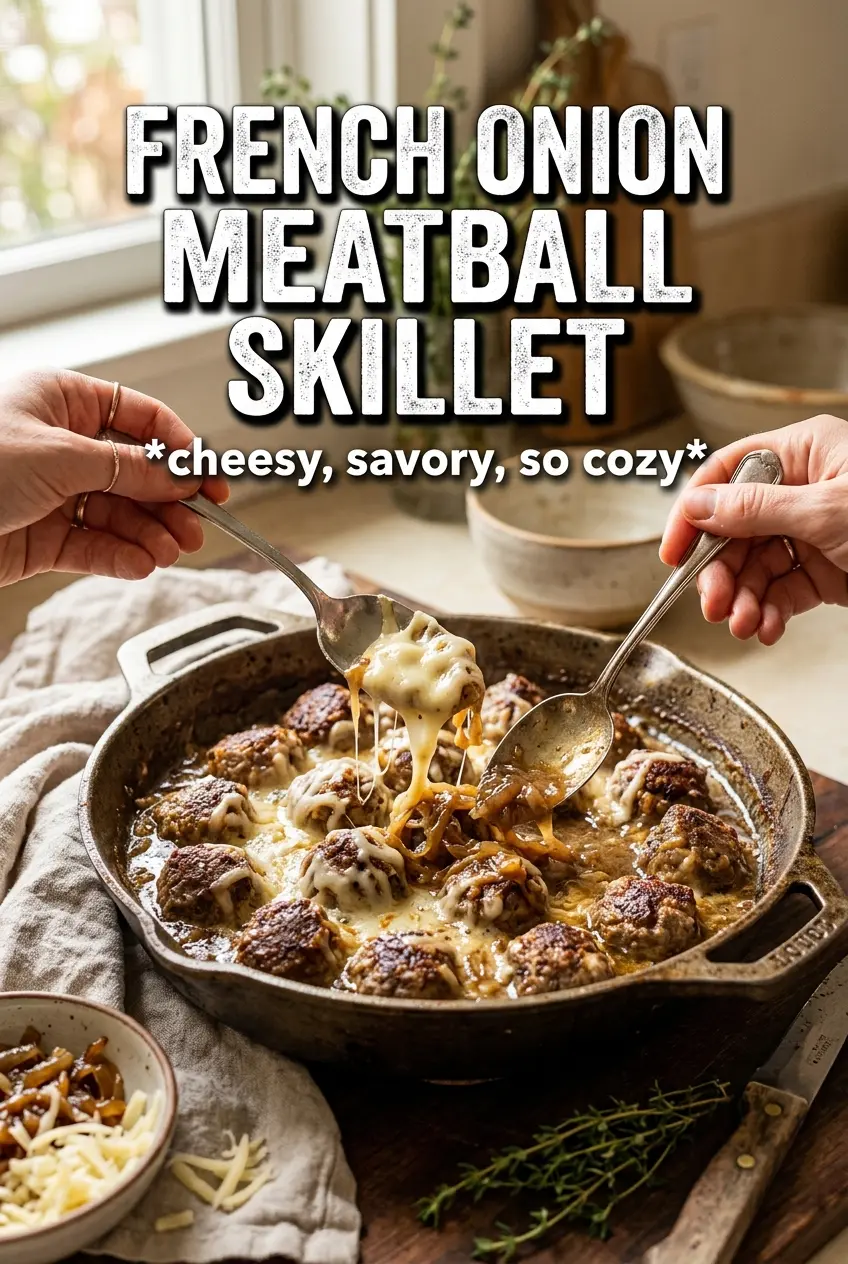
French Onion Meatball Skillet
Ingredients
Equipment
Method
- In a mixing bowl, combine ground beef, breadcrumbs, egg, Worcestershire, garlic powder, and salt and pepper, then mix until just combined.
- Roll the mixture into meatballs and set them aside.
- Melt 1–2 tablespoons of butter in an oven-safe skillet over medium-high heat, then brown the meatballs until golden on the outside.
- Remove the meatballs to a plate while keeping the browned bits in the skillet.
- Add the remaining butter and cook onions in the same skillet over medium-low heat for 30-35 minutes, stirring occasionally, until deeply caramelized.
- Stir in the minced garlic and fresh thyme for 30 seconds, just until fragrant and lightly softened.
- Pour in the dry white wine and scrape up the browned bits, simmering until the liquid reduces slightly, about 2-3 minutes.
- Add beef broth and Worcestershire, then bring to a gentle simmer.
- Nestle the meatballs into the caramelized onion sauce and simmer for 10 minutes, turning once so they cook through.
- Scatter shredded Gruyère over the top and broil for 3-5 minutes until golden and bubbly with melted cheese covering the surface.