French strawberry cake lands somewhere between a classic sponge and a chilled pastry-filled dessert, and that’s exactly why it feels special on the table. The cake is light enough to carry the strawberries without collapsing, while the pastry cream adds a cool, silky layer that keeps each slice tasting refined instead of heavy. When it’s sliced cleanly, you get soft yellow cake, pale cream, and whole berries in every bite.
The real advantage here is balance. The sponge uses whipped egg whites for lift, so the crumb stays tender without needing butter, and the cake can absorb just enough moisture from the cream and berries without going soggy. Keeping the strawberries whole or halved, instead of mashing them into the filling, preserves their shape and gives the finished cake that polished bakery look. A full hour in the fridge lets the layers settle, which makes the slices much neater.
Below you’ll find the little details that matter most: how to keep the sponge airy, why the pastry cream should be cold before assembling, and what to change if your berries are on the tart side or your cake pan runs a little deeper than average.
The sponge stayed light even after chilling, and the pastry cream set up beautifully between the layers. I was worried the strawberries would slide around, but after an hour in the fridge the slices held together and looked gorgeous.
Save this French strawberry cake for the day you want a light sponge, pastry cream, and glossy strawberries on one elegant dessert.
The Sponge Needs Air, Not More Mixing
This cake works because the structure comes from whipped eggs, not from heavy batter. Once the yolks are beaten with sugar until pale, the mixture holds enough air to bake up light, but the whites are the real insurance policy. Fold them in gently and stop as soon as the batter looks uniform. If you keep stirring after that, the cake loses height and turns dense instead of springy.
The other place people lose the texture is after the flour goes in. Overmixing at that point wakes up the gluten and tightens the crumb, which is the opposite of what you want in a French-style layer cake. Use a spatula, not a whisk, and keep the motion broad and slow. The batter should still look a little soft and billowy when it goes into the pan.
- Egg whites — These are what give the cake its lift. Stiff peaks matter here; soft peaks won’t hold enough structure once the batter hits the oven.
- Oil — Oil keeps the sponge tender even after chilling. Butter can work, but it sets firmer in the fridge and makes the cake feel less delicate.
- Water — It sounds plain, but it keeps the batter light. Milk makes the crumb a touch richer, but water gives the cleanest, most classic sponge texture.
What the Pastry Cream and Strawberries Are Really Doing Here
The filling is more than decoration. Pastry cream gives the cake weight and that soft, custardy middle, while the strawberries add freshness and a little sharpness so the dessert doesn’t taste flat. If the pastry cream is too loose, the layers slide. If it’s too stiff, the cake eats like a dry sandwich. Cold, spoonable pastry cream is the sweet spot.
Use the best strawberries you can find because there’s nowhere to hide them. Small berries with good flavor are ideal, and if yours are large, slice them in half so they sit neatly on the cream. Powdered sugar on top is not just for looks; it softens the berry edge visually and gives the finished cake that bakery-window finish.
- Strawberries — Fresh berries are essential. Frozen strawberries release too much liquid and will bleed into the cream.
- Pastry cream — This needs to be fully chilled before assembly. Warm cream softens the cake and makes the layers drift.
- Powdered sugar — A light dusting finishes the top without weighing down the berries. Add it just before serving so it doesn’t dissolve into the fruit.
Building the Layers Without Letting the Cake Slip
Baking the Sponge Until It Springs Back
Beat the yolks and sugar until the mixture turns thick and noticeably paler, then fold in the dry ingredients before adding the whipped whites. That order keeps the batter from collapsing too early. Bake until the center springs back when touched and a toothpick comes out clean. If the top browns too quickly before the middle is set, the oven is running hot, so keep an eye on it in the last 10 minutes.
Cooling Before You Cut
Let the cake cool completely in the pan, then turn it out only when it’s no longer warm. A warm sponge tears easily and smears the crumb when you slice it. Use a long serrated knife to split the cake into layers, and clean the blade between cuts if the cake starts to drag. A chilled cake slices even cleaner, so if you have time, chill it for 20 minutes before cutting.
Assembling the Cake So It Stays Neat
Spread the pastry cream right up to the edge of the bottom layer, then arrange the strawberries in an even layer so the top doesn’t sink in unevenly. Set the second layer gently on top instead of pressing it down. Finish with the remaining cream and berries, then refrigerate for at least an hour. That rest time lets the cream firm up and helps the cake cut into tidy slices instead of leaning apart on the plate.
How to Adapt It Without Losing the Elegant Finish
Gluten-Free Version
Use a good 1:1 gluten-free flour blend in place of the all-purpose flour. The cake will still be light, but it may be a little more delicate when sliced, so chill it well before serving. If the blend is very starchy, add a teaspoon of water only if the batter looks dry after folding.
Dairy-Free Filling Swap
If you need a dairy-free version, use a coconut- or oat-based pastry cream that holds its shape when cold. The cake itself is already dairy-free, so the filling is the only part that needs attention. Pick a version that tastes clean and not overly sweet, since the strawberries should stay in front.
Raspberry or Mixed Berry Finish
Raspberries or a mix of small berries can stand in for the strawberries if that’s what you have. The tartness gives the cake a brighter edge, but the berries should still be fresh and dry so they don’t bleed into the pastry cream. Skip very juicy berries unless you’re serving the cake the same day.
Storage and Reheating
- Refrigerator: Store covered for up to 3 days. The sponge stays tender, but the berries soften and release a little juice over time.
- Freezer: This cake does not freeze well once assembled. The pastry cream turns grainy after thawing and the strawberries lose their fresh texture.
- Reheating: Don’t reheat this cake. Serve it cold from the fridge for the cleanest slices and the best texture. If it’s been chilled overnight, let it sit at room temperature for 10 to 15 minutes before serving so the cream softens slightly.
Questions I Get Asked About This Recipe
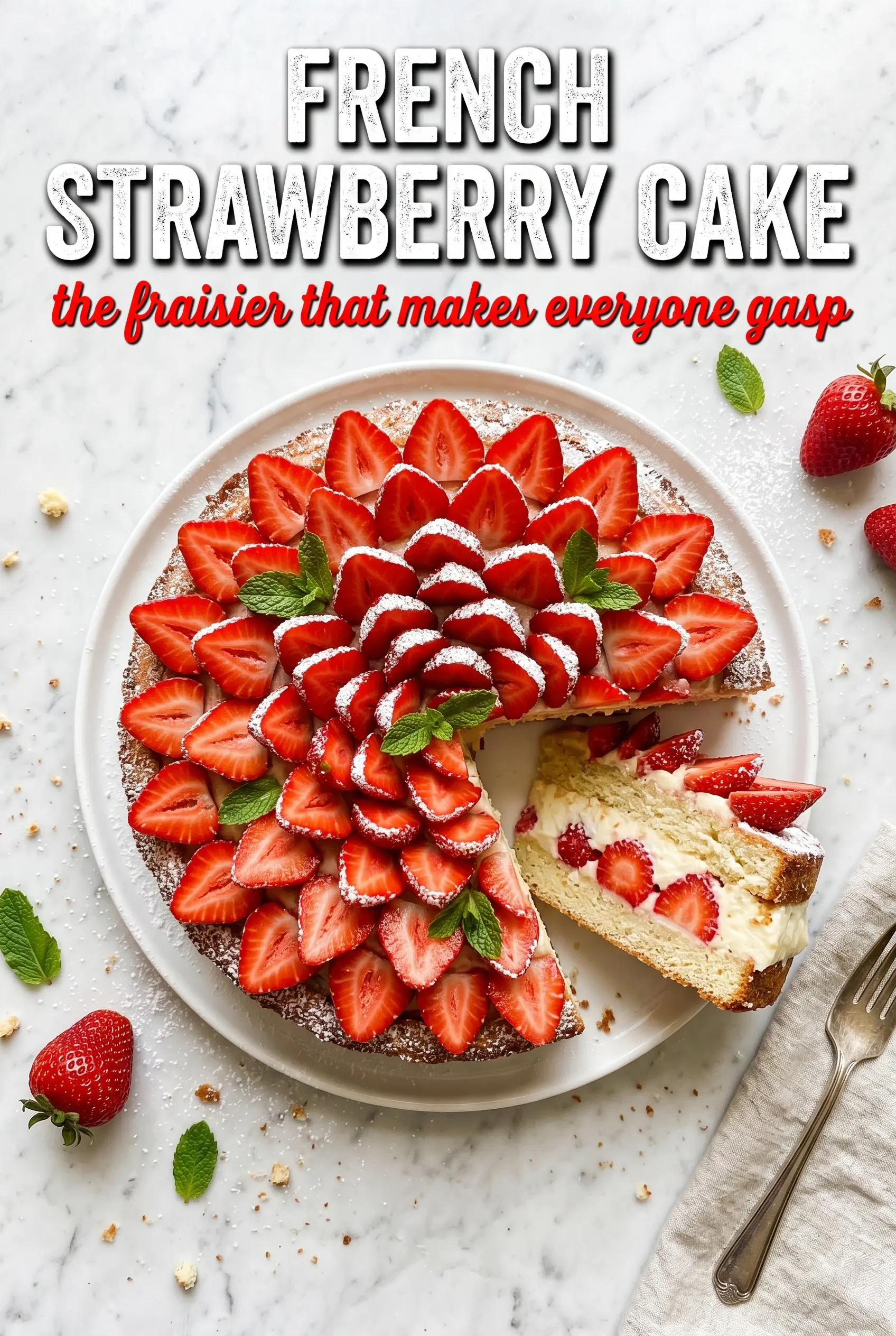
French Strawberry Cake
Ingredients
Equipment
Method
- Preheat oven to 350°F and prepare a 9-inch round cake pan. Ensure it is ready so the batter goes in immediately after mixing.
- Whisk together all-purpose flour, baking powder, and salt in a mixing bowl until evenly combined. Stop whisking when the mixture looks uniform in color.
- Beat egg yolks with granulated sugar until pale and thick, about 3 minutes. The mixture should look lighter and ribbon slightly when lifted.
- Add vegetable oil, water, and vanilla extract to the yolk mixture. Mix until smooth and glossy with no visible oil streaks.
- Fold the flour mixture into the yolk mixture just until no dry pockets remain. Stop as soon as the batter looks cohesive to keep the sponge tender.
- Beat the egg whites until stiff peaks form. Lift the whisk to confirm the peaks stand upright and hold their shape.
- Gently fold the beaten egg whites into the batter. Fold until the color is uniform and the batter is airy.
- Pour the batter into the 9-inch round cake pan and smooth the top. Tap the pan lightly so the surface settles evenly.
- Bake for 30 minutes at 350°F until a toothpick comes out clean. Look for a lightly golden top that springs back when gently pressed.
- Cool completely. The cake must be fully cool before slicing so layers stay intact.
- Slice the cake into two layers. Aim for even thickness so the pastry cream layer stays level.
- Spread half the pastry cream on the bottom layer. Smooth to the edges for a neat, pale pink stripe.
- Arrange half the whole strawberries on top of the pastry cream. Place them close together for a jewel-like layer.
- Add the top cake layer. Press gently so the layers adhere without squashing the fruit.
- Spread the remaining pastry cream over the top layer. Smooth it evenly for a consistent base under the final strawberry arrangement.
- Arrange the remaining whole strawberries on top in a decorative pattern. Create a centered or fan layout so the fruit is the focal point.
- Dust with powdered sugar. Use a light hand so it looks like a thin snowfall rather than a thick coating.
- Refrigerate for at least 1 hour before serving. Chill until the pastry cream is set and the slice holds together.