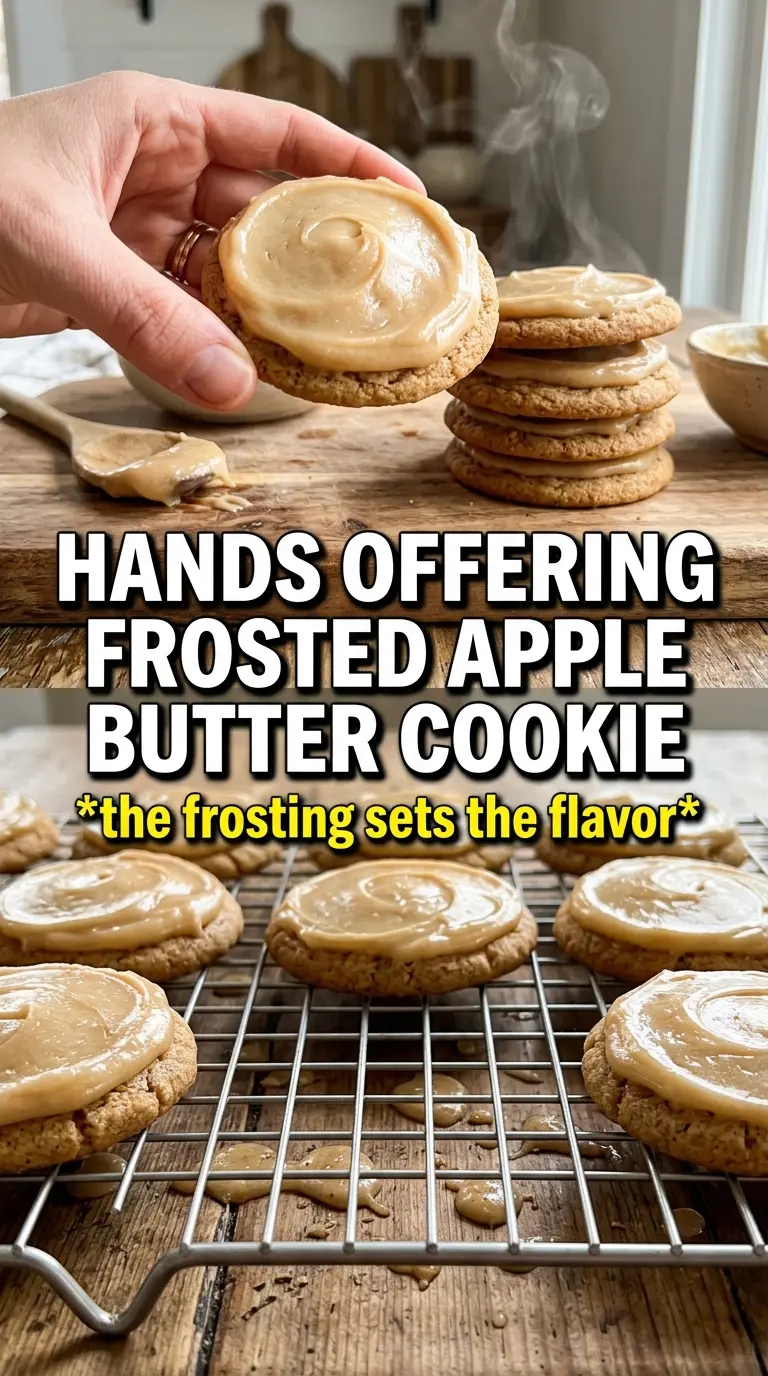
Frosted apple butter sugar cookies bake up soft in the center with lightly crisp edges and that warm apple-cinnamon note tucked right into the dough. The frosting leans creamy and tangy from the cream cheese, then gets finished with cinnamon sugar and a thin caramel drizzle that makes each cookie taste like it came straight from a bakery case.
What makes these work is the balance. Apple butter brings concentrated flavor without adding extra liquid the way fresh apples would, so the dough stays sturdy enough to roll and cut cleanly after chilling. The frosting uses just enough apple butter to carry the same flavor into the topping without turning runny, and the cookies hold their shape best when the dough is cold and the centers are pulled before they look fully done.
Below, I’m walking through the few details that matter most: how to keep the dough from spreading, how to get a smooth frosting that spreads instead of sliding, and what to change if you want a slightly different finish.
The cookies held their shape perfectly after chilling, and the apple butter frosting set up creamy instead of sliding off. The caramel drizzle on top made them taste like a cinnamon-apple dessert I’d order again.
Love the soft apple butter centers and cream cheese frosting? Save these frosted apple butter sugar cookies for your next baking day.
The Chilling Step That Keeps These Cookies from Spreading
Apple butter adds flavor without making the dough wet, but the butter and sugar still need time to firm up before baking. Skip the chill and these cookies will spread into flatter rounds with softer edges. That’s not a disaster, but it does change the texture from a neat cut-out cookie to something closer to a drop cookie.
The dough should feel cool and slightly firm when you roll it out. If it starts sticking to the counter or losing its shape while you cut, slide it back into the fridge for 10 to 15 minutes. Cold dough gives you thicker cookies, cleaner edges, and a center that stays tender instead of dry.
What Each Ingredient Is Actually Doing in This Dough and Frosting
- Apple butter — This is the flavor engine in both the cookie and the frosting. It gives you cooked apple flavor without extra moisture from fresh fruit, which is why the dough still rolls well and the frosting stays spreadable.
- Butter — Use softened butter in the dough and frosting, not melted. Softened butter traps air when you beat it with the sugar, which helps the cookies bake up lighter instead of dense.
- Cream cheese — This makes the frosting tangy and sturdy. Full-fat cream cheese gives the best body; reduced-fat versions can loosen the frosting and make it harder to spread cleanly.
- Cinnamon — There’s cinnamon in the dough, frosting, and finish for a reason. It ties the apple butter together and keeps the flavor from tasting flat, especially after chilling and baking.
- Powdered sugar — This sweetens and thickens the frosting at the same time. Add it gradually so you can stop at a spreadable texture instead of ending up with a stiff, grainy bowl.
Rolling, Baking, and Frosting Without Losing the Shape
Building the Cookie Dough
Beat the butter, sugar, and apple butter until the mixture looks fluffy and a little lighter in color. That step matters because it sets the texture before the flour goes in. Add the egg and vanilla next, then fold in the dry ingredients just until the dough comes together. If you keep mixing after the flour disappears, the cookies can bake up tougher than they should.
Cutting Clean Shapes
After chilling, roll the dough to about 1/4-inch thickness on a lightly floured surface. Too thin and the cookies lose their soft center; too thick and they can bake up puffy in the middle. Cut the rounds or apple shapes, then move them to the baking sheet while the dough is still cold. If the shapes start to warp, they’re warming up too much and need a quick pause in the fridge.
Baking to Just-Set Centers
Bake at 350°F until the edges are set but the centers still look pale and slightly soft, about 8 to 10 minutes. The cookies continue to firm up on the baking sheet, so pulling them when they look a touch underdone is what keeps them tender. Let them cool completely before frosting; warm cookies will melt the frosting and send the caramel sliding off the top.
Making the Frosting Spreadable
Beat the cream cheese, butter, apple butter, powdered sugar, cinnamon, and just enough milk to make a smooth frosting that spreads without tearing the cookies. If it looks loose, add a little more powdered sugar. If it feels stiff, a splash of milk loosens it fast. The goal is a frosting that holds swirls but still drags across the cookie in a soft, even layer.
How to Adapt These Cookies for Different Baking Needs
Make Them Gluten-Free
Use a 1:1 gluten-free baking flour that includes xanthan gum. The dough may feel a little softer, so chill it well and roll it between two sheets of parchment to keep the cut-outs neat. The cookies will be slightly more delicate, but the flavor stays the same.
Swap the Cream Cheese Frosting for a Dairy-Free Finish
Use a dairy-free butter alternative and a dairy-free cream cheese-style spread. The frosting won’t have quite the same tang, and some brands are softer, so add the powdered sugar slowly until it holds its shape. Chill the finished cookies briefly before adding caramel if the topping feels loose.
Turn Them Into Sandwich Cookies
Spread frosting on the flat side of one cooled cookie and top with another for a thicker, bakery-style version. You’ll use less caramel this way, but the cookies stay softer in the center because the frosting is protected between layers instead of sitting on top.
Storage and Reheating
- Refrigerator: Store frosted cookies in an airtight container for up to 4 days. The frosting stays stable, but the cookie softens a bit as it sits.
- Freezer: Freeze the unfrosted cookies for up to 2 months. Thaw them at room temperature, then frost after they’re fully thawed for the cleanest finish.
- Reheating: These don’t need reheating once frosted. If you freeze the baked cookies unfrosted, let them thaw uncovered so condensation doesn’t make the frosting slide later.
Answers to the Questions Worth Asking
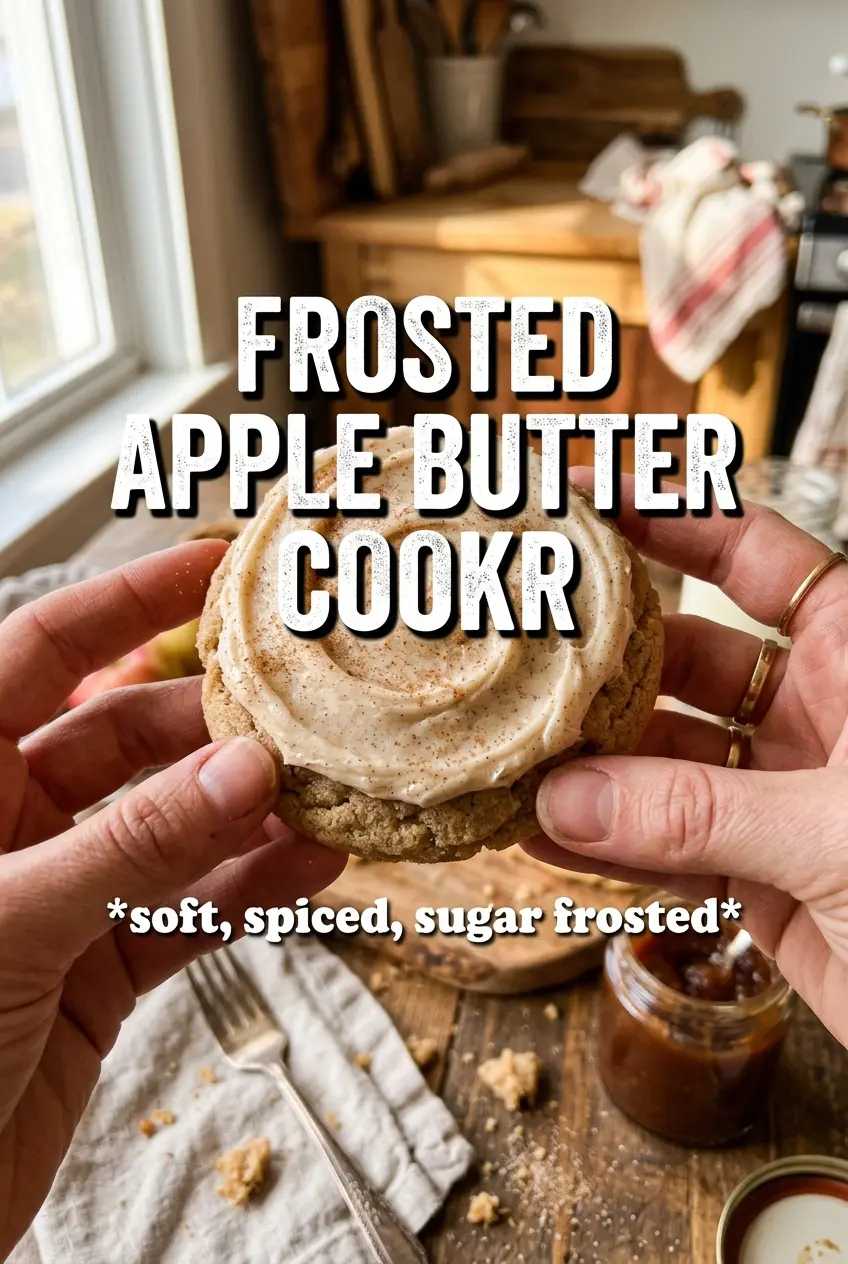
Frosted Apple Butter Sugar Cookies
Ingredients
Equipment
Method
- Beat the softened unsalted butter with the granulated sugar and apple butter until smooth. Beat in the egg and vanilla extract until combined.
- Fold in the all-purpose flour, baking powder, salt, and cinnamon until a cohesive dough forms.
- Refrigerate the dough for 1 hour while you preheat the oven to 350°F. Line a sheet pan for baking.
- Roll the dough to 1/4-inch thickness on a lightly floured surface and cut into rounds or apple shapes.
- Bake for 8-10 minutes at 350°F until the cookies are just set at the edges. Transfer to a rack and cool completely.
- Beat the cream cheese, unsalted butter, apple butter, powdered sugar, and cinnamon until smooth and spreadable. Beat in milk 1 tablespoon at a time until it reaches a thick spreadable consistency.
- Spread frosting over each cooled cookie, then dust with cinnamon sugar and drizzle with caramel.