Golden chicken strips over spaghetti slicked in garlic butter is the kind of dinner that disappears fast because every bite hits the same way: savory, rich, bright, and just a little peppery at the finish. The sauce clings to the pasta instead of pooling at the bottom of the bowl, and the chicken stays juicy because it gets cooked separately and added back at the end.
What makes this version work is restraint. The garlic gets just enough time in the butter to turn fragrant and lightly golden at the edges, but not long enough to go bitter. A splash of lemon juice sharpens the sauce, and reserved pasta water gives the butter something to grab onto so the spaghetti turns glossy instead of greasy.
Below, I’ll walk through the exact moment to add the pasta water, why freshly grated Parmesan matters here, and the small timing detail that keeps the chicken from drying out while the sauce comes together.
The sauce coated the spaghetti perfectly and didn’t separate, even after I tossed the chicken back in. My husband went back for seconds and said the garlic butter tasted like a restaurant dish.
Save this garlic butter chicken pasta for the nights when you want glossy spaghetti, seared chicken, and a pan sauce that comes together in one skillet.
The Chicken Needs a Real Sear Before the Sauce Starts
Garlic butter pasta can go soft and flat if the chicken is steamed in the pan or the sauce starts before the meat has color. Here, the chicken gets cooked first in olive oil over medium-high heat, which gives you browned edges and a deeper savory base for the butter to pick up later. That browning matters more than extra seasoning.
Once the chicken comes out, the skillet should have browned bits stuck to the bottom. That’s the flavor foundation. If the pan looks pale, the heat was too low or the pan was crowded, and the finished pasta will taste one-note instead of layered.
- Chicken breasts — Cutting them into strips keeps them tender and helps them cook quickly and evenly. If you use chicken thighs, they’ll bring more richness and stay juicy a little longer, but the final dish will be heavier.
- Butter — This is the sauce. Don’t swap in only oil unless you want a thinner, less plush finish. If you need to reduce dairy, use a good plant butter and keep the heat low so it doesn’t separate.
- Garlic — Fresh garlic is worth it here. Jarred garlic can work in a pinch, but it won’t soften into the butter the same way and the flavor can taste sharper.
- Parmesan — Freshly grated Parmesan melts into the sauce better than the shelf-stable kind. Pre-shredded cheese often has starch that can make the sauce gritty or clumpy.
- Lemon juice — This keeps the butter from tasting heavy. Bottled lemon juice will work, but fresh gives the sauce a cleaner finish.
How to Keep the Sauce Glossy Instead of Greasy
Season and Sear the Chicken
Pat the chicken dry, season it well, and lay it into hot olive oil in a single layer. You want a steady sizzle as soon as it hits the pan. Let it cook without moving it too much so the surface turns golden before you flip it. If the pieces are crowded, they’ll steam and the whole dish loses the browned flavor that makes the pasta taste finished.
Wake Up the Garlic in Butter
Lower the heat before the garlic goes in. Butter and garlic burn fast, and burnt garlic turns the whole sauce bitter in seconds. Cook it just until fragrant and the edges start to look lightly golden, then move straight to the lemon juice. That keeps the garlic sweet and mellow instead of harsh.
Toss the Pasta With Enough Pasta Water
Add the cooked spaghetti to the skillet and toss it in the butter sauce with a splash of reserved pasta water. The starch in that water helps the butter cling to the noodles, which is why the sauce looks silky instead of oily. Add it gradually. Too much at once dilutes the flavor and turns the sauce loose.
Finish With Cheese and Chicken
Take the pan off the heat before you add the Parmesan if the sauce is very hot. Cheese melts cleanly when the pan isn’t scorching, and that prevents graininess. Fold the chicken back in, or pile it over the top if you want cleaner presentation. Finish with parsley right before serving so it stays bright.
Three Ways to Adapt Garlic Butter Chicken Pasta Without Losing the Point
Make It Gluten-Free
Use your favorite gluten-free spaghetti and cook it just to al dente, since it can go soft faster once it hits the sauce. Keep a close eye on the pasta water too, because some gluten-free pastas release less starch and may need a little extra tossing to coat well.
Make It Dairy-Free
Use a high-quality plant butter and skip the Parmesan or replace it with a dairy-free hard cheese style alternative. The sauce will still be rich, but it won’t have quite the same nutty finish, so keep the lemon and parsley in place to keep it lively.
Swap in Chicken Thighs for More Richness
Boneless skinless thighs work well if you want a juicier bite and a little more savory depth. They take a minute or two longer to cook through, but the tradeoff is that they stay tender even if the pasta sits for a few minutes before serving.
Storage and Reheating
- Refrigerator: Store in an airtight container for up to 3 days. The pasta will absorb some of the sauce as it sits.
- Freezer: It freezes, but the sauce is best fresh. The butter and cheese can separate a bit after thawing, so I don’t recommend freezing if you can avoid it.
- Reheating: Warm gently on the stove with a splash of water or broth over low heat, stirring often. Microwaving on high tends to dry out the chicken and makes the sauce greasy instead of smooth.
Answers to the Questions Worth Asking
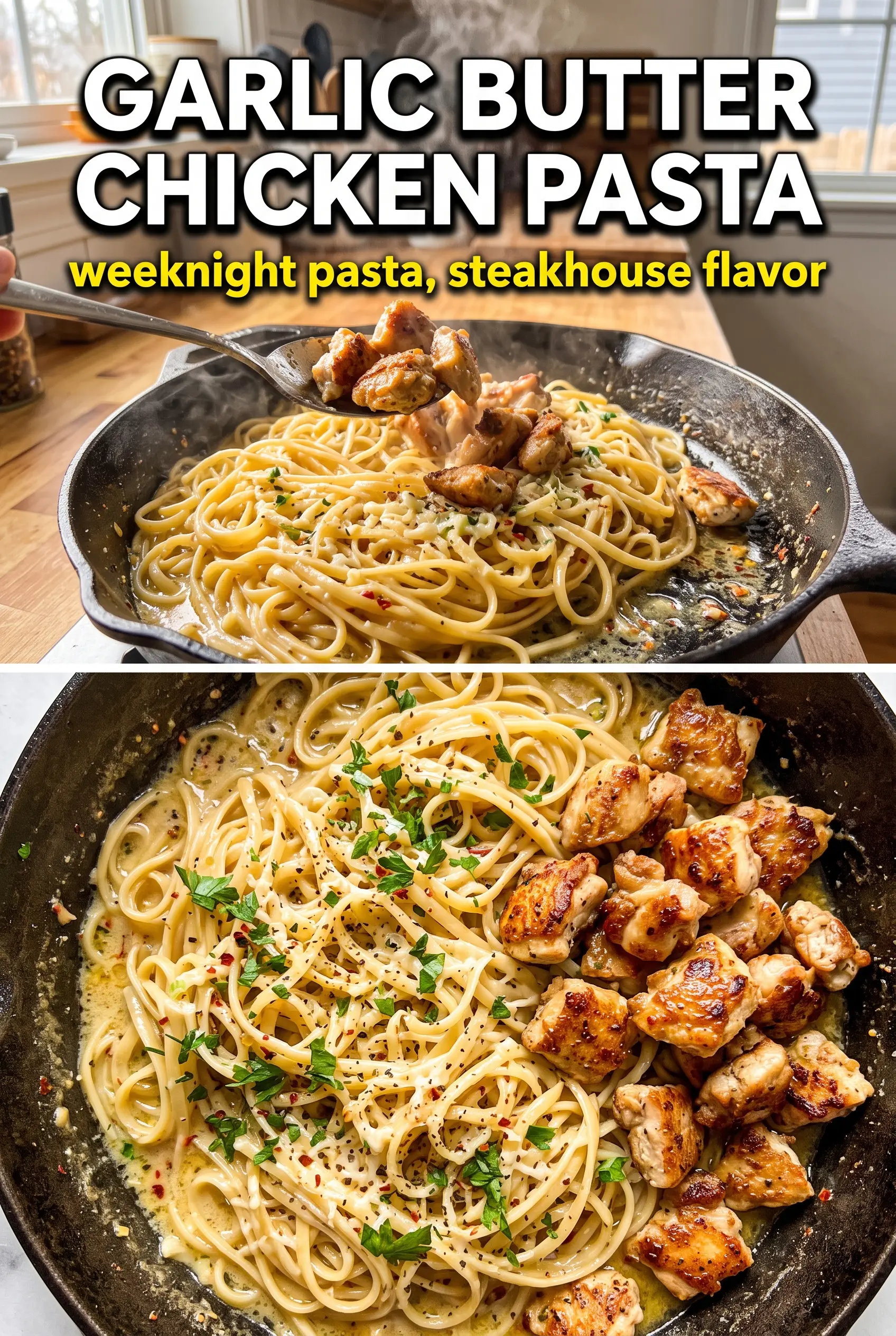
Garlic Butter Chicken Pasta
Ingredients
Equipment
Method
- Season the chicken strips with salt, pepper, garlic powder, and Italian seasoning to taste. Heat olive oil in a large skillet over medium-high heat and cook the chicken for 4-5 minutes per side until golden and cooked through, then remove and set aside.
- Melt the butter in the same skillet over medium heat. Add minced garlic and red pepper flakes and cook for 1-2 minutes until fragrant and golden at the edges.
- Add fresh lemon juice to the skillet and toss in the cooked spaghetti. Add reserved pasta water a splash at a time, tossing until the sauce coats every strand and looks glossy.
- Add the seared chicken strips back to the skillet and toss to combine. Continue tossing just until the chicken is warmed through and the pasta is evenly coated.
- Sprinkle freshly grated Parmesan and chopped parsley generously over the top. Serve immediately so the butter sauce stays silky and coats the spaghetti.