Golden seared garlic butter chicken thighs over creamy Parmesan rice hit that sweet spot where dinner feels complete without needing anything else on the table. The chicken brings a crisp, deeply browned exterior and juicy center, while the rice turns rich and savory as it absorbs the garlic butter and pan drippings. By the time everything comes back together in one skillet, the dish tastes like you worked a lot harder than you did.
What makes this version work is the order. The chicken gets a proper sear first, which leaves the good browned bits behind for the rice. The garlic goes into the butter only briefly, just long enough to perfume the pan before it can turn bitter. Then the broth does the heavy lifting, loosening those drippings and carrying all that flavor into the rice as it simmers.
Below, I’ll walk through the part that matters most: how to keep the rice creamy without turning it mushy, and how to finish the dish so the chicken stays juicy when it goes back into the pan.
The chicken stayed juicy and the rice soaked up every bit of that garlic butter. Mine was creamy without getting sticky, and the Parmesan at the end made it taste like something from a restaurant skillet.
Save this garlic butter chicken with Parmesan rice for a one-pan dinner that turns simple pantry staples into a creamy, pan-dripping-packed skillet meal.
The Sear-and-Simmer Order That Keeps the Rice Creamy
The biggest mistake in skillet chicken and rice is rushing the chicken out of the pan too early or trying to cook the rice in a pan that still has raw chicken sitting in it. You want a full sear first, because that browned surface gives the dish its depth. Once the chicken is out, the rice cooks in the same skillet with all the flavor left behind, and that’s what keeps the final dish tasting layered instead of flat.
Long-grain white rice is the right choice here. It stays separate enough to turn creamy instead of gluey, especially once the Parmesan and cream go in at the end. If your rice tends to get soft fast, keep the simmer low and the lid on tight; lifting the lid too often lets steam escape and throws off the texture.
- Chicken thighs — Boneless skinless thighs stay juicy through the sear and the final reheat in the rice. Breasts can work, but they dry out faster and need a shorter sear.
- Long-grain white rice — This holds its shape while still soaking up the broth and cream. Short-grain rice will push the dish toward sticky, while brown rice needs a much longer cook and more liquid.
- Chicken broth — This is where most of the background flavor comes from, so use a broth you’d actually drink. Water will cook the rice, but it won’t replace the savory base the drippings need.
- Parmesan — Grate it finely so it melts smoothly into the rice. Pre-shredded Parmesan can work in a pinch, but it often leaves the sauce a little grainy.
Building the Pan Flavor Without Burning the Garlic
Seasoning and Searing the Chicken
Coat the chicken evenly with salt, pepper, garlic powder, and smoked paprika so every bite is seasoned before it ever hits the skillet. The oil should shimmer before the chicken goes in, and once it’s down, leave it alone until it releases cleanly from the pan. If you try to move it too early, you’ll tear the crust and leave the best browning behind.
Letting the Garlic Bloom in Butter
After the chicken comes out, drop the butter into the same skillet and let the garlic cook just until fragrant. That usually takes about a minute. If the garlic starts to darken, pull the pan off the heat for a few seconds; burned garlic turns sharp and bitter, and there’s no bringing that back.
Cooking the Rice in the Drippings
Stir the rice into the garlic butter for a couple of minutes so each grain gets coated before the broth goes in. That quick toast gives the rice a better texture and helps it stay separate. Once the broth is added, bring it to a boil, then cover and turn the heat down low. A hard simmer will cook off too much liquid and leave you with uneven rice.
Finishing with Cream and Parmesan
When the rice is tender, stir in the Parmesan, cream, and thyme. The rice should look glossy and loose, not stiff or dry, because it will tighten slightly as it sits. Return the chicken to the pan only after the rice is creamy, then let it rest in the sauce long enough to warm through without overcooking.
How to Change It Without Losing the Skillet Comfort
Make It Dairy-Free
Use olive oil instead of butter, then finish the rice with a full-fat unsweetened coconut cream or a dairy-free cooking cream. You’ll lose the sharp, salty edge of Parmesan, so add a little extra salt and a spoonful of nutritional yeast if you want more savory depth.
Use Chicken Breasts Instead of Thighs
Chicken breasts work, but they need a gentler hand. Sear them just until golden and take them out before they fully cook through, then return them at the end so they finish in the rice without drying out.
Make It Gluten-Free
This dish is naturally gluten-free as long as your broth is certified gluten-free. Check the Parmesan too if you’re using a packaged version, since some blends include additives that can be a problem for sensitive eaters.
Add Vegetables Without Weighing Down the Rice
Stir in a handful of baby spinach at the end or fold in steamed peas with the Parmesan. Raw vegetables with a lot of water, like zucchini, can throw off the rice texture and make the skillet feel loose instead of creamy.
Storage and Reheating
- Refrigerator: Store leftovers in an airtight container for up to 4 days. The rice will firm up as it chills, but it should still stay creamy once reheated.
- Freezer: This freezes better than plain cream sauce dishes, though the rice softens a bit after thawing. Freeze in portions for up to 2 months and thaw overnight in the fridge before reheating.
- Reheating: Warm it gently on the stove or in the microwave with a splash of broth or water. The common mistake is blasting it on high heat, which dries out the chicken and makes the rice tight before the middle is hot.
Answers to the Questions Worth Asking
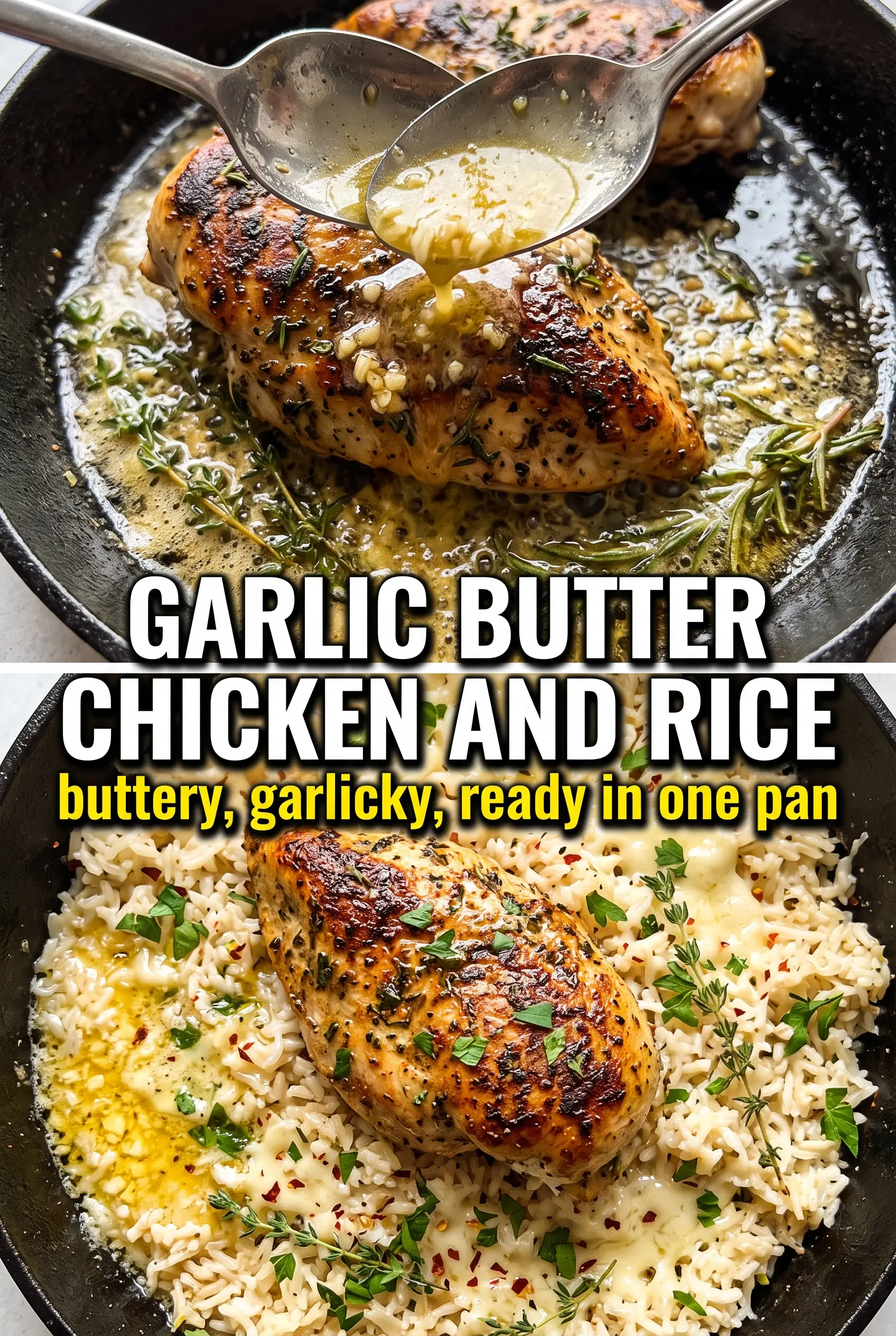
Garlic Butter Chicken with Parmesan Rice
Ingredients
Equipment
Method
- Season the chicken thighs with salt, pepper, garlic powder, and smoked paprika to taste. Heat olive oil in a large skillet over medium-high heat until shimmering, then sear chicken for 5-6 minutes per side until golden and cooked through to 165°F.
- Remove the chicken to a plate and keep it warm while you cook the rice in the same skillet.
- Melt 4 tablespoons butter in the same skillet, then cook the minced garlic for 1 minute until fragrant and lightly golden.
- Add the long-grain white rice and toast for 2 minutes, stirring to coat so the grains smell nutty.
- Pour in the chicken broth and bring to a boil, scraping up any browned bits from the bottom of the pan.
- Cover and simmer over low heat for 18 minutes until the rice is tender.
- Stir in the grated Parmesan cheese, heavy cream, and dried thyme until the rice is creamy and saucy.
- Return the chicken to the pan, nesting it into the Parmesan rice so it warms through and stays surrounded by the sauce.
- Garnish with fresh parsley and serve hot.