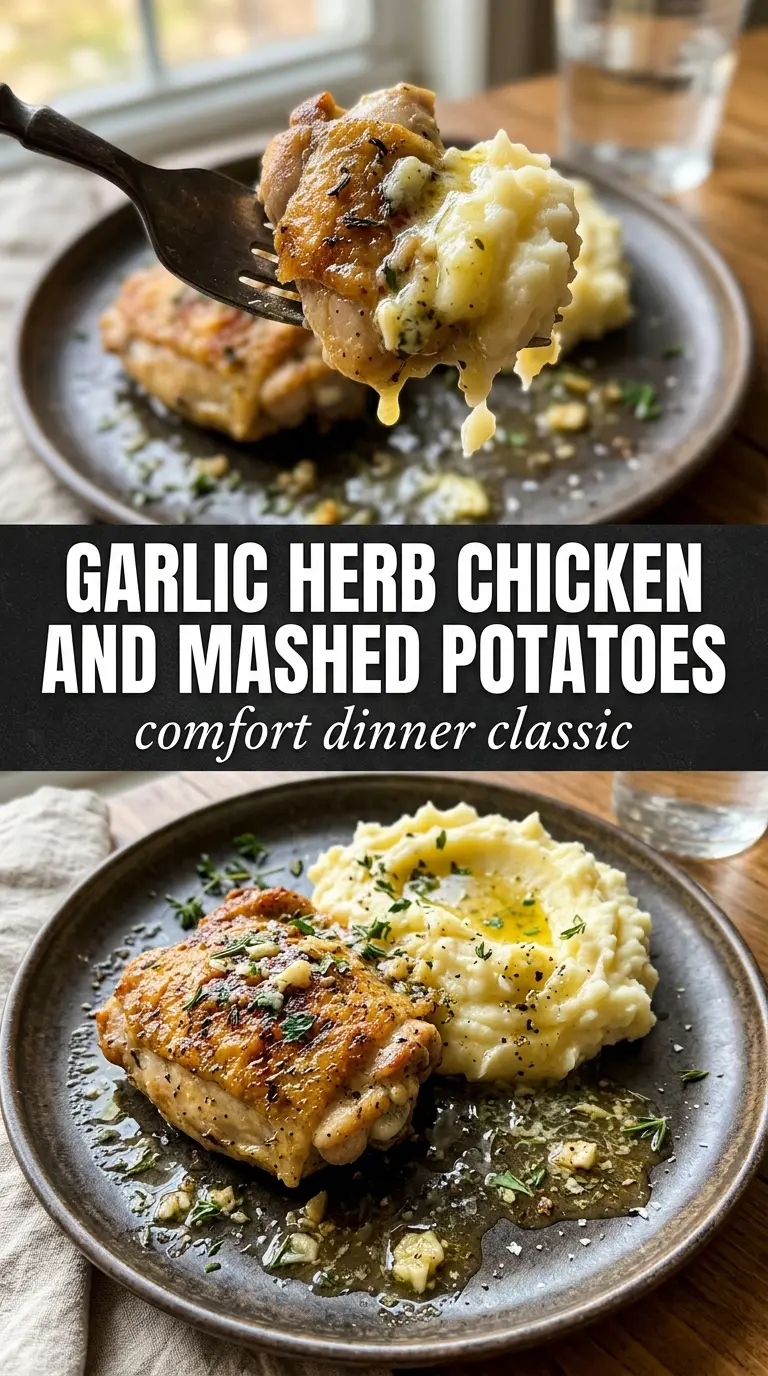
Garlic herb chicken breast over mashed potatoes is the kind of dinner that disappears fast because every part of it pulls its weight. The chicken gets a deep savory crust from garlic powder, thyme, rosemary, and smoked paprika, then the pan sauce picks up all those browned bits and turns them into something that tastes like it took a lot more effort than it did. Spoon that over buttery Yukon Gold potatoes and you’ve got a plate with crisp edges, creamy mash, and enough sauce to keep every bite interesting.
What makes this version work is the order. The potatoes get cooked first so they can stay warm and fluffy while the chicken sears, and the same pan builds the sauce after the chicken comes out. That means nothing useful gets washed away. The chicken also stays juicier when it’s patted dry, seasoned well, and left alone long enough to form a proper crust before you flip it.
Below you’ll find the timing that keeps the potatoes smooth without turning gluey, plus a few ways to adjust the dish if you want to swap the dairy or stretch it for a bigger table.
The chicken browned beautifully and the pan sauce made the mashed potatoes taste like they came from a restaurant. I used Yukon Golds and they stayed so creamy under the sauce.
Save this garlic herb chicken breast with mashed potatoes for the nights when you want a full comfort food dinner with a from-scratch pan sauce.
The Step That Keeps the Chicken Juicy While Still Getting a Real Sear
The biggest mistake with chicken breast is rushing the pan. If the pan isn’t hot enough, the outside never gets that browned crust before the inside overcooks. If it’s too hot and crowded, the seasoning can burn before the meat cooks through. Medium-high heat and a single layer give you the sweet spot: browned spices, clear juices, and chicken that still slices cleanly.
Letting the chicken sit untouched for the first few minutes matters more than fussing with the seasoning blend. You’re waiting for the pan to do its job. When the chicken releases easily, it’s ready to turn. If it fights you, it needs another minute.
- Garlic powder — This gives the chicken a deeper garlic note than fresh garlic alone, and it won’t scorch in the hot pan the way minced garlic can.
- Smoked paprika — It adds color and a little warmth. Sweet paprika works in a pinch, but you’ll lose some of that smoky edge that makes the chicken taste fuller.
- Dried thyme and rosemary — These hold up well to searing and bring the herb crust to life. Fresh herbs can work, but use a bit more and add them later in the process if they’re delicate.
- Yukon Gold potatoes — They mash into a creamy texture without turning watery. Russets work, but they lean drier and fluffier, so the mash won’t taste as naturally buttery.
- Heavy cream or whole milk — Warm it before adding it to the potatoes so the mash stays smooth. Cold dairy cools everything down and can make the texture gluey if you overmix trying to fix it.
Building the Sauce and Mash in the Right Order
- Chicken broth — This loosens the browned bits left in the pan and turns them into sauce. Low-sodium broth gives you more control, especially since the chicken and potatoes are already seasoned.
- Butter — The butter in the sauce softens the garlic and helps the liquid emulsify a little. In the potatoes, it’s what makes them taste rich instead of just mashed.
- Fresh parsley — It’s not just garnish here. A little chopped parsley cuts through the butter and gives the plate a fresh finish right at the end.
Boiling the Potatoes Until They Collapse at the Edges
Start the potatoes in well-salted water and cook them until a fork slides through with no resistance. If they’re underdone, you’ll end up with lumps that never fully smooth out no matter how much you mash. Drain them well and let the steam escape for a minute before adding butter and cream, because extra water is what makes mash heavy instead of fluffy.
Seasoning the Chicken So the Crust Actually Sticks
Pat the chicken dry before you season it. Moisture on the surface prevents browning, and all that moisture turns to steam in the pan. Press the garlic powder, paprika, thyme, rosemary, salt, and pepper onto both sides so the coating stays put while it sears.
Pulling the Sauce From the Same Pan
Once the chicken is cooked through, move it to a plate and keep the drippings in the skillet. Melt the butter, stir in the garlic for about a minute, then add the broth and scrape the bottom of the pan hard enough to lift every browned bit. That’s where the flavor is. Let the sauce simmer until it looks slightly glossy and reduces enough to lightly coat a spoon, not until it turns thick like gravy.
Plating So the Sauce Hits the Potatoes Too
Spoon the mashed potatoes onto the plate first, then set the chicken on top or slightly to the side. Drizzle the sauce over both. If you pour it only on the chicken, the potatoes can taste plain by comparison, and this dish works best when every bite gets some of that garlic herb butter running through it.
How to Adapt This Chicken and Mash for Different Tables
Dairy-Free Version
Use olive oil in the mash instead of butter and warm unsweetened oat milk or another plain dairy-free milk in place of cream. The potatoes won’t taste quite as rich, but they’ll still be creamy if you stop mashing as soon as they’re smooth. The chicken and pan sauce stay just as flavorful.
Low-Carb Plate
Swap the mashed potatoes for mashed cauliflower if you want a lighter base. Drain the cauliflower well after cooking, or it’ll go watery fast. You’ll still get the same chicken and sauce combo, just with a softer, less starchy bottom layer.
Extra Herb Finish
If you want the dish to taste a little brighter, stir a teaspoon of chopped parsley or thyme into the sauce right before serving. Add it after the heat is low so the herbs stay fresh-tasting instead of turning dull and cooked.
Storage and Reheating
- Refrigerator: Store the chicken, sauce, and mashed potatoes separately or together for up to 4 days. The potatoes will thicken as they chill.
- Freezer: The chicken and sauce freeze fairly well for up to 2 months. The mashed potatoes can freeze, but the texture gets a little less silky after thawing.
- Reheating: Warm the potatoes and chicken gently over low heat or in the microwave at half power with a splash of milk or broth. High heat dries out the chicken and makes the potatoes turn stiff before the center warms through.
Questions I Get Asked About This Recipe

Garlic Herb Chicken Breast with Mashed Potatoes
Ingredients
Equipment
Method
- Boil the peeled and cubed Yukon Gold potatoes in salted water for 15-18 minutes until fork-tender, then drain well.
- Mash the hot potatoes with butter, warmed heavy cream or whole milk, salt, pepper, and garlic powder until smooth and fluffy; keep warm.
- Pat the chicken breasts dry and season with garlic powder, smoked paprika, dried thyme, dried rosemary, salt, and pepper.
- Heat olive oil in a cast iron skillet over medium-high heat and sear the chicken for 5-6 minutes per side until golden and cooked through to 165°F, then remove.
- Melt 2 tablespoons butter in the same pan and cook the minced garlic for 1 minute.
- Add the chicken broth, scrape up the browned bits, and simmer for 2-3 minutes until a simple pan sauce forms.
- Plate the mashed potatoes and place the cooked chicken on top.
- Drizzle the garlic herb pan sauce over the chicken and drizzle across the plate.
- Finish with fresh parsley garnish.