Chicken breasts come out of the oven with a crackled Parmesan crust that feels almost fried, but the oven does the work. The garlic butter sinks into the chicken as it bakes, and the cheese-and-panko topping turns deeply golden instead of pale and soft. What you get is a main dish with real crunch on top, juicy meat underneath, and enough browned edges to make every bite interesting.
The trick is in the layering. The butter and garlic go on first so the seasoning has something to cling to, then the Parmesan mixture gets pressed down firmly so it bakes into a crust instead of slipping off the chicken. Freshly grated Parmesan matters here because the pre-shredded stuff usually has anti-caking agents that can keep the topping from melting and browning the way it should.
Below, I’ve included the small details that keep the crust crisp and the chicken tender, plus a few smart swaps if you need to adjust the recipe for what’s in your kitchen.
The Parmesan crust browned up beautifully and stayed on the chicken instead of sliding off. I made it with lemon at the end like suggested, and it cut through the richness perfectly.
Save this Garlic Parmesan Chicken Bake for a weeknight dinner with a crispy topping and juicy chicken every time.
The Reason the Topping Stays Crisp Instead of Going Soggy
The biggest risk in a chicken bake like this is a topping that turns damp before the chicken is done. That happens when the crust sits on top of wet chicken without enough fat to help it toast, or when the topping is sprinkled loosely instead of pressed on. In this version, the melted butter acts like glue and also helps the breadcrumbs and Parmesan brown at the same pace.
Another thing that matters is the oven temperature. At 400°F, the top has enough heat to brown before the chicken dries out. If your chicken breasts are unusually thick, pound them to a more even thickness first; otherwise the edges can overcook before the center reaches 165°F.
- Butter — This is the base that carries the garlic and helps the crust brown. Melted butter works better than softened butter because it coats the chicken evenly and lets the topping adhere.
- Freshly grated Parmesan — It melts and crisps in a way the shelf-stable canisters usually don’t. If you use pre-grated Parmesan in a pinch, expect a slightly drier, less even crust.
- Panko — These crumbs keep the topping light and crackly. Regular breadcrumbs work, but the crust will be denser and less shattery.
- Chicken breasts — Boneless, skinless breasts are lean, so they need even thickness and accurate timing. If one side is much thicker, the crust can be perfect while the center is still underdone.
What Each Ingredient Is Doing Under That Garlic-Parmesan Crust
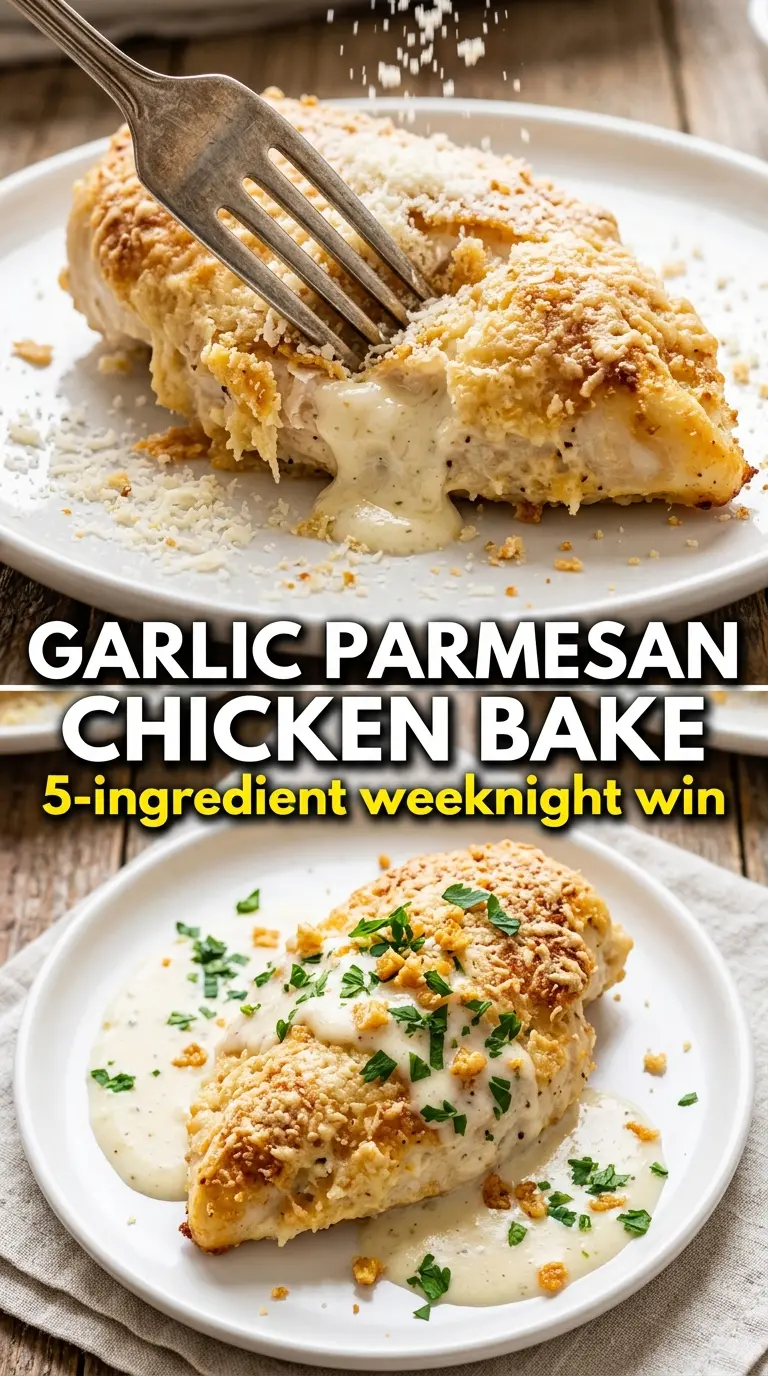
Chicken breasts carry the whole dish, so buy pieces that are close in size. If one breast is much thicker than the others, slice it horizontally or pound it lightly so everything finishes at the same time.
Garlic needs to be minced fine so it spreads through the butter instead of sitting in clumps that can burn. Jarred minced garlic works, but fresh gives a sharper, cleaner bite after baking.
Italian seasoning, parsley, and smoked paprika round out the Parmesan without making the crust taste one-note. The paprika doesn’t make this taste smoky in a barbecue way; it just adds warmth and helps the topping look deeper and more browned.
Lemon wedges are not garnish for the sake of garnish. A squeeze over the finished chicken cuts through the butter and cheese and wakes up the whole plate.
Press the Crust On, Then Leave It Alone
Season the chicken first
Start by seasoning the chicken with salt, pepper, and garlic powder before anything else touches it. That layer seasons the meat itself, not just the crust, and it gives you better flavor in every bite. Put the chicken in the greased baking dish in a single layer so the pieces aren’t crowded. If they overlap, they’ll steam where they touch.
Brush with garlic butter
Mix the melted butter with the minced garlic and brush it generously over the top of each breast. You want a full coating, not a drizzle, because the butter helps the topping stay put and browns the crust from underneath. If the butter starts to solidify while you work, warm it just enough to loosen it again. Cold spots of butter won’t spread evenly and can leave dry patches.
Pack on the Parmesan mixture
Combine the Parmesan, panko, Italian seasoning, parsley, and smoked paprika, then press it firmly onto the buttered chicken. Don’t just sprinkle it over the top; press it so the crumbs and cheese make contact with the butter layer. That contact is what gives you the crackled, cohesive crust instead of loose topping that falls off when you cut into it.
Bake until the center and crust are both ready
Bake at 400°F for 25 to 30 minutes, depending on the thickness of the chicken. The crust should be deeply golden and fragrant, with some darker edges, and the thickest part of the chicken should reach 165°F. If the top is browning too fast before the chicken is done, lay a loose piece of foil over the dish for the last few minutes. Don’t seal it tightly or you’ll trap steam and soften the crust.
How to Adapt This for Different Kitchens and Different Needs
Gluten-Free Version
Swap the panko for gluten-free breadcrumbs or crushed gluten-free crackers. You’ll still get a crisp topping, though cracker crumbs brown a little faster, so watch the last 5 minutes closely.
Dairy-Free Adjustment
Use a plant-based butter and a dairy-free Parmesan-style substitute. The topping won’t brown quite as deeply as the original, but the garlic and seasoning still give you a savory crust with good crunch.
Extra-Crispy Topping
Toast the panko in a dry skillet for 2 to 3 minutes before mixing it with the Parmesan. That gives the crust a head start, which is useful if you want a more pronounced crunch without overbaking the chicken.
Storage and Reheating
- Refrigerator: Store leftovers in an airtight container for up to 3 days. The crust softens a bit as it sits, but the flavor holds up well.
- Freezer: This freezes best after baking and cooling completely. Wrap tightly and freeze for up to 2 months; thaw in the fridge before reheating.
- Reheating: Warm in a 350°F oven until heated through, uncovered, so the topping can crisp back up. The microwave will heat the chicken, but it turns the crust soft and chewy.
Questions I Get Asked About This Recipe
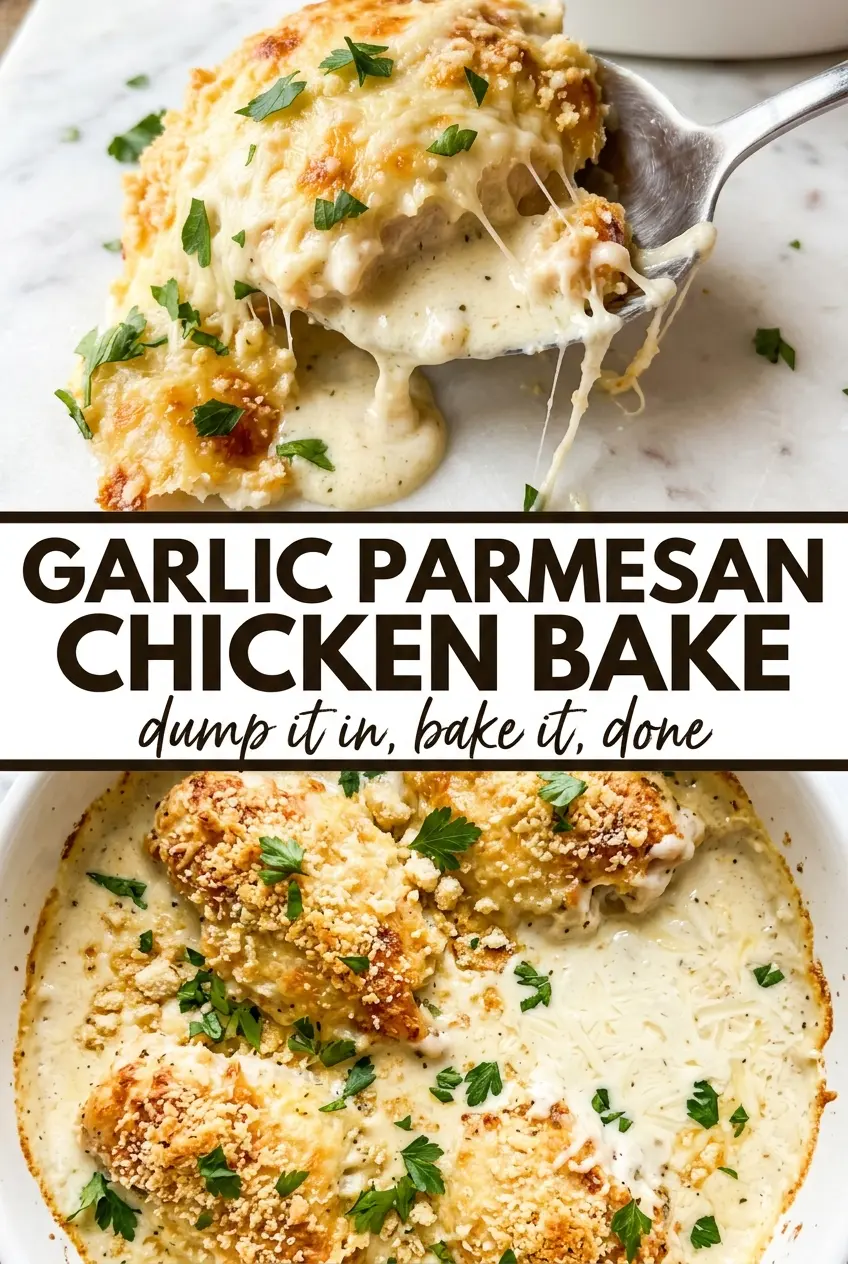
Garlic Parmesan Chicken Bake
Ingredients
Equipment
Method
- Preheat the oven to 400°F and grease a 9x13 baking dish so it releases easily. You should see an evenly coated baking surface ready for the chicken.
- Season the chicken breasts with salt, pepper, and garlic powder, then place them in the prepared dish. The tops and sides should look evenly dusted.
- Mix melted butter with minced garlic and brush generously over each chicken breast. The surface should look glossy and wet with garlic butter.
- Combine Parmesan, panko breadcrumbs, Italian seasoning, dried parsley, and smoked paprika. The mixture should be evenly speckled and dry-looking.
- Press the Parmesan-panko mixture firmly over the buttered chicken so it adheres. You should see a thick, even layer covering the top of each breast.
- Bake for 25-30 minutes at 400°F until the Parmesan crust is deeply golden and the cheese looks browned and crackled. The center should reach 165°F.
- Garnish with fresh parsley and serve with lemon wedges. The finished top should look fragrant and golden, with a bright pop of green and citrus.