Greek potato salad lands with the kind of bright, salty, lemony bite that makes a side dish disappear before the main course gets a chance. The potatoes stay tender but not mushy, the feta softens into the dressing, and the olives and tomatoes keep each forkful from tasting flat or heavy. It’s the kind of bowl that tastes even better after it has had time to sit, because the dressing settles into the warm potatoes and the oregano gets a chance to bloom.
The trick here is using red potatoes and stopping the boil while they still hold their shape. Waxy potatoes stay intact after tossing, which matters because this salad is dressed like a classic Greek table salad, not bound with mayo. The lemon, vinegar, and olive oil do the work, while the feta adds salt and creaminess without turning the whole thing dense. Letting it chill for a couple of hours is part of the recipe, not an afterthought.
Below you’ll find the small details that keep the potatoes from falling apart, the dressing from tasting sharp, and the salad from getting watery. There’s also a note on the one substitution I’d actually use when you need to work with what’s already in the pantry.
The potatoes held their shape after chilling, and the lemon-oregano dressing soaked in just enough without making the salad watery. I brought it to a cookout and every last bite was gone.
Save this Greek potato salad for the nights when you want a bright feta-and-olive side that chills beautifully and gets better after the dressing settles in.
The Potatoes Need Enough Structure to Carry the Dressing
Most potato salads go wrong before the dressing even hits the bowl. If the potatoes are overcooked, they’ll break apart when you toss them, and that starchy mash at the bottom will soak up the dressing while the top stays underseasoned. Red potatoes solve part of that problem because they’re waxy and hold their shape, but you still need to pull them the moment a knife slips in without resistance.
The other mistake is dressing hot potatoes too aggressively. Warm potatoes absorb flavor better than cold ones, but if you stir too hard, the edges smear and the whole salad turns muddy. Let the potatoes cool just enough that they’re still warm to the touch, then fold everything together gently so the feta stays crumbled instead of dissolving.
- Red potatoes — These hold their shape better than russets and give the salad that clean, fork-friendly texture. If you only have Yukon Golds, they’ll work, but they’re a little softer and need a gentler toss.
- Feta cheese — Use a block and crumble it yourself if you can. Pre-crumbled feta is drier and usually less creamy, which matters here because the cheese should soften into the dressing instead of sitting in grainy little bits.
- Kalamata olives — Their briny depth is what keeps this tasting Greek instead of just lemony potato salad. Green olives can work in a pinch, but they’re sharper and less rich.
- Olive oil and lemon juice — This is the backbone of the dressing, so use olive oil you actually like the taste of. The lemon brightens the potatoes, while the vinegar gives the dressing a little more snap so it doesn’t taste flat after chilling.
What Each Ingredient Is Actually Doing to Carry Dressing
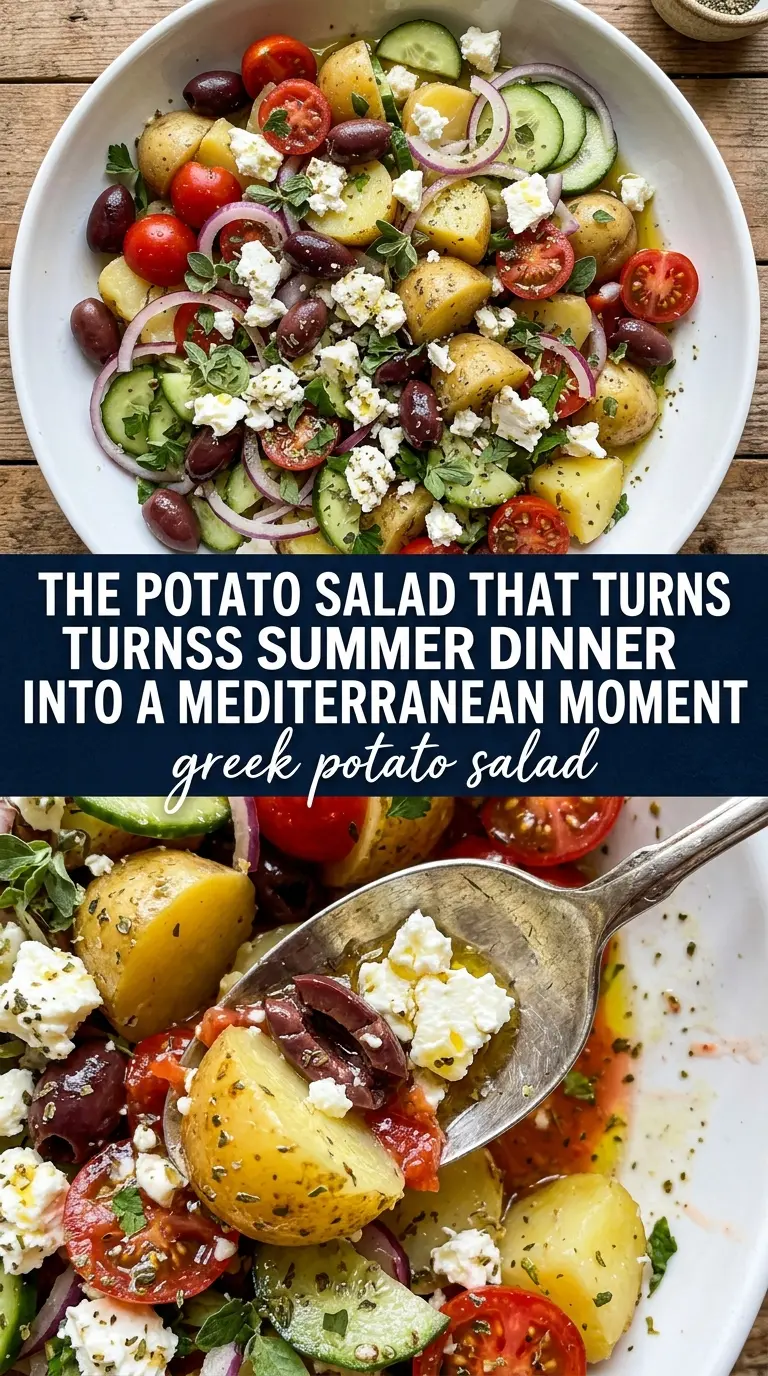
- Potatoes (cooked to proper firmness) — The potato pieces must have enough structure to hold dressing without dissolving. Cook until tender, not soft.
- Potato size and cut (uniform pieces) — Larger pieces hold their shape better than mashed potato bits. Uniformly cut pieces cook evenly and have consistent structure.
- Waxy potatoes (maintain structure) — Starchy potatoes break down and can’t carry dressing. Waxy potatoes stay firm and hold everything together.
- Cooling completely (firms up the structure) — Hot potatoes are soft. Cooled potatoes firm up and can support the weight of dressing without falling apart.
- Dressing consistency (thick enough to cling) — Thin dressing slides off the potatoes. Thick dressing coats and clings to the structure.
- Careful mixing (preserve potato integrity) — Rough handling breaks the potatoes. Gentle folding keeps the structure intact.
- Optional: light coating with oil before dressing — A light oil coating helps potatoes hold structure and prevents them from absorbing all the liquid.
- Final check (potatoes should be visible and distinct) — You should be able to see individual potato pieces. If the salad is homogeneous mush, the potatoes couldn’t carry the dressing properly.
How to Toss It So the Salad Stays Bright, Not Mushy
Cooking the Potatoes Just to Tender
Start the potatoes in well-salted water and cook them until a knife slides in easily but the cubes still look intact. Drain them right away and spread them out for a few minutes so steam escapes instead of turning the outside gummy. If they sit in the colander too long, the trapped heat keeps cooking them and the edges start to break down before you even dress them.
Building the Dressing in the Bowl
Whisk the olive oil, lemon juice, vinegar, oregano, salt, and pepper together before it hits the potatoes. The oregano needs that acid and oil to wake up, and the dressing tastes more even when it’s fully blended. If the lemon seems too sharp at first, don’t add sugar; let the salad sit and season again after chilling, because the potatoes will mellow the acidity on their own.
Folding Everything Without Crushing It
Add the potatoes, feta, olives, tomatoes, and onion to a large bowl, then pour the dressing over the top and fold from the bottom up. Use a wide spoon or spatula and stop as soon as everything looks coated. The tomatoes can leak if you overwork the bowl, and the feta gets pasty if you stir like it’s mashed potatoes.
The Chill That Pulls It Together
Chill the salad for two hours before serving. That rest time gives the potatoes a chance to absorb the dressing and lets the onion soften just enough to lose its raw bite. If the salad tastes a little quiet straight from the fridge, that’s normal; a final pinch of salt and a splash of lemon right before serving brings it back to life.
How to Adapt This for a Lighter Bowl or a Bigger Crowd
Make It Dairy-Free
Skip the feta and add a handful of chopped cucumber or extra olives for texture and salt. You’ll lose the creamy, tangy pockets that feta gives the salad, but the lemon-oregano dressing still carries the dish well.
Use What You Have Instead of Red Potatoes
Yukon Golds are the best swap because they stay creamy without collapsing. Russets work only if you’re careful, since they break down fast and turn the salad cloudy; cut them larger and handle them very gently.
Make It Ahead for a Cookout
This salad actually benefits from a few hours in the fridge, but hold back a little parsley and a small spoonful of dressing until just before serving. That last fresh hit wakes up the bowl after the chill and keeps the top from tasting dull.
Storage and Reheating
- Refrigerator: Store covered for up to 3 days. The potatoes will absorb more dressing as it sits, so expect the salad to taste a little more settled and less bright on day two.
- Freezer: Don’t freeze this one. Potatoes turn grainy after thawing, and the tomatoes and feta both lose their texture.
- Reheating: This salad is meant to be served cold or cool. If it tastes muted after chilling, let it sit at room temperature for 15 to 20 minutes and add a small splash of lemon juice instead of heating it.
Answers to the Questions Worth Asking

Greek Potato Salad
Ingredients
Equipment
Method
- Bring a pot of water to a boil over high heat, then add the cubed red potatoes and boil until tender, 10-15 minutes. You should see the cubes break apart easily when pierced with a fork.
- Drain the potatoes and cool them until they’re no longer steaming, about 10 minutes. They should look matte and hold their shape without being hot.
- Combine the cooled potatoes, crumbled feta cheese, pitted and halved Kalamata olives, halved cherry tomatoes, and thinly sliced red onion in a bowl. Toss lightly just until everything is evenly distributed.
- Whisk together olive oil, lemon juice, red wine vinegar, dried oregano, salt, and pepper until the dressing looks uniform, about 30-60 seconds. The mixture should smell bright and herbaceous.
- Pour the dressing over the potato mixture and toss gently until glossy and coated. Stop when you see the potatoes take on a light sheen.
- Add the chopped fresh parsley and fold in once, just to distribute. The salad should show green flecks throughout.
- Refrigerate the salad to chill for 2 hours. It should look slightly set and taste more cohesive when served cold.