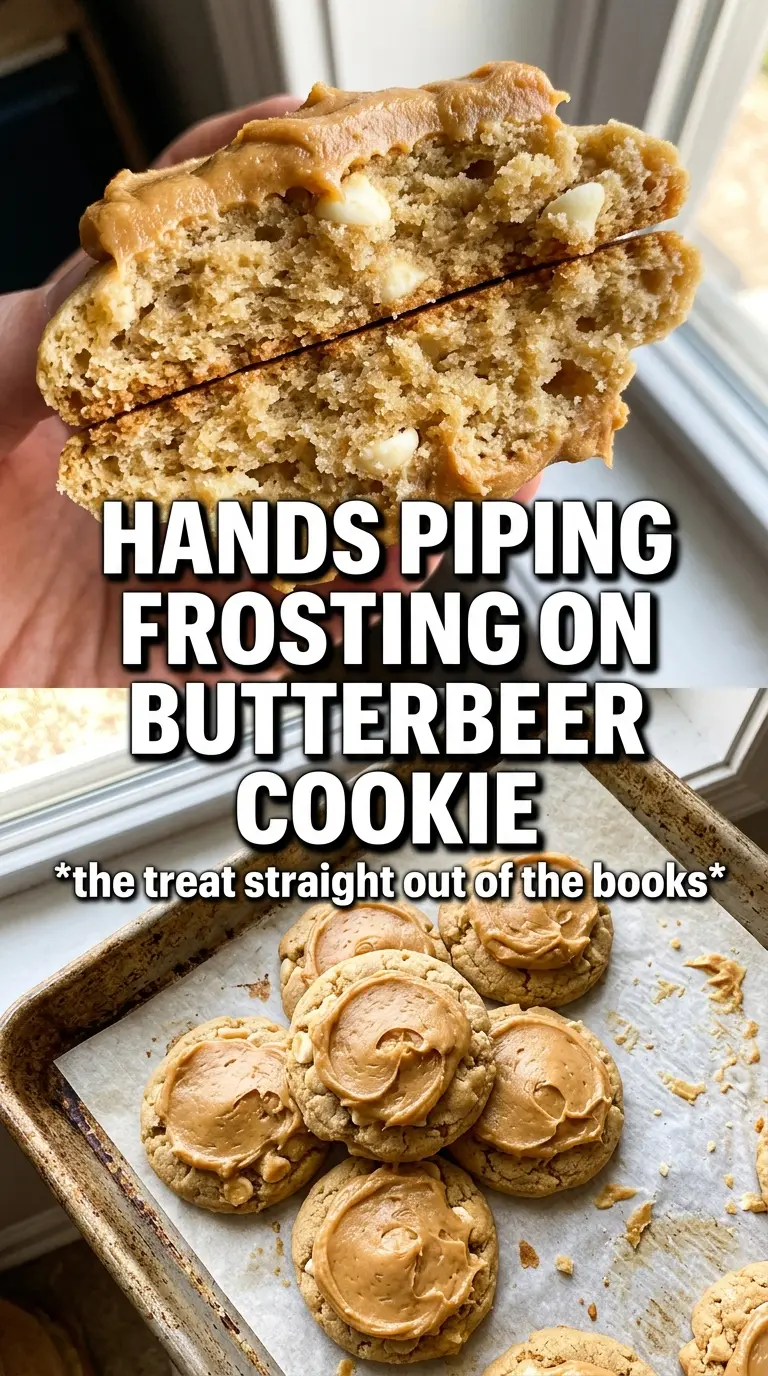
Golden, soft-centered butterbeer cookies bring that nostalgic butterscotch-and-cream-soda flavor into a dessert that actually bakes up tender instead of dense. The cookies stay plush in the middle with just enough edge to hold the frosting, and the butterbeer frosting on top gives each bite a sweet, creamy finish that tastes like the theme, not just the name.
The trick is balancing moisture and structure. Melted butterscotch chips add deeper flavor than extract alone, while the cream soda keeps the dough from tasting flat without making it cakey. The frosting follows the same idea: butter for body, butterscotch sauce for flavor, and only enough cream soda to loosen it into something pipeable.
Below, I’ll show you how to keep the cookies soft, how to get the frosting fluffy without turning it runny, and a few useful swaps if you need to work with what’s already in your pantry.
The cookies baked up soft with that butterscotch flavor coming through, and the frosting set enough to pipe without sliding off. My kids picked the gold sugar off first, then asked for the recipe the next day.
Like these Harry Potter Butterbeer Cookies? Save them to Pinterest for soft, frosted cookies with a butterscotch finish.
The Soft Center Comes From Not Overbaking the Last Two Minutes
Butterbeer cookies should look a little underdone when they come out of the oven. The centers need to stay pale and puffed, with the edges just turning set, because they finish baking on the sheet as they cool. If you wait until they look fully done in the oven, they’ll go dry by the time the frosting hits them.
The other thing people miss is that the dough already has plenty of richness from butter, brown sugar, and melted butterscotch chips. That means you don’t need to push the bake time for more color. Pull them when the tops no longer look wet and give the pans a couple minutes before moving the cookies to a rack.
- Brown sugar gives the cookies their soft chew and deep caramel note. White sugar would bake up drier and flatter.
- Melted butterscotch chips carry the signature flavor more clearly than extract alone. Stir them in after melting so they disperse evenly through the dough.
- Cream soda adds the butterbeer note without thinning the dough too much. More than the recipe calls for can make the cookies spread.
- Cinnamon is subtle here, but it keeps the flavor from reading one-note sweet.
What Each Part of the Butterbeer Frosting Is Doing
- Unsalted butter gives the frosting structure and helps it pipe cleanly. If it’s too cold, the frosting stays lumpy; if it’s too soft, it won’t hold its shape.
- Butterscotch sauce deepens the flavor and makes the frosting taste like more than sweetened butter. Use a thick sauce, not a thin sundae topping, or the frosting can get loose.
- Powdered sugar sets the consistency. Add it gradually so you can stop when the frosting is smooth, not stiff and crumbly.
- Cream soda loosens the mixture just enough for piping. Add the smallest amount that gives you a spreadable texture, because it’s easy to overshoot and end up with frosting that slides off the cookies.
Building the Dough and Frosting in the Right Order
Mix the butter base until it’s fully aerated
Beat the softened butter and brown sugar until the mixture looks lighter in color and a little fluffy. That step gives the cookies lift before the flour goes in, and it helps the sugar dissolve so the texture stays smooth instead of grainy. Add the melted butterscotch chips next, then the egg, vanilla, and cream soda. If the melted chips are still hot, let them cool for a minute or two first or they can start to melt the butter and make the dough greasy.
Fold in the dry ingredients just until the flour disappears
Stir the flour, baking soda, baking powder, cinnamon, and salt together, then add them to the wet mixture and mix only until no dry streaks remain. Overmixing builds too much gluten and turns a soft cookie into one that bakes up tough around the edges. The dough should be thick and scoopable, not sticky and loose. If it seems a little soft, that’s normal; it firms up as it sits and bakes.
Bake until set at the edges and soft in the middle
Scoop the dough into 2-tablespoon rounds and leave space between each one so they can spread evenly. Bake at 375°F for 10 to 12 minutes, watching for the edges to look set while the centers still look slightly underbaked. If the cookies are golden all over, they’ve gone too far for a soft result. Cool them completely before frosting, or the buttercream will slide and melt at the base.
Whip the frosting until it holds a gentle swirl
Beat the softened butter, butterscotch sauce, powdered sugar, cream soda, and vanilla until smooth and fluffy. The texture should be thick enough to pipe but soft enough to spread without tearing the cookie. If it’s too stiff, add cream soda a teaspoon at a time. If it turns loose, add a little more powdered sugar and beat again before decorating.
Make them a little more caramel-forward
Add an extra tablespoon of butterscotch sauce to the frosting and an extra tablespoon of melted butterscotch chips to the dough. That pushes the flavor deeper and richer, but the frosting will be a touch softer, so pipe it and decorate soon after mixing.
Gluten-free version
Use a 1:1 gluten-free baking flour blend that includes xanthan gum. The cookies will still be soft, but they may spread a little less and need a minute of extra cooling on the pan before moving them.
Dairy-free version
Use plant-based butter in both the cookies and frosting, and choose dairy-free butterscotch chips and sauce if you can find them. The flavor still comes through, though the frosting may need a little less cream soda because some nondairy butters are softer at room temperature.
Storage and Reheating
- Refrigerator: Store frosted cookies in a covered container for up to 4 days. The frosting firms up a bit, but the cookies stay soft.
- Freezer: Freeze the unfrosted cookies for up to 2 months. Thaw at room temperature, then frost after they’ve fully softened.
- Reheating: These cookies are best served at room temperature, not warmed. Heat softens the frosting too much and can make the tops slide, so let chilled cookies sit out before serving instead of microwaving them.
Questions I Get Asked About This Recipe

Harry Potter Butterbeer Cookies
Ingredients
Equipment
Method
- Beat softened butter and brown sugar until smooth and combined, then add melted butterscotch chips, egg, vanilla, and cream soda and mix until glossy.
- In a separate dry mix, combine flour, baking soda, baking powder, cinnamon, and salt, then fold the flour mixture into the wet ingredients until just incorporated.
- Scoop dough into 2-tablespoon rounds and place them on a baking sheet with space between each cookie.
- Bake at 375°F for 10-12 minutes, until the edges look set and the centers remain soft.
- Cool cookies completely before frosting so the topping stays thick and doesn’t melt.
- Beat frosting ingredients until smooth and fluffy, adjusting with an extra 1 tablespoon cream soda only if needed for pipeable consistency.
- Pipe or spread frosting onto each cooled cookie in an even layer.
- Decorate with gold sugar sprinkles so each cookie gets a festive, sparkling top.