Hobo dinner cheeseburgers come out with the best parts of a burger and a foil packet dinner in one bite: juicy beef, soft potatoes, sweet onions, and peppers that steam in the beef drippings and butter. The packet does the work for you, which means the vegetables cook right alongside the patties and soak up every bit of flavor instead of turning into a separate side dish that gets ignored.
The trick is slicing the potatoes thin enough to finish in the same time as the burgers, then sealing the foil tightly so the ingredients steam before they brown too much. Heavy-duty foil matters here because thin foil can split once the butter melts and the packet gets flipped over heat. American cheese is the right call for this style of burger because it melts cleanly and gives you that creamy, familiar finish without making the packet greasy.
Below, you’ll find the little details that make these packets work on a campfire grate, plus the swaps that still keep dinner easy when you’re cooking at home or changing up the vegetables.
The potatoes were tender, the burgers stayed juicy, and the cheese melted perfectly when I resealed the packets for the last couple of minutes. My husband said it tasted like a campfire burger and baked potato all in one.
Save these foil packet hobo dinner cheeseburgers for a campfire-friendly meal with melty cheese and tender vegetables.
The Reason These Packets Cook Evenly Instead of Ending Up Half Raw
The biggest mistake with foil packet burgers is building them like a regular burger plate. The potatoes need a head start from thin slicing, not chunky wedges, or they stay firm while the beef finishes. Once the foil seals, the packet traps steam, and that steam is what softens the vegetables before the butter and drippings turn everything rich.
Another thing that matters is the shape of the patty. Keep it thin and a little wider than the bun-sized burger you might normally make, because it will shrink as it cooks and because thicker patties can leave you with dry beef by the time the potatoes are done. Medium campfire heat is the sweet spot. Too hot, and the foil scorches before the vegetables soften. Too low, and the potatoes go from firm to muddy.
What Each Ingredient Is Actually Doing in the Packet
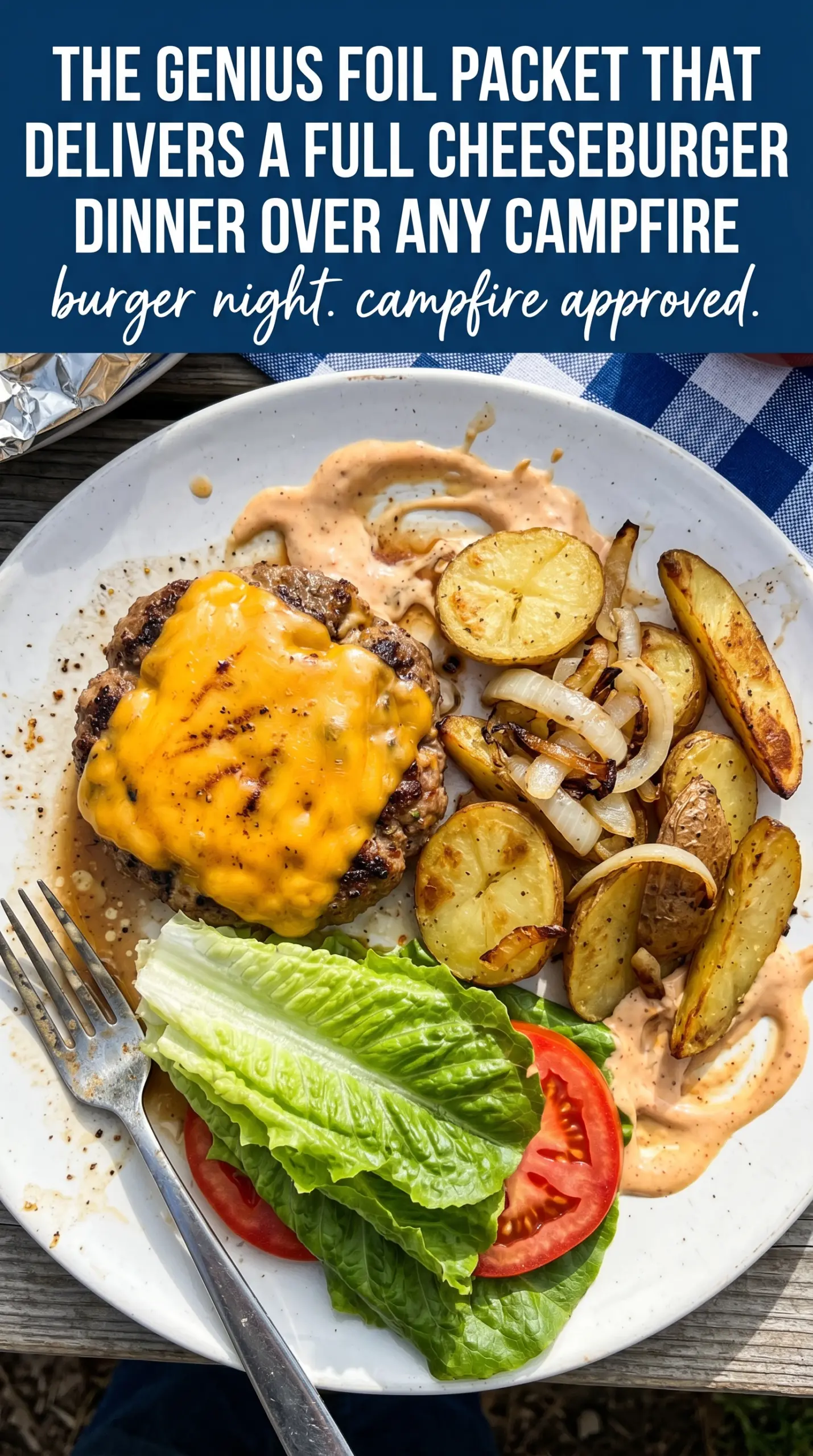
- Ground beef — Use 80/20 if you can. The fat keeps the burger juicy and gives the vegetables something to mingle with. Lean beef works, but the packet tastes less rich and the patties dry out faster.
- Potatoes — Thin slices are nonnegotiable. They cook through in the same window as the burgers and absorb the butter and beef juices. A mandoline helps, but a sharp knife works if you keep the slices even.
- Onion and bell pepper — These soften into the foil packet and give you the sweet, savory base that makes the meal feel complete. Red, yellow, or green peppers all work, but sweeter peppers bring a gentler finish. The onion can be sliced fairly thin so it doesn’t stay crunchy.
- American cheese — This melts smoothly over the hot burger without seizing or turning oily. A slice of cheddar works in a pinch, but it won’t cling to the patty the same way and can separate a little more in the sealed packet.
- Butter — This isn’t just for richness. It helps the vegetables cook and keeps the packet from tasting dry once the steam settles. If you’re using a fattier ground beef, you can cut back a bit, but don’t skip it entirely.
- Heavy-duty foil — Regular foil can tear when you fold and flip the packets. Heavy-duty sheets hold their shape better and stay sealed over campfire heat, which is the difference between a tidy dinner and a leaking mess.
Building the Packet So the Potatoes Finish at the Same Time as the Burger
Layer the vegetables under the meat
The potatoes go on the bottom, then the onion and bell pepper, then the patty. That order lets the vegetables sit closest to the heat and catch the butter as it melts. If you put the burger underneath, the juices can overcook the meat before the potatoes are tender.
Seal the foil tight, but leave room for steam
Fold the foil into a firm packet with enough space inside for steam to circulate. Crimp the edges well so the butter doesn’t leak out over the fire, but don’t press the foil so flat that it hugs the food. A little air pocket helps the potatoes soften instead of steaming against a tight metal lid.
Flip once and finish with the cheese
Cook the packets over medium heat for about 20 to 25 minutes, turning them halfway through so the bottom doesn’t scorch. When the potatoes are tender and the burger is cooked through, open the packet carefully because the steam is hot. Add the cheese, reseal the packet for a minute or two, and let the residual heat melt it without drying out the beef.
Rest before serving from the packet
Let the packets sit for about 5 minutes before opening fully and serving. That short rest lets the juices settle back into the meat instead of spilling out the second you cut in. If you open them too soon, the burger can taste a little loose and the vegetables will be hotter than they are tender.
Ways to Change the Packets Without Losing the Point
Make It Dairy-Free
Skip the butter and use a neutral oil or a dairy-free butter substitute. The packets still cook evenly, but you’ll lose a little of that rich, buttery finish. Add a pinch more salt at the end since butter usually carries some of the flavor people expect here.
Swap the Vegetables for What You Have
Mushrooms, zucchini, or sliced carrots can stand in for the bell pepper, but keep everything sliced thin so the timing stays close. Sturdier vegetables need to be cut smaller than you’d think, or they stay firm while the burger cooks past juicy.
Use a Different Cheese
Cheddar, Monterey Jack, or pepper jack work if you want a little more bite. American cheese is the smoothest melter, but the others bring a sharper finish. Add them only at the end, after the burger is cooked, or they’ll tighten up and get greasy in the packet.
Make It Gluten-Free Without Changing Anything Else
This recipe is naturally gluten-free as written as long as your cheese and any added seasonings are certified gluten-free. That makes it an easy camp dinner when you want something filling without needing a separate bun or side dish.
Storage and Reheating
- Refrigerator: Store leftovers in an airtight container for up to 3 days. The potatoes soften a bit more after chilling, but the flavor holds up well.
- Freezer: I don’t recommend freezing the finished packets. The potatoes turn grainy after thawing and the vegetables lose their texture.
- Reheating: Reheat gently in a covered skillet over low heat or in a 300°F oven until warmed through. High heat dries out the burger before the center is hot, and the cheese can turn greasy instead of melty.
Questions I Get Asked About This Recipe
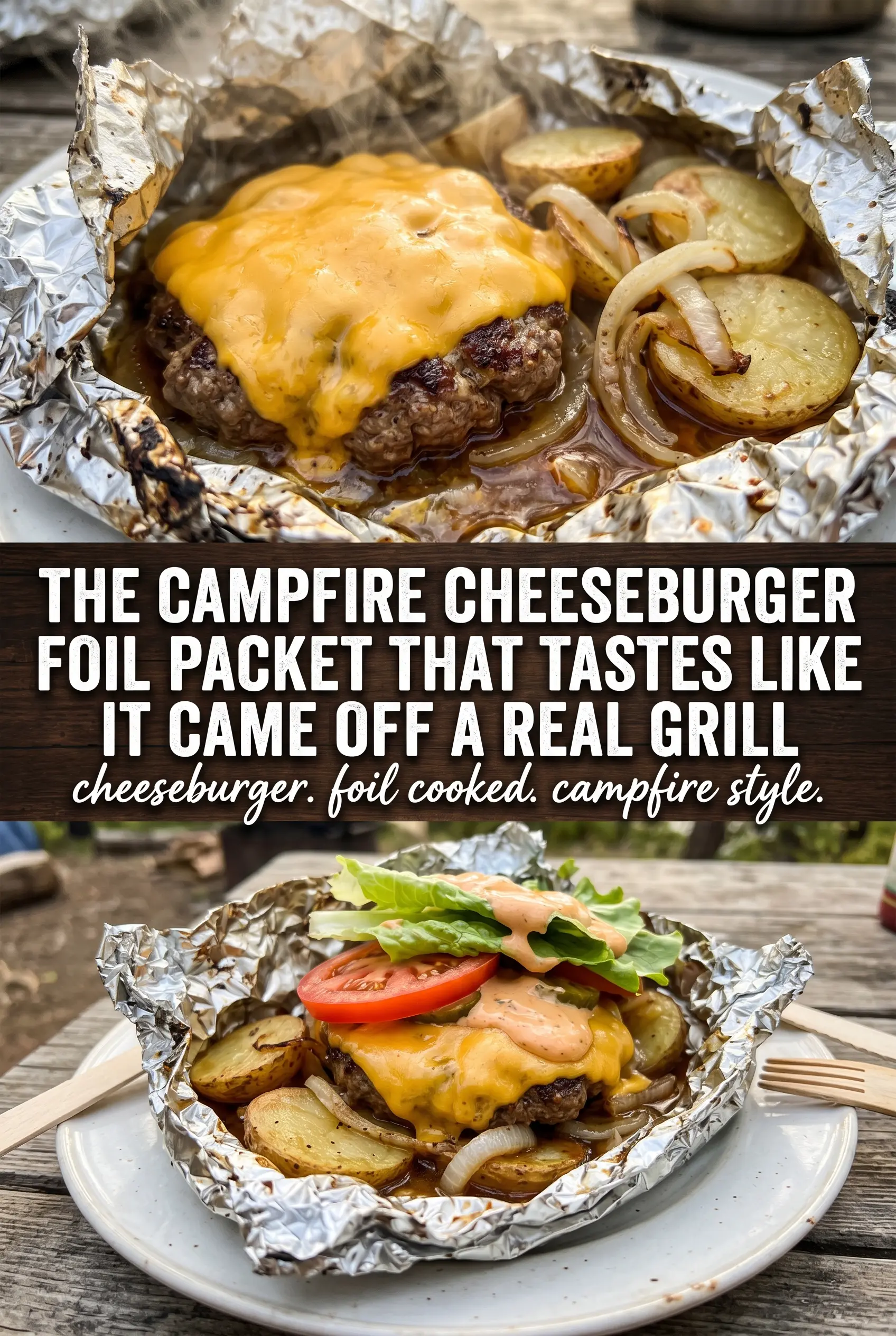
Hobo Dinner Cheeseburgers
Ingredients
Equipment
Method
- Divide the ground beef into 4 portions and form each into a thin patty, then season all sides with salt and pepper.
- Set the patties aside while you prep the vegetables and foil packets.
- Lay out 4 heavy-duty aluminum foil sheets and layer sliced potatoes, onions, and bell peppers on each sheet.
- Place a beef patty on top of the vegetables, then dot the patty with 1 tablespoon butter on each packet.
- Fold the foil up and over to seal into packets, leaving no major gaps for steam to escape.
- Place packets on a campfire grate over medium heat for 20-25 minutes, flipping halfway so both sides cook evenly.
- Carefully open each packet and add 1 slice of American cheese to the burger.
- Reseal the packets briefly just long enough to melt the cheese.
- Let the packets cool for 5 minutes before serving directly from the foil.